production
/viewbook/list/all/?page=1012
/
/static/
None
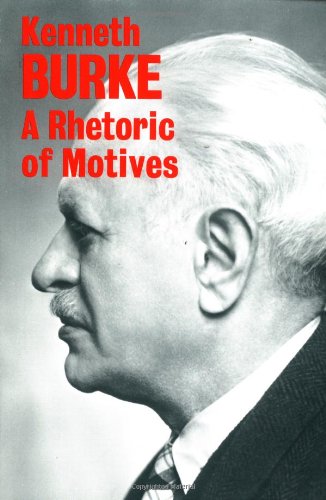
A Rhetoric of Motives
Authors:
Kenneth Burke
Publisher:
University of California Press
Publication Date:
Not available
ISBN:
0520015460
As critic, Kenneth Burke's preoccupations were at the beginning purely esthetic and literary; but after Counter-Statement (1931), he began to... discriminate a "rhetorical" or persuasive component in literature, and thereupon became a philosopher of language and human conduct.In A Grammar of Motives (1945) and A Rhetoric of Motives (1950), Burke's conception of "symbolic action" comes into its own: all human activities--linguisitc or extra-linguistic--are modes of symbolizing; man is defined as the symbol-using (and -misusing) animal. The critic's job becomes one of the interpreting human symbolizing wherever he finds it, with the aim of illuminating human motivation. Thus the reach of the literary critic now extends to the social and ethical.A Grammar of Motives is a "methodical meditation" on such complex linguistic forms as plays, stories, poems, theologies, metaphysical systems, political philosophies, constitutions. A Rhetoric of Motives expands the field to human ways of persuasion and identification. Persuasion, as Burke sees it, "ranges from the bluntest quest of advantage, as in sales promotion or propaganda, through courtship, social etiquette, education, and the sermon, to a 'pure' form that delights in the process of appeal for itself alone, without ulterior purpose. And identification ranges from the politician who, addressing an audience of farmers, says, 'I was a farm boy myself,' through the mysteries of social status, to the mystic's devout identification with the sources of all being."

A Rhetoric of Style
Authors:
Professor Barry Brummett PhD
Publisher:
Southern Illinois University Press
Publication Date:
Not available
ISBN:
0809328585

Ariaal Pastoralists of Kenya: Studying Pastoralism, Drought, and...
Authors:
Elliot M. Fratkin
Publisher:
Pearson
Publication Date:
Not available
ISBN:
0205391427
Based on over twenty-five years of research and fieldwork, the Second Edition of Ariaal Pastoralists of Kenya: Studying Pastoralism, Drought, and... Development in Africa's Arid Lands, offers a highly readable and often humorous ethnographic description of the Maasai-speaking society of East Africa. This unique text details the story of how one society of livestock herders in northern Kenya has adapted to and survived both natural and human-induced disasters of recent times, including drought and famine, inter-pastoralist warfare, and the wide-scale intervention of international development and relief organizations. The Ariaal's determination to maintain their pastoral lifestyle while taking advantage of new health, employment, marketing, and education opportunities offered in the growing Kenyan towns provides a fascinating study of the dynamics of cultural change and the threat to cultural survival among East African pastoralists. This small, accessible ethnography offers a detailed look at pastoral ecology, life in an Ariaal community, the trials and tribulations of anthropological fieldwork, and problems of development and social change for Ariaal people.
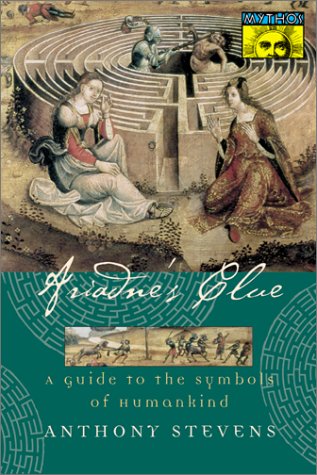
Ariadne's Clue: A Guide to the Symbols of Humankind (Mythos: The...
Authors:
Anthony Stevens
Publisher:
Princeton University Press
Publication Date:
Not available
ISBN:
0691086613
Symbolism is the most powerful and ancient means of communication available to humankind. For centuries people have expressed their preoccupations and... concerns through symbolism in the form of myths, stories, religions, and dreams. The meaning of symbols has long been debated among philosophers, antiquarians, theologians, and, more recently, anthropologists and psychologists. In Ariadne's Clue, distinguished analyst and psychiatrist Anthony Stevens explores the nature of symbols and explains how and why we create the symbols we do.The book is divided into two parts: an interpretive section that concerns symbols in general and a "dictionary" that lists hundreds of symbols and explains their origins, their resemblances to other symbols, and the belief systems behind them. In the first section, Stevens takes the ideas of C. G. Jung a stage further, asserting not only that we possess an innate symbol-forming propensity that exists as a creative and integral part of our psychic make-up, but also that the human mind evolved this capacity as a result of selection pressures encountered by our species in the course of its evolutionary history. Stevens argues that symbol formation has an adaptive function: it promotes our grasp on reality and in dreams often corrects deficient modes of psychological functioning. In the second section, Stevens examines symbols under four headings: "The Physical Environment," "Culture and Psyche," "People, Animals, and Plants," and "The Body." Many of the symbols are illustrated in the book's rich variety of woodcuts. From the ancient symbol of the serpent to the archetypal masculine and feminine, from the earth to the stars, from the primordial landscape of the savannah to the mysterious depths of the sea, Stevens traces a host of common symbols back through time to reveal their psychodynamic functioning and looks at their deep-rooted effects on the lives of modern men, women, and children.

Ariadne's Thread: Case Studies in the Therapeutic Relationship
Authors:
Eric Cowan
Publisher:
Houghton Mifflin
Publication Date:
Not available
ISBN:
0618370285
This casebook provides a personal account of the struggles a counselor encounters in everyday clinical practice. Each of the eight studies, thoughtfully... detailed by Dr. Cowan from his own experience, illuminates the therapist/client relationship. Follow-up discussions tie each case and the therapist's technique to counseling theory and practice. A final conclusion links all cases and the related discourse together.

Ariane Mnouchkine (Routledge Performance Practitioners)
Authors:
Judith G. Miller
Publisher:
Routledge
Publication Date:
Not available
ISBN:
0415338859
Routledge Performance Practitioners is a series of introductory guides to the key theatre-makers of the last century. Each volume explains the... background to and the work of one of the major influences on twentieth- and twenty-first-century performance. One of the most important directors of her generation, and one of the only women ever to have attained great director status in France, Ariane Mnouchkine's work is in revolt against declamation and text-based theatre. A utopian humanist, attracting actors from almost forty different countries to her company, Le Theatre du Soleil, Mnouchkine nurtures a passionate following. This is the first book to combine: an overview of Mnouchkine's life, work and theatrical influences an exploration of her key ideas on theatre and the creative process analysis of key productions, including 1789 and Richard II. As a first step towards critical understanding, and as an initial exploration before going on to further, primary research, Routledge Performance Practitioners are unbeatable value for today's student.

Aria Ready, The Business of Singing 2ND EDITION!
Authors:
Carol Kirkpatrick
Publisher:
Bancroft Publications
Publication Date:
Not available
ISBN:
0977052400
An all new 2nd EDITION of the acclaimed career guide for singers! Personal and Business strategies for making the transtition from Aspiring Artist to... Prepared Professional.
You are the product, the company, and the person who manages your business, so it is Your responsibility to learn how to weave these part together into a successful venture, determining how best to utilize your time, energy, and money towards building a career. Developing a solid foundation, beginning with the product-you, the performer-is the first and most important part of the process. Discover how you work best, and begin accomplishing the necessary tasks to successfully reach your goals, while liberating the artist within.
Arias for Baritone: G. Schirmer Opera Anthology
Authors:
Not Available
Publisher:
G. Schirmer, Inc.
Publication Date:
Not available
ISBN:
0793504031
(Vocal Collection). Contents: Mozart: Hai gia vinta la causa! ...Vedro mentr'io sospiro (Le Nozze di Figaro) * Fin ch'an dal vino (Don Giovanni) * Deh... vieni alla finestra (Don Giovanni) * Donne mie, la fate a tanti (Cosi fan tutte) * Der Vogelfanger bin ich ja (Die Zauberflote) * Ein Madchen oder Weibchen (Die Zauberflote) Rossini: Largo al factotum (Il Barbiere di Siviglia) Donizetti: Come Paride vezzoso (L'Elisir d'Amore) * Bella Sicome un angelo (Don Pasquale) Bellini: Ah! per sempre (I Puritani) Wagner: O! du mein holder Abendstern (Tannhauser) Verdi: Pari Siamo! (Rigoletto) * Di Provenza il mar, il suol (La Traviata) Thomas: O vin, dissipe la tristesse (Hamlet) Gounod: Mab, la reine des mensonges (Romeo et Juliette) * Avant de quitter ces lieux (Faust) Bizet: Votre toast, je peux vous le rendre (Carmen) Ponchielli: Ah! Pescator (La Gioconda) Massenet: Vision fugitive (Herodiade) * Voila donc la terrible cite (Thais) Leoncavallo: Zaza, piccola zingara (Zaza) Puccini: Minnie, dalla mia casa son partito (La Fanciulla del West) Moore: Warm as the autumn night (The Ballad of Baby Doe) Barber: You rascal you! I never knew you had a soul (Vanessa).
Arias for Bass: G. Schirmer Opera Anthology
Authors:
Not Available
Publisher:
G. Schirmer, Inc.
Publication Date:
Not available
ISBN:
079350404X
(Vocal Collection). Contents: Mozart: O Isis und Osiris (Die Zauberflote) * In diesen heil'gen Hallen (Die Zauberflote) Rossini: La calunnia (Il... Barbiere di Siviglia) * Miei rampolli femminini (La Cenerentola) C.M. von Weber: Schweig'! schweig'! damit dich Niemand warnt (Der Freischutz) Bellini: Vi ravviso (La Sonnambula) Donizetti: Dalle stanze ove Lucia (Lucia di Lammermoor) * Ah! un faco insolito (Don Pasquale) Meyerbeer: Pour les couvents c'est fini (Piff, paff) (Les Huguenots) Verdi: Infelice! e tuo credevi (Ernani) * Come dal ciel precipita (Macbeth) * O tu, Palermo (I Vespri Sicilianni) * Il lacerato spirito (Simon Boccanegra) Nicolai: Als Bublein klein (Die Lustigen Weiber von Windsor) Gounod: Le veau d'or est toujours debout! (Faust) * Vous qui faites l'endormie (Faust) Bizet: Quand la flamme de l'amour (La Jolie Fille de Perth) Tchaikovsky: Gemin's Aria (Eugen Onegin) Massenet: Epouse quelque brave fille (Manon) Puccini: Vecchia zimarra, senti (La Boheme) Weill: Let Things Be Like They Always Was (Street Scene) Thomson: What, what is it? (The Mother of Us All).

Arias for Mezzo-Soprano: G. Schirmer Opera Anthology
Authors:
Not Available
Publisher:
G. Schirmer, Inc.
Publication Date:
Not available
ISBN:
0793504015
(Vocal Collection). Contents: Purcell: When I am laid in earth (Dido and Aeneas) Gluck: Che faro senza Euridice? (Orfeo ed Euridice) Mozart: Non so... piu (Le Nozze di Figaro) * Voi, che sapete (Le Nozze di Figaro) * Smanie implacabili (Cosi fan tutte) Rossini: Cruda sorte!...Gia so per pratica (L'Italiana in Algeri) * Una voce poco fa (Il Barbiere di Siviglia) * Non piu mesta (La Cenerentola) Donizetti: Il segreto per esser felici (Orsini's Drinking Song) (Lucrezia Borgia) * O mio Fernando (La Favorita) Meyerbeer: Nobles seigneurs, salut! (Les Huguenots) Verdi: Stride la vampa! (Il Trovatore) Gounod: Faites-lui mes aveux (Faust) * Que fais-tu, blanche tourterelle (Romeo et Juliette) J. Strauss: Chacun a son got (Die Fledermaus) Bizet: Habanera (Carmen) * Seguidilla (Carmen) * En vain, pour eviter les reponses ameres (Carmen) Ponchielli: Voce di donne (La Gioconda) Saint-Saens: Printemps qui commence (Samson et Dalila) * Amour! viens aider ma faiblesse! (Samson et Dalila) * Mon coeur s'ouvre a ta voix (Samson et Dalila) Mascagni: Voi lo sapete (Cavalleria Rusticana) Massenet: Va! laisse couler mes larmes (Werther) Cilea: Acerba volutta (Adriana Lecouvreur) Thomson: We cannot retrace our steps (The Mother of Us All) Menotti: Lullaby (The Consul) * Au, Michele, don't you know (The Saint of Bleecker Street) Moore: Augusta! How can you turn away? (The Ballad of Baby Doe) Barber: Must the Winter Come so Soon? (Vanessa).

Arias for Soprano: G. Schirmer Opera Anthology (G. Schrimer Opera...
Authors:
Not Available
Publisher:
G. Schirmer, Inc.
Publication Date:
Not available
ISBN:
0793504007
(Vocal Collection). Contents: Handel: V'adoro pupille (Giulio Cesare) Mozart: Porgi, amor (Le Nozze di Figaro) * Dove sono (Le Nozze Figaro) * Deh... vieni, non tardar (Le Nozze di Figaro) * Bester Jungling (Der Schauspieldirektor) * Batti, batti, bel Masetto (Don Giovanni) * Vedrai carino (Don Giovanni) * Ach, ich fuhl's (Die Zauberflote) Beethoven: O war' ich schon mit dir vereint (Fidelio) C.M. von Weber: Kommt ein schlanker Bursch gegangen (Der Freischutz) Verdi: Caro nome (Rigoletto) * Saper vorreste (Un Ballo in Maschera) * Sul fil d'un soffio etesio (Falstaff) Gounod: The Jewel Song (Faust) * Ah! Je veux vivre (Romeo et Juliette) Bizet: Je dis que rien ne m 'epouvante (Carmen) Offenbach: Elle a fui, la tourterelle! (Les Contes d'Hoffmann) Massenet: Adieu, notre petite table (Manon) Leoncavallo: Ballatella (I Pagliacci) Puccini: Mi chiamano Mimi (La Boheme) * Donde lieta (La Boheme) * Quando men vo (La Boheme) * Un bel di (Madama Butterfly) * O mio babbino caro (Gianni Schicchi) * Signore, ascolta (Turandot) * Tu che di gel sei cinta (Turandot) Menotti: The Black Swan (The Medium) * Monica's Waltz (The Medium) Moore: Willow Song (The Ballad of Baby Doe) * The Silver Aria (The Ballad of Baby Doe) Mechem: Fair Robin, I love (Tartuffe).

Arias for Soprano, Volume 2: G. Schirmer Opera Anthology
Authors:
Not Available
Publisher:
G. Schirmer, Inc.
Publication Date:
Not available
ISBN:
0634078682
(Vocal Collection). The G. Schirmer Opera Anthology series revolutionized opera aria study after its release in 1991. There are so many wonderful... soprano arias that a second volume was warranted. The music is predominantly for lyric soprano. As in the original volumes, these are new, clean editions, with historical and plot information about each of the 32 arias included.

Arias for Tenor: G. Schirmer Opera Anthology
Authors:
Not Available
Publisher:
G. Schirmer, Inc.
Publication Date:
Not available
ISBN:
0793504023
(Vocal Collection). Contents: Mozart: O wie angstlich (Die Entfuhrung aus dem Serail) * Frisch zum Kampfe! (Die Entfuhrung aus dem Serail) * Dalla sua... pace (Don Giovanni) * Il mio tesoro (Don Giovanni) * Un' aura amorosa (Cosi fan tutte) * Dies Bildnis ist bezaubernd schon (Die Zauberflote) Rossini: Ecco ridente in cielo (Il Barbiere di Siviglia) Donizetti: Quanto e bella (L'Elisir d'Amore) * Una furtiva lagrima (L'Elisir d'Amore) * Spirto gentil (La Favorita) * Com' e gentil (Don Pasquale) Flotow: Ach! so fromm (Martha) Nicolai: Horch, die Lerche (Die Lustigen Weiber von Windsor) Verdi: Questa o quella (Rigoletto) * La Donna e mobile (Rigoletto) * De' miei bollenti spiriti (La Traviata) * Dal labbro il canto estasiato vola (Falstaff) Gounod: Salut! demeure chaste et pure (Faust) Bizet: Je crois entendre encore (Les Pecheurs de Perles) * La fleur que tu m'avais jettee (Carmen) Tchaikovsky: Lenski's Aria (Eugen Onegin) Massenet: En fermant les yeus (Manon) * Pourquoi me reveiller (Werther) Lalo: Vainemant, ma bien-aimee (Le Roi d'Ys) Puccini: Che gelida manina (La Boheme) * Amore, grillo (Madama Butterfly) * Firenze e come un alberto fiorito (Gianni Schicchi) Cilea: E la solita storia del pastore (L'Arlesiana) Giordano: Amor ti vieta (Fedora) Britten: Inkslinger's Song (Paul Bunyan) Weill: Lonely House (Street Scene) Menotti: I know that you all hate me (The Saint of Bleecker Street) Barber: Outside this house (Vanessa) Hoiby: Caliban's Aria (The Tempest).

A Ricepaper Airplane: A Novel (Intersections: Asian and Pacific...
Authors:
Gary Pak
Publisher:
Univ of Hawaii Pr
Publication Date:
Not available
ISBN:
0824813014
From a hospital bed a dying man unfolds the tale of an arduous life on the fringes of a Hawai'i sugar plantation in the 1920s. There Kim Sung Wha -- ... laborer, patriot, revolutionary, aviator -- envisioned building an airplane from ricepaper, bamboo, and the scrap parts of a broken-down bicycle, an airplane that would carry him back to his Korean homeland and to his wife and children. From the start Sung Wha's dream is destined to fail, but this moving and passionate work is the story of a man who dares to life past the wreckage of shattered visions. His is a heroic story of loss, of deep love, and of rebirth.

A Richer Heritage: Historic Preservation in the Twenty-First Century
Authors:
Robert E. Stipe
Publisher:
The University of North Carolina Press
Publication Date:
Not available
ISBN:
0807854514
In this "best practices" volume for students, professionals, and policy makers, 15 essays by leading scholars and professionals explore the history of... the preservation movement in the US, the current range of philosophies and strategies employed by professionals in the field, and recommendations for appropriate preservation strategies, both public and private.
 '
'