production
/viewbook/list/all/?page=1036
/
/static/
None
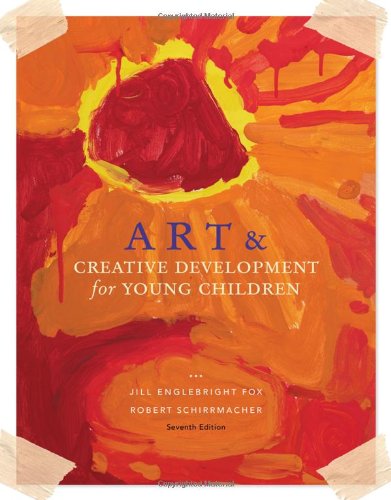
Art and Creative Development for Young Children (What's New in...
Authors:
J. Englebright Fox
Publisher:
Wadsworth Publishing
Publication Date:
Not available
ISBN:
049591312X
Written for pre-service and in-service early childhood professionals in child care, preschool, or kindergarten through third grade settings, ART AND... CREATIVE DEVELOPMENT FOR YOUNG CHILDREN, 7th Edition, takes a child-centered approach to art education. Updated throughout, the book includes an in-depth discussion of technology to aid teachers in understanding the role that technology can play in children's visual art appreciation and production. Guidelines for establishing an inclusive art program in classrooms for young children are included for early childhood professionals. Activities and recipes make the text a valuable resource for in-service teachers.
Art and Culture: Critical Essays
Authors:
Clement Greenberg
Publisher:
Beacon Press, Boston
Publication Date:
Not available
ISBN:
0807066818
"Clement Greenberg is, internationally, the best-known American art critic popularly considered to be the man who put American vanguard painting and... sculpture on the world map. . . . An important book for everyone interested in modern painting and sculpture."—The New York Times
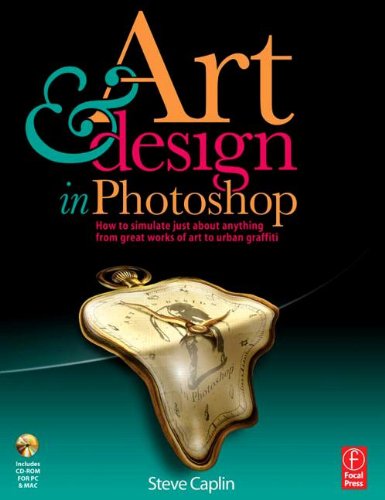
Art and Design in Photoshop: How to simulate just about anything...
Authors:
Steve Caplin
Publisher:
Focal Press
Publication Date:
Not available
ISBN:
0240811097
Fancy designing your own classic and contemporary movie posters, books and magazine covers?Feel like turning your photographs into works by Turner,... Matisse and Magritte?Want to create illustrations in the styles of The Simpsons, steampunk and Victorian engravings?Then you need Art and Design in Photoshop. In this unique book, acclaimed master of photomontage and visual trickery Steve Caplin shows you how to stretch your creative boundaries. Taking the same tried-and-tested practical approach as his best selling How to Cheat in Photoshop titles, Steve's step-by-step instructions recreate a dazzling and diverse array of fabulous design effects. You'll learn how to design everything from wine labels to sushi cartons, from certificates to iPod advertising, from textbooks to pulp fiction.Written by a working pro, the clear guidelines pinpoint exactly what you need to know: how to get slick-looking results with minimum fuss, with a 16-page Photoshop Reference chapter that provides an at-a-glance guide to Photoshop tools and techniques for less experienced users. Steve explains both typography and the design process in a clear, informative and entertaining way.All the images, textures and fonts used in the book are supplied on the accompanying CD-ROM. Imaginative, inspirational and fun to use, this book is a must-have for every creative Photoshop user, both amateur and professional.* Learn to quickly and ingeniously create fantastic graphic effects in Photoshop, from graffiti to classic art, newsprint and stained-glass windows* Easy and fun to use with clear step-by-step instructions and hundreds of screenshots.* Backwards compatible: fully up-to-date with the latest Photoshop release but also relevant for use with previous versions of Photoshop
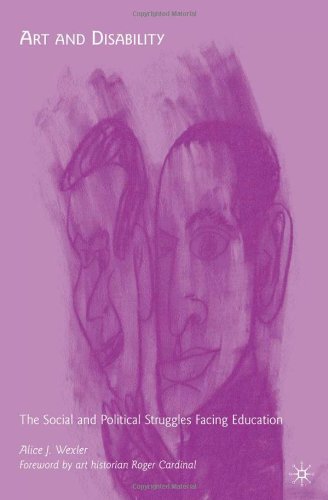
Art and Disability: The Social and Political Struggles Facing...
Authors:
Alice J. Wexler
Publisher:
Palgrave Macmillan
Publication Date:
Not available
ISBN:
0230606296
In the past few decades, making art has been used in special education classrooms as a way of offering psychic freedom, if not bodily freedom, by... providing a partial antidote to the social problems generated in an impoverished environment. The art that has emerged has redeemed the inevitable isolation and loss and become its driving force. Wexler argues that the arts are most effective when they are in service of social growth, critical to identity formation. This book balances theory with practical knowledge and offers critical research that challenges the biases regarding the nature of art and education. It includes case studies, examples of the author’s strategies with children and art students, as well as a chapter devoted to lesson plans.
Art and Discontent: Theory at the Millennium
Authors:
Thomas McEvilley
Publisher:
McPherson
Publication Date:
Not available
ISBN:
0929701313
In the wake of a disappearing “Modernism” and with an unpredictable “post-Modernism” confounding the art establishment, a world-renowned critic... proposes a new vision for the critical enterprise. Thomas McEvilley confronts, in these six straightforward essays, the ideas and philosophies which have exalted art above constructive involvement in the world for two centuries. The formalist aesthetics of Clive Bell, Roger Fry, Clement Greenberg, and Susan Sontag are specifically criticized, revealing their buried assumptions and agenda. The persistence of the Romantic idea of Self is discovered at the heart of Modernism along with ideas of Spirit secretly enshrined in the distinction between abstraction and representation. Mr. McEvilley goes on to shed new light on the roots of Modernism, the collapse of the idea of history, and the subsequent development of a global discourse. He brings to Art & Discontent a commanding knowledge of Greek and Egyptian art, Western and non-Western philosophies, and the most avant garde of contemporary art and artists. In explaining why our Modernism was not unique and why it is being superseded, McEvilley suggests the functions that art can perform in a post-Modern culture and offers compelling reasons why the history of art needs to be rewritten from a thoroughly renewed perspective.
Art and Electronic Media (Themes & Movements)
Authors:
Edward A. Shanken
Publisher:
Phaidon Press
Publication Date:
Not available
ISBN:
0714847828
As accessibility and understanding of electronic media grows, its use by artists becomes more widespread. Yet the art world, both critically and... practically, was initially slow to accept this emergence - new technology is potentially alienating and esoteric. Edward A. Shanken gives a lucid evaluation of the subject, contextualizing it in a broader art-historical and political framework. A comprehensive survey, his essay also addresses the reaction, development and future of artistic practice in the face of new technology, and how art can 'humanize and mythologize' science. Divided into seven thematic sections, the book follows a broadly chronological approach. The seven sections of this survey include: light, space, motion, time which lays the foundations in the early twentieth century, artists introduced motion and light into their work, defying the traditional concept of art as static, lit object - the jump-off point for interactive art incorporating digital media; Coded Form and Electronic Production which shows how the emergence of computer graphics and electronic photocopying (1950s and 1960s), and high resolution digital photography, printing and rapid prototyping (1980s and 1990s) expanded the possibilities for artistic production and reproduction, challenging notions of originality and creativity; Simulation and Simulacra which describes the interactive exchanges allowed by virtual reality, engaging audiences with simulated forms and environments, playing on the trompe-l'oeil verisimilitude of art history. Sections also include Electronic Environments which is distinctly different from virtual reality outlines performances enacted in electronic environments that enable audience feedback to influence the unfolding of various elements or demonstrate the politicized contexts in which the media (and the mass media in particular) operate. This work also includes sections such as: Networks, Surveillance, Culture Jamming which discusses public access cable television, satellite transmissions, and especially the union of computers and telecommunications, and how these have led to exchange, transfer and collaborative creation; Bodies, Surrogates, and Emergent Systems which questions the distinction between real and artificial, as artists join their bodies (and/or those of their audiences) with electronic media, creating cyborgs and robots in order to examine human existence; and, Exhibitions, Institutions and Communities which looks at how technical requirements and financial overheads demand close collaboration between artists, scientists and engineers, shaping production, reception and historicization.
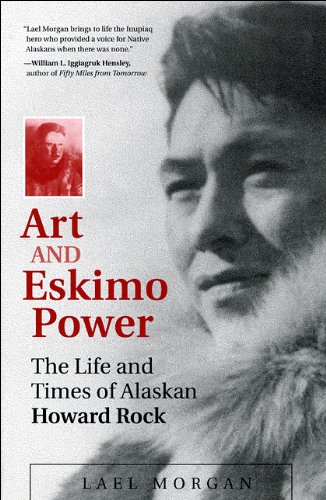
Art and Eskimo Power: The Life and Times of Alaskan Howard Rock
Authors:
Lael Morgan
Publisher:
University of Alaska Press
Publication Date:
Not available
ISBN:
1602230218
At Howard Rock's birth, a shaman predicted that he would become a great man. Born in 1911 in a sod igloo in Point Hope, an ancient Eskimo village,... Howard became an accomplished artist and crusading newspaper editor who helped to defend his people from a controversial Atomic Energy Commission proposal to excavate a harbor near his native village with an atomic blast. Art and Eskimo Power chronicles the life of this influential and artist, editor, and founder of the Tundra Times—under whose leadership the newspaper helped to organize Alaska’s native people to press their aboriginal land claims before Congress, which ultimately led to their being awarded over $1 billion and 40 million acres.
Art and Experience in Classical Greece
Authors:
Jerome Jordan Pollitt
Publisher:
Cambridge University Press
Publication Date:
Not available
ISBN:
0521096626
An account of the development of Greek art in the Classical period (about 480-320 BC) which places particular emphasis on the meaning and content of... Greek sculpture, architecture and painting. Professor Pollitt reminds us that the visual arts in Greece, as elsewhere, were primarily vehicles of expression. He does not ignore formal development but always relates this to social and cultural history, which it reflected and from which it grew. While his subject is art, he refers frequently to the literature and philosophy of the period which were shaped by the same influences.
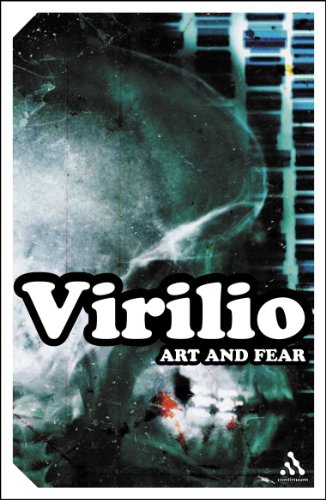
Art and Fear
Authors:
Paul Virilio
Publisher:
Continuum
Publication Date:
Not available
ISBN:
0826487963
Paul Virilio is one of contemporary Continental thought's most original and provocative critical voices. His vision of the impact of modern technology... on the contemporary global condition is powerful and disturbing, ranging over art, science, politics and warfare. In Art and Fear, Paul Virilio traces the twin development of art and science over the twentieth century. In his provocative and challenging vision, art and science vie with each other for the destruction of the human form as we know it. He traces the connections between the way early twentieth century avant-garde artists twisted and tortured the human form before making it vanish in abstraction, and the blasting to bits of men who were no more than cannon fodder i nthe trenches of the Great War; and between the German Expressionists' hate-filled portraits of the damned, and the 'medical' experiments of the Nazi eugenicists; and between the mangled messages of global advertising, and the organisation of global terrorism.Now, at the start of the twenty-first century, science has finally left art behind, as genetic engineers prepare to turn themselves into the worst of expressionists, with the human being the raw material for new and monstrous forms of life.Art and Fear is essential reading for anyone wondering where art has gone and where science is taking us.
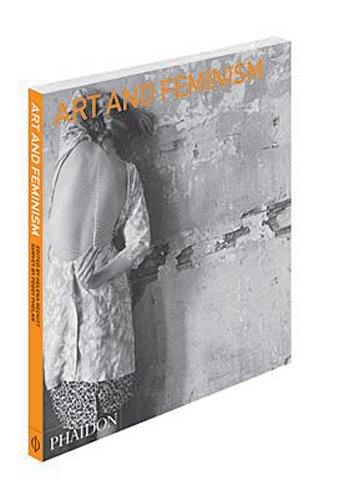
Art and Feminism (Themes & Movements)
Authors:
Not Available
Publisher:
Phaidon Press
Publication Date:
Not available
ISBN:
0714863912
Art and Feminism is a must-have resource for those interested in contemporary art, art history, and feminist and gender studies. The book features the... work of 150 artists such as Louise Bourgeois, Paula Rego, Roni Horn, and Orlan. Art and Feminism is unique in the way it juxtaposes artists, theories and artistic practices, not usually discussed together. The sections are divided thematically, with section headings such as 'Identity crises' 'Corporeality,' 'Personalizing the political' and 'femmes de siecle' suggesting the breadth of studies and movements examined in the book. This is a resource unparalleled in the study of feminist art, for all those with an interest in art, or the feminist movement.
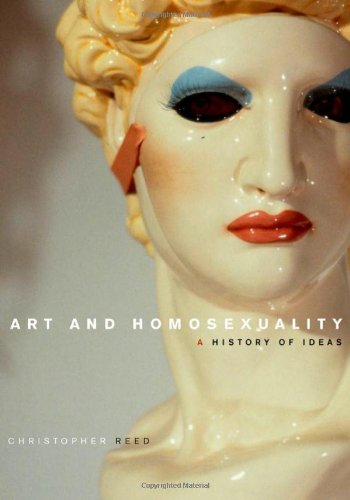
Art and Homosexuality: A History of Ideas
Authors:
Christopher Reed
Publisher:
Oxford University Press, USA
Publication Date:
Not available
ISBN:
0195399072
Product DescriptionThis bold, globe-spanning survey is the first book to thoroughly explore the radical, long-standing interdependence between art and... homosexuality. It draws examples from the full range of the Western tradition, including classical, Renaissance, and contemporary art, with special focus on the modern era. It was in the modern period, when arguments about homosexuality and the avant-garde were especially public, that our current conception of the artist and the homosexual began to take shape, and almost as quickly to overlap. Not a chronology of gay or lesbian artists, the book is a fascinating and sophisticated account of the ways two conspicuous identities have fundamentally informed one another. Art and Homosexuality discusses many of modernism's canonical figures--painters like Courbet, Picasso, and Pollock; writers like Whitman and Stein--and issues, such as the rise of abstraction, the avant-garde's relationship to its patrons and the political exploitation of art. It shows that many of the core ideas that define modernism are nearly indecipherable without an understanding of the paired identities of artist and homosexual. Illustrated with over 175 b/w and color images that range from high to popular culture and from Ancient Greece to contemporary America, Art and Homosexuality punctures the platitudes surrounding discussions of both aesthetics and sexual identity and takes our understanding of each in stimulating new directions. Amazon Exclusive: Author Q&A with Christopher Reed Arrow Shirt Collar advertisement, J.C. Leyendecker, 1910.Photo courtesy of Archives of the American Illustrators Gallery, New York. Q: Sexuality in art is a very personal thing, expressed and interpreted in many different ways. What does sexuality in art mean to you? A: That depends on what you mean by "personal." It's true, of course, we all experience our own erotic and aesthetic emotions personally, but they are experienced in relation to other people or things. And the categories of "sexuality" and "art" are social and collective. Different cultures create and develop them in different ways. The book is about those patterns. One of the primary ways our culture has defined art and sexuality is as expressions of individualism – that is as "personal." Our culture puts huge – probably historically unprecedented – value on the idea of individualism. Because we have made art and sexuality primary markers of individualism, they are enormously important to our culture. Just look at the expenditures of time and money we devote to them – and at the intense pleasures and frustrations they bring us.But if we look at how tastes change--tastes in sex and in art--we see that they do so across cultures. It's paradoxical but true: Our sense of what individualism is is shared and collective. What this book does is trace the way modern culture conjoined the kinds of individualism represented by the "artist" and the "homosexual" so that these were seen as closely interrelated types: outsiders, sensitive to aesthetics, who gravitated to cities and shocked conventional sensibilities by acting on their unconventional impulses. Q: Will any of the artists in the book surprise people? A: Well I suppose that depends on how easily surprised people are! There are a lot of heavy hitters in the book, from Michelangelo to Andy Warhol. Maybe people will be surprised by the not-homosexual artists who play a role in the history the book lays out, people like Marcel Duchamp and George Segal. It's really no exaggeration to say that virtually every modern artist had to deal with ideas about homosexuality in some way because of the stereotypes that became so powerful about artists being gay. So almost any artists could be included. What I think might surprised people more is the range of "art" included in the book, which stretches from Native American weavings to European glassware to modern magazine advertising. Q: How much is censorship a part of the history and present of homosexuality in art? Does any particular period stand out as being more or less conservative? A: Censorship is a tricky term. There are the very obvious cases of censorship, like when the Speaker of the House phones up the Smithsonian and demands the removal of David Wojnarowicz's video, A Fire in My Belly, from the Hide/Seek show recently. Those episodes are probably the least dangerous kinds of censorship. For one thing, they result in the supposedly censored image being much more widely circulated (through the news media, on the web, etc.) than it ever would have been without the censorship. What is far more pernicious than such overt censorship are the subtler forms of self-censorship practiced by museums, commercial art galleries, and individual artists. To return to the example of the recent controversy over Wojnarowicz's A Fire in My Belly video, some of the museums that rushed to purchase and display the video once it was in the news for being censored had themselves refused to take the Hide/Seek exhibition, which was the first major museum exhibition in the US to focus on sexual identity as such. No major museum would touch this topic for a show. It was simply too controversial. And the same thinking excluded art that dealt with non-normative sexuality from lots of smaller shows at museums and galleries everywhere. And the same thinking makes commercial galleries turn away from art that deals with the politics of sexual identity. And that makes artists self-censor, both in their art and in the kinds of things they think and say about their art. I have examples of these dynamics in the book. When you have an art world that constantly claims to be promoting and celebrating artistic individualism, but it has ruled expressions of any kind of politics of identity out of bounds, that's dangerous. Beyond its implications for artistic innovation, it limits everyone's ability to think about the possible range of their individual desires, passions, and pleasures. And I would say that right now is one of the most conservative eras for that kind of censorship. It's hard to recognize, because we can't see things that are not being made, or not shown. And it's hard to think about ideas that are not being discussed. But these dynamics are very clear if we look back to the 1990s, when the art world--because of AIDS--was engaging these issues, and that engagement was rapidly shut down, not just by political conservatives but by academics and critics associated with the avant-garde. The chapter in my book on that gives some really egregious examples quoting people like Hal Foster who continue to be very influential in the contemporary art world today.
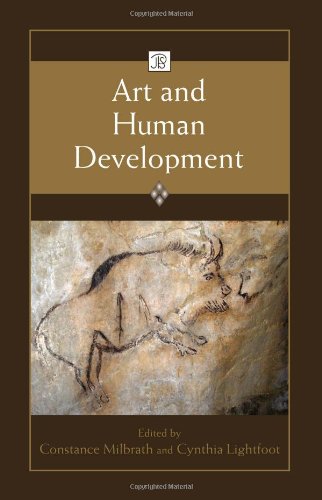
Art and Human Development (Jean Piaget Symposia Series)
Authors:
Not Available
Publisher:
Psychology Press
Publication Date:
Not available
ISBN:
0415965535
This interdisciplinary volume explores art, its development, and its role in the construction of knowledge. Presenting theory and research on artistic... development as a cultural and creative endeavor, contributors examine the origins of human art during the Paleolithic cultural revolution, as part of a modern cultural transformation, in the growth of a creative artist, and in developing children. Target chapters expressing the disciplinary perspectives of psychology, archaeology, communications, education, and the performing arts are followed by commentaries from internationally acclaimed scholars of human development. Part 1 explores how cultures harness and exploit the arts to give expression to values, social practices, and traditions. This section traces the emergence of new art forms that arose during social unrest, including the symbolization of spiritual beliefs expressed on the walls of Paleolithic caves, and the racial identity and cultural values expressed in the media of the hip-hop generation. Part 2 examines the journeys of a composer and a group of students to highlight the process of becoming an artist and the role education plays in its development. The book concludes with a focus on the development of aesthetic appreciation and artistic activity in childhood and adolescence, including, for example, how a child’s developing theory of mind affects appreciation for the arts, and how developing empathy and emotional regulation contribute to the cognitive and affective underpinnings of acting in adolescence. As a whole contributors explore the developmental, sociocultural, and evolutionary processes that make the creation and experience of art possible. Intended for researchers and advanced students in both human development and the arts, this book will also serve as a textbook for advanced courses on psychology and the arts and/or special topics courses in cognitive and/or human development.
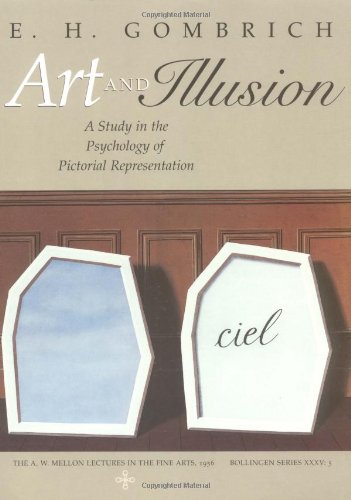
Art and Illusion
Authors:
E. H. Gombrich
Publisher:
Princeton University Press
Publication Date:
Not available
ISBN:
0691070008
Considered a great classic by all who seek for a meeting ground between science and the humanities, Art and Illusion examines the history and psychology... of pictorial representation in light of present-day theories of visual perception information and learning. Searching for a rational explanation of the changing styles of art, Gombrich reexamines many ideas on the imitation of nature and the function of tradition. In testing his arguments he ranges over the history of art, noticing particularly the accomplishments of the ancient Greeks, and the visual discoveries of such masters as Leonardo da Vinci and Rembrandt, as well as the impressionists and the cubists. Gombrich's triumph in Art and Illusion arises from the fact that his main concern is less with the artists than with ourselves, the beholders.
Art and Interaction
Authors:
Judith Peck
Publisher:
Imagination Arts Pubns
Publication Date:
Not available
ISBN:
0927351005
Art and Interaction (Ramapo College of New Jersey, Mahwah, New Jersey 07430) A comprehensive guide describing how to set up, train and administer a... volunteer program of art in the community at such facilities as senior citizen centers; residences for youth; jails; psychiatric hospitals and community centers for both youth and adults. Includes illustrated art projects in drawing, painting, sculpture, crafts and jewelry.
Art and Interpretation
Authors:
Not Available
Publisher:
Broadview Press
Publication Date:
Not available
ISBN:
155111190X
Art and Interpretation is a comprehensive anthology of readings on aesthetics. Its aim is to present fundamental philosophical issues in such a way as... to create a common vocabulary for those from diverse backgrounds to communicate meaningfully about aesthetic issues. To that end, the editor has provided selections from a wide variety of challenging works in aesthetic theory, both classical and modern. The approach is often cross-disciplinary. Within the discipline of philosophy it seeks to balance readings from the analytic tradition with continental European, hermeneutical postmodern (including deconstructionist), and feminist readings. The anthology is thus broadly conceived, but by grouping the readings into sections such as ‘Expression and Aesthetic object,’ ‘Psychology and Interpretation,’ ‘Marxist Theory,’ and ‘Culture, Gender, and Difference,’ it aims as well to provide depth of coverage for each topic or issue. The book opens with a historical section containing substantial selections from Plato, Aristotle, Hume, Kant, Shelley and Nietzsche; these readings introduce themes that recur and are developed in the remainder of the anthology.
 '
'