production
/viewbook/list/all/?page=1051
/
/static/
None
Articulos De Costumbre(C.A.99)(a 70 Años
Authors:
Unknown
Publisher:
Not available
Publication Date:
Not available
ISBN:
8467021586
The author was twenty-six years old when she was diagnosed with multiple sclerosis. As Teresa Meinert worked she found she had a talent for speaking... with people. At age forty she was no longer able to work in the conventional sense. Looking for new opportunities, Teresa returned to college. She graduated with a Masters from the University of Iowa. She then taught. Her own early teaching has helped Teresa to have a positive outlook on life, which she continues. She and her assistant live and work in Iowa. In Valleys to Mountaintops, the phrase", Walk a mile in my shoes", takes on a new meaning. With this inspirational book, author Teresa Meinert shares the first-person stories of individuals who have experienced physical or mental health challenges and she celebrates their fortitude to survive and thrive. From autoimmune disorders to vision difficulties, Valleys to Mountaintops reveals peoples' deepest thoughts about what it's like to live with a disability; they talk about their challenges, and their joys. Jerome discusses his battle with paranoid personality disorder, Christina talks about what it's like to live with an eating disorder, Scott Harvey communicates the sometimes devastating implications of rheumatoid arthritis. Teresa follows these personal stories with helpful information about the issues' causes and symptoms and relays helpful tips and resources. Valleys to Mountaintops demonstrates that it's not easy to live with a health challenge. Even so, these stories serve to inspire-to show the strength and determination of the human spirit.
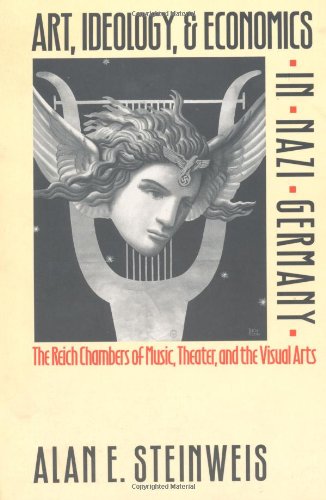
Art, Ideology, and Economics in Nazi Germany: The Reich Chambers of...
Authors:
Alan E. Steinweis
Publisher:
The University of North Carolina Press
Publication Date:
Not available
ISBN:
0807846074
From 1933 to 1945, the Reich Chamber of Culture exercised a profound influence over hundreds of thousands of German artists and entertainers. Alan... Steinweis focuses on the fields of music, theater, and the visual arts in this first major study of Nazi cultural administration, examining a complex pattern of interaction among leading Nazi figures, German cultural functionaries, ordinary artists, and consumers of culture. Steinweis gives special attention to Nazi efforts to purge the arts of Jews and other so-called undesirables. Steinweis describes the political, professional, and economic environment in which German artists were compelled to function and explains the structure of decision making, thus showing in whose interest cultural policies were formulated. He discusses such issues as insurance, minimum wage statutes, and certification guidelines, all of which were matters of high priority to the art professions before 1933 as well as after the Nazi seizure of power. By elucidating the economic and professional context of cultural life, Steinweis helps to explain the widespread acquiescence of German artists to artistic censorship and racial 'purification.' His work also sheds new light on the purge of Jews from German cultural life.
Artifacts (Archaeologist's Toolkit)
Authors:
Charles R. Ewen
Publisher:
Not available
Publication Date:
Not available
ISBN:
0759100225
How can you ensure that you are learning everything your artifacts have to teach you? Charles Ewen explores a variety of methods and techniques used to... prepare, protect, and analyze artifacts once they are in the lab. In brief, user-friendly sections, he outlines the basic principles of identification, classification, quantification, data manipulation, and analysis. Students will find that Ewen's suggestions point out fruitful areas of analysis, yet do not dictate the researcher's approach. Examples drawn from 16th century Spanish sites in the Americas introduce students to the hows and whys of archaeological lab work.
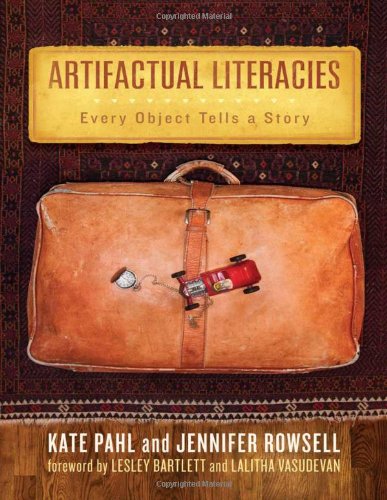
Artifactual Literacies: Every Object Tells a Story (Language and...
Authors:
Kate Pahl
Publisher:
Teachers College Press
Publication Date:
Not available
ISBN:
0807751324
To re-engage students with literacy, teachers need an entry point that recognizes and honors students' out-of-school identities. This book looks at how... artifacts (everyday objects) access the daily, sensory world in which students live. Exploring how artifacts can generate literacy learning, the book shows teachers how to use a family photo, heirloom, or recipe to tell intergenerational tales; how to collaborate with local museums and cultural centers; how to create new material artifacts; and much more. Featuring vignettes, lesson examples, and photographs, the text includes chapters on community connections, critical literacy, adolescent writing, and digital storytelling. This book features a theoretical framework for teaching literacy that unites the domains of home and school and brings students' passions to the forefront; a fresh, integrated synthesis of the fields of New Literacy Studies, multimodality, material cultural studies, and literacy education; new field-tested ideas for creating lessons that improve literacy standards.
Artificial Happiness: The Dark Side of the New Happy Class
Authors:
Ronald W. Dworkin M.D. M.D.
Publisher:
Basic Books
Publication Date:
Not available
ISBN:
0786719338
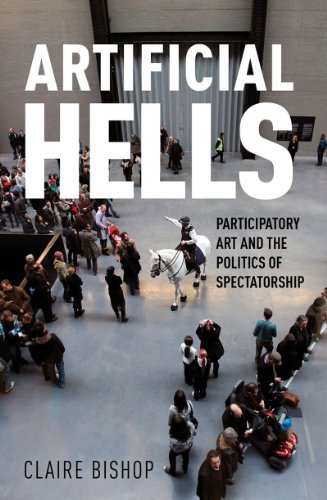
Artificial Hells: Participatory Art and the Politics of Spectatorship
Authors:
Claire Bishop
Publisher:
Verso
Publication Date:
Not available
ISBN:
1844676900
A searing critique of participatory art by an iconoclastic historian.Since the 1990s, critics and curators have broadly accepted the notion that... participatory art is the ultimate political art: that by encouraging an audience to take part an artist can promote new emancipatory social relations. Around the world, the champions of this form of expression are numerous, ranging from art historians such as Grant Kester, curators such as Nicolas Bourriaud and Nato Thompson, to performance theorists such as Shannon Jackson. Artificial Hells is the first historical and theoretical overview of socially engaged participatory art, known in the US as “social practice.” Claire Bishop follows the trajectory of twentieth-century art and examines key moments in the development of a participatory aesthetic. This itinerary takes in Futurism and Dada; the Situationist International; Happenings in Eastern Europe, Argentina and Paris; the 1970s Community Arts Movement; and the Artists Placement Group. It concludes with a discussion of long-term educational projects by contemporary artists such as Thomas Hirschhorn, Tania Bruguera, Paweł Althamer and Paul Chan.Since her controversial essay in Artforum in 2006, Claire Bishop has been one of the few to challenge the political and aesthetic ambitions of participatory art. In Artificial Hells, she not only scrutinizes the emancipatory claims made for these projects, but also provides an alternative to the ethical (rather than artistic) criteria invited by such artworks. Artificial Hells calls for a less prescriptive approach to art and politics, and for more compelling, troubling and bolder forms of participatory art and criticism. 86 B&W illustrations
Artificial Insemination & Embryo Transfer of Dairy & Beef...
Authors:
Jere R. Mitchell
Publisher:
Prentice Hall
Publication Date:
Not available
ISBN:
0131122789
Material is organized into 5 parts for easy and ready use, broadening the usefulness of the book, making it the most comprehensive, hands-on AI... manual available. This manual prepares users for the "real world" by exposing them to the latest technology and techniques used in the reproduction and the practice of artificial insemination (AI) in livestock. Part One provides information on the advantages and considerations of artificial insemination, basic livestock genetics, the anatomy and reproductive processes of the cow and bull, and semen collection methods. It relates statistics on AI usage and general information about NAAB and CSS. Part Two deals with semen characteristics, including evaluation, processing, and extension; freezing and cryogenic storage; and care of the refrigerator unit. The various tests for semen quality are discussed in detail as is custom selection of semen. Part Three explains insemination techniques for dairy and beef cattle, inseminator training, pregnancy determination in cattle, conception rates, and breeding problems. The exercise on "Embryo Transfer and Related Practices" explains the advances and techniques involved in the field. Part Four includes an overview of sire selection, sire health, sire management, AI organization, and career opportunities. Part Five explains the use and techniques for artificial insemination in dairy goats and other farm animals. For herd operators and persons involved in genetic development—of particular use to people interested in livestock improvement. For those who are anticipating careers in some phase of the AI industry.
Artificial Intelligence
Authors:
Elaine Rich
Publisher:
McGraw-Hill Science/Engineering/Math
Publication Date:
Not available
ISBN:
0070522634
The breadth of Artificial Intelligence is explored and explained in this best selling text. Assuming no prior knowledge, it covers topics like neural... networks and robotics. This text explores the range of problems which have been and remain to be solved using Artificial Intelligence tools and techniques. The second half of this text is an excellent reference.
Artificial Intelligence (3rd Edition)
Authors:
Winston
Publisher:
Addison-Wesley
Publication Date:
Not available
ISBN:
0201533774
This is the all-time bestselling introduction to artificial intelligence. The third edition retains the best features of the earlier works, including... superior readability, currency, and excellence in the selection of examples. Winston emphasizes how artificial intelligence can be viewed from an engineering or a scientific point of view. The new edition offers comprehensive coverage of more material, and many of the ideas presented are enhanced with a variety of side pieces, including application examples such as the Westinghouse nuclear fuel plant optimizer.
Artificial Intelligence: A Guide to Intelligent Systems (2nd Edition)
Authors:
Michael Negnevitsky
Publisher:
Addison-Wesley
Publication Date:
Not available
ISBN:
0321204662
Artificial Intelligence is one of the most rapidly evolving subjects within the computing/engineering curriculum, with an emphasis on creating practical... applications from hybrid techniques. Despite this, the traditional textbooks continue to expect mathematical and programming expertise beyond the scope of current undergraduates and focus on areas not relevant to many of today's courses. Negnevitsky shows students how to build intelligent systems drawing on techniques from knowledge-based systems, neural networks, fuzzy systems, evolutionary computation and now also intelligent agents. The principles behind these techniques are explained without resorting to complex mathematics, showing how the various techniques are implemented, when they are useful and when they are not. No particular programming language is assumed and the book does not tie itself to any of the software tools available. However, available tools and their uses will be described and program examples will be given in Java. The lack of assumed prior knowledge makes this book ideal for any introductory courses in artificial intelligence or intelligent systems design, while the contempory coverage means more advanced students will benefit by discovering the latest state-of-the-art techniques.
Artificial Intelligence: A Modern Approach (2nd Edition)
Authors:
Stuart Russell
Publisher:
Prentice Hall
Publication Date:
Not available
ISBN:
0137903952
For one or two-semester, undergraduate or graduate-level courses in Artificial Intelligence. The long-anticipated revision of this best-selling text... offers the most comprehensive, up-to-date introduction to the theory and practice of artificial intelligence. Click on "Features" tab below for more information Resources: Visit the author's website http://aima.cs.berkeley.edu/ to access both student and instructor resources including Power Point slides, syllabus. homework and exams, and solutions text problems.
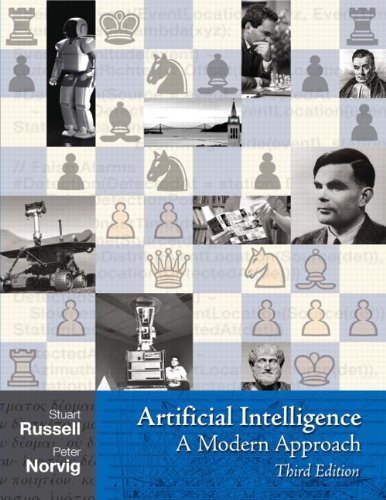
Artificial Intelligence: A Modern Approach (3rd Edition)
Authors:
Stuart Russell
Publisher:
Prentice Hall
Publication Date:
Not available
ISBN:
0136042597
Artificial Intelligence: A Modern Approach, 3e offers the most comprehensive, up-to-date introduction to the theory and practice of artificial... intelligence. Number one in its field, this textbook is ideal for one or two-semester, undergraduate or graduate-level courses in Artificial Intelligence. Dr. Peter Norvig, contributing Artificial Intelligence author and Professor Sebastian Thrun, a Pearson author are offering a free online course at Stanford University on artificial intelligence. According to an article in The New York Times , the course on artificial intelligence is “one of three being offered experimentally by the Stanford computer science department to extend technology knowledge and skills beyond this elite campus to the entire world.” One of the other two courses, an introduction to database software, is being taught by Pearson author Dr. Jennifer Widom. Artificial Intelligence: A Modern Approach, 3e is available to purchase as an eText for your Kindle™, NOOK™, and the iPhone®/iPad®. To learn more about the course on artificial intelligence, visit http://www.ai-class.com. To read the full New York Times article, click here.

Artificial Intelligence: A Modern Approach (Custom Ed)
Authors:
Not Available
Publisher:
Not available
Publication Date:
Not available
ISBN:
055890226X
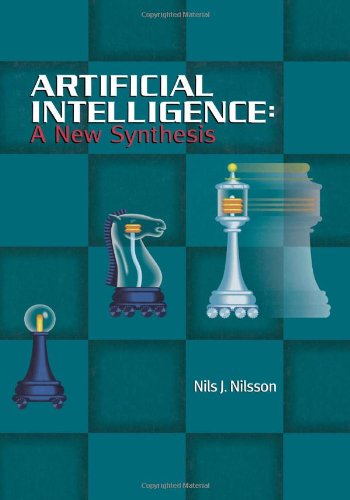
Artificial Intelligence: A New Synthesis
Authors:
Nils J. Nilsson
Publisher:
Morgan Kaufmann Publishers, Inc.
Publication Date:
Not available
ISBN:
1558604677
Intelligent agents are employed as the central characters in this new introductory text. Beginning with elementary reactive agents, Nilsson gradually... increases their cognitive horsepower to illustrate the most important and lasting ideas in AI. Neural networks, genetic programming, computer vision, heuristic search, knowledge representation and reasoning, Bayes networks, planning, and language understanding are each revealed through the growing capabilities of these agents. The book provides a refreshing and motivating new synthesis of the field by one of AI's master expositors and leading researchers. Artificial Intelligence: A New Synthesis takes the reader on a complete tour of this intriguing new world of AI. * An evolutionary approach provides a unifying theme * Thorough coverage of important AI ideas, old and new* Frequent use of examples and illustrative diagrams* Extensive coverage of machine learning methods throughout the text* Citations to over 500 references* Comprehensive index
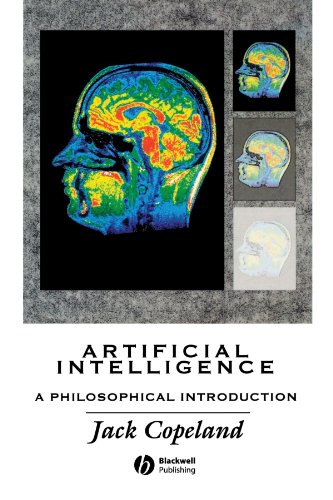
Artificial Intelligence: A Philosophical Introduction
Authors:
Jack Copeland
Publisher:
Wiley-Blackwell
Publication Date:
Not available
ISBN:
063118385X
Presupposing no familiarity with the technical concepts of either philosophy or computing, this clear introduction reviews the progress made in AI since... the inception of the field in 1956. Copeland goes on to analyze what those working in AI must achieve before they can claim to have built a thinking machine and appraises their prospects of succeeding.There are clear introductions to connectionism and to the language of thought hypothesis which weave together material from philosophy, artificial intelligence and neuroscience. John Searle's attacks on AI and cognitive science are countered and close attention is given to foundational issues, including the nature of computation, Turing Machines, the Church-Turing Thesis and the difference between classical symbol processing and parallel distributed processing. The book also explores the possibility of machines having free will and consciousness and concludes with a discussion of in what sense the human brain may be a computer.
 '
'