production
/viewbook/list/all/?page=107
/
/static/
None
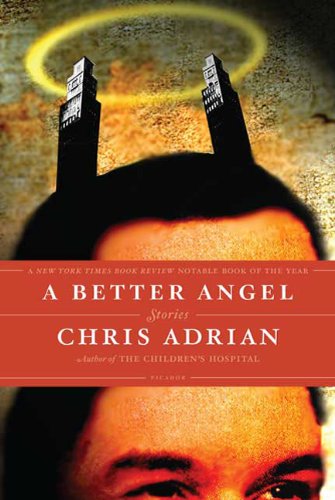
A Better Angel: Stories
Authors:
Chris Adrian
Publisher:
Picador
Publication Date:
Not available
ISBN:
0312428537
A NEW YORK TIMES BOOK REVIEW NOTABLE BOOK OF THE YEARA NEW YORK TIMES BOOK REVIEW EDITORS' CHOICEIn this inventive collection of stories, Chris Adrian... treads the terrain of human suffering--illness, regret, mourning, sympathy--in the most unusual ways. A bereaved twin starts a friendship with a homicidal fifth grader in the hope that she can somehow lead him back to his dead brother. A boy tries to contact the spirit of his dead father and finds himself talking to the Devil instead. A ne'er-do-well pediatrician returns home to take care of his dying father, all the while under the scrutiny of an easily-disappointed heavenly agent. With A Better Angel's cast of living and dead characters, at once otherworldly and painfully human, Adrian has created a haunting work of spectral beauty and wit.
A Better Pencil: Readers, Writers, and the Digital Revolution
Authors:
Dennis Baron
Publisher:
Oxford University Press, USA
Publication Date:
Not available
ISBN:
0195388445
Computers, now the writer's tool of choice, are still blamed by skeptics for a variety of ills, from speeding writing up to the point of recklessness,... to complicating or trivializing the writing process, to destroying the English language itself. A Better Pencil puts our complex, still-evolving hate-love relationship with computers and the internet into perspective, describing how the digital revolution influences our reading and writing practices, and how the latest technologies differ from what came before. The book explores our use of computers as writing tools in light of the history of communication technology, a history of how we love, fear, and actually use our writing technologies--not just computers, but also typewriters, pencils, and clay tablets. Dennis Baron shows that virtually all writing implements--and even writing itself--were greeted at first with anxiety and outrage: the printing press disrupted the "almost spiritual connection" between the writer and the page; the typewriter was "impersonal and noisy" and would "destroy the art of handwriting." Both pencils and computers were created for tasks that had nothing to do with writing. Pencils, crafted by woodworkers for marking up their boards, were quickly repurposed by writers and artists. The computer crunched numbers, not words, until writers saw it as the next writing machine. Baron also explores the new genres that the computer has launched: email, the instant message, the web page, the blog, social-networking pages like MySpace and Facebook, and communally-generated texts like Wikipedia and the Urban Dictionary, not to mention YouTube.Here then is a fascinating history of our tangled dealings with a wide range of writing instruments, from ancient papyrus to the modern laptop. With dozens of illustrations and many colorful anecdotes, the book will enthrall anyone interested in language, literacy, or writing.
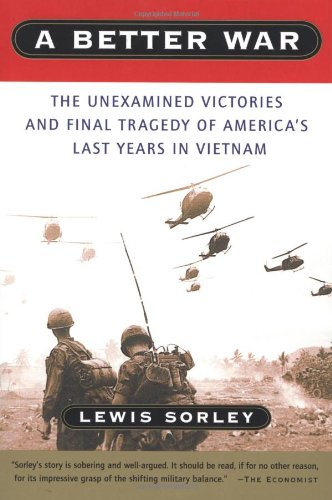
A Better War: The Unexamined Victories and Final Tragedy of...
Authors:
Lewis Sorley
Publisher:
Harvest
Publication Date:
Not available
ISBN:
0156013096
Neglected by scholars and journalists alike, the years of conflict in Vietnam from 1968 to 1975 offer surprises not only about how the war was fought,... but about what was achieved. Drawing on authoritative materials not previously available, including thousands of hours of tape-recorded allied councils of war, award-winning military historian Lewis Sorley has given us what has long been needed-an insightful, factual, and superbly documented history of these important years. Among his findings is that the war was being won on the ground even as it was being lost at the peace table and in the U.S. Congress. The story is a great human drama of purposeful and principled service in the face of an agonizing succession of lost opportunities, told with uncommon understanding and compassion. Sorley documents the dramatic differences in conception, conduct, and-at least for a time-results between the early and the later war. Meticulously researched and movingly told, A Better War is sure to stimulate controversy as it sheds brilliant new light on the war in Vietnam.
A Better Way to Think About Business: How Personal Integrity Leads...
Authors:
Robert C. Solomon
Publisher:
Oxford University Press, USA
Publication Date:
Not available
ISBN:
0195167333
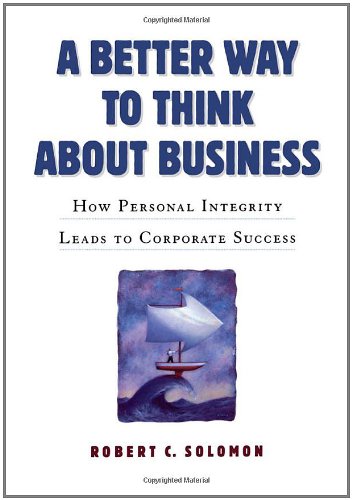
Is business ethics a contradiction in terms? Absolutely not, says Robert Solomon. In fact, he maintains that sound ethics is a necessary precondition of... any long-term business enterprise, and that excellence in business must exist on the foundation of values that most of us hold dear. Drawing on twenty years of experience consulting with major corporations on ethics, Solomon clarifies the difficult ethical choices all people in business face. He uses an "Aristotelian" approach to remind readers that a corporation--like an individual--is embedded in a community, and that corporate values such as fairness and honesty are meaningless until transformed into action. Without a base of shared values, trust and mutual benefits, today's national and international business world would fall apart. In keeping with his conviction that virtue and profit must thrive together, Solomon both examines the ways in which deficient values actually destroy businesses, and debunks the pervasive myths that encourage unethical business practices. Complete with a working catalog of virtues designed to illustrate the importance of integrity in any business situation, this compelling handbook contains a gold mine of wisdom for either the small business manager or the corporate executive struggling with ethical issues.
A Better Way to Think About Business: How Personal Integrity Leads...
Authors:
Robert C. Solomon
Publisher:
Oxford University Press, USA
Publication Date:
Not available
ISBN:
0195112385
Is business ethics a contradiction in terms? Absolutely not, says Robert Solomon. In fact, he maintains that sound ethics is a necessary precondition of... any long-term business enterprise, and that excellence in business must exist on the foundation of values that most of us hold dear. Drawing on twenty years of experience consulting with major corporations on ethics, Solomon clarifies the difficult ethical choices all people in business face. He uses an "Aristotelian" approach to remind readers that a corporation--like an individual--is embedded in a community, and that corporate values such as fairness and honesty are meaningless until transformed into action. Without a base of shared values, trust and mutual benefits, today's national and international business world would fall apart. In keeping with his conviction that virtue and profit must thrive together, Solomon both examines the ways in which deficient values actually destroy businesses, and debunks the pervasive myths that encourage unethical business practices. Complete with a working catalog of virtues designed to illustrate the importance of integrity in any business situation, this compelling handbook contains a gold mine of wisdom for either the small business manager or the corporate executive struggling with ethical issues.

A Better Way to Zone: Ten Principles to Create More Livable Cities
Authors:
Donald L. Elliott
Publisher:
Island Press
Publication Date:
Not available
ISBN:
1597261815
Nearly all large American cities rely on zoning to regulate land use. According to Donald L. Elliott, however, zoning often discourages the very... development that bigger cities need and want. In fact, Elliott thinks that zoning has become so complex that it is often dysfunctional and in desperate need of an overhaul. A Better Way to Zone explains precisely what has gone wrong and how it can be fixed. A Better Way to Zone explores the constitutional and legal framework of zoning, its evolution over the course of the twentieth century, the reasons behind major reform efforts of the past, and the adverse impacts of most current city zoning systems. To unravel what has gone wrong, Elliott identifies several assumptions behind early zoning that no longer hold true, four new land use drivers that have emerged since zoning began, and basic elements of good urban governance that are violated by prevailing forms of zoning. With insight and clarity, Elliott then identifies ten sound principles for change that would avoid these mistakes, produce more livable cities, and make zoning simpler to understand and use. He also proposes five practical steps to get started on the road to zoning reform. While recent discussion of zoning has focused on how cities should look, A Better Way to Zone does not follow that trend. Although New Urbanist tools, form-based zoning, and the SmartCode are making headlines both within and outside the planning profession, Elliott believes that each has limitations as a general approach to big city zoning. While all three trends include innovations that the profession badly needs, they are sometimes misapplied to situations where they do not work well. In contrast, A Better Way to Zone provides a vision of the future of zoning that is not tied to a particular picture of how cities should look, but is instead based on how cities should operate.
Abhandlungen über den Ursprung der Sprache
Authors:
Johann Gottfried Herder
Publisher:
Reclam Philipp Jun.
Publication Date:
Not available
ISBN:
3150087295
Purchase of this book includes free trial access to www.million-books.com where you can read more than a million books for free. This is an OCR edition... with typos. Excerpt from book: PERSONS REPRESENTED. Philip the Second, king of Spain. Elizabeth of Valois, his wife. Don Carlos, the Crown-Prince, eon of the king. Alexander Farnese, Prince of Parma, nephew of the king. Clara Eugenia, Infanta. A child of three years. Duchess Of Olivarez. First Lady of the queen. Marchioness Of Mondecar, 1 Princess Eboli, Ladies of the queen. Countess Fuentes, ) Marhuis Of Posa, a Knight of Malta. 1 Duke Of Alba. Grandees Count Lerma, Colonel of the Life Guard. I Or Duke Of Feria, Knight of the Golden Fleece, j Spain Duke Of Medina Sidonia, Admiral. | Don Raymond of Taxis, Postmaster General. ) Domingo, the King's Confessor. The Grand Inquisitor of the kingdom. The Prior of a Carthusian Convent. A Page of the Queen. Don Louis Mercado, Physician to the Queen. Other Ladies and Grandees, Pages, Officers, SfC. chapter{Section 4DON CARLOS. ACT I. The Royal Garden at Aranjwz. SCENE I. Don Carlos and Domingo. Dom. The lovely season in Aranjuez Is now at end. I see, your royal Highness Leaves it no happier. We've been here in vain. Break this mysterious silence. Open to Tour father, Prince, your heart. Too dear the King Can never buy his son's, his one son's peace.— (Carlos remains silent.) Were there a wish that Heav'n doth yet refuse It's choicest child?—Within Toledo's walls, I saw the haughty Charles the homage take Of Princes, emulous to kiss his hand: In one obeisance six kingdoms lay Before his feet. I saw the young blood flush His cheek,—his bosom heave with princely thoughts,- His glowing eye survey th' assembled throng, And beam delight:—and that eye, Prince, confest— I'm sated. (Carlos turns away.) This becalmed and solemn grief Which for eight moons we read in Charles' looks— The Spanish c...
A Biblically Based Model of Cultural Competence in the Delivery of...
Authors:
J. Campinha-Bacote PhD
Publisher:
Not available
Publication Date:
Not available
ISBN:
0974158216
Abiding Courage: African American Migrant Women and the East Bay...
Authors:
Gretchen Lemke-Santangelo
Publisher:
The University of North Carolina Press
Publication Date:
Not available
ISBN:
0807845639
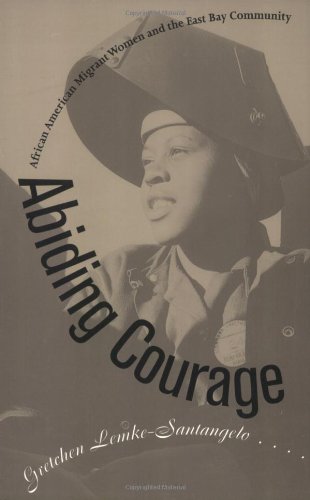
Between 1940 and 1945, thousands of African Americans migrated from the South to the East Bay Area of northern California in search of the social and... economic mobility that was associated with the region's expanding defense industry and its reputation for greater racial tolerance. Drawing on fifty oral interviews with migrants as well as on archival and other written records, Abiding Courage examines the experiences of the African American women who migrated west and built communities there.Gretchen Lemke-Santangelo vividly shows how women made the transition from southern domestic and field work to jobs in an industrial, wartime economy. At the same time, they were struggling to keep their families together, establishing new households, and creating community-sustaining networks and institutions. While white women shouldered the double burden of wage labor and housework, black women faced even greater challenges: finding houses and schools, locating churches and medical services, and contending with racism. By focusing on women, Lemke-Santangelo provides new perspectives on where and how social change takes place and how community is established and maintained.

Abie's Irish Rose
Authors:
Not Available
Publisher:
Not available
Publication Date:
Not available
ISBN:
0573605025
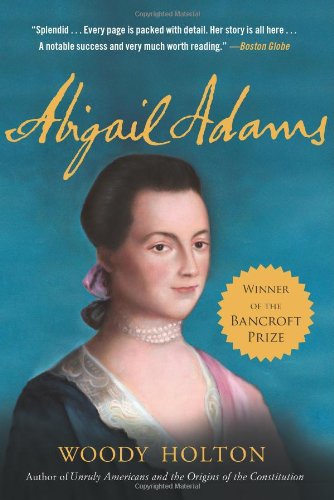
Abigail Adams
Authors:
Woody Holton
Publisher:
Free Press
Publication Date:
Not available
ISBN:
1416546812
The New York Times Book Review, Editor’s ChoiceAmerican Heritage, Best of 2009In this vivid new biography of Abigail Adams, the most illustrious woman... of the founding era, Bancroft Award–winning historian Woody Holton offers a sweeping reinterpretation of Adams’s life story and of women’s roles in the creation of the republic. Using previously overlooked documents from numerous archives, Abigail Adams shows that the wife of the second president of the United States was far more charismatic and influential than historians have realized. One of the finest writers of her age, Adams passionately campaigned for women’s education, denounced sex discrimination, and matched wits not only with her brilliant husband, John, but with Thomas Jefferson and George Washington. When male Patriots ignored her famous appeal to "Remember the Ladies," she accomplished her own personal declaration of independence: Defying centuries of legislation that assigned married women’s property to their husbands, she amassed a fortune in her own name. Adams’s life story encapsulates the history of the founding era, for she defined herself in relation to the people she loved or hated (she was never neutral), a cast of characters that included her mother and sisters; Benjamin Franklin and James Lovell, her husband’s bawdy congressional colleagues; Phoebe Abdee, her father’s former slave; her financially naïve husband; and her son John Quincy. At once epic and intimate, Abigail Adams, sheds light on a complicated, fascinating woman, one of the most beloved figures of American history.
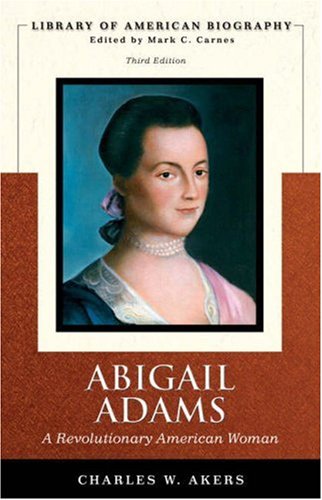
Abigail Adams: A Revolutionary American Woman (Library of American...
Authors:
Charles W. Akers
Publisher:
Pearson
Publication Date:
Not available
ISBN:
0321445015
This lively biography of Adams details the life of a revolutionary, mother, activist and wife who engaged in the building of the America nation. ... Abigail Adams campaigned for the education of women and pioneered the role women were to play in the American Revolution and the new Republic. The life of this one woman forms a large window on society during the 75 years that saw the birth and cultural maturation of the United States. The titles in the Library of American Biography Series make ideal supplements for American History Survey courses or other courses in American history where figures in history are explored. Paperback, brief, and inexpensive, each interpretative biography in this series focuses on a figure whose actions and ideas significantly influenced the course of American history and national life. At the same time, each biography relates the life of its subject to the broader themes and developments of the times.
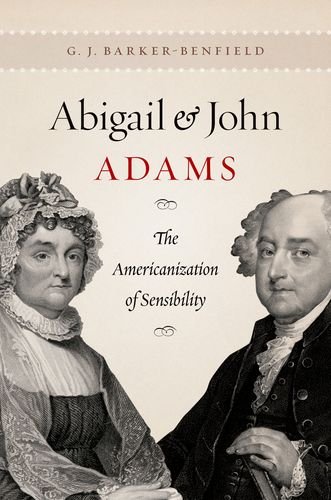
Abigail and John Adams: The Americanization of Sensibility
Authors:
G. J. Barker-Benfield
Publisher:
University Of Chicago Press
Publication Date:
Not available
ISBN:
0226037436
During the many years that they were separated by the perils of the American Revolution, John and Abigail Adams exchanged hundreds of letters. Writing... to each other of public events and private feelings, loyalty and love, revolution and parenting, they wove a tapestry of correspondence that has become a cherished part of American history and literature.With Abigail and John Adams, historian G. J. Barker-Benfield mines those familiar letters to a new purpose: teasing out the ways in which they reflected—and helped transform—a language of sensibility, inherited from Britain but, amid the revolutionary fervor, becoming Americanized. Sensibility—a heightened moral consciousness of feeling, rooted in the theories of such thinkers as Descartes, Locke, and Adam Smith and including a “moral sense” akin to the physical senses—threads throughout these letters. As Barker-Benfield makes clear, sensibility was the fertile, humanizing ground on which the Adamses not only founded their marriage, but also the “abhorrence of injustice and inhumanity” they and their contemporaries hoped to plant at the heart of the new nation. Bringing together their correspondence with a wealth of fascinating detail about life and thought, courtship and sex, gender and parenting, and class and politics in the revolutionary generation and beyond, Abigail and John Adams draws a lively, convincing portrait of a marriage endangered by separation, yet surviving by the same ideas and idealism that drove the revolution itself.A feast of ideas that never neglects the real lives of the man and woman at its center, Abigail and John Adams takes readers into the heart of an unforgettable union in order to illuminate the first days of our nation—and explore our earliest understandings of what it might mean to be an American.
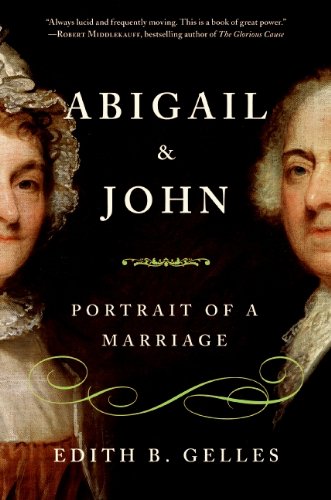
Abigail and John: Portrait of a Marriage
Authors:
Edith Gelles
Publisher:
Harper Perennial
Publication Date:
Not available
ISBN:
0061354120
Married in 1764, Abigail and John Adams worked side by side for a decade, raising a family while John became one of the most prosperous, respected... lawyers in Massachusetts. When his duties as a statesman and diplomat during the Revolutionary War expanded, Abigail and John endured lengthy separations. But their loyalty and love remained strong, as their passionate, forthright letters attest. It's in this correspondence that Abigail comes into her own as an independent woman. It's also in these exchanges that we learn about the familial tragedies that tested them: the early deaths of their son Charles from alcoholism and their daughter Nabby from breast cancer. As much a romance as it is a lively chapter in early American history, Abigail and John is an inspirational portrait of a couple who endured the turmoil and trials of a revolution, and in so doing paved the way for the birth of a nation.

Abigail's Party (Acting Edition)
Authors:
Mike Leigh
Publisher:
Samuel French Inc Plays
Publication Date:
Not available
ISBN:
0573110166
Mike Leigh’s 1970s classic play ‘Abigail’s Party’ focuses on an evening of domestic hell in the guise of a suburban drinks soirée. While... teenager Abigail parties a few doors away, the pretentious Beverly and her estate agent husband, Laurence, entertain their neighbours – Abigail’s mother, Susan, ex-footballer, Tony, and his wife, Angela. But as the alcohol flows, tensions in the hosts’ barely functional marriage emerge and their obsessions, prejudices and petty competitiveness are ruthlessly, and hilariously, exposed. ‘Goose-Pimples’, meanwhile, is easily as sharp and uncompromising. This time, the action focuses on ambitious casino croupier, Jackie, and Saudi businessman, Muhammad, who meet – and misunderstand – one another spectacularly.
 '
'