production
/viewbook/list/all/?page=1171
/
/static/
None
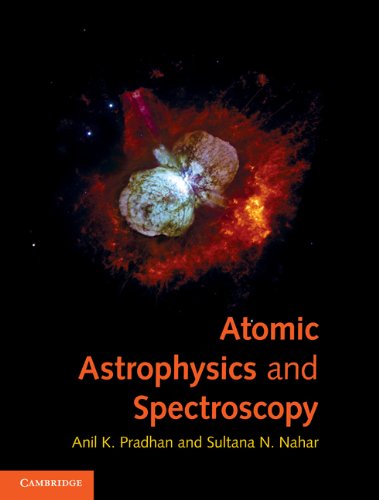
Atomic Astrophysics and Spectroscopy
Authors:
Anil K. Pradhan
Publisher:
Cambridge University Press
Publication Date:
Not available
ISBN:
0521825369
Spectroscopy enables the precise study of astronomical objects and phenomena. Bridging the gap between physics and astronomy, this is the first... integrated graduate-level textbook on atomic astrophysics. It covers the basics of atomic physics and astrophysics, including state-of-the-art research applications, methods and tools. The content is evenly balanced between the physical foundations of spectroscopy and their applications to astronomical objects and cosmology. An undergraduate knowledge of physics is assumed, and relevant basic material is summarised at the beginning of each chapter. The material is completely self-contained and features sufficient background information for self-study. Advanced users will find it handy for spectroscopic studies. A website hosted by the authors contains updates, corrections, exercises and solutions, as well as news items from physics and astronomy related to spectroscopy. A link to this can be found at www.cambridge.org/9780521825368.
Atomic Awakening: A New Look at the History and Future of Nuclear...
Authors:
James Mahaffey
Publisher:
Pegasus
Publication Date:
Not available
ISBN:
1605981273
“Persuasive and based on deep research. Atomic Awakening taught me a great deal."—NatureThe American public's introduction to nuclear technology was... manifested in destruction and death. With Hiroshima and the Cold War still ringing in our ears, our perception of all things nuclear is seen through the lens of weapons development. Nuclear power is full of mind-bending theories, deep secrets, and the misdirection of public consciousness, some deliberate, some accidental. The result of this fixation on bombs and fallout is that the development of a non-polluting, renewable energy source stands frozen in time. Outlining nuclear energy's discovery and applications throughout history, Mahaffey's brilliant and accessible book is essential to understanding the astounding phenomenon of nuclear power in an age where renewable energy and climate change have become the defining concerns of the twenty-first century.

Atomic Dwelling: Anxiety, Domesticity, and Postwar Architecture
Authors:
Not Available
Publisher:
Routledge
Publication Date:
Not available
ISBN:
0415676096
In the years of reconstruction and economic boom that followed the Second World War, the domestic sphere encountered new expectations regarding social... behaviour, modes of living, and forms of dwelling. This book brings together an international group of scholars from architecture, design, urban planning, and interior design to reappraise mid-twentieth century modern life, offering a timely reassessment of culture and the economic and political effects on civilian life. This collection contains essays that examine the material of art, objects, and spaces in the context of practices of dwelling over the long span of the postwar period. It asks what role material objects, interior spaces, and architecture played in quelling or fanning the anxieties of modernism’s ordinary denizens, and how this role informs their legacy today.

Atomic Fragments: A Daughter's Questions
Authors:
Mary Palevsky
Publisher:
University of California Press
Publication Date:
Not available
ISBN:
0520220552
More than most of us, Mary Palevsky needed to come to terms with the moral complexities of the atomic bomb: Her parents worked on its development during... World War II and were profoundly changed by that experience. After they died, unanswered questions sent their daughter on a search for understanding. This compelling, sometimes heart-wrenching chronicle is the story of that quest. It takes her, and us, on a journey into the minds, memories, and emotions of the bomb builders. Scientists Hans Bethe, Edward Teller, Joseph Rotblat, Herbert York, Philip Morrison, and Robert Wilson, and philosopher David Hawkins responded to Palevsky's personal approach in a way that dramatically expands their previously published statements. Her skill and passion as an interlocutor prompt these men to recall their lives vividly and to reexamine their own decisions, debating within themselves the complex issues raised by the bomb. The author herself, seeking to comprehend the widely differing ways in which individual scientists made choices about the bomb and made sense of their work, deeply reconsiders those questions of commitment and conscience her parents faced. In personal vignettes that complement the interviews, she captures other remembrances of the bomb through commemorative events and chance encounters with people who were "there." Her concluding chapter reframes the crucial moral questions in terms that show the questions themselves to be the abiding legacy we all share. This beautifully written book bridges generations to make its readers participants in the ongoing dialogue about science and philosophy, war and peace.

Atomic Frontier Days: Hanford and the American West (Sick Series in...
Authors:
John M. Findlay
Publisher:
University of Washington Press
Publication Date:
Not available
ISBN:
029599097X
On the banks of the Pacific Northwest's greatest river lies the Hanford nuclear reservation, an industrial site that appears to be at odds with the... surrounding vineyards and desert. The 586-square mile compound on the Columbia in eastern Washington is known both for its origins as part of the Manhattan Project, which made the first atomic bombs, and for the monumental effort now under way to clean up forty-five years' of waste from manufacturing plutonium for the U.S. nuclear weapons complex. Hanford routinely makes the news, as scientists, litigants, administrators, and politicians argue over its past and its future.It is easy to think about Hanford as an expression of federal power, a place apart from humanity and nature, but that view is a distortion of its history. Atomic Frontier Days looks through a wider lens, telling a complex story of production, community-building, politics, and environmental sensibilities. In brilliantly structured parallel stories, the authors bridge the divisions that accompany Hanford's headlines and offer perspective on today's controversies. Influenced as much by regional culture, economics, and politics as by war, diplomacy, and environmentalism, the story of Hanford and the Tri-Cities of Richland, Pasco, and Kennewick illuminates the history of the modern American West. John M. Findlay is professor of history at the University of Washington. His focus is social and urban history. Bruce Hevly is associate professor of history at the University of Washington. His focus is history of science and technology."Atomic Frontier Days captures one of the most interesting and controversial places in the American West in all its surprising particularity. Technologically sophisticated, shrewd, at once analytically unflinching and generous, it belongs on the short list of books necessary to understand the West and its complicated relation to the nation." -Richard White, author of The Organic Machine"This richly detailed study takes us beyond big government programs and corporate contracts to show people coping with the intricate dance of science and technology, warfare and welfare, the mess of making bombs and the business of cleaning up." -Virginia Scharff, Center for the Southwest, University of New Mexico

Atomic Narratives and American Youth: Coming of Age With the Atom,...
Authors:
Michael Scheibach
Publisher:
Mcfarland & Co Inc Pub
Publication Date:
Not available
ISBN:
0786415665
Following the atomic bombings of Hiroshima and Nagasaki, numerous "atomic narratives"—books, newspapers, magazines, textbooks, movies, and television... programs—addressed the implications of the bomb. Post–World War II youth encountered atomic narratives in their daily lives at school, at home and in their communities, and were profoundly affected by what they read and saw. This multidisciplinary study examines the exposure of American youth to atomic narratives during the ten years following World War II. In addition, it examines the broader "social narrative of the atom," which included educational, social, cultural, and political activities that surrounded and involved American youth. The activities ranged from school and community programs to movies and television shows to government-sponsored traveling exhibits on atomic energy. The book also presents numerous examples of writings by postwar adolescents, who clearly expressed their conflicted feelings about growing up in such a tumultuous time, and shows how many of the issues commonly associated with the sixties generation, such as peace, fellowship, free expression, and environmental concern, can be traced to this earlier generation.
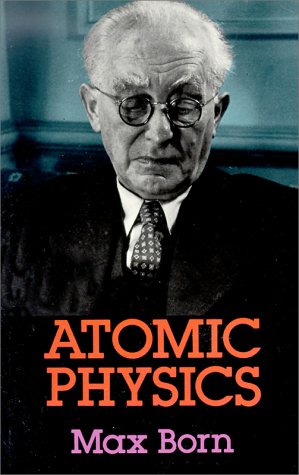
Atomic Physics: 8th Edition (Dover Books on Physics)
Authors:
Max Born
Publisher:
Dover Publications
Publication Date:
Not available
ISBN:
0486659844
The Nobel Laureate's brilliant exposition of the kinetic theory of gases, elementary particles, the nuclear atom, wave-corpuscles, atomic structure and... spectral lines, electron spin and Pauli's principle, quantum statistics, molecular structure and nuclear physics. Over 40 appendices, a bibliography, numerous figures and graphs.

Atomic Physics (Oxford Master Series in Atomic, Optical and Laser...
Authors:
Christopher J. Foot
Publisher:
Oxford University Press, USA
Publication Date:
Not available
ISBN:
0198506961
This text will thoroughly update the existing literature on atomic physics. Intended to accompany an advanced undergraduate course in atomic physics,... the book will lead the students up to the latest advances and the applications to Bose-Einstein Condensation of atoms, matter-wave inter-ferometry and quantum computing with trapped ions. The elementary atomic physics covered in the early chapters should be accessible to undergraduates when they are first introduced to the subject. To complement the usual quantum mechanical treatment of atomic structure the book strongly emphasizes the experimental basis of the subject, especially in the later chapters. It includes ample tutorial material (examples, illustrations, chapter summaries, graded problem sets).

Atomic Spectra and Atomic Structure (Dover Books on Physics)
Authors:
Gerhard Herzberg
Publisher:
Dover Publications
Publication Date:
Not available
ISBN:
0486601153
For beginners and specialists in other fields: the Nobel Laureate's widely admired introduction to atomic spectra and their relationship to atomic... structures, stressing basic principles. The treatment is physical, rather than mathematical, with experiment serving as the starting point for theory. 80 illustrations.
Atomik Aztex
Authors:
Sesshu Foster
Publisher:
City Lights Publishers
Publication Date:
Not available
ISBN:
0872864405
In the alternate universe of this glitteringly surreal first novel, the Aztecs rule, having conquered the European invaders. Zenzontli, Keeper of the... House of Darkness, is visited by visions of a parallel world run by the Europeans, where consumerism reigns supreme. Aztecs armed with automatic weapons, totemic powers and blood sacrifice conquer and colonize 1940s Europe, as ghosts of the world wars emerge to haunt contemporary Los Angeles.Atomik Aztex is a hilarious read. A potent concoction, with influences from graphic novels, along with Ishmael Reed’s Mumbo Jumbo, the paranoia of Philip K. Dick and William Burroughs, and an outrageous cyber-Aztlán mix reminiscent of Guillermo Gómez-Peña.Sesshu Foster is the author of the critically acclaimed City Terrace Field Manual.
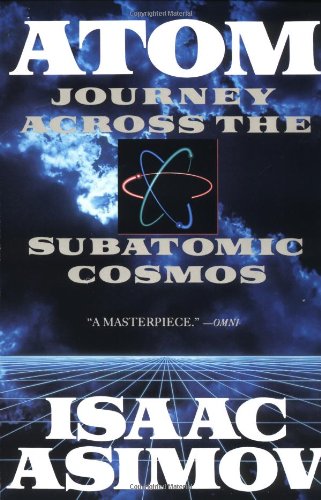
Atom: Journey Across the Subatomic Cosmos (Truman Talley)
Authors:
Isaac Asimov
Publisher:
Plume
Publication Date:
Not available
ISBN:
0452268346
The legendary Isaac Asimov starts what is perhaps the finest of all his books with a simple query: How finely can a piece of matter be divided? But like... many simple questions, this one leads readers on a far-flung quest for a final answer, a search that encompasses such fascinating phenomena as light and electricity and their components--strange but real bits of matter that challenge our assumptions about the very nature of time and space. 40 illustrations.
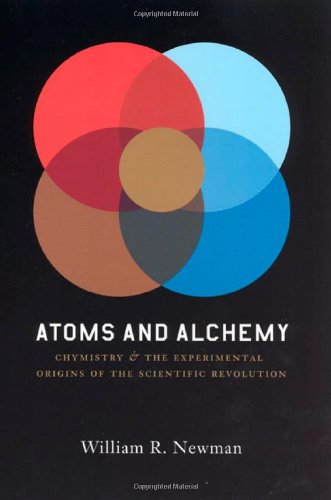
Atoms and Alchemy: Chymistry and the Experimental Origins of the...
Authors:
William R. Newman
Publisher:
University Of Chicago Press
Publication Date:
Not available
ISBN:
0226576973
Since the Enlightenment, alchemy has been viewed as a sort of antiscience, disparaged by many historians as a form of lunacy that impeded the... development of rational chemistry. But in Atoms and Alchemy, William R. Newman—a historian widely credited for reviving recent interest in alchemy—exposes the speciousness of these views and challenges widely held beliefs about the origins of the Scientific Revolution. Tracing the alchemical roots of Robert Boyle’s famous mechanical philosophy, Newman shows that alchemy contributed to the mechanization of nature, a movement that lay at the very heart of scientific discovery. Boyle and his predecessors—figures like the mysterious medieval Geber or the Lutheran professor Daniel Sennert—provided convincing experimental proof that matter is made up of enduring particles at the microlevel. At the same time, Newman argues that alchemists created the operational criterion of an “atomic” element as the last point of analysis, thereby contributing a key feature to the development of later chemistry. Atoms and Alchemy thus provokes a refreshing debate about the origins of modern science and will be welcomed—and deliberated—by all who are interested in the development of scientific theory and practice.
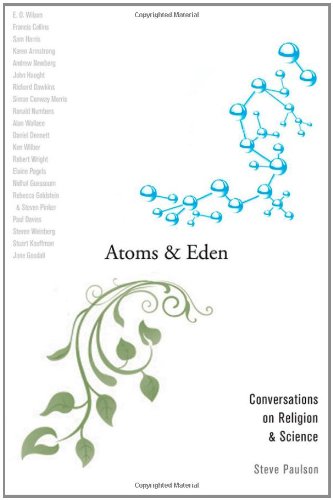
Atoms and Eden: Conversations on Religion and Science
Authors:
Steve Paulson
Publisher:
Oxford University Press, USA
Publication Date:
Not available
ISBN:
0199743169
Here is an unprecedented collection of twenty freewheeling and revealing interviews with major players in the ongoing--and increasingly heated--debate... about the relationship between religion and science. These lively conversations cover the most important and interesting topics imaginable: the Big Bang, the origins of life, the nature of consciousness, the foundations of religion, the meaning of God, and much more. In Atoms and Eden, Peabody Award-winning journalist Steve Paulson explores these topics with some of the most prominent public intellectuals of our time, including Richard Dawkins, Karen Armstrong, E. O. Wilson, Sam Harris, Elaine Pagels, Francis Collins, Daniel Dennett, Jane Goodall, Paul Davies, and Steven Weinberg. The interviewees include Christians, Buddhists, Jews, and Muslims, as well as agnostics, atheists, and other scholars who hold perspectives that are hard to categorize. Paulson's interviews sweep across a broad range of scientific disciplines--evolutionary biology, quantum physics, cosmology, and neuroscience--and also explore key issues in theology, religious history, and what William James called ''the varieties of religious experience.'' Collectively, these engaging dialogues cover the major issues that have often pitted science against religion--from the origins of the universe to debates about God, Darwin, the nature of reality, and the limits of human reason. These are complex, intellectually rich discussions, presented in an accessible and engaging manner. Most of these interviews were originally published as individual cover stories for Salon.com, where they generated a huge reader response. Public Radio's "To the Best of Our Knowledge" will present a major companion series on related topics this fall. A feast of ideas and competing perspectives, this volume will appeal to scientists, spiritual seekers, and the intellectually curious.

ATOMS FIRST CUSTOM V2 (W/O CONNECT PLUS)
Authors:
Not Available
Publisher:
Not available
Publication Date:
Not available
ISBN:
Not available
ATOMS FIRST W/ CONNECTPLUS, CUSTOM VOLUME 1
Authors:
Not Available
Publisher:
Not available
Publication Date:
Not available
ISBN:
Not available
 '
'