production
/viewbook/list/all/?page=1268
/
/static/
None

Bader Reading & Language Inventory (7th Edition)
Authors:
Lois A. Bader
Publisher:
Pearson
Publication Date:
Not available
ISBN:
0132943689
The Bader Reading and Language Inventory presents a much-needed, highly authoritative model for ensuring K—12 readers’ growth, assessing the... effectiveness of specific reading approaches, and diagnosing a wide range of literacy needs. In it, teachers, teachers of adult students, reading specialists, and clinicians get a flexible approach to carrying out every aspect of effective reading and learning assessment–from a quick screening through a comprehensive reading assessment. Included are personal interviews and student reflection, observations, informal and formal tests, and diagnostic teaching, plus valuable research-based tools and guides that complement the assessment model and provide a balance of assessment practice that doesn’t over-test students.
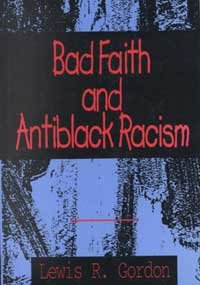
Bad Faith and Antiblack Racism
Authors:
Lewis R. Gordon
Publisher:
Humanity Books
Publication Date:
Not available
ISBN:
1573925349
Lewis Gordon presents the first detailed existential phenomenological investigation of anti-black racism as a form of Sartrean bad faith. Bad faith, the... attitude in which human beings attempt to evade freedom and responsibility, is treated as a constant possibility of human existence. Anti-black racism, the attitude and practice that involve the construction of black people as fundamentally inferior and subhuman, is examined as an effort to evade the responsibilities of a human and humane world. Gordon argues that the concept of bad faith militates against any human science that is built upon a theory of human nature and as such offers an analysis of anti-black racism that stands as a challenge to our ordinary assumptions of what it means to be human.

Bad for Democracy: How the Presidency Undermines the Power of the...
Authors:
Dana D. Nelson
Publisher:
Univ Of Minnesota Press
Publication Date:
Not available
ISBN:
0816656789
Dana D. Nelson argues that it is the office of the presidency itself that endangers the great American experiment. This urgent book, with new analysis... of President Barack Obama's first months in office, reveals the futility of placing all of our hopes for the future in the American president and encourages citizens to create a politics of deliberation, action, and agency.
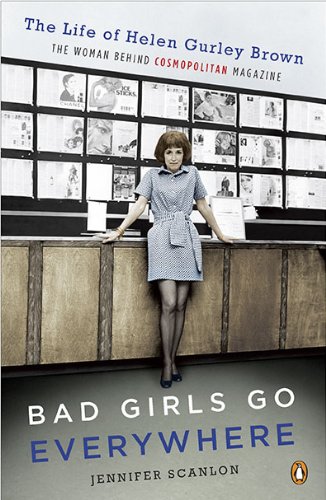
Bad Girls Go Everywhere: The Life of Helen Gurley Brown, the Woman...
Authors:
Jennifer Scanlon
Publisher:
Penguin Books
Publication Date:
Not available
ISBN:
0143118129
The biography of the revolutionary magazine editor who created the “Cosmo Girl” before Sex and the City’s Carrie Bradshaw was even born As the... author of the iconic Sex and the Single Girl (1962) and the editor-in-chief of Cosmopolitan magazine for over three decades, Helen Gurley Brown (1922–2012) changed how women thought about sex, money, and their bodies in a way that resonates in our culture today. In Jennifer Scanlon's widely acclaimed biography, the award-winning scholar reveals Brown’s incredible life story from her escape from her humble beginnings in the Ozarks to her eyebrow-raising exploits as a young woman in New York City, and her late-blooming career as the world's first "lipstick feminist." A mesmerizing tribute to a legend, Bad Girls Go Everywhere will appeal to everyone from Sex and the City and Mad Men fans to students of women's history and media studies.

Bad Girls of Japan
Authors:
Not Available
Publisher:
Palgrave Macmillan
Publication Date:
Not available
ISBN:
1403969477
Are bad girls casualties of patriarchy, a necessary evil, or visionary pioneers? By tracing the concept of the bad girl in Japan as a product of... specific cultural assumptions and historical settings, Bad Girls of Japan maps new roads and old detours in revealing a disorderly politics of gender. The essays explore deviancy in richly diverse media. Mountain witches, murderers, performance artists, cartoonists, schoolgirls, and shoppers gone wild are all part of the terrain.

Bad Guys Don't Have Birthdays: Fantasy Play at Four
Authors:
Vivian Gussin Paley
Publisher:
University Of Chicago Press
Publication Date:
Not available
ISBN:
0226644960
Bad guys are not allowed to have birthdays, pick blueberries, or disturb the baby. So say the four-year-olds who announce life's risks and dangers as... they play out the school year in Vivian Paley's classroom.Their play is filled with warnings. They invent chaos in order to show that everything is under control. They portray fear to prove that it can be conquered. No theme is too large or too small for their intense scrutiny. Fantasy play is their ever dependable pathway to knowledge and certainty." It . . . takes a special teacher to value the young child's communications sufficiently, enter into a meaningful dialogue with the youngster, and thereby stimulate more productivity without overwhelming the child with her own ideas. Vivian Paley is such a teacher."—Maria W. Piers, in the American Journal of Education"[Mrs. Paley's books] should be required reading wherever children are growing. Mrs. Paley does not presume to understand preschool children, or to theorize. Her strength lies equally in knowing that she does not know and in trying to learn. When she cannot help children—because she can neither anticipate nor follow their thinking—she strives not to hinder them. She avoids the arrogance of adult to small child; of teacher to student; or writer to reader."—Penelope Leach, author of Your Baby & Child in the New York Times Book Review"[Paley's] stories and interpretation argue for a new type of early childhood education . . . a form of teaching that builds upon the considerable knowledge children already have and grapple with daily in fantasy play."—Alex Raskin, Los Angeles Times Book Review"Through the 'intuitive language' of fantasy play, Paley believes, children express their deepest concerns. They act out different roles and invent imaginative scenarios to better understand the real world. Fantasy play helps them cope with uncomfortable feelings. . . . In fantasy, any device may be used to draw safe boundaries."—Ruth J. Moss, Psychology Today
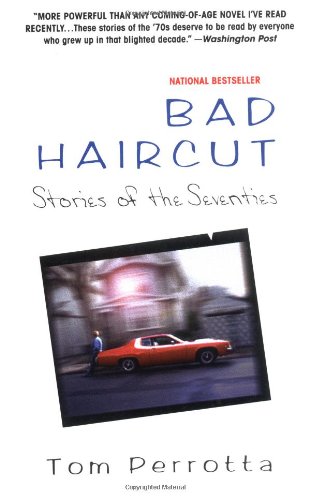
Bad Haircut: Stories of the Seventies
Authors:
Tom Perrotta
Publisher:
Berkley Trade
Publication Date:
Not available
ISBN:
042515954X
Tom Perrotta made his literary debut with his short story collection Bad Haircut, earning critical praise and comparisons to Salinger, Carver, and Roth... by taking readers to New Jersey in the 1970s as a boy named Buddy struggles with the timeless mysteries of sex, death, parents-and of course, bad haircuts.
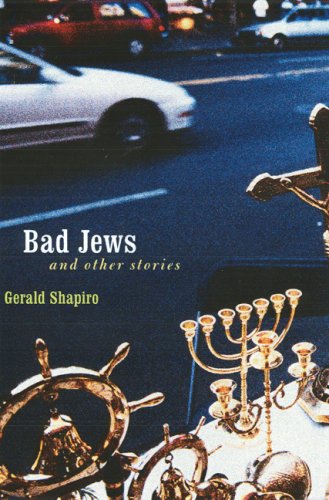
Bad Jews and Other Stories (Bison Book)
Authors:
Gerald Shapiro
Publisher:
Bison Books
Publication Date:
Not available
ISBN:
0803293127
Bad Jews and Other Stories is a nuanced and comic vision of life, love, and spiritual adventurism among the determinedly secular class of contemporary... American Jews. Separated from the character-building hardships endured by their parents and grandparents, unable to find a faith of their own or for that matter to believe in much of anything at all, the characters of Bad Jews and Other Stories wander through the moral landscape of their lives in a loopy version of the Children of Israel’s meandering way home. Along the way they suffer a range of antic, often absurd misadventures. And as often as not they find redemption as well as disaster.
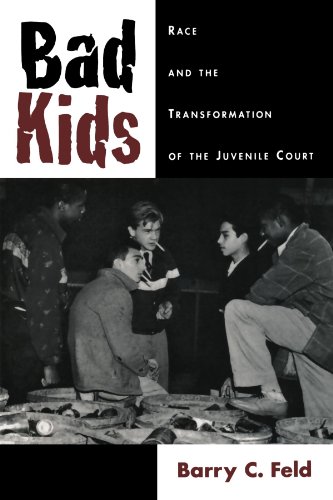
Bad Kids: Race and the Transformation of the Juvenile Court...
Authors:
Barry C. Feld
Publisher:
Oxford University Press, USA
Publication Date:
Not available
ISBN:
0195097882
Within the past three decades, social and legal changes have transformed the juvenile court from a nominally rehabilitative welfare agency into a... second-class criminal court for young offenders. Recent efforts to "toughen" juvenile justice policies have resulted in increasingly harsh sanctions that fall disproportionately on minority youths. In this provocative new book, Barry Feld examines what went wrong with the juvenile court and proposes an alternative model for youth crime control and child welfare. The Progressive reformers who created the juvenile court a century ago saw children as relatively blameless and innocent. But recent decades of rising crime rates associated with urban decay have strained this tolerant view of young offenders. Feld relates the 1967 Supreme Court decision In re Gault to the broader social and legal changes associated with the civil rights movement and the Warren Court's "Due Process Revolution." Although gault mandated more elaborate procedural safeguards in delinquency hearings, ironically, those protections legitimated the imposition of more punitive sanctions. Since Gault, Feld argues, three decades of judicial, legislative, and administrative reforms have conducted a form of "criminological triage." At the "soft end," reforms have shifted noncriminal status offenders, primarily female and white, out of the juvenile justice system into a "hidden system" made up of private sector mental health and chemical dependency facilities. At the "hard end," states transfer increasing numbers of young offenders, disproportionately minorities, to criminal court for prosecution as adults. Meanwhile, juvenile courts punish more severely those delinquents-again disproportionately minorities-who remain within the increasingly criminalized juvenile justice system. Feld attributes the current state of affairs to a conceptual flaw inherent in the juvenile court. The juvenile justice system attempts to combine social welfare and social control functions in one organization, but inevitably fulfills both missions badly because of the inherent and irreconcilable contradictions between them. Progressive reformers situated the juvenile court on a number of cultural, legal, and criminological fault lines, where the ideas of child and adult, determinism and free will, immature and responsible, treatment and punishment collide. The past three decades have witnessed a shift from the former to the latter of these binary pairs in response to the racial transformation of cities, the increase in serious youth crime, and the erosion of the rehabilitative assumptions of the juvenile court. The solution, Feld argues, is to uncouple social welfare from criminal social control. States could try all offenders in one integrated criminal justice system with appropriate modifications to accommodate the youthfulness of younger defendants: a graduated, age-culpability sentencing system, separate youth correctional facilities, and the like. Formally recognizing youthfulness as a mitigating factor would provide youths with greater protections and justice than they currently receive in either the juvenile or criminal justice systems. At the same time such a strategy would enable public policies to address directly the social welfare needs of all young people.
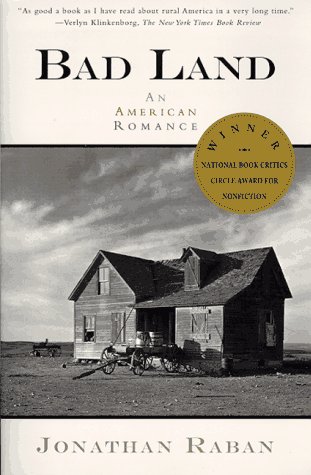
Bad Land: An American Romance
Authors:
Jonathan Raban
Publisher:
Vintage
Publication Date:
Not available
ISBN:
0679759069
A New York Times Editors' Choice for Book of the YearWinner of the Pacific Northwest Booksellers AwardWinner of the PEN West Creative Nonfiction... Award"No one has evoked with greater power the marriage of land and sky that gives this country both its beauty and its terror. "--Washington Post Book WorldIn 1909 maps still identified eastern Montana as the Great American Desert. But in that year Congress, lobbied heavily by railroad companies, offered 320-acre tracts of land to anyone bold or foolish enough to stake a claim to them. Drawn by shamelessly inventive brochures, countless homesteaders--many of them immigrants--went west to make their fortunes. Most failed. In Bad Land, Jonathan Raban travels through the unforgiving country that was the scene of their dreams and undoing, and makes their story come miraculously alive. In towns named Terry, Calypso, and Ismay (which changed its name to Joe, Montana, in an effort to attract football fans), and in the landscape in between, Raban unearths a vanished episode of American history, with its own ruins, its own heroes and heroines, its own hopeful myths and bitter memories. Startlingly observed, beautifully written, this book is a contemporary classic of the American West. "Exceptional. . . . A beautifully told historical meditation. "--Time"Championship prose. . . . In fifty years don't be surprised if Bad Land is a landmark."--Los Angeles Times
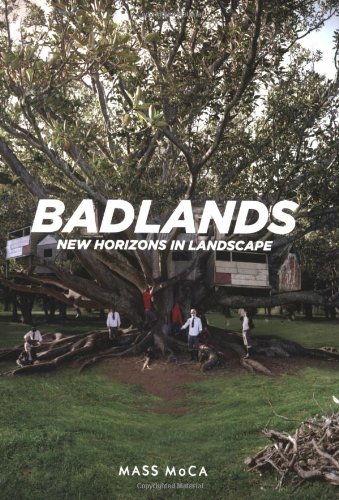
Badlands: New Horizons in Landscape
Authors:
Not Available
Publisher:
The MIT Press
Publication Date:
Not available
ISBN:
0262633663
The artist's relationship to landscape was once invoked by a canvas on an easel in a picturesque vista. No more. In the 1960s, the Earth Artists started... focusing on natural systems and entropy; in the 1970s, photographers in the New Topographics movement turned their attention unsentimentally to the industrialized "man-altered" environment; in the 1980s, artists animated the natural landscape with art, movement, and performance; and in the 1990s, Eco-Artists collaborated with scientists to address sustainability, pollution, and politics. Badlands explores the latest manifestations of artists' fascination with the earth, gathering work by contemporary artists who approach landscape through history, culture, and science. Badlands, which accompanies an exhibition at MASS MoCA, approaches landscape as a theme with variations, grouping artists and their art (which is shown in 150 color illustrations) by category: Historians, who recontextualize the history of landscape depiction; Explorers, who explore the environment and our place within it; Activists and Pragmatists, who alert us to problems in the natural world and suggest solutions; and the Aestheticists, who look at the beauty found in nature. Each section begins with an essay: Gregory Volk maps the evolution of the genre from the Hudson River School to Earth Art; Ginger Strand examines the relationship between man and landscape through our cultural history; Tensie Whelan discusses environmental science, sustainability, and climate change; and Denise Markonish considers the new genre of landscape that emerges from the work displayed in Badlands. As a physical object, Badlands supports the values represented by its intellectual and artistic content: it was produced using FSC (Forest Stewardship Council) certified techniques including paper, printing, and inks.ArtistsRobert Adams, Vaughn Bell, Boyle Family, Melissa Brown, Center for Land Use Interpretation, Leila Daw, Gregory Euclide, J. Henry Fair, Mike Glier, Anthony Goicolea, Marine Hugonnier, Mike Glier, Paul Jacobsen, Nina Katchadourian, Jane Marsching, Alexis Rockman, Ed Ruscha, Joseph Smolinski, Yutaka Sone, Jennifer Steinkamp, Mary Temple
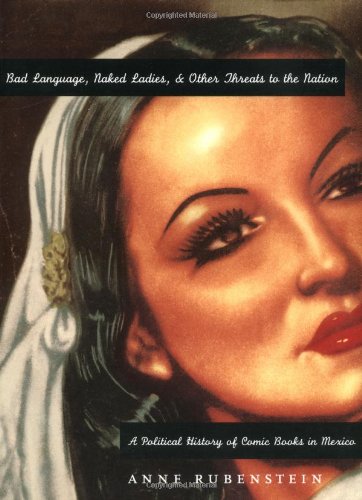
Bad Language, Naked Ladies, and Other Threats to the Nation: A...
Authors:
Anne Rubenstein
Publisher:
Duke University Press Books
Publication Date:
Not available
ISBN:
0822321416
In Bad Language, Naked Ladies, and Other Threats to the Nation, Anne Rubenstein examines how comic books—which were overwhelmingly popular but... extremely controversial in post-revolutionary Mexico—played an important role in the development of a stable, legitimate state. Studying the relationship of the Mexican state to its civil society from the 1930s to the 1970s through comic books and their producers, readers, and censors, Rubenstein shows how these thrilling tales of adventure—and the debates over them—reveal much about Mexico’s cultural nationalism and government attempts to direct, if not control, social change. Since their first appearance in 1934, comic books enjoyed wide readership, often serving as a practical guide to life in booming new cities. Conservative protest against the so-called immorality of these publications, of mass media generally, and of Mexican modernity itself, however, led the Mexican government to establish a censorship office that, while having little impact on the content of comic books, succeeded in directing conservative ire away from government policies and toward the Mexican media. Bad Language, Naked Ladies, and Other Threats to the Nation examines the complex dynamics of the politics of censorship occasioned by Mexican comic books, including the conservative political campaigns against them, government and industrial responses to such campaigns, and the publishers’ championing of Mexican nationalism and their efforts to preserve their publishing empires through informal influence over government policies. Rubenstein’s analysis suggests a new Mexican history after the revolution, one in which negotiation over cultural questions replaced open conflict and mass-media narrative helped ensure political stability. This book will engage readers with an interest in Mexican history, Latin American studies, cultural studies, and popular culture.
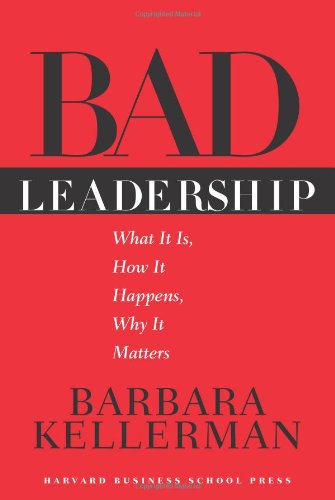
Bad Leadership: What It Is, How It Happens, Why It Matters...
Authors:
Barbara Kellerman
Publisher:
Harvard Business Review Press
Publication Date:
Not available
ISBN:
1591391660
A provocative departure from conventional thinking, "Bad Leadership" compels us to see leadership in its entirety Kellerman argues that the dark side of... leadership - from rigidity and callousness to corruption and cruelty - is not an aberration. Rather bad leadership is as ubiquitous as it is insidious - and so must be more carefully examined and better understood. Drawing on high-profile contemporary examples - from Mary Meeker to David Koresh, Bill Clinton to Radovan Karadzic, Al Dunlap to Leona Helmsley - Kellerman explores seven primary types of bad leadership and dissects why and how leaders cross the line from good to bad. The book also illuminates the critical role of followers, revealing how they collaborate in, and sometimes even cause, bad leadership. Daring and counterintuitive, "Bad Leadership" makes clear that we need to face the dark side in order to become better leaders and followers ourselves.

Badm 106 - 2, 3 & 81 Organizational Behaviour Fall 2012
Authors:
Not Available
Publisher:
Not available
Publication Date:
Not available
ISBN:
9511012079
Badm 107 Lecture Guide Fall 2012
Authors:
Not Available
Publisher:
Not available
Publication Date:
Not available
ISBN:
9511015469
 '
'