production
/viewbook/list/all/?page=1405
/
/static/
None
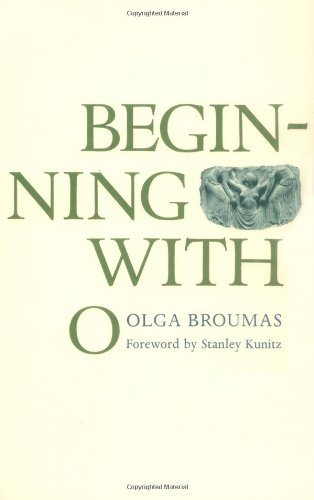
Beginning with O (Yale Series of Younger Poets)
Authors:
Olga Broumas
Publisher:
Yale University Press
Publication Date:
Not available
ISBN:
0300021119
For years, those who claimed that the death of six million Jews in Nazi concentration camps was nothing but a hoax perpetrated by a powerful Zionist... conspiracy, were treated as harmless cranks. But over the past decade, they have begun to gain a hearing in respectable arenas. In this text, a social and intellectual history of Holocaust denial, Lipstadt shows how, despite thousands of living witnesses and vast amounts of documentary evidence, this idea has become an international movement, with organized chapters, "independent" research centres and official publications that promote a "revisionist" view of recent history.
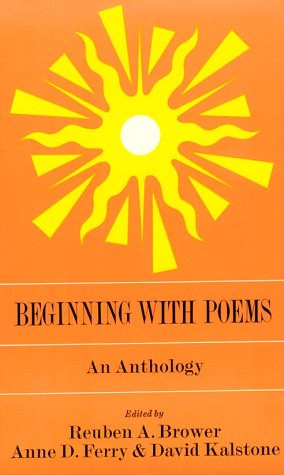
Beginning With Poems
Authors:
Reuben Arthur Brower
Publisher:
W W Norton & Co Inc (Np)
Publication Date:
Not available
ISBN:
0393095096
From the AgAnda for Education in a Democracy SeriesSponsored by the National Network for Educational Renewal"This book is comprehensive in its account... of what goes into the substance and process of preparing the professional educator, from selection to induction into teaching. The story that unfolds in the collaboration of the University of Connecticut and several schools is one of redesigning virtually every component into something quite different from what existed before without stopping the traffic of future teachers from crossing the bridge to practice."--from the Foreword by John I. Goodlad, codirector, Center for Educational Renewal, University of Washington, and president, Institute for Educational InquiryThis practical volume redefines teaching as a profession with pronounced service and moral dimensions. The Professional Teacher shows how this new paradigm can be instilled in teacher education programs and in teaching practice. The authors argue that the practice of teaching requires much more than knowledge and technical competence. It calls for reflection and inquiry, a dedication to democratic principles, and a strong commitment to educational renewal and change. The authors reveal how teacher education can be structured to emphasize the moral and service responsibilities of the profession--especially by forging close ties with local schools and communities--to produce caring and effective teachers. Richly illustrated with research and real-life examples of good practice, The Professional Teacher proposes a new standard that focuses on preparing teachers for a climate of school renewal and change.
Beginning with the Pre-Socratics
Authors:
Merrill Ring
Publisher:
McGraw-Hill Humanities/Social Sciences/Languages
Publication Date:
Not available
ISBN:
0767413385
This brief and accessible supplementary text provides the historical and cultural background necessary to understanding how early philosophy developed,... along with solid philosophical exposition, analysis and critique. It is at once both highly readable and philosophically responsible.
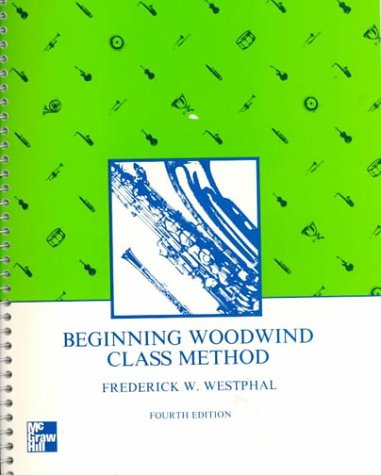
Beginning Woodwind Class Method
Authors:
Frederick Westphal
Publisher:
WM. C. Brown Company Publishers
Publication Date:
Not available
ISBN:
0697035654
Beginning Woodwing Class Method is designed specifically for college and university students. It takes full advantage of previously learned skills in... music. There is no provision for instruction in basic note reading skills of the kind found in methods aimed at younger students. Musical materials have been selected with the mature learner in mind. Instructional materials for all of woodwind instruments -- flute, clarinet, oboe, bassoon, alto saxaphone, and tenor sxaphone -- are included. Flexible scoring is used in all of the ensemble material so that musical balance can be achieved with a variety of instrumental combinations.
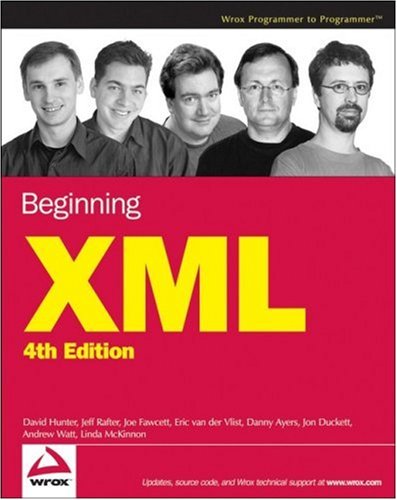
Beginning XML, 4th Edition (Programmer to Programmer)
Authors:
David Hunter
Publisher:
Wrox
Publication Date:
Not available
ISBN:
0470114878
When the first edition of this book was written, XML was a relatively new language but already gaining ground fast and becoming more and more widely... used in a vast range of applications. By the time of the second edition, XML had already proven itself to be more than a passing fad, and was in fact being used throughout the industry for an incredibly wide range of uses. With the third edition, it was clear that XML was a mature technology, but more important, it became evident that the XML landscape was dividing into several areas of expertise. Now in this edition, we needed to categorize the increasing number of specifications surrounding XML, which either use XML or provide functionality in addition to the XML core specification.So what is XML? It's a markup language, used to describe the structure of data in meaningful ways. Anywhere that data is input/output, stored, or transmitted from one place to another, is a potential fit for XML's capabilities. Perhaps the most well-known applications are web-related (especially with the latest developments in handheld web access—for which some of the technology is XML-based). However, there are many other non-web-based applications for which XML is useful—for example, as a replacement for (or to complement) traditional databases, or for the transfer of financial information between businesses. News organizations, along with individuals, have also been using XML to distribute syndicated news stories and blog entries.This book aims to teach you all you need to know about XML—what it is, how it works, what technologies surround it, and how it can best be used in a variety of situations, from simple data transfer to using XML in your web pages. It answers the fundamental questions:* What is XML?* How do you use XML?* How does it work?* What can you use it for, anyway?This book is for people who know that it would be a pretty good idea to learn XML but aren't 100 percent sure why. You've heard the hype but haven't seen enough substance to figure out what XML is and what it can do. You may be using development tools that try to hide the XML behind user interfaces and scripts, but you want to know what is really happening behind the scenes. You may already be somehow involved in web development and probably even know the basics of HTML, although neither of these qualifications is absolutely necessary for this book.What you don't need is knowledge of markup languages in general. This book assumes that you're new to the concept of markup languages, and we have structured it in a way that should make sense to the beginner and yet quickly bring you to XML expert status.The word "Beginning" in the title refers to the style of the book, rather than the reader's experience level. There are two types of beginner for whom this book is ideal:* Programmers who are already familiar with some web programming or data exchange techniques. Programmers in this category will already understand some of the concepts discussed here, but you will learn how you can incorporate XML technologies to enhance those solutions you currently develop.* Those working in a programming environment but with no substantial knowledge or experience of web development or data exchange applications. In addition to learning how XML technologies can be applied to such applications, you will be introduced to some new concepts to help you understand how such systems work.The subjects covered in this book are arranged to take you from novice to expert in as logical a manner as we could. This Fourth Edition is structured in sections based on various areas of XML expertise. Unless you are already using XML, you should start by reading the introduction to XML in Part I. From there, you can quickly jump into specific areas of expertise, or, if you prefer, you can read through the book in order. Keep in mind that there is quite a lot of overlap in XML, and that some of the sections make use of techniques described elsewhere in the book.* The book begins by explaining what exactly XML is and why the industry felt that a language like this was needed.* After covering the why, the next logical step is the how, so it shows you how to create well-formed XML.* Once you understand the whys and hows of XML, you'll go on to some more advanced things you can do when creating your XML documents, to make them not only well formed, but valid. (And you'll learn what "valid" really means.)* After you're comfortable with XML and have seen it in action, the book unleashes the programmer within and looks at an XML-based programming language that you can use to transform XML documents from one format to another.* Eventually, you will need to store and retrieve XML information from databases. At this point, you will learn not only the state of the art for XML and databases, but also how to query XML information using an SQL-like syntax called XQuery.* XML wouldn't really be useful unless you could write programs to read the data in XML documents and create new XML documents, so we'll get back to programming and look at a couple of ways that you can do that.* Understanding how to program and use XML within your own business is one thing, but sending that information to a business partner or publishing it to the Internet is another. You'll learn about technologies that use XML that enable you to send messages across the Internet, publish information, and discover services that provide information.* Since you have all of this data in XML format, it would be great if you could easily display it to people, and it turns out you can. You'll see an XML version of HTML called XHTML. You'll also look at a technology you may already be using in conjunction with HTML documents called CSS. CSS enables you to add visual styles to your XML documents. In addition, you'll learn how to design stunning graphics and make interactive forms using XML.* Finally, the book ends with a case study, which should help to give you ideas about how XML can be used in real-life situations, and which could be used in your own applications.This book builds on the strengths of the earlier editions, and provides new material to reflect the changes in the XML landscape—notably XQuery, RSS and Atom, and AJAX. Updates have been made to reflect the most recent versions of specifications and best practices throughout the book. In addition to the many changes, each chapter has a set of exercise questions to test your understanding of the material. Possible solutions to these questions appear in Appendix A.Part I: Introduction: The introduction is where most readers should begin. The first three chapters introduce some of the goals of XML as well as the specific rules for constructing XML. Once you have read this part you should be able to read and create your own XML documents.Chapter 1: What Is XML?: This chapter cover some basic concepts, introducing the fact that XML is a markup language (a bit like HTML) whereby you can define your own elements, tags, and attributes (known as a vocabulary). You'll see that tags have no presentation meaning—they're just a way to describe the structure of the data.Chapter 2: Well-Formed XML: In addition to explaining what well-formed XML is, we offer a look at the rules that exist (the XML 1.0 and 1.1 Recommendations) for naming and structuring elements—you need to comply with these rules in order to produce well-formed XML.Chapter 3: XML Namespaces: Because tags can be made up, you need to avoid name conflicts when sharing documents. Namespaces provide a way to uniquely identify a group of tags, using a URI. This chapter explains how to use namespaces.Part II: Validation: In addition to the well-formedness rules you learn in Part I, you will most likely want to learn how to create and use different XML vocabularies. This Part introduces you to DTDs, XML Schemas, and RELAX NG: three languages that define custom XML vocabularies. It also shows you how to utilize these definitions to validate your XML documents.Chapter 4: Document Type Definitions: You can specify how an XML document should be structured, and even provide default values, using Document Type Definitions (DTDs). If XML conforms to the associated DTD, it is known as valid XML. This chapter covers the basics of using DTDs.Chapter 5: XML Schemas: XML Schemas, like DTDs, enable you to define how a document should be structured. In addition to defining document structure, they enable you to specify the individual datatypes of attribute values and element content. They are a more powerful alternative to DTDs.Chapter 6: RELAX NG: RELAX NG is a third technology used to define the structure of documents. In addition to a new syntax and new features, it takes the best from XML Schemas and DTDs, and is therefore very simple and very powerful. RELAX NG has two syntaxes; both the full syntax and compact syntax are discussed.Part III: Processing: In addition to defining and creating XML documents, you need to know how to work with documents to extract information and convert it to other formats. In fact, easily extracting information and converting it to other formats is what makes XML so powerful.Chapter 7: XPath: The XPath language is used to locate sections and data in the XML document, and it’s important in many other XML technologies.Chapter 8: XSLT: XML can be transformed into other XML documents, HTML, and other formats using XSLT stylesheets, which are introduced in this chapter.Part IV: Databases: Creating and processing XML documents is good, but eventually you will want to store those documents. This section describes strategies for storing and retrieving XML documents and document fragments from different databases.Chapter 9: XQuery, the XML Query Language: Very often, you will need to retrieve information from within a database. XQuery, which is built on XPath and XPath2, enables you to do this in an elegant way.Chapter 10: XML and Databases: XM...
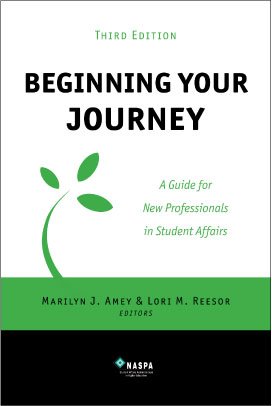
Beginning Your Journey: A Guide for New Professionals in Student...
Authors:
Not Available
Publisher:
National Association of Student Personnel Administrators
Publication Date:
Not available
ISBN:
0931654610
The transition from graduate school to a full-time position in student affairs can be filled with both opportunities and challenges. In order to be... successful, new professionals must understand the organizational and political realities of working on college and university campuses. Beginning Your Journey: A Guide for New Professionals in Student Affairs addresses the most critical and current issues for those entering the field. In this comprehensive guide, seasoned student affairs leaders and new professionals share practical advice and offer broad perspectives on: * Managing the first job search and networking professionally * Seeking opportunities for career advancement * Supervising student affairs staff * Achieving work-life balance * Defining professional and personal ethics * Collaborating with faculty colleagues * Handling critical incidents and larger crises Whether you are moving into student affairs from a graduate preparation program or making a career change, this book shows you how to navigate and negotiate within the higher education landscape.

Beginning Your Marriage
Authors:
John L. Thomas
Publisher:
ACTA Publications
Publication Date:
Not available
ISBN:
0915388243
This is an excellent resource for couples in the first few years of marriage, when the rosy optimism of courtship and wedding are tempered by the... reality of two people learning to negotiate daily life together.

Beginnning Algebra W/ Sol Man And Dvd Lecture Series
Authors:
Not Available
Publisher:
Not available
Publication Date:
Not available
ISBN:
0321678613
BEG & INT ALGEBRA ]CUSTOM[
Authors:
Not Available
Publisher:
Not available
Publication Date:
Not available
ISBN:
Not available
BEG.&INT.ALGEBRA LOOSE.W/1 SEM. ALEKS
Authors:
Not Available
Publisher:
Not available
Publication Date:
Not available
ISBN:
Not available
BEG.&INT.ALGEBRA LOOSE.W/2 SEM.ALEKS
Authors:
Not Available
Publisher:
Not available
Publication Date:
Not available
ISBN:
Not available
BEG & INT ALGEBRA W/DVD/MATHXL ]CUSTOM[
Authors:
Not Available
Publisher:
Not available
Publication Date:
Not available
ISBN:
Not available
BEG+INT ALGEBRA W/MML+MWKBK PKG
Authors:
Not Available
Publisher:
Not available
Publication Date:
Not available
ISBN:
Not available
BEG & INT ALG GUIDED NTBK/W MYMATHLAB-MYLABSPLUS ACCESS
Authors:
Not Available
Publisher:
Not available
Publication Date:
Not available
ISBN:
Not available
BEG.&INTER.ALGEBRA&MML&SSM&DVD 4TH ED.
Authors:
Not Available
Publisher:
Not available
Publication Date:
Not available
ISBN:
Not available
 '
'