production
/viewbook/list/all/?page=1408
/
/static/
None
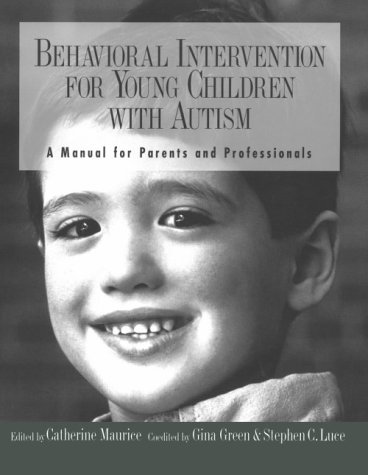
Behavioral Intervention for Young Children With Autism: A Manual...
Authors:
Not Available
Publisher:
Not available
Publication Date:
Not available
ISBN:
0890796831
A growing body of research shows that many young children with autism and pervasive developmental disorders can derive significant, lasting, and... sometimes dramatic benefits from early intervention based on the principles of Applied Behavior Analysis. This manual, inspired by that research, provides a wealth of practical information for parents, professionals, and others concerned with helping such children. Authors include parents whose children have been the beneficiaries of a science based approach to autism treatment, as well as many noted researchers and experienced clinicians.The manual gives the reader concrete information on how to evaluate treatment options and differentiate scientifically validated interventions from fads and miracle cures; assess children s skills, needs, and progress objectively and systematically; teach children a wide variety of important skills, ranging from basics such as listening and looking, to complex language and social skills; and determine who is competent to deliver and supervise behavioral intervention.

Behavioral Interventions in Schools: A Response-to-Intervention...
Authors:
David Hulac
Publisher:
Routledge
Publication Date:
Not available
ISBN:
0415875854
This book is a how-to manual for school mental health professionals, educators, and administrators that discusses a series of steps that can be used to... proactively manage and prevent many different types of behavioral problems in a positive manner. It incorporates both the high structure and high behavioral expectations that are crucial for school success, but also describes following this structure in such a way that students feel included, important, and respected. Rather than requiring the mental health providers to investigate the research themselves and come up with a behavioral problem solving model, this book includes step-by-step guides on how to implement school-wide and classroom-wide interventions in a response-to-intervention format. For those students who demonstrate more behavior problems, more intensive interventions are included to help alleviate those problems. The first section of the book discusses Tier I interventions and assessments designed to ensure that the school is effectively implementing a high quality, research-based behavioral management system. The next section covers Tier II interventions, those used for students who do not respond adequately to those of Tier I. These interventions are research-based, rigorous, and designed to address a broad range of behavior problems. Finally, the last section discusses Tier III interventions for students in need of highly individualized and intensive interventions to manage behavior problems.
Behavioral Interventions in Schools: Evidence-Based Postive...
Authors:
Not Available
Publisher:
American Psychological Association (APA)
Publication Date:
Not available
ISBN:
1433804603
Behavioral Interviewing Guide: A Practical, Structured Approach For...
Authors:
Tom S. Turner
Publisher:
Trafford Publishing
Publication Date:
Not available
ISBN:
1412042852
Is your organization using the most effective type of interviewing in your hiring and promotional processes? Selection research results indicate that... the most valid type of interview to use is a structured, behavioral interview that is focused on the success related knowledge, skills and personal qualities. Behavioral Interviewing Guide provides you with a practical step-by-step approach for planning, conducting and evaluating a structured, behavioral interview. Some of the many supporting documents, guides and techniques included in the book are: Selection criteria definitions, Twenty five pages of categorized behavioral questions, Generic interview guides for both management and non-management positions, Self assessment quiz, and; Generic behavioural background/reference check guide. Also incorporated into the guide are the interviewing best practices of predetermining selection criteria, using a team/panel of interviewers, using a structured guide, using a quantitative rating scale to evaluate candidates, reaching consensus evaluations, and completing behavioral background checks. The Behavioral Interview Guide explains how to: Properly prepare for the interview. Prepare good behavioral questions Conduct the interview. Create a good interview atmosphere. Ask follow-up questions to get a complete answer. Take thorough notes Handle unusual interview situations. Evaluate the candidate's answers. Rating the suitability of candidates. Conduct behavioural background checks. By using the practices and techniques presented in the Behavioral Interview Guide you will hire or promote good performers more often. Is it worth it? You bet! Selection research studies indicate good workers can do twice as much work as poor workers. In addition, each year a good worker is with an organization, they contribute a monetary value equivalent in the range of 70% to 140% of their annual salary. Better selection and interviewing practices also significantly reduce the huge monetary and emotional costs associated with hiring or promoting poor performers. Bad decisions, equipment/material damage, accidents, customer complaints, low morale, legal fees, overtime wages and replacement hiring fees are just some of the substantial costs associated with hiring or promoting poor workers. The behavioral interview is based on the practical assumption that a person's past behavior will predict their future behavior. If a person has demonstrated strong initiative, work standards, ability to learn, judgment, flexibility, honesty, attendance etc. in past positions, they will, in all probability, continue to show the same behavior in future positions. Consequently, the challenge of selection interviewers to ask specific, behavioral questions that will elicit positive and negative examples of a candidate's past behavior relative to the position's critical success competencies. The Behavioral Interview Guide provides you with hundreds of good behavioral questions to choose from and explains the necessary structure and steps to ensure interview success. A content outline of the Behavioral Interview Guide follows: Essential Selection Interviewing Information Essential selection interviewing information Types of interviews What makes an interview valid The behavioral interview paradigm Unionized work environments Preparing For The Interview Determine interview format and select interviewers Determine the interview focus by identifying and defining selection criteria/competencies Types of criteria Legal considerations Methods for identifying criteria Core selection criteria Prepare the behavioral questions and interview guide How to prepare behavioral questions Ques
Behavioral Law and Economics (Cambridge Series on Judgment and...
Authors:
Not Available
Publisher:
Cambridge University Press
Publication Date:
Not available
ISBN:
0521667437
This exciting volume marks the birth of a new field--a field that studies law with reference to an accurate, rather than a crude, understanding of human... behavior. Behavioral Law and Economics presents new findings in cognitive psychology and behavioral economics, which show that people are frequently both unselfish and over-optimistic; that people have limited willpower and limited self-control; and that people are "boundedly" rational, in the sense that they have limited information-processing powers, and frequently rely on mental short-cuts and rules of thumb. Understanding this kind of human behavior has large-scale implications for the analysis of law, in areas including environmental protection, taxation and tax compliance, constitutional law, voting behavior, punitive damages for civil rights violations, labor negotiations and strikes, and corporate finance. Behavioral Law and Economics offers many new insights into these fields and suggestions for legal reform. With a better knowledge of human behavior, it is possible to predict the actual effects of law, to see how law might actually promote society's goals, and to reassess the questions of what law should be doing.
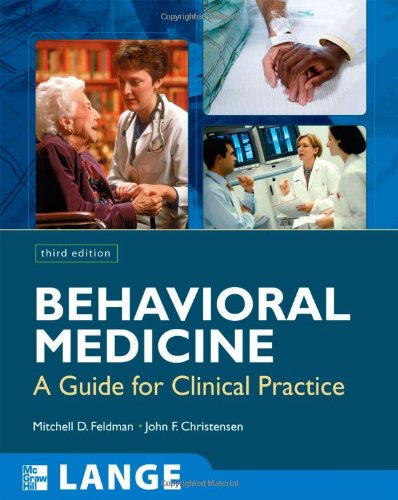
Behavioral Medicine: A Guide for Clinical Practice, Third Edition
Authors:
Mitchell Feldman
Publisher:
McGraw-Hill Medical
Publication Date:
Not available
ISBN:
0071438602
5 STAR DOODY'S REVIEW! "This is an extraordinarily thorough, useful book. It manages to summarize numerous topics, many of which are not a part of a... traditional medical curriculum, in concise, relevant chapters. Physicians who do not understand the dynamics behind the doctor-patient relationship usually end up being poor doctors, and this book reviews the many behavioral issues that patients have that can affect this relationship. This is a very welcome addition to the medical education literature, and should be required reading for all practicing clinicians."--Doody's Review Service Behavioral Medicine delivers practical coverage of behavioral and interactional issues that occur between provider and patient in everyday clinical practice. You will learn how to deliver bad news, how to conduct an effective patient interview, how to clinically manage behavioral issues in the dying patient, the principles of medical professionalism, behavioral issues in men's and women's health, and much more. Features: Thorough but practical discussion of the scope of the physician-patient relationship Includes extensive use of cases and clinical vignettes Complete coverage of medical disorders that influence both physician and patient behavior in clinical practice (20081118)
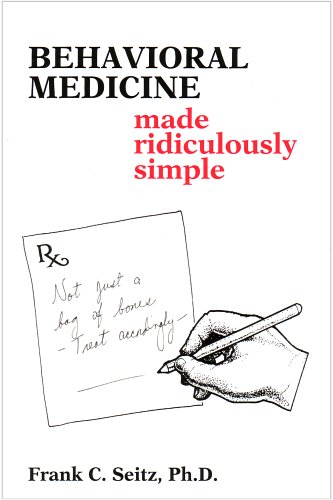
Behavioral Medicine Made Ridiculously Simple (Medmaster Series)
Authors:
Frank C. Seitz
Publisher:
Not available
Publication Date:
Not available
ISBN:
0940780291
Practical and concise behavioral strategies for understanding and treating common clinical challenges from stress to suicide. Initially written for... medical students, this focused, compassionate and humorous clinical psychology book also will be a welcome addition to the libraries of counselors, social workers, and other health care professionals.
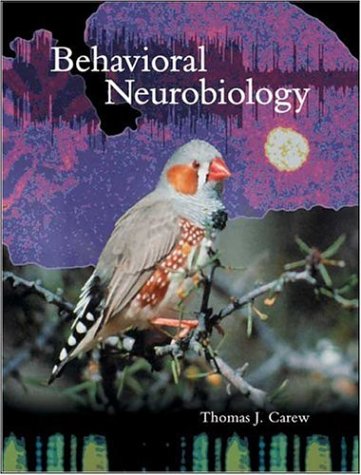
Behavioral Neurobiology: The Cellular Organization of Natural Behavior
Authors:
Thomas J. Carew
Publisher:
Sinauer Associates Inc
Publication Date:
Not available
ISBN:
0878930922
Behavioral Neurobiology provides a novel treatment of the neural basis of behavior. The pedagogical premise of the book is that general insights into... the neuronal organization of behavior can be gained by examining neural solutions that have evolved in animals to solve problems encountered in their particular environmental niches. The author presents in-depth "case studies" of individual animals from which themes clearly emerge, taking on additional meaning by being considered in a real-world behavioral context.

BEHAVIORAL RESEARCH
Authors:
Not Available
Publisher:
Not available
Publication Date:
Not available
ISBN:
Not available
Behavioral Response to Intervention (Creating a Continuum of...
Authors:
Ph.D. Randy Sprick
Publisher:
Pacific Northwest Publsihing
Publication Date:
Not available
ISBN:
1599090287
A unique resource for educators that provides an in-depth look at how to organize a continuum of support to ensure that schools meet the needs of all... students on a schoolwide, classroom, and individual level. Grades K-12. Includes CD with more than 30 reproducible forms, all enabled for type-in entry on your computer.

Behavioral Science in Medicine
Authors:
Barbara Fadem
Publisher:
Lippincott Williams & Wilkins
Publication Date:
Not available
ISBN:
1609136640
Behavioral Science in Medicine introduces medical students to the science of human behavior. Organized to mirror the behavioral science-psychiatry... course taught in the first two years, this text effectively teaches the major concepts of this complex subject and prepares students for board exams. The Second Edition is appropriate for courses in Behavioral Science alone but also for courses that merge Behavioral Science and Neuroscience. The increased depth of coverage of psychiatric illness, substance abuse, and pediatric psychiatry, also makes the Second Edition appropriate for use in Clinical Psychiatry courses in the third and fourth year.
Behavioral Science in Medicine
Authors:
Barbara Fadem
Publisher:
Lippincott Williams & Wilkins
Publication Date:
Not available
ISBN:
0781736692
Behavioral Science in Medicine is intended as a primary textbook for the behavioral science/psychiatry course in the first two years of medical school.... Each chapter includes representative clinical case scenarios illustrating important facets of the material in that chapter. All material presented in the text will be consistent with the DSM-IV-TR.
Behavioral Sciences STAT (with Review Cards and Psychology...
Authors:
Gary Heiman
Publisher:
Duxbury Press
Publication Date:
Not available
ISBN:
1111342067
Created through a "student-tested, faculty-approved" review process with students and faculty, STAT FOR THE BEHAVIORAL SCIENCES is an engaging and... accessible solution to accommodate the diverse lifestyles of today's learners at a value-based price. Each chapter begins with a list of previously discussed concepts that students should review. Throughout each chapter, important points are emphasized by a "REMEMBER" summary reminder set off from the text. Summary tables and sections appear regularly and help organize and integrate the separate steps discussed in previous sections. Key terms are bold and in color. Graphs and diagrams are explained in captions and fully integrated into the discussion. Using What You Know sections at the end of each chapter ask students to apply their new knowledge to actual problems. A perforated review card is provided in the IE, which includes a chapter outline, learning outcomes, teaching tips, additional examples, key terms, and key formulas.
BEHAVIORAL SCIENCE STATISTICS-PART 1:
Authors:
Not Available
Publisher:
Not available
Publication Date:
Not available
ISBN:
Not available
BEHAVIORAL SCI STATS ACP INCL ST GD
Authors:
Not Available
Publisher:
Not available
Publication Date:
Not available
ISBN:
Not available
 '
'