production
/viewbook/list/all/?page=1472
/
/static/
None

Beyond the First Amendment: The Politics of Free Speech and Pluralism
Authors:
Samuel P. Nelson
Publisher:
The Johns Hopkins University Press
Publication Date:
Not available
ISBN:
0801881730
Americans often believe that the First Amendment and free speech are synonymous and that all restrictions on speech can be addressed by the legal... framework of the First Amendment. Political theorist Samuel P. Nelson argues that the current legal framework for free speech actually undermines attempts to resolve many of these issues and that the law of the First Amendment has supplanted the vital politics of free speech. To cut through the confusion, Nelson takes a step back from the First Amendment framework to understand the social nature of speech, moving toward a more pluralistsic and value-based understanding. He examines three philosophies commonly used to justify speech protection—libertarianism, expressivism, and egalitarianism—and finds none of them sufficiently responsive in today's contemporary political landscape.Advocating an approach grounded in value pluralism—which describes a wider variety of free speech claims than the First Amendment allows—Nelson pushes the debate beyond constitutional and legal questions.
Beyond the Five-Paragraph Essay
Authors:
Kimberly Hill Campbell
Publisher:
Stenhouse Publishers
Publication Date:
Not available
ISBN:
1571108521
Love it or hate it, the five-paragraph essay is perhaps the most frequently taught form of writing in classrooms of yesterday and today. But have you... ever actually seen five-paragraph essays outside of school walls? Have you ever found it in business writing, journalism, nonfiction, or any other genres that exist in the real world? Kimberly Hill Campbell and Kristi Latimer reviewed the research on the effectiveness of the form as a teaching tool and discovered that the research does not support the five-paragraph formula. In fact, research shows that the formula restricts creativity, emphasizes structure rather than content, does not improve standardized test scores, inadequately prepares students for college writing, and results in vapid writing. In Beyond the Five-Paragraph Essay, Kimberly and Kristi show you how to reclaim the literary essay and create a program that encourages thoughtful writing in response to literature. They provide numerous strategies that stimulate student thinking, value unique insight, and encourage lively, personal writing, including the following: Close reading (which is the basis for writing about literature) Low-stakes writing options that support students' thinking as they read Collaboration in support of discussion, debate, and organizational structures that support writing as exploration A focus on students' writing process as foundational to content development and structure The use of model texts to write in the form of the literature students are reading and analyzingThe goal of reading and writing about literature is to push and challenge our students' thinking. We want students to know that their writing can convey something important: a unique view to share, defend, prove, delight, discover, and inspire. If we want our students to be more engaged, skilled writers, we need to move beyond the five-paragraph essay.

Beyond the Founders: New Approaches to the Political History of the...
Authors:
Jeffrey L. Pasley
Publisher:
The University of North Carolina Press
Publication Date:
Not available
ISBN:
0807855588
In pursuit of a more sophisticated and inclusive American history, the contributors to Beyond the Founders propose new directions for the study of the... political history of the republic before 1830. In ways formal and informal, symbolic and tactile, this political world encompassed blacks, women, entrepreneurs, and Native Americans, as well as the Adamses, Jeffersons, and Jacksons, all struggling in their own ways to shape the new nation and express their ideas of American democracy.Taking inspiration from the new cultural and social histories, these political historians show that the early history of the United States was not just the product of a few "founding fathers," but was also marked by widespread and passionate popular involvement; print media more politically potent than that of later eras; and political conflicts and influences that crossed lines of race, gender, and class.
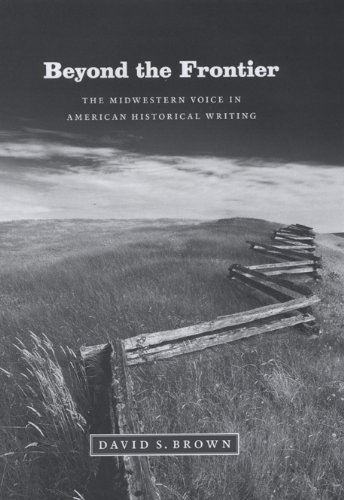
Beyond the Frontier: The Midwestern Voice in American Historical...
Authors:
David S. Brown
Publisher:
University Of Chicago Press
Publication Date:
Not available
ISBN:
0226076512
As the world went to war in 1941, Time magazine founder Henry Luce coined a term for what was rapidly becoming the establishment view of America’s... role in the world: the twentieth century, he argued, was the American Century. Many of the nation’s most eminent historians—nearly all of them from the East Coast—agreed with this vision and its endorsement of the vigorous use of power and persuasion to direct world affairs. But an important concentration of midwestern historians actively dissented. With Beyond the Frontier, David S. Brown tells their little-known story of opposition.Raised in a cultural landscape that combined agrarian provincialism with reform-minded progressivism, these historians—among them Charles Beard, William Appleman Williams, and Christopher Lasch—argued strenuously against the imperial presidencies, interventionist foreign policies, and Keynesian capitalism that swiftly shaped cold war America. Casting a skeptical eye on the burgeoning military-industrial complex and its domestic counterpart, the welfare state, they warned that both components of the liberal internationalist vision jeopardized the individualistic, republican ethos that had long lain at the heart of American democracy.Drawing on interviews, personal papers, and correspondence of the imoprtant players in the debate, Brown has written a fascinating follow-up to his critically acclaimed biography of Richard Hofstadter. Illuminating key ideas that link midwestern writers from Frederick Jackson Turner all the way to William Cronon and Thomas Frank, Beyond the Frontier is intellectual history at its best: grounded in real lives and focused on issues that remain salient—and unresolved—even today.
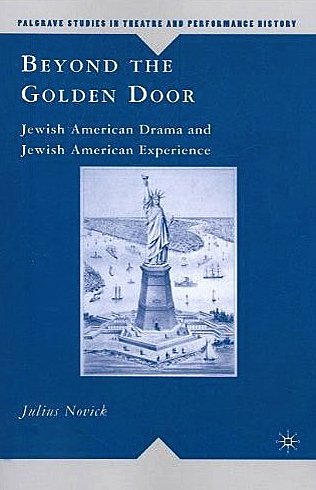
Beyond the Golden Door: Jewish American Drama and Jewish American...
Authors:
Julius Novick
Publisher:
Palgrave Macmillan
Publication Date:
Not available
ISBN:
0230619665
Clifford Odets. Arthur Miller. Paddy Chayefsky. Neil Simon. Jules Feiffer. Wendy Wasserstein. Tony Kushner. These leading American playwrights do not... just happen to be Jewish: they are Jewish playwrights. They and other Jewish playwrights have written out of their own experience, for general American audiences, about what it feels like to be twentieth-century American Jews. Beyond the Golden Door is the first book devoted to showing how Jewish playwrights have dramatized the great struggle to balance Old World heritage with New World opportunity—a struggle with implications for all American ethnicities.
Beyond the Grammar Wars: A Resource for Teachers and Students on...
Authors:
Not Available
Publisher:
Routledge
Publication Date:
Not available
ISBN:
0415802652
Are there evidence-based answers to the broad question "What explicit knowledge about language in teachers and/or students appears to enhance literacy... development in some way"? Distinguished by its global perspective, its currency, and its comprehensiveness, Beyond the Grammar Wars: provides an historical overview of the debates around grammar and English/literacy teaching in four settings: the US, England, Scotland and Australia offers an up-to-date account of what the research is telling (and not telling) us about the effectiveness of certain kinds of grammar-based pedagogies in English/literacy classrooms takes readers into English/literacy classrooms through a range of examples of language/grammar-based pedagogies which have proven to be successful addresses metalinguistic issues related to changes in textual practices in a digital and multimodal age, and explores the challenges for educators who are committed to finding a "usable grammar" to contribute to teaching and learning in relation to these practices. All of the contributors are acknowledged experts in their field. Activities designed for use in language and literacy education courses actively engage students in reflecting on and applying the content in their own teaching contexts.
Beyond the Great Story: History as Text and Discourse
Authors:
Robert F. Berkhofer Jr.
Publisher:
Belknap Press of Harvard University Press
Publication Date:
Not available
ISBN:
0674069080
What legitimate form can history take when faced by the severe challenges issued in recent years by literary, rhetorical, multiculturalist, and... feminist theories? That is the question considered in this long-awaited and pathbreaking book. Robert F. Berkhofer, Jr., addresses the essential practical concern of contemporary historians; he offers a way actually to go about reading and writing histories in light of the many contesting theories. Berkhofer ranges through a vast archive of recent writings by a broad range of authors. He explicates the opposing paradigms and their corresponding dilemmas by presenting in dialogue form the positions of modernists and postmodernists, formalists and deconstructionists, textualists and contextualists. Poststructuralism, the New Historicism, the New Anthropology, the New Philosophy of History--these and many other approaches are illuminated in new ways in these comprehensive, interdisciplinary explorations. From them, Berkhofer arrives at a clear vision of the forms historical discourse might take, advocates a new approach to historical criticism, and proposes new forms of historical representation that encompass multiculturalism, poetics, and reflexive (con)textualization. He elegantly blends traditional and new methodology; assesses what the "revival of the narrative" actually entails; considers the politics of disciplinary frameworks; and derives coherent new approaches to writing, teaching, reviewing, and reading histories.
Beyond the Hoax: Science, Philosophy and Culture
Authors:
Alan Sokal
Publisher:
Oxford University Press, USA
Publication Date:
Not available
ISBN:
0199239207
When physicist Alan Sokal revealed that his 1996 article, "Transgressing the Boundaries: Toward a Transformative Hermeneutics of Quantum Gravity,"... published in Social Text, was a hoax, the ensuing scandal made the front page of the New York Times and caused an uproar among the post-modernists he had so hilariously--and convincingly--parodied. Now, in Beyond the Hoax, Sokal revisits this remarkable chapter in our intellectual history to illuminate issues that are with us even more pressingly today than they were a decade ago. Sokal's main argument, then and now, is for the centrality of evidence in all matters of public debate. The original article, (included in the book, with new explanatory footnotes), exposed the faulty thinking and outright nonsense of the postmodernist critique of science, which asserts that facts, truth, evidence, even reality itself are all merely social constructs. Today, right wing politicians and industry executives are happily manipulating these basic tenents of postmodernism to obscure the scientific consensus on global warming, biological evolution, second-hand smoke, and a host of other issues. Indeed, Sokal shows that academic leftists have unwittingly abetted right wing ideologies by wrapping themselves in a relativistic fog where any belief is as valid as any other because all claims to truth must be regarded as equally suspect. Sokal's goal, throughout the book, is to expose the dangers in such thinking and to defend a scientific worldview based on respect for evidence, logic, and reasoned argument over wishful thinking, superstition, and demagoguery of any kind. Written with rare lucidity, a lively wit, and a keen appreciation of the real-world consequences of sloppy thinking, Beyond the Hoax is essential reading for anyone concerned with the state of American culture today.
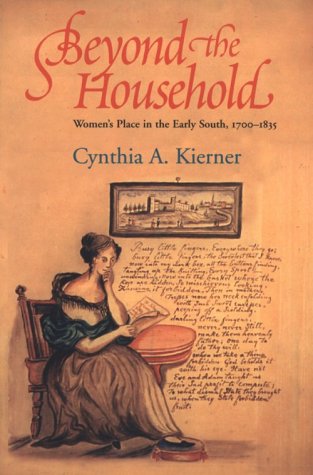
Beyond the Household: Women's Place in the Early South, 1700-1835...
Authors:
Cynthia A. Kierner
Publisher:
Cornell University Press
Publication Date:
Not available
ISBN:
0801484626
Much has been written about the "southern lady," that pervasive and enduring icon of antebellum regional identity. But how did the lady get on her... pedestal-and were the lives of white southern women always so different from those of their northern contemporaries? In her ambitious new book, Cynthia A. Kierner charts the evolution of the lives of white southern women through the colonial, revolutionary, and early republican eras. Using the lady on her pedestal as the end-rather than the beginning-of her story, she shows how gentility, republican political ideals, and evangelical religion successively altered southern gender ideals and thereby forced women to reshape their public roles. Kierner concludes that southern women continually renegotiated their access to the public sphere-and that even the emergence of the frail and submissive lady as icon did not obliterate women's public role.Kierner draws on a strong overall command of early American and women's history and adds to it research in letters, diaries, newspapers, secular and religious periodicals, travelers' accounts, etiquette manuals, and cookery books. Focusing on the issues of work, education, and access to the public sphere, she explores the evolution of southern gender ideals in an important transitional era. Specifically, she asks what kinds of changes occurred in women's relation to the public sphere from 1700 to 1835. In answering this major question, she makes important links and comparisons, across both time and region, and creates a chronology of social and intellectual change that addresses many key questions in the history of women, the South, and early America.
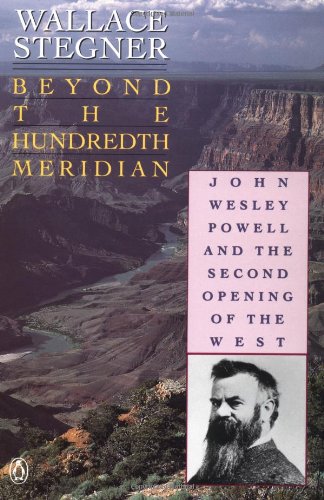
Beyond the Hundredth Meridian: John Wesley Powell and the Second...
Authors:
Wallace Stegner
Publisher:
Green Cat Press
Publication Date:
Not available
ISBN:
0140159940
In this book Wallace Stegner recounts the sucesses and frustrations of John Wesley Powell, the distinguished ethnologist and geologist who explored the... Colorado River, the Grand Canyon, and the homeland of Indian tribes of the American Southwest. A prophet without honor who had a profound understanding of the American West, Powell warned long ago of the dangers economic exploitation would pose to the West and spent a good deal of his life overcoming Washington politics in getting his message across. Only now, we may recognize just how accurate a prophet he was. "This book goes far beyond biography, into the nature and soul of the American West. It is Stegner at his best, assaying an entire era of our history, packing his pages with insights as shrewd as his prose." —Ivan Doig
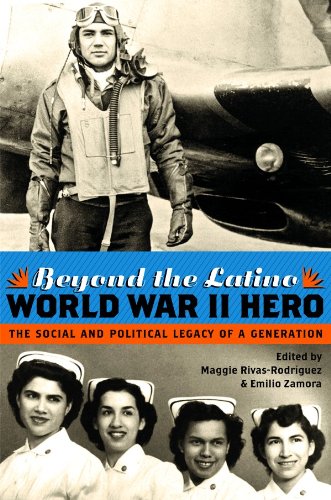
Beyond the Latino World War II Hero: The Social and Political...
Authors:
Not Available
Publisher:
University of Texas Press
Publication Date:
Not available
ISBN:
0292725809
Maggie Rivas-Rodríguez 's edited volume Mexican Americans & World War II brought pivotal stories from the shadows, contributing to the growing... acknowledgment of Mexican American patriotism as a meaningful force within the Greatest Generation. In this latest anthology, Rivas-Rodríguez and historian Emilio Zamora team up with scholars from various disciplines to add new insights. Beyond the Latino World War II Hero focuses on home-front issues and government relations, delving into new arenas of research and incorporating stirring oral histories. These recollections highlight realities such as post-traumatic stress disorder and its effects on veterans' families, as well as Mexican American women of this era, whose fighting spirit inspired their daughters to participate in Chicana/o activism of the 1960s and 1970s. Other topics include the importance of radio as a powerful medium during the war and postwar periods, the participation of Mexican nationals in World War II, and intergovernmental negotiations involving Mexico and Puerto Rico. Addressing the complexity of the Latino war experience, such as the tandem between the frontline and the disruption of the agricultural migrant stream on the home front, the authors and contributors unite diverse perspectives to harness the rich resources of an invaluable oral history.
Beyond the Lean Revolution: Achieving Successful and Sustainable...
Authors:
Deborah J. Nightingale
Publisher:
AMACOM
Publication Date:
Not available
ISBN:
0814417094
Most organizations are engaged in change efforts often focused solely on eliminating waste in specific departments or 'silos'. That's the 'lean... paradigm', and while it's a good place to start, enterprise transformation goes much further. It begins with the big picture: What are the strategic objectives? How is the enterprise per forming against those objectives? How should it be? Who are the stakeholders and what do they value? Then it moves forward toward an audacious vision of the enterprise's future. Based on years of research and implementation, "Beyond the Lean Revolution" provides a roadmap for achieving sustainable, bottom-line results, delivering value to stakeholders, and reaching that future vision. Filled with illuminating examples, the book moves well beyond traditional lean thinking, showing readers how to: ensure senior leadership commitment; assess the enterprise's current state; analyze stakeholder values; develop a future vision; and, create a plan for transformation. From inception to implementation and beyond, this book provides a holistic framework for bridging the gap from mere change to genuine transformation.
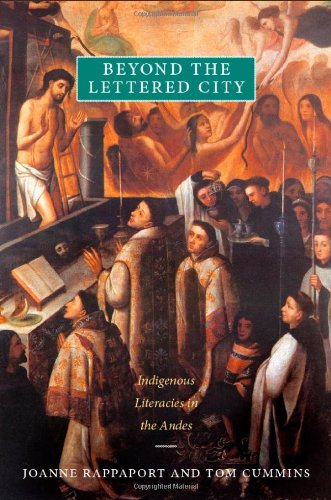
Beyond the Lettered City: Indigenous Literacies in the Andes...
Authors:
Joanne Rappaport
Publisher:
Duke University Press Books
Publication Date:
Not available
ISBN:
0822351285
In Beyond the Lettered City, the anthropologist Joanne Rappaport and the art historian Tom Cummins examine the colonial imposition of alphabetic and... visual literacy on indigenous groups in the northern Andes. They consider how the Andean peoples received, maintained, and subverted the conventions of Spanish literacy, often combining them with their own traditions. Indigenous Andean communities neither used narrative pictorial representation nor had alphabetic or hieroglyphic literacy before the arrival of the Spaniards. To absorb the conventions of Spanish literacy, they had to engage with European symbolic systems. Doing so altered their worldviews and everyday lives, making alphabetic and visual literacy prime tools of colonial domination. Rappaport and Cummins advocate a broad understanding of literacy, including not only reading and writing, but also interpretations of the spoken word, paintings, wax seals, gestures, and urban design. By analyzing secular and religious notarial manuals and dictionaries, urban architecture, religious images, catechisms and sermons, and the vast corpus of administrative documents produced by the colonial authorities and indigenous scribes, they expand Ángel Rama’s concept of the lettered city to encompass many of those who previously would have been considered the least literate.
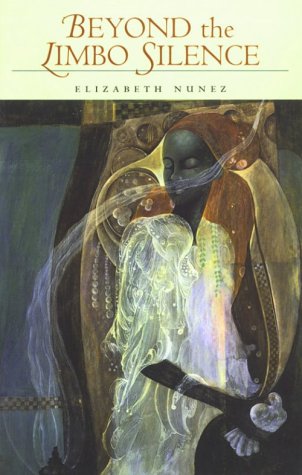
Beyond the Limbo Silence
Authors:
Elizabeth Nunez
Publisher:
Seal Press
Publication Date:
Not available
ISBN:
1580050131
In the tradition of novelists Alice Walker, Jamaica Kincaid, and Tsitsi Dangarembga, Elizabeth Nunez weaves a personal story into the broader tapestry... of political history. Twenty-year-old Sara Edgehill has left her native Trinidad in 1963 to attend college in Oshkosh, Wisconsin, where she joins two other girls -- Courtney from St. Lucia and Angela from British Guyana -- in the task of integrating the all-white school. For Sara, coming from a world in which she is connected to a vibrant community and culture, this cold, alien place in which she is neither loved nor understood is profoundly shocking and disorienting.She longs to return to Trinidad, but knows she must finish college. Slowly, Sara finds support in her friendship with Courtney, who covertly practices voodoo rituals, and in a blossoming relationship with Sam, an African-American who draws her into the turbulent civil rights movement.Set against vivid historical events and written with poignancy and insight, Beyond the Limbo Silence will surely take its place among the classics of its genre.
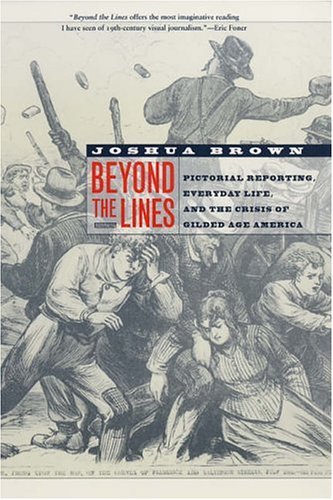
Beyond the Lines: Pictorial Reporting, Everyday Life, and the...
Authors:
Joshua Brown
Publisher:
University of California Press
Publication Date:
Not available
ISBN:
0520248147
In this wonderfully illustrated book, Joshua Brown shows that the wood engravings in the illustrated newspapers of Gilded Age America were more than a... quaint predecessor to our own sophisticated media. As he tells the history and traces the influence of Frank Leslie's Illustrated Newspaper, with relevant asides to Harper's Weekly, the New York Daily Graphic, and others, Brown recaptures the complexity and richness of pictorial reporting. He finds these images to be significant barometers for gauging how the general public perceived pivotal events and crises--the Civil War, Reconstruction, important labor battles, and more. This book is the best available source on the pictorial riches of Frank Leslie's newspaper and the only study to situate these images fully within the social context of Gilded Age America. Beyond the Lines illuminates the role of illustration in nineteenth-century America and gives us a new look at how the social milieu shaped the practice of illustrated journalism and was in turn shaped by it.
 '
'