production
/viewbook/list/all/?page=1569
/
/static/
None

BIOMECHANICS (HAMILTON/LUTGENS) [POD] [CUSTOM]
Authors:
Not Available
Publisher:
Not available
Publication Date:
Not available
ISBN:
Not available
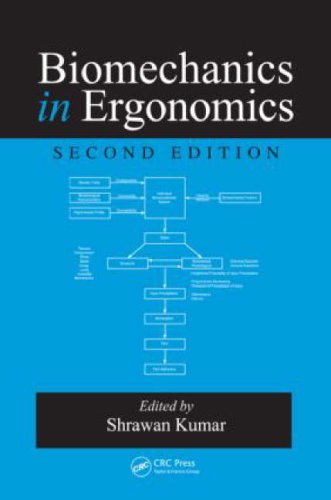
Biomechanics in Ergonomics, Second Edition
Authors:
Not Available
Publisher:
CRC Press
Publication Date:
Not available
ISBN:
0849379083
Safety or comfort? Can you truly have one without the other? Is it feasible to have both? Although by no means the only factor, a deep understanding of... biomechanics plays a leading role in the design of work and workplaces that are both pain and injury free. Standing firmly on the foundation built by the previous edition, the second edition of Biomechanics in Ergonomics establishes an understanding of gross biomechanical loads on the human system at the tissue level and then brings that understanding through to the whole body level. Applications for the Real World Produced under the aegis of editor Shrawan Kumar with contributors who are leading scholars in the field, the book contains unique chapters such as Exposure Assessment Tools and Techniques and Cumulative Load and Models. Also included is a chapter on hand tools, which have a real application to the field of ergonomics. New and significantly revamped chapters: Theories of occupational musculoskeletal injury causation Anthropometry and Biomechanics — Anthropometrics Mechanical Exposure Assessment in the Design of Work Determinant of Muscle Strength Biomechanics of Gloves The ACGIH TLV® for Hand Activity Level Whiplash Injuries — In Vitro Studies Whiplash Injuries — In Vivo Studies Models in Manual Materials Handling Revised NIOSH Lifting Equation Whole Body Vibration Cumulative Load and Models Create Safety Through Better Workplace Design The book dives deep into the biomechanics of the connective tissues before thoroughly covering upper and lower extremities, shoulder and neck, low back, and whole body mechanics. With chapters selected and designed to provide extensive coverage of ergonomically relevant biomechanics, this volume supplies an integrated understanding of the inseparable relationship between ergonomics and biomechanics that can be translated into better safety design and better workplaces.
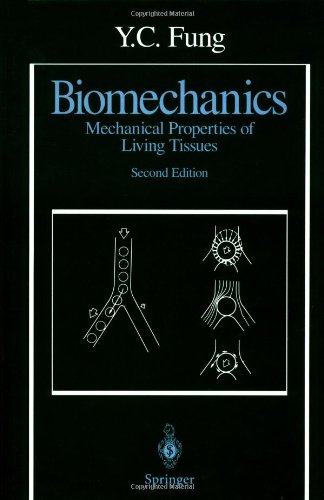
Biomechanics: Mechanical Properties of Living Tissues
Authors:
Y. C. Fung
Publisher:
Springer
Publication Date:
Not available
ISBN:
0387979476
This classic book is accepted internationally as the standard treatment of the mechanical properties of biological fluids, solids, tissues and organs.... It is used widely as both a reference and textbook in this rapidly-growing field. Biomechanics presents a general outline of the discipline, with applications to bioengineering, physiology, medicine and surgery. The second edition reflects the broad advances that have been made in this field during the past decade, and adds numerous new topics. References have been brought up to date, and the widely-praised emphasis on formulating and solving problems has been strengthened with numerous new problems.
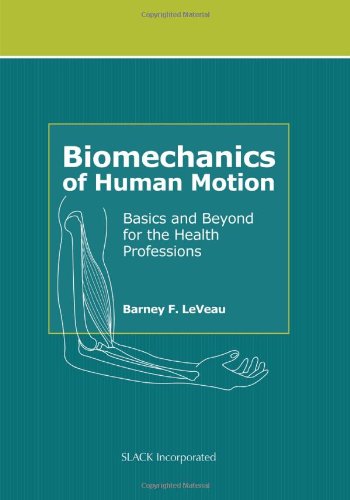
Biomechanics of Human Motion: Basics and Beyond for the Health...
Authors:
Barney F. LeVeau PhD PT
Publisher:
Slack Incorporated
Publication Date:
Not available
ISBN:
1556429053
Biomechanics of Human Motion: Basics and Beyond for the Health Professions presents a straightforward approach to the basic principles, theories and... applications of biomechanics and provides numerous techniques and examples for approaching biomechanical situations enhanced by healthcare professionals.Building on his previous work, Dr. Barney LeVeau uses clearly defined, concise terms and real-life applications rather than advanced mathematics to make teaching and learning biomechanics easier. Based upon the concept of force, the text illustrates how force is applied to the human body and how the body applies force to various objects. The emphasis is upon the pertinent factors that guide the reader to an understanding of biomechanics at a beginning level.Chapter Topics Include: • Strength of material such as loading and stress-strain relationships • Composition and Resolution of Forces such as graphic method and mathematical method • Equilibrium such as static, first condition and second condition • Dynamics such as kinematics and kinetics • Application such as stability and balance, motion analysis, and gaitWhat’s Inside: • Simple explanations of biological & mechanical concepts • Contemporary articles at the end of each chapter providing readers with information beyond the basics • Over 240 images illustrate biomechanical situations and computations • User-friendly, uncomplicated mathematical formulas and examplesBiomechanics of Human Motion: Basics and Beyond for the Health Professions provides students and clinicians of all allied health professions with a basic background and solid foundation on which to build a solid understanding of force and biomechanics.
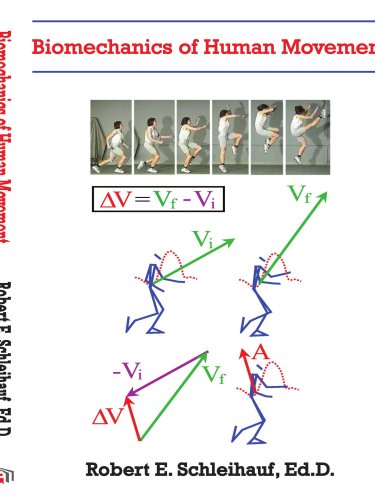
Biomechanics of Human Movement
Authors:
Robert Schleihauf
Publisher:
AuthorHouse
Publication Date:
Not available
ISBN:
1418469580
This Biomechanics of Human Movement textbook is designed for use with advanced undergraduate students and entry level graduate students. The following... topics are considered in considerable depth: Linear Kinematics, Linear Kinetics, Angular Kinematics, Angular Kinetics and Fluid Mechanics. The text is extensively illustrated (670 illustrations) and integrated with two supplementary software programs: The BHMViewer software provides assess to animated color illustrations, slow motion and stop action video clips, and interactive questions. The Kinematic Analysis software provides the tools needed for a complete video analysis of human movement. This research software is tied to the textbook through computer based laboratory exercises that reinforce the critical concepts presented in the text. The courseware is available through a "Laboratory-Support" distribution plan (see www.kavideo.sfsu.edu).

Biomechanics of Human Movement and Sport
Authors:
DANNY TOO
Publisher:
Kendall Hunt Publishing
Publication Date:
Not available
ISBN:
0757520200
Biomechanics of Musculoskeletal Injury, Second Edition
Authors:
William C. Whiting PhD
Publisher:
Human Kinetics
Publication Date:
Not available
ISBN:
0736054421
Biomechanics of Musculoskeletal Injury, Second Edition, presents clear, accessible explanations of the biomechanical principles of injury and how... injuries affect the normal function of muscles, connective tissue, and joints. Noted biomechanists William Whiting and Ronald Zernicke guide readers through the mechanical concepts of musculoskeletal injuries without heavy emphasis on mathematics.Almost 10 years after the publication of the first edition, this much-needed second edition has been vastly improved. Packed with more than 400 illustrations, including graphs and anatomical art (nearly twice as many as in the previous edition), Biomechanics of Musculoskeletal Injury, Second Edition, is an indispensable reference offering perspectives on and appreciation for the intricacies of injury mechanisms. The text provides a solid foundation for in-depth study with a comprehensive examination of these issues:-The mechanical aspects of injury and the concept of injury as a stimulus for beneficial tissue adaptations -How injury affects the normal function of the human musculoskeletal system and an examination of arthrology, or joint mechanics-Mechanical parameters such as force, stress and strain, stiffness, and elasticity and their application to tissue mechanics and injury-How connective tissues respond to mechanical loading and how those tissues are studied to quantify their mechanical behavior-Factors such as age, gender, nutrition, and exercise with emphasis on how lifestyle choices might lessen the chance or severity of injury-How the principles of mechanical load and overload, use and overuse, level and progression of injury, and the many contributory factors involved in injury combine to form a backdrop for viewing specific musculoskeletal injuriesDrawing on the information provided in previous chapters, the final section of the text covers the essentials of injuries of the lower extremity, upper extremity, and the head, neck, and trunk. New to the second edition, special sections titled “A Closer Look” present a detailed analysis of anterior cruciate ligament injuries, rotator cuff pathologies, and concussion. In addition, topics of current concern such as falls in older populations, throwing-related rotator cuff pathologies, and youth-related injuries from carrying backpacks are also discussed.This new edition also employs updated design features to reinforce learning, including the addition of a second color to highlight new sections and special elements. The running glossary provides immediate access to definitions, thereby increasing reading comprehension. The improved index offers a quick-search feature for glossary word definitions, and expanded references provide direction for further study. Additionally, essay questions included at the end of each chapter help readers create logical flows of information pertinent to chapter contents. For instructors, an online instructor guide offers outlines of the topics that students should address to answer the chapter review questions. Also available to instructors is an online presentation package featuring the graphics from the text to be incorporated easily into lecture presentations. By providing an understanding of injury mechanisms in all body regions, Biomechanics of Musculoskeletal Injury, Second Edition, serves as a comprehensive resource to assist health professionals, researchers, and students with the proper diagnosis, treatment, and prevention of musculoskeletal injuries.
Biomechanics of Skeletal Muscles
Authors:
Vladimir Zatsiorsky
Publisher:
Human Kinetics
Publication Date:
Not available
ISBN:
0736080201
Richly illustrated and presented in clear, concise language, Biomechanics of Skeletal Muscles is an essential resource for those seeking advanced... knowledge of muscle biomechanics. Written by leading experts Vladimir Zatsiorsky and Boris Prilutsky, the text is one of the few to look at muscle biomechanics in its entirety—from muscle fibers to muscle coordination—making it a unique contribution to the field. Using a blend of experimental evidence and mechanical models, Biomechanics of Skeletal Muscles provides an explanation of whole muscle biomechanics at work in the body in motion. The book first addresses the mechanical behavior of single muscles—from the sarcomere level up to the entire muscle. The architecture of human muscle, the mechanical properties of tendons and passive muscles, the biomechanics of active muscles, and the force transmission and shock absorption aspects of muscle are explored in detail. Next, the various issues of muscle functioning during human motion are addressed. The transformation from muscle force to joint movements, two-joint muscle function, eccentric muscle action, and muscle coordination are analyzed. This advanced text assumes some knowledge of algebra and calculus; however, the emphasis is on understanding physical concepts. Higher-level computational descriptions are placed in special sections in the later chapters of the book, allowing those with a strong mathematical background to explore this material in more detail. Readers who choose to skip over these sections will find that the book still provides a strong conceptual understanding of advanced topics. Biomechanics of Skeletal Muscles also contains numerous special features that facilitate readers’ comprehension of the topics presented. More than 300 illustrations and accompanying explanations provide an extensive visual representation of muscle biomechanics. Refresher sidebars offer brief reminders of mathematical and biomechanical concepts, and From the Literature sidebars present practical examples that illustrate the concepts under discussion. Chapter summaries and review questions provide an opportunity for reflection and self-testing, and reference lists at the end of each chapter provide a starting point for further study. Biomechanics of Skeletal Muscles offers a thorough explanation of whole muscle biomechanics, bridging the gap between foundational biomechanics texts and scientific literature. With the information found in this text, readers can prepare themselves to better understand the latest in cutting-edge research. Biomechanics of Skeletal Muscles is the third volume in the Biomechanics of Human Motion series. Advanced readers in human movement science gain a comprehensive understanding of the biomechanics of human motion as presented by one of the world’s foremost researchers on the subject, Dr. Vladimir Zatsiorsky. The series begins with Kinematics of Human Motion, which details human body positioning and movement in three dimensions; continues with Kinetics of Human Motion, which examines the forces that create body motion and their effects; and concludes with Biomechanics of Skeletal Muscles, which explains the action of the biological motors that exert force and produce mechanical work during human movement.
Biomechanics of Sport and Exercise
Authors:
Peter M. McGinnis
Publisher:
Human Kinetics
Publication Date:
Not available
ISBN:
0736079661
Taking a unique approach to the presentation of mechanical concepts, Biomechanics of Sport and Exercise, Third Edition With Web Resource and... MaxTRAQ Software Access, introduces exercise and sport biomechanics in simple terms. By providing mechanics before functional anatomy, the book helps students understand forces and their effects before studying how body structures deal with forces. Students will learn to appreciate the consequences of external forces, how the body generates internal forces to maintain position, and how forces create movement in physical activities. Rather than presenting the principles as isolated and abstract, the text enables students to discover the principles of biomechanics for themselves through observation. By examining ordinary activities firsthand, students will develop meaningful explanations resulting in a deeper understanding of the underlying mechanical concepts. This practical approach combines striking visual elements with clear and concise language to encourage active learning and improved comprehension. This updated edition maintains the organization and features that made previous editions user friendly, such as a quick reference guide of frequently used equations printed on the inside cover and review questions at the end of each chapter to test students’ understanding of important concepts. The third edition also incorporates new features to facilitate learning: • Access to MaxTRAQ software allows students to analyze real-world sport movements through video. • The new web resource guides students step by step through the process of solving 10 sample problems. • New art and diagrams enhance problem sets and help students visualize the mechanics of real-world scenarios. • Increased number of review questions (200) and problem sets (120) provide an opportunity for practical application of concepts. • Greater emphasis on the basics, including improved descriptions of conversions and an expanded explanation of the assumption of point mass when modeling objects, provides a stronger foundation for understanding. • New content on deriving kinematic data from video or film and the use of accelerometers in monitoring physical activity keeps students informed of technological advances in the field. Biomechanics of Sport and Exercise, Third Edition With Web Resource and MaxTRAQ Software Access, is supplemented with two companion resources that will help students better comprehend the material. The web resource includes all of the problems from the book, separated by chapter, plus 10 sample problems that guide students step by step through the process of solving. This text is also enhanced with access to MaxTRAQ 2D software for Windows. MaxTRAQ 2D software enables students to analyze and quantify real-world sport movements in video clips and upload their own video content for analysis. The software supplements the final section of the text that bridges the concepts of internal and external forces with the application of biomechanics; it also provides an overview of the technology used in conducting quantitative biomechanical analyses. Access to both online resources is included with new print books. To purchase the components separately, click on the web resource under “Related Products” in the right column. Instructors will benefit from an updated ancillary package. An instructor guide outlines each chapter and offers step-by-step solutions to the quantitative problems presented, as well as sample lecture topics, student activities, and teaching tips. A test package makes it easy to prepare quizzes and tests, and an image bank contains most of the figures and tables from the text for use in developing course presentations. Biomechanics of Sport and Exercise, Third Edition, is ideal for those needing a deeper understanding of biomechanics from a qualitative perspective. Thoroughly updated and expanded, this text makes the biomechanics of physical activity easy to understand and apply.
Biomechanics of Sport and Exercise-2nd Edition
Authors:
Peter McGinnis
Publisher:
Humsn Kinetics Publishers,2005
Publication Date:
Not available
ISBN:
0736051015
Like the groundbreaking first edition, Biomechanics of Sport and Exercise, Second Edition, introduces exercise and sport biomechanics in simple and... concise terms rather than focusing on complex math and physics. With a unique presentation of biomechanical concepts supported with illustrations, the book helps students learn to appreciate external forces and their effects, how the body generates forces to maintain position, and how forces create movement in physical activities. Biomechanics of Sport and Exercise, Second Edition, allows students to discover the principles of biomechanics through observation of common activities. By observing ordinary activities firsthand, students will be able to develop functional and meaningful explanations, resulting in a deeper understanding of the underlying mechanical concepts. This practical approach combines striking visual elements with clear and concise language to encourage active learning and improved comprehension. Many new benefits are in the second edition for students and instructors alike: -More sample problems throughout the book to illustrate problem-solving techniques-A quick reference guide of frequently used equations printed on the inside cover-A new chapter on technology used in the study of biomechanics-Review questions at the end of each chapter to test the reader's understanding of important concepts -A new instructor guide outlining each chapter and step-by-step solutions to the quantitative problems presented, as well as a test packageBiomechanics of Sport and Exercise, Second Edition, is ideal for those needing a deeper understanding of biomechanics from a qualitative perspective. Designed for students who will likely take only one course in biomechanics, the text prepares students to utilize the principles of biomechanics as professionals in the physical activity field. Thoroughly updated and expanded, Biomechanics of Sport and Exercise, Second Edition, makes the biomechanics of physical activity easy to understand and apply.
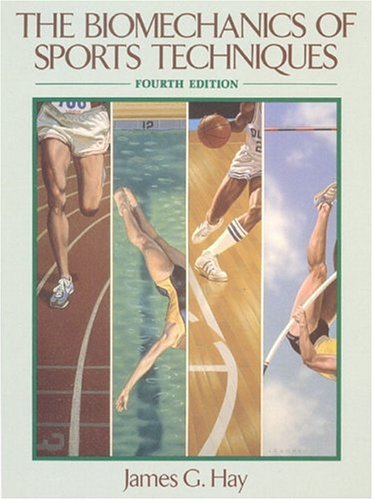
Biomechanics of Sports Techniques, The (4th Edition)
Authors:
James G. Hay
Publisher:
Benjamin Cummings
Publication Date:
Not available
ISBN:
0130845345
Recognized both nationally and internationally as the leading reference guide in the field, this volume provides a scientific basis for analyzing... the various sports techniques used in baseball, basketball, football, golf, gymnastics, softball, swimming, and track and field's running, jumping, and throwing. KEY TOPICS: The book explains how these techniques are used by first considering the basic factors involved in the performance of each technique, then discusses the current controversies and latest research findings surrounding each technique ... includes revised coverage of track and field -- the sport in which the most important research advances have been made ... discusses basic biomechanical concepts in order, from simple to complex, with each new concept building upon the last ... covers often overlooked aspects such as impulse, mechanical energy, lift and drag, and the segmentation method of locating the center of gravity of an athlete ... provides coverage of forms of motion, linear and angular kinematics, linear and angular kinetics, and fluid mechanics ... plus, contains new and revised illustrations throughout. Ideal for sports trainers, therapists, and anyone involved in biomechanics.
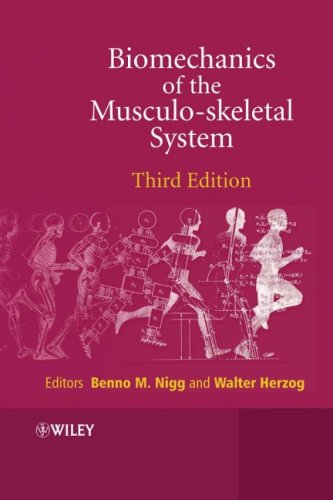
Biomechanics of the Musculo-skeletal System
Authors:
Benno M. Nigg
Publisher:
Wiley
Publication Date:
Not available
ISBN:
0470017678
The latest edition of this well organised and authoritative book provides a comprehensive account of the mechanics of the neuro-musculo-skeletal system.... Covering the key areas including the properties of biomaterials, common measuring techniques and modelling, Biomechanics of the Musculo-skeletal System, Third Edition also integrates historical aspects thus building a bridge between old and familiar knowledge and the latest developments in biomechanics. As with the previous edition there are numerous applications and extensive questions and answers at the end of sections. Specific changes for this edition include: Major revision of the section on biological materials including bone, cartilage, ligament, tendon, muscle and joints and new discussion of failure and healingExtensive updating of material covering force, pressure distribution, optical methods and simulationIncrease in the number and type of applications across a broad range of disciplinesBiomechanics of the Musculo-skeletal System, Third Edition is an invaluable resource for all students, professionals and researchers concerned with biomechanical aspects of the human or animal body.
Biomedical Applications for Introductory Physics
Authors:
J. A. Tuszynski
Publisher:
Wiley
Publication Date:
Not available
ISBN:
0471412953
* Can be utilized in either Algebra or Calculus-based courses and is available either as a standalone text or as a supplement for books like Cutnell... PHYSICS, 5e or Halliday, Resnick, & Walker FUNDAMENTALS OF PHYSICS, 6e.* Math level is Algebra & Trigonometry; however, a few examples require the use of integration and differentiation.* Unlike competing supplements, Tuszinski offers both a wealth of engaging biomedical applications as well as quantitative problem-solving. The quantitative problem-solving is presented in the form of worked examples and homework problems.* The quantitative problem-solving is presented in the form of worked examples and homework problems.* The standard organization facilitates the integration of the material into most introductory courses.

Biomedical Device Technology: Principles And Design
Authors:
Anthony Y. K. Chan
Publisher:
Charles C Thomas Pub Ltd
Publication Date:
Not available
ISBN:
0398077002

Biomedical Engineering: Bridging Medicine and Technology (Cambridge...
Authors:
W. Mark Saltzman
Publisher:
Cambridge University Press
Publication Date:
Not available
ISBN:
0521840996
This is an ideal text for an introduction to biomedical engineering. The book presents the basic science knowledge used by biomedical engineers at a... level accessible to all students and illustrates the first steps in applying this knowledge to solve problems in human medicine. Biomedical engineering now encompasses a range of fields of specialization including bioinstrumentation, bioimaging, biomechanics, biomaterials, and biomolecular engineering. This introduction to bioengineering assembles foundational resources from molecular and cellular biology and physiology and relates them to various sub-specialties of biomedical engineering. The first two parts of the book present basic information in molecular/cellular biology and human physiology; quantitative concepts are stressed in these sections. Comprehension of these basic life science principles provides the context in which biomedical engineers interact. The third part of the book introduces the sub-specialties in biomedical engineering, and emphasizes - through examples and profiles of people in the field - the types of problems biomedical engineers solve.
 '
'