production
/viewbook/list/all/?page=1586
/
/static/
None
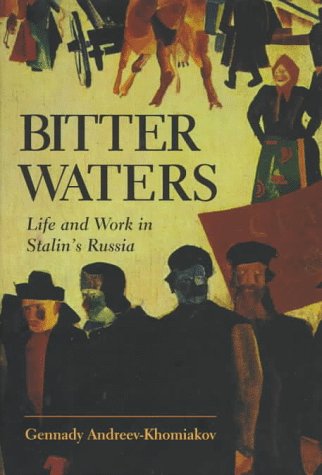
Bitter Waters: Life And Work In Stalin's Russia
Authors:
Gennady Andreev-khomiakov
Publisher:
Basic Books
Publication Date:
Not available
ISBN:
0813323908
One dusty summer day in 1935, a young writer named Gennady Andreev-Khomiakov was released from the Siberian labor camp where he had spent the last eight... years of his life. His total assets amounted to 25 rubles, a loaf of bread, five dried herrings, and the papers identifying him as a convicted “enemy of the people.” From this hard-pressed beginning, Andreev-Khomiakov would eventually work his way into a series of jobs that would allow him to travel and see more of ordinary life and work in the Soviet Union of the 1930s than most of his fellow Soviet citizens would ever have dreamed possible. Capitalizing on this rare opportunity, Bitter Waters is Andreev-Khomiakov’s eyewitness account of those tumultuous years, a time when titanic forces were shaping the course of Russian history.Later to become a successful writer and editor in the Russian émigré community in the 1950s and 1960s, Andreev-Khomiakov brilliantly uses this memoir to explore many aspects of Stalinist society. Forced collectivization, Five Year Plans, purges, and the questionable achievements of “shock worker brigades” are only part of this story. Andreev-Khomiakov exposes the Soviet economy as little more than a web of corruption, a system that largely functioned through bribery, barter, and brute force—and that fell into temporary chaos when the German army suddenly invaded in 1941.Bitter Waters may be most valuable for what it reveals about Russian society during the tumultuous 1930s. From remote provincial centers and rural areas, to the best and worst of Moscow and Leningrad, Andreev-Khomiakov’s series of deftly drawn sketches of people, places, and events provide a unique window on the hard daily lives of the people who built Stalin’s Soviet Union.

Bittker, McMahon & Zelenak's Federal Income Taxation of...
Authors:
Jr. Martin J. McMahon
Publisher:
Warren, Gorham & Lamont RIA
Publication Date:
Not available
ISBN:
0791348474

Bivariate Data Analysis: A Practical Guide
Authors:
Randi L. Sims
Publisher:
Nova Science Pub Inc
Publication Date:
Not available
ISBN:
1560727519
The purpose of this book is to help the users of computerised statistical packages make the correct statistical choices to match the data they have... already collected. It is assumed that the reader has information available on the use of the statistical package. While most statistical packages will perform whatever statistical analyses the user chooses, the package will not help the user in the selection of the choice or in the interpretation of the results. Thus, a statistical package is only a tool. While statistical packages come with instructions on their use, the user must know how to apply the package to the data available and how to read the results printed. The book provides a simple to understand, step-by-step guide for the user of any computerised statistical package. This book is designed to bivariate (two variables tested together) data analysis.
BIZ CAFE INTERPRETIVE SIMULATIONS CODE
Authors:
Not Available
Publisher:
Not available
Publication Date:
Not available
ISBN:
Not available

BizPlanBuilder Express: A Guide to Creating a Business Plan (with...
Authors:
Inc. JIAN Tools for Sale
Publisher:
South-Western College Pub
Publication Date:
Not available
ISBN:
0324421184
Make your business plan shine! BIZPLANBUILDER EXPRESS: A GUIDE TO CREATING A BUSINESS PLAN and its accompanying BizPlanBuilder CD-ROMshows you... step-by-step how to prepare each section of your plan, including ready-to-customize samples, prompts and advice, detailed marketing analysis, straight-forward financial tools, and links to marketing resources. BIZPLANBUILDER EXPRESS: A GUIDE TO CREATING A BUSINESS PLAN is the workbook you need to utilize this powerful business plan software, which works on either Windows or Macintosh, to its full potential.
BIZ-SIM: A BUSINESS SIMULATION
Authors:
Not Available
Publisher:
Not available
Publication Date:
Not available
ISBN:
Not available
BKM: Essentials of Investment (Sean Davis Investments class, UNF,...
Authors:
Kane, Marcus Bodie
Publisher:
Not available
Publication Date:
Not available
ISBN:
1121372023

B.K.S. Iyengar Yoga: The Path to Holistic Health
Authors:
B.K.S. Iyengar
Publisher:
DK ADULT
Publication Date:
Not available
ISBN:
0756633621
Updated to celebrate the Yogi's 90th birthday, this perennial bestseller is the only illustrated practical Iyengar yoga guide written by the master... himself. B.K.S. Iyengar Yoga: The Path to Holistic Health is the complete, authoritative teachings of B.K.S. Iyengar for mind, body, and health, and is suitable for every level of ability, age, and physical conditions. The book includes all the classic asanas, which are illustrated with 360¼ views of step-by-step sequences. There are also yoga sequences devoted to help ease the symptoms of more than 80 ailments, from asthma and arthritis to IBS and varicose veins. This edition's new material includes a chapter of reportage-style photography focusing on the life and works of B.K.S Iyengar, chronicling his path from a sickly childhood to a worldwide yoga authority.
BL 260 BUNDLE:ACP BUSINESS LAW
Authors:
Not Available
Publisher:
Not available
Publication Date:
Not available
ISBN:
Not available
BL 363:ACP BUSINESS LAW
Authors:
Not Available
Publisher:
Not available
Publication Date:
Not available
ISBN:
Not available
BLA 361/MBA 560 CUSTOM BOOK
Authors:
Not Available
Publisher:
Not available
Publication Date:
Not available
ISBN:
Not available
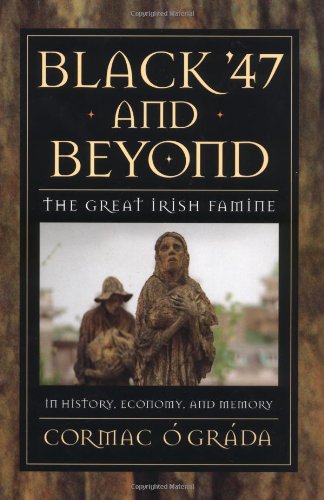
Black '47 and Beyond: The Great Irish Famine in History, Economy,...
Authors:
Cormac Ó Gráda
Publisher:
Princeton University Press
Publication Date:
Not available
ISBN:
0691070156
Here Ireland's premier economic historian and one of the leading authorities on the Great Irish Famine examines the most lethal natural disaster to... strike Europe in the nineteenth century. Between the mid-eighteenth and early-nineteenth centuries, the food source that we still call the Irish potato had allowed the fastest population growth in the whole of Western Europe. As vividly described in Ó'Gráda's new work, the advent of the blight phytophthora infestans transformed the potato from an emblem of utility to a symbol of death by starvation. The Irish famine peaked in Black '47, but it brought misery and increased mortality to Ireland for several years.Central to Irish and British history, European demography, the world history of famines, and the story of American immigration, the Great Irish Famine is presented here from a variety of new perspectives. Moving away from the traditional narrative historical approach to the catastrophe, Ó'Gráda concentrates instead on fresh insights available through interdisciplinary and comparative methods. He highlights several economic and sociological features of the famine previously neglected in the literature, such as the part played by traders and markets, by medical science, and by migration. Other topics include how the Irish climate, usually hospitable to the potato, exacerbated the failure of the crops in 1845-1847, and the controversial issue of Britain's failure to provide adequate relief to the dying Irish.Ó'Gráda also examines the impact on urban Dublin of what was mainly a rural disaster and offers a critical analysis of the famine as represented in folk memory and tradition.The broad scope of this book is matched by its remarkable range of sources, published and archival. The book will be the starting point for all future research into the Irish famine.
BLACK 4GB USB TRAVEL DRIVE
Authors:
Not Available
Publisher:
Not available
Publication Date:
Not available
ISBN:
Not available
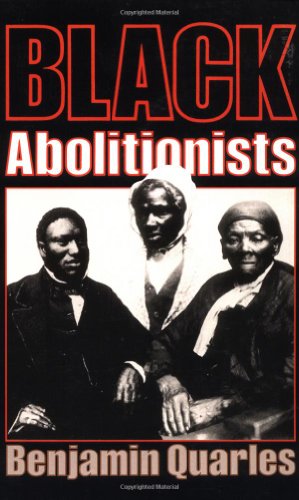
Black Abolitionists (Da Capo Paperback)
Authors:
Benjamin Quarles
Publisher:
Da Capo Press
Publication Date:
Not available
ISBN:
0306804255
While much is known about the white men and women who were involved in the anti-slavery movement, the black abolitionists have been largely ignored.... This book, written by one of America’s leading black historians, sets the record straight. As Benjamin Quarles shows, blacks were anything but passive in the abolitionist movement. Many of the pioneers of abolition were black; dozens of black preachers and writers actively promoted the cause; black organizations were founded to support their brothers; black ambassadors for freedom crossed the Atlantic; blacks were instrumental in the operation of the Underground Railroad. Quarles puts it eloquently: ”To the extent that America had a revolutionary tradition [the black American] was its protagonist no less than its symbol.”

Black African Cinema
Authors:
Nwachukwu Frank Ukadike
Publisher:
University of California Press
Publication Date:
Not available
ISBN:
0520077482
From the proselytizing lantern slides of early Christian missionaries to contemporary films that look at Africa through an African lens, N. Frank... Ukadike explores the development of black African cinema. He examines the impact of culture and history, and of technology and co-production, on filmmaking throughout Africa.Every aspect of African contact with and contribution to cinematic practices receives attention: British colonial cinema; the thematic and stylistic diversity of the pioneering "francophone" films; the effects of television on the motion picture industry; and patterns of television documentary filmmaking in "anglophone" regions. Ukadike gives special attention to the growth of independent production in Ghana and Nigeria, the unique Yoruba theater-film tradition, and the militant liberationist tendencies of "lusophone" filmmakers. He offers a lucid discussion of oral tradition as a creative matrix and the relationship between cinema and other forms of popular culture. And, by contrasting "new" African films with those based on the traditional paradigm, he explores the trends emerging from the eighties and nineties.Clearly written and accessible to specialist and general reader alike, Black African Cinema's analysis of key films and issues--the most comprehensive in English--is unique. The book's pan-Africanist vision heralds important new strategies for appraising a cinema that increasingly attracts the attention of film students and Africanists.
 '
'