production
/viewbook/list/all/?page=1588
/
/static/
None
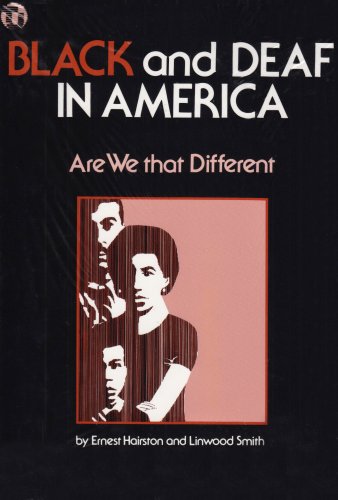
Black and Deaf in America
Authors:
Ernest Hairston
Publisher:
T J Pub Inc
Publication Date:
Not available
ISBN:
0932666183
This is an accessible introduction to the major areas of sociolinguistics as they relate to sign languages and deaf communities. Clearly organized, it... brings together a team of leading experts in sign linguistics to survey the field, and covers a wide range of topics including variation, multilingualism, bilingualism, language attitudes, discourse analysis, language policy and planning. Each chapter introduces the key issues in each area of inquiry and provides a comprehensive review of the literature. The book also includes suggestions for further reading and helpful exercises.

Black and Indigenous: Garifuna Activism and Consumer Culture in...
Authors:
Mark Anderson
Publisher:
Univ Of Minnesota Press
Publication Date:
Not available
ISBN:
0816661022
Garifuna live in Central America, primarily Honduras, and the United States. Identified as Black by others and by themselves, they also claim indigenous... status and rights in Latin America. Examining this set of paradoxes, Mark Anderson shows how, on the one hand, Garifuna embrace discourses of tradition, roots, and a paradigm of ethnic political struggle. On the other hand, Garifuna often affirm blackness through assertions of African roots and affiliations with Blacks elsewhere, drawing particularly on popular images of U.S. blackness embodied by hip-hop music and culture.Black and Indigenous explores the politics of race and culture among Garifuna in Honduras as a window into the active relations among multiculturalism, consumption, and neoliberalism in the Americas. Based on ethnographic work, Anderson questions perspectives that view indigeneity and blackness, nativist attachments and diasporic affiliations, as mutually exclusive paradigms of representation, being, and belonging.As Anderson reveals, within contemporary struggles of race, ethnicity, and culture, indigeneity serves as a normative model for collective rights, while blackness confers a status of subaltern cosmopolitanism. Indigeneity and blackness, he concludes, operate as unstable, often ambivalent, and sometimes overlapping modes through which people both represent themselves and negotiate oppression.

Black and White
Authors:
David Macaulay
Publisher:
Sandpiper
Publication Date:
Not available
ISBN:
0618636870
Four stories are told simultaneously, with each double-page spread divided into quadrants. The stories do not necessarily take place at the same moment... in time, but are they really one story?
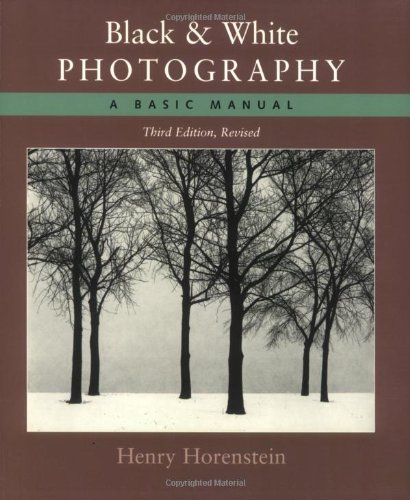
Black and White Photography: A Basic Manual Third Revised Edition
Authors:
Henry Horenstein
Publisher:
Little, Brown and Company
Publication Date:
Not available
ISBN:
0316373052
BLACK & WHITE PHOTOGRAPHY is a comprehensive instructional book that covers every element of photography. Henry Horenstein's books have been widely... used at leading universities, including Parsons School of Design, Harvard, Yale, Princeton, and MIT as well as in continuing education programs. Horenstein is a professor at the Rhode Island School of Design. BLACK & WHITE PHOTOGRAPHY is a real bargain among photographic how-to books.

Black and White Styles in Conflict
Authors:
Thomas Kochman
Publisher:
University Of Chicago Press
Publication Date:
Not available
ISBN:
0226449556
"Goes a long way toward showing a lay audience the value, integrity, and aesthetic sensibility of black culture, and moreover the conflicts which arise... when its values are treated as deviant version of majority ones."—Marjorie Harness Goodwin, American Ethnologist
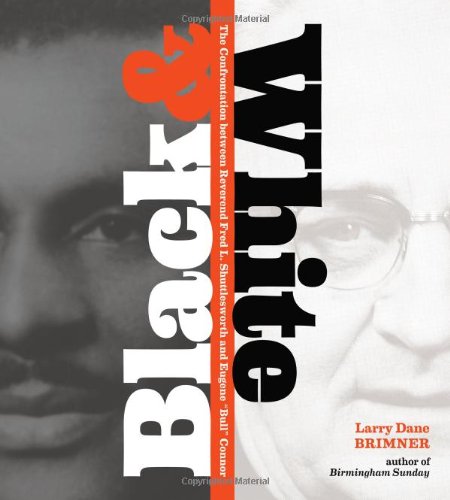
Black and White: The Confrontation between Reverend Fred L....
Authors:
Larry Dane Brimner
Publisher:
Boyds Mills Press
Publication Date:
Not available
ISBN:
1590787668
In the nineteen fifties and early sixties, Birmingham, Alabama, became known as Bombingham. At the center of this violent time in the fight for civil... rights, and standing at opposite ends, were Reverend Fred L. Shuttlesworth and Eugene "Bull" Connor. From his pulpit, Shuttlesworth agitated for racial equality, while Commissioner Connor fought for the status quo. Relying on court documents, police and FBI reports, newspapers, interviews, and photographs, author Larry Dane Brimner first covers each man's life and then brings them together to show how their confrontation brought about significant change to the southern city. The author worked closely with Birmingham's Civil Rights Institute as well as with Reverend Fred L. Shuttlesworth and his wife to bring together this Robert F. Sibert Honor Book, ALA Notable Children’s book, and Kirkus Reviews Best Children’s Book of the Year.

Black And White (Turtleback School & Library Binding Edition)
Authors:
David Macaulay
Publisher:
Turtleback
Publication Date:
Not available
ISBN:
1417718005

Black Ants and Buddhists
Authors:
Mary Cowhey
Publisher:
Stenhouse Publishers
Publication Date:
Not available
ISBN:
1571104186
What would a classroom look like if understanding and respecting differences in race, culture, beliefs, and opinions were at its heart? Welcome to Mary... Cowhey's Peace Class in Northampton, MA, where first and second graders view the entire curriculum through the framework of understanding the world, and trying to do their part to make it a better place.Woven through the book is Mary's unflinching and humorous account of her own roots in a struggling large Irish Catholic family and her early career as a community activist. Mary's teaching is infused with lessons of her heroes: Gandhi, Eleanor Roosevelt, Helen Keller, Martin Luther King, and others. Her students learn to make connections between their lives, the books they read, the community leaders they meet, and the larger world.If you were inspired to become a teacher because you wanted to change the world, and instead find yourself limited by teach-to-the-test pressures, this is the book that will make you think hard about how you spend your time with students. It offers no easy answers, just a wealth of insight into the challenges of helping students think critically about the world, and starting points for conversations about diversity and controversy in your classroom, as well as in the larger community.

Black Apollo of Science: The Life of Ernest Everett Just
Authors:
Kenneth R. Manning
Publisher:
Oxford University Press, USA
Publication Date:
Not available
ISBN:
0195034988
This biography illuminates the racial attitudes of an elite group of American scientists and foundation officers. It is the story of a complex and... unhappy man. It blends social, institutional, black, and political history with the history of science.
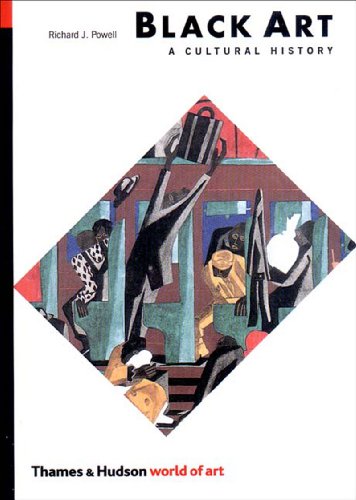
Black Art: A Cultural History (Second Edition) (World of Art)
Authors:
Richard J. Powell
Publisher:
Thames & Hudson
Publication Date:
Not available
ISBN:
0500203628
"Excellent artists' profiles, lots of reproductions, and illuminating and original discussions of social and cultural contexts of African American... art."—Booklist.The African diaspora—a direct result of the transatlantic slave trade and Western colonialism—generated a wide array of artistic achievements in the past century, from blues to reggae, from the paintings of Henry Ossawa Tanner to the video installations of Keith Piper. Richard Powell's study concentrates on the works of art themselves and on how these works, created during a time of major social upheaval and transformation, use black culture as both subject and context. From musings on the "the souls of black folk" in early twentieth-century painting, sculpture, and photography to questions of racial and cultural identities in performance, media, and computer-assisted arts in the 1990s, the book draws on the works of hundreds of artists including Jean-Michel Basquiat, Romare Bearden, Elizabeth Catlett, Lois Mailou Jones, Wifredo Lam, Jacob Lawrence, Spike Lee, Archibald Motley, Jr., Faith Ringgold, and Gerard Sekoto. This revised edition includes expanded coverage of video art and a new chapter that discusses work by a number of artists who have newly risen to prominence, such as Chris Ofili, Kara Walker, and Renée Cox. Biographies of more than 170 key artists provide a unique art-historical reference. Placing its emphasis on black cultural themes rather than on black racial identity, this groundbreaking book is an important exploration of the visual representations of black culture throughout the twentieth century and into the twenty-first. 190 illustrations, 36 in color

Black Arts West: Culture and Struggle in Postwar Los Angeles
Authors:
Daniel Widener
Publisher:
Duke University Press Books
Publication Date:
Not available
ISBN:
0822346796
From postwar efforts to end discrimination in the motion-picture industry, recording studios, and musicians’ unions, through the development of... community-based arts organizations, to the creation of searing films critiquing conditions in the black working class neighborhoods of a city touting its multiculturalism—Black Arts West documents the social and political significance of African American arts activity in Los Angeles between the Second World War and the riots of 1992. Focusing on the lives and work of black writers, visual artists, musicians, and filmmakers, Daniel Widener tells how black cultural politics changed over time, and how altered political realities generated new forms of artistic and cultural expression. His narrative is filled with figures invested in the politics of black art and culture in postwar Los Angeles, including not only African American artists but also black nationalists, affluent liberal whites, elected officials, and federal bureaucrats.Along with the politicization of black culture, Widener explores the rise of a distinctive regional Black Arts Movement. Originating in the efforts of wartime cultural activists, the movement was rooted in the black working class and characterized by struggles for artistic autonomy and improved living and working conditions for local black artists. As new ideas concerning art, racial identity, and the institutional position of African American artists emerged, dozens of new collectives appeared, from the Watts Writers Workshop, to the Inner City Cultural Center, to the New Art Jazz Ensemble. Spread across generations of artists, the Black Arts Movement in Southern California was more than the artistic affiliate of the local civil-rights or black-power efforts: it was a social movement itself. Illuminating the fundamental connections between expressive culture and political struggle, Black Arts West is a major contribution to the histories of Los Angeles, black radicalism, and avant-garde art.

Black Athena: The Afroasiatic Roots of Classical Civilization (The...
Authors:
Not Available
Publisher:
Rutgers University Press
Publication Date:
Not available
ISBN:
0813512778
Winner of the American Book Award and a Socialist Review Book Award What is classical about Classical Civilization? In one of the most audacious works... of scholarship ever written, Martin Bernal challenges the whole basis of our thinking about this question. Classical civilization, he argues, has deep roots in Afroasiatic cultures. But these Afroasiatic influences have been systematically ignored, denied, or supressed since the eighteenth century--chiefly for racist reasons. The popular view is that Greek civilization was the result of the conquest of a sophisticated but weak native population by vigorous Indo-European speakers--or Aryans--from the North. But the Classical Greeks, Bernal argues, knew nothing of this "Aryan model." They did not see their political institutions, science, philosophy, or religion as original, but rather as derived from the East in general, and Egypt in particular. Black Athena is a three-volume work. Volume 1 concentrates on the crucial period between 1785 and 1850, which saw the Romantic and racist reaction to the Enlightment and the French Revolution, and the consolidation of Northern expansion into other continents. In an unprecedented tour de force, Bernal makes meaningful links between a wide range of areas and disciplines--drama poetry, myth, theological controversy, esoteric religion, philosophy, biography, language, historical narrative, and the emergence of "modern scholarship." Martin Bernal is Professor Emeritus of Government Studies at Cornell University; he was formerly a Fellow at King's College, Cambridge.

Black Atlantic Politics: Dilemmas of Political Empowerment in...
Authors:
William E. Nelson
Publisher:
State Univ of New York Pr
Publication Date:
Not available
ISBN:
0791446727
This first comprehensive comparative study of Black politics focuses on American and British settings--Boston and Liverpool. The author argues that... Black communities on both sides of the Atlantic face a host of social, economic, and political constraints produced by hierarchical racial systems that promote White dominance and Black subordination. Built on a strong historical foundation and on interviews with over 150 political activists, academicians, politicians, and public administrators, this study examines some of the most important issues in the field of urban politics: the mobilization of bias in the political system, race and class constraints on the exercise of political influence, the impact of racial and political ideologies on the external policy environment, dilemmas associated with the mobilization of minority leadership, Black electoral strategies and political participation, the social consequences of urban regeneration, urban riots, school desegregation, the development of effective Black political resources, and conflict and cooperation in the internal politics of the Black community.

Black Atlantic Religion: Tradition, Transnationalism, and...
Authors:
J. Lorand Matory
Publisher:
Princeton University Press
Publication Date:
Not available
ISBN:
0691059446
Black Atlantic Religion illuminates the mutual transformation of African and African-American cultures, highlighting the example of the Afro-Brazilian... Candomblé religion. This book contests both the recent conviction that transnationalism is new and the long-held supposition that African culture endures in the Americas only among the poorest and most isolated of black populations. In fact, African culture in the Americas has most flourished among the urban and the prosperous, who, through travel, commerce, and literacy, were well exposed to other cultures. Their embrace of African religion is less a "survival," or inert residue of the African past, than a strategic choice in their circum-Atlantic, multicultural world. With counterparts in Nigeria, the Benin Republic, Haiti, Cuba, Trinidad, and the United States, Candomblé is a religion of spirit possession, dance, healing, and blood sacrifice. Most surprising to those who imagine Candomblé and other such religions as the products of anonymous folk memory is the fact that some of this religion's towering leaders and priests have been either well-traveled writers or merchants, whose stake in African-inspired religion was as much commercial as spiritual. Morever, they influenced Africa as much as Brazil. Thus, for centuries, Candomblé and its counterparts have stood at the crux of enormous transnational forces. Vividly combining history and ethnography, Matory spotlights a so-called "folk" religion defined not by its closure or internal homogeneity but by the diversity of its connections to classes and places often far away. Black Atlantic Religion sets a new standard for the study of transnationalism in its subaltern and often ancient manifestations.

Black Bazar
Authors:
Alain Mabanckou
Publisher:
Not available
Publication Date:
Not available
ISBN:
275781639X
Où est le peuple français aujourd’hui, qu’est devenue la notion même de peuple ? Y a-t-il encore une communauté suffisante de destins, la... possibilité d’un « nous » ? Toutes ces questions – lucides, brûlantes, virulentes, émues – parcourent le premier roman de Jean-Eric Boulin, Supplément au roman national. Au fil des scènes, le peuple apparaît comme une gigantesque addition d’invisibles face aux apparents, aux nantis, aux privilégiés de l’éternelle société du spectacle, à la caste béate, inconsciente et arrogante des politiques. Les invisibles sont trop fatigués pour se rassembler, pour songer à la lutte des classes, pour ne pas sombrer dans les mirages du commerce et de l’envie. La solution est individuelle. Pour certains, elle est extrémiste. Comme Kamel Barek et Yann Guillois qui, lassés d’endurer les humiliations, se révoltent contre une France qui n’est plus, surtout pour ses immigrés, qu’une publicité mensongère. Mais la rage commence à monter des profondeurs, c’est le malheur qui rougeoie dans le gris des banlieues, c’est la colère de tous les indigènes de la République, de la jeunesse françarabe, c’est l’embrasement d’une France réduite bientôt à un vieux souvenir de flammes. Une France qui attend son sauveur, l’homme politique providentiel. Il n’y a pas de clans, de nuances de peau dans la détresse, il y a juste les riches et les pauvres et, entre eux, ce supplément de vide que Jean-Eric Boulin cerne avec son intelligence, ses visions et son amour des invisibles.
 '
'