production
/viewbook/list/all/?page=1591
/
/static/
None
Black Children: Their Roots, Culture, and Learning Styles
Authors:
Janice E. Hale-Benson
Publisher:
The Johns Hopkins University Press
Publication Date:
Not available
ISBN:
0801833833
American educators have largely failed to recognize the crucial significance of culture in the education of African-American children, contends Janic E.... Hale in the revised edition of her groundbreaking work, "Black Children." As African-American children are acculturated at home and in the African-American community, they develop cognitive patterns and behaviors that may prove incompatible with the school environment. Cultural factors produce group differences that must be addressed in the educational process. Drawing on the fields of anthropology, sociology, history, and psychology, Hale explores the effects of African-American culture on a child's intellectual devlopment and suggests curricular reforms that would allow African-American children to develop their intelligence, pursue their strengths, and succeed in school and at work.

BLACK CHURCH AND ITS SIGNIFICANCE
Authors:
Not Available
Publisher:
Not available
Publication Date:
Not available
ISBN:
Not available
Black Church Studies: An Introduction
Authors:
Nancy Lynne Westfield
Publisher:
Abingdon Press
Publication Date:
Not available
ISBN:
0687332656
Religious StudiesOver the last thirty years African American voices and perspectives have become essential to the study of the various theological... disciplines. Writing out of their particular position in the North American context, African American thinkers have contributed significantly to biblical studies, theology, church history, ethics, sociology of religion, homiletics, pastoral care, and a number of other fields. Frequently the work of these African American scholars is brought together in the seminary curriculum under the rubric of the black church studies class. Drawing on these several disciplines, the black church studies class seeks to give an account of the broad meaning of Christian faith in the African American experience. Up to now, however, there has not been a single, comprehensive textbook designed to meet the needs of students and instructors in these classes. Black Church Studies: An Introduction will meet that need. Drawing on the work of specialists in several fields, it introduces all of the core theological disciplines from an African American standpoint, from African American biblical interpretation to womanist theology and and ethics to sociological understandings of the life of African American churches. It will become an indispensable resource for all those preparing to serve in African American congregations, or to understand African American contributions to the study of Christian faith. Looks at the diverse definitions and functions of the Black Church as well as the ways in which race, class, religion, and gender inform its evolution. Provides a comprehensive view of the contributions of African American Scholarship to the current theological discussion. Written by scholars with broad expertise in a number of subject areas and disciplines. Will enable the reader to relate the work of African American theological scholars to the tasks of preaching, teaching, and leading in local congregations. Will provide the reader the most comprehensive understanding of African American theological scholarship available in one volume. Stacey Floyd-Thomas, Brite Divinity SchoolJuan Floyd-Thomas, Texas Christian UniversityCarol B. Duncan, Wilfrid Laurier UniversityStephen G. Ray Jr., Lutheran Theological Seminary-PhiladelphiaNancy Lynne Westfield, Drew UniversityTheology/Theology and Doctrine/Contemporary Theology
Black City Cinema: African American Urban Experiences in Film...
Authors:
Paula J. Massood
Publisher:
Temple University Press
Publication Date:
Not available
ISBN:
1592130038
In "Black City Cinema", Paula Massood shows how popular films reflected the massive social changes that resulted from the Great Migration of African... Americans from the rural South to cities in the North, West, and Mid-West during the first three decades of the twentieth century. By the onset of the Depression, the Black population had become primarily urban, transforming individual lives as well as urban experience and culture. Massood probes into the relationship of place and time, showing how urban settings became an intrinsic element of African American film as Black people became more firmly rooted in urban spaces and more visible as historical and political subjects.Illuminating the intersections of film, history, politics, and urban discourse, she considers the chief genres of African American and Hollywood narrative film: the black cast musicals of the 1920s and the "race" films of the early sound era to blaxploitation and hood films, as well as the work of Spike Lee toward the end of the century. As it examines such a wide range of films over much of the twentieth century, this book offers a unique map of Black representations in film. Paula J.Massood is Assistant Professor of Film Studies at Brooklyn College, City University of New York.
Black Civil Rights in America (Introductions to History)
Authors:
Kevern Verney
Publisher:
Routledge
Publication Date:
Not available
ISBN:
0415238889
This book is the authoritative introduction to the history of black civil rights in the USA. It provides a clear and useful guide to the political,... social and cultural history of black Americans and their pursuit of equal rights and recognition from 1865 through to the present day. From the civil war of the 1860s to the race riots of the 1990s, Black Civil Rights details the history of the modern civil rights movement in American history. This book introduces the reader to: * leading civil rights activists* black political movements within the USA* crucial legal and political developments* the portrayal of black Americans in the media. This a book no American history or cultural studies student will want to do without.
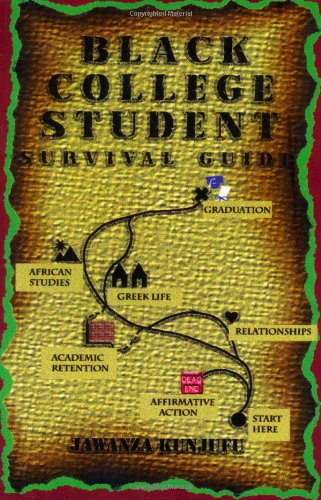
Black College Student Survival Guide
Authors:
Dr. Jawanza Kunjufu
Publisher:
African American Images
Publication Date:
Not available
ISBN:
0913543551
Claiming that many African American students have not fully accepted the responsibility of being a college student, this book is a blueprint in choosing... the most appropriate college, making the right decisions while there, and ultimately marketing oneself after graduation.

Black Cool: One Thousand Streams of Blackness
Authors:
Not Available
Publisher:
Soft Skull Press
Publication Date:
Not available
ISBN:
1593764170
Black Cool explores the ineffable state and aesthetic of Black Cool. From the effortless reserve of Miles Davis in khakis on an early album cover, to... the shock of resistance in black women’s fashion from Angela Davis to Rihanna, to the cadence of poets as diverse as Staceyann Chin and Audre Lorde, Black Cool looks at the roots of Black Cool and attempts to name elements of the phenomena that have emerged to shape the global expectation of cool itself.Buoyed by some of America’s most innovative thinkers on the subjectgraphic novelist Mat Johnson, Brown University Professor of African Studies Tricia Rose, critical thinking and cultural icon bell hooks, Macarthur winner Kara Walker, and many morethe book is at once a handbook, a map, a journey into the matrix of another cosmology. It’s a literal periodic table of cool, wherein each writer names and defines their element of choice. Dream Hampton writes about Audacity. Helena Andrews about Reserve, Margo Jefferson on Eccentricity, Veronica Chambers on Genius, and so on. With a foreword by Henry Louis Gates that bridges historical African elements of cool with the path laid out for the future, Black Cool offers a provocative perspective on this powerful cultural legacy.
Black Corona: Race and the Politics of Place in an Urban Community
Authors:
Steven Gregory
Publisher:
Princeton University Press
Publication Date:
Not available
ISBN:
0691029369
In Black Corona, Steven Gregory examines political culture and activism in an African-American neighborhood in New York City. Using historical and... ethnographic research, he challenges the view that black urban communities are "socially disorganized." Gregory demonstrates instead how working-class and middle-class African Americans construct and negotiate complex and deeply historical political identities and institutions through struggles over the built environment and neighborhood quality of life. With its emphasis on the lived experiences of African Americans, Black Corona provides a fresh and innovative contribution to the study of the dynamic interplay of race, class, and space in contemporary urban communities. It questions the accuracy of the widely used trope of the dysfunctional "black ghetto," which, the author asserts, has often been deployed to depoliticize issues of racial and economic inequality in the United States. By contrast, Gregory argues that the urban experience of African Americans is more diverse than is generally acknowledged and that it is only by attending to the history and politics of black identity and community life that we can come to appreciate this complexity.This is the first modern ethnography to focus on black working-class and middle-class life and politics. Unlike books that enumerate the ways in which black communities have been rendered powerless by urban political processes and by changing urban economies, Black Corona demonstrates the range of ways in which African Americans continue to organize and struggle for social justice and community empowerment. Although it discusses the experiences of one community, its implications resonate far more widely.
Black Corporate Executives (Labor And Social Change)
Authors:
Sharon Collins
Publisher:
Temple University Press
Publication Date:
Not available
ISBN:
1566394740
Against the backdrop of increasing ambivalence in the federal government commitment to race-based employment policies, this book reveals how... African-Americans first broke into professional and managerial jobs in corporations during the sixties and offers in-depth profiles of their subsequent career experiences. Two sets of interviews with the most successful Black executives in Chicago's major corporations are used to demonstrate how the creation of the Black business elite is connected to federal government pressures and black social unrest that characterized the civil Rights movement in the sixties. "Black Corporate Executives" presents, first hand, the dilemmas and contradictions that face this first wave of Black managers and reveals a subtle new employment discrimination.Corporations hired these executives in response to race-conscious political pressures and shifted them into "racialized" positions directing affirmative action programs or serving "special" markets of minority clients, customers, or urban affairs. Many executives became, as one man said, "the head Black in charge of Black people." These positions gave upper-middle-class lifestyles to those who held them but also siphoned these executives out of mainstream paths to corporate power typically leading through planning and production areas. As the political climate has become more conservative and the economy undergoes restructuring, these Black executives believe that the importance of recruiting Blacks has waned and that the jobs Blacks hold are vulnerable.Collins-Lowry's analysis challenges arguments that justify dismantling affirmative action. She argues that it is a myth to believe that Black occupational attainments are evidence that race no longer matters in the middle-class employment arena. On the contrary, Blacks' progress and well-being are tied to politics and employment practices that are sensitive to race. Author note: Sharon M. Collins teaches Sociology at the University of Illinois, in Chicago.
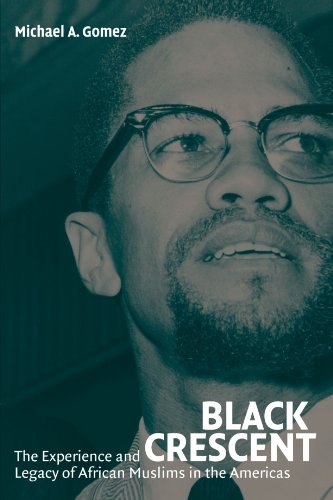
Black Crescent: The Experience and Legacy of African Muslims in the...
Authors:
Michael A. Gomez
Publisher:
Cambridge University Press
Publication Date:
Not available
ISBN:
0521600790
Beginning with Latin America in the fifteenth century, this book comprises a social history of the experiences of African Muslims and their descendants... throughout the Americas, including the Caribbean. The years under slavery are examined, as well as the post-slavery period. The study also analyzes Muslim revolts in Brazil--especially in 1835. The second part of the book traces the emergence of Islam among U.S. African descendants in the twentieth century, featuring chapters on Noble Drew Ali, Elijah Muhammad, and Malcolm X to explain how orthodoxy arose from varied unorthodox roots. Currently Professor of History and Middle Eastern Studies at NYU, Michael Gomez has research interests that include Islam in West Africa, the African diaspora and African culture in North America. He has been involved with the launching of a new academic organization, the Association for the Study of the Worldwide African Diaspora (ASWAD), and has published widely in the field.
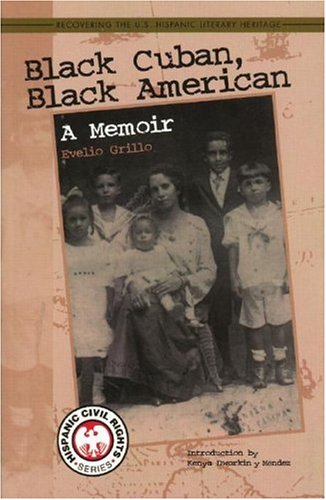
Black Cuban, Black American: A Memoir (Hispanic Civil Rights)
Authors:
Evelio Grillo
Publisher:
Arte Publico Press
Publication Date:
Not available
ISBN:
155885293X
Ybor City, Florida, was once a thriving factory town populated by cigar-makers, mostly emigrants from Cuba and Spain. Growing up in Ybor City (now... Tampa) in the early twentieth century, the young Evelio Grillo experienced the complexities of life in a horse-and-buggy society demarcated by both racial and linguistic lines: Life was different depending on whether one was Spanish- or English-speaking, a white or black Cuban, a Cuban American or a native-born U.S. citizen, well-off or poor. (Even American-born blacks did not always get along with their Hispanic counterparts.) Grillo recaptures in prose this unique world that slowly faded away as he grew to adulthood during the Depression. He relates his increasing assimilation into black American society, and then tells of his adventures as a soldier in an all-black unit during World War II. Booklovers may have read of Ybor City in the novels of Jose Yglesias, but never before has it been portrayed from this unique and vital perspective.
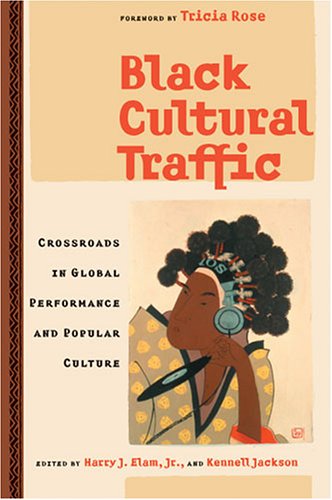
Black Cultural Traffic: Crossroads in Global Performance and...
Authors:
Not Available
Publisher:
University of Michigan Press
Publication Date:
Not available
ISBN:
0472068407
"A shrewdly designed, generously expansive, timely contribution to our understanding of how 'black' expression continues to define and defy the contours... of global (post)modernity. The essays argue persuasively for a transnational ethos binding disparate African and diasporic enactments, and together provide a robust conversation about the nature, history, future, and even possibility of 'blackness' as a distinctive mode of cultural practice."--Kimberly Benston, author of Performing Blackness "Black Cultural Traffic is nothing less than our generation's manifesto on black performance and popular culture. With a distinguished roster of contributors and topics ranging across academic disciplines and the arts (including commentary on film, music, literature, theater, television, and visual cultures), this volume is not only required reading for scholars serious about the various dimensions of black performance, it is also a timely and necessary teaching tool. It captures the excitement and intellectual innovation of a field that has come of age. Kudos!"--Dwight A. McBride, author of Why I Hate Abercrombie & Fitch"The explosion of interest in black popular culture studies in the past fifteen years has left a significant need for a reader that reflects this new scholarly energy. Black Cultural Traffic answers that need."--Mark Anthony Neal, author of Songs in the Key of Black Life"A revolutionary anthology that will be widely read and taught. It crisscrosses continents and cultures and examines confluences and influences of black popular culture -- music, dance, theatre, television, fashion and film. It also adds a new dimension to current discussions of racial, ethnic, and national identity."--Horace Porter, author of The Making of a Black Scholar
Black Culture and Black Consciousness: Afro-American Folk Thought...
Authors:
the late Lawrence W. Levine
Publisher:
Oxford University Press, USA
Publication Date:
Not available
ISBN:
019530568X
When Black Culture and Black Consciousness first appeared thirty years ago, it marked a revolution in our understanding of African American history.... Contrary to prevailing ideas at the time, which held that African culture disappeared quickly under slavery and that black Americans had little group pride, history, or cohesiveness, Levine uncovered a cultural treasure trove, illuminating a rich and complex African American oral tradition, including songs, proverbs, jokes, folktales, and long narrative poems called toasts--work that dated from before and after emancipation. The fact that these ideas and sources seem so commonplace now is in large part due this book and the scholarship that followed in its wake. A landmark work that was part of the "cultural turn" in American history, Black Culture and Black Consciousness profoundly influenced an entire generation of historians and continues to be read and taught. For this anniversary reissue, Levine wrote a new preface reflecting on the writing of the book and its place within intellectual trends in African American and American cultural history.
Black Culture and Black Consciousness: Afro-American Folk Thought...
Authors:
Lawrence W. Levine
Publisher:
Oxford University Press, USA
Publication Date:
Not available
ISBN:
0195023749
When Black Culture and Black Consciousness first appeared thirty years ago, it marked a revolution in our understanding of African American history.... Contrary to prevailing ideas at the time, which held that African culture disappeared quickly under slavery and that black Americans had little group pride, history, or cohesiveness, Levine uncovered a cultural treasure trove, illuminating a rich and complex African American oral tradition, including songs, proverbs, jokes, folktales, and long narrative poems called toasts--work that dated from before and after emancipation. The fact that these ideas and sources seem so commonplace now is in large part due this book and the scholarship that followed in its wake. A landmark work that was part of the "cultural turn" in American history, Black Culture and Black Consciousness profoundly influenced an entire generation of historians and continues to be read and taught. For this anniversary reissue, Levine wrote a new preface reflecting on the writing of the book and its place within intellectual trends in African American and American cultural history.
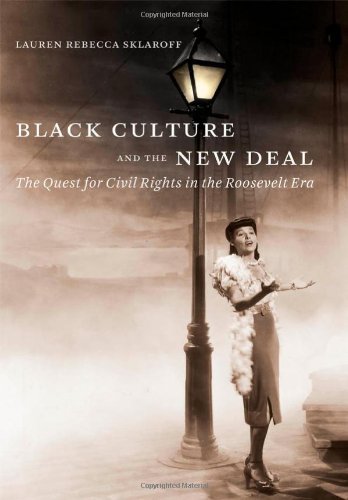
Black Culture and the New Deal: The Quest for Civil Rights in the...
Authors:
Sklaroff Lauren Rebecca
Publisher:
The University of North Carolina Press
Publication Date:
Not available
ISBN:
0807833126
In the 1930s, the Roosevelt administration-unwilling to antagonize a powerful southern congressional bloc-refused to endorse legislation that openly... sought to improve political, economic, and social conditions for African Americans. Instead, as historian Lauren Rebecca Sklaroff shows, the administration recognized and celebrated African Americans by offering federal support to notable black intellectuals, celebrities, and artists. Sklaroff illustrates how programs within the Federal Arts Projects and several war agencies gave voice to African Americans such as Lena Horne, Joe Louis, Duke Ellington, and Richard Wright, as well as lesser-known figures. She argues that these New Deal programs represent a key moment in the history of American race relations, as the cultural arena provided black men and women with unique employment opportunities and new outlets for political expression. Equally important, she contends that these cultural programs were not merely an attempt to appease a black constituency but were also part of the New Deal's larger goal of promoting a multiracial nation. Yet, while federal projects ushered in creativity and unprecedented possibilities, they were subject to censorship, bigotry, and political machinations. With numerous illustrations, Black Culture and the New Deal offers a fresh perspective on the New Deal's racial progressivism and provides a new framework for understanding black culture and politics in the Roosevelt era.
 '
'