production
/viewbook/list/all/?page=1602
/
/static/
None
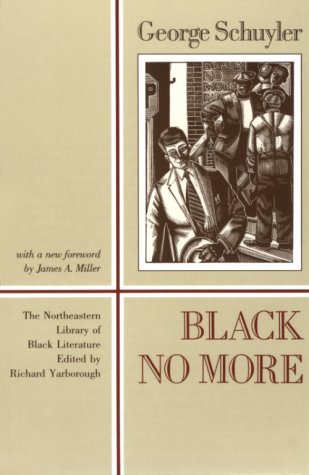
Black No More: Being an Account of the Strange and Wonderful...
Authors:
George Samuel Schuyler
Publisher:
Northeastern
Publication Date:
Not available
ISBN:
155553063X
Black No More, George S. Schuyler's satiric romp, is the story of Max Disher, a dapper black rogue of an insurance man who, through a scientific... transformation process, becomes Matthew Fisher, a white man. Matt dreams up a scam that allows him to become the leader of the Knights of Nordica, a white supremacist group, as well as to marry the white woman who rejected him when he was black. Black No More is a hysterical exploration of race and all its self-serving definitions. Ishmael Reed, one of today's top black satirists and the author of Mumbo Jumbo and Japanese by Spring, provides a spirited introduction.

Black No More (New Traveller's Companion)
Authors:
George Schuyler
Publisher:
Not available
Publication Date:
Not available
ISBN:
Not available
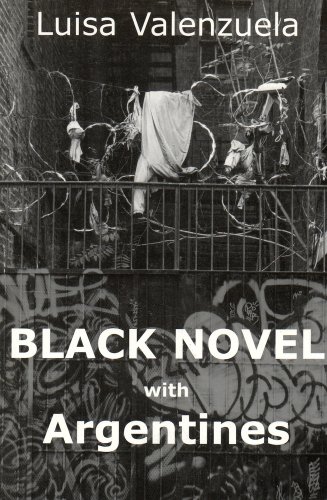
Black Novel with Argentines (Discoveries)
Authors:
Luisa Valenzuela
Publisher:
Latin Amer Literary Review Pr
Publication Date:
Not available
ISBN:
1891270133
Luisa Valenzuela is one of the most recognized Latin American writers in the U.S. She has been featured in Time magazine alongside Garcia Marquez and... Vargas Llosa. This novel, with the characteristics of a thriller, is set in New York among Argentine exiles—a man emerges from a building, a revolver in his pocket. Upstairs, in her apartment, alone, lies a woman, an actress the man met for the first time that evening. She is dead—the man is an Argentine novelist adrift in New York, trying desperately to write. Valenzuela’s dark story draws a fine line between creativity and insanity, following Dostoyevsky’s footsteps. It shows a penetrating portrait of the sub-city, complete with its seductive perversity.Luisa Valenzuela resides in Buenos Aires.
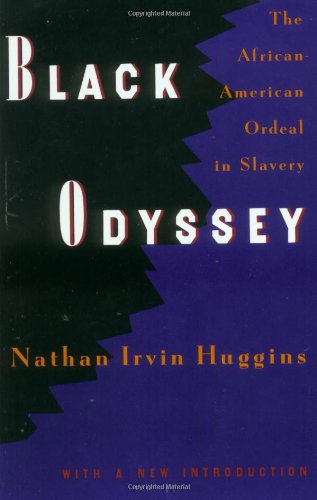
Black Odyssey: The African-American Ordeal in Slavery
Authors:
Nathan Irvin Huggins
Publisher:
Vintage
Publication Date:
Not available
ISBN:
0679728147
This classic work of scholarship and empathy tells the story of the self-creation of the African-American people. It assesses the full impact of the... Middle Passage -- "the most traumatizing mass human migration in modern history" -- and of North American slavery both on the enslaved and on those who enslaved them. It explores the ways in which a nominally free society perverted its own freedoms and denied the fact that an inhuman institution lies at the heart of the American experience. The authority and eloquence of this work make it essential reading for all who want to understand the American past and present.
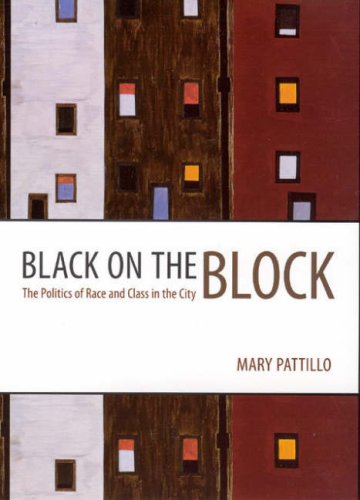
Black on the Block: The Politics of Race and Class in the City
Authors:
Mary Pattillo
Publisher:
University Of Chicago Press
Publication Date:
Not available
ISBN:
0226649326
In Black on the Block, Mary Pattillo—a Newsweek Woman of the 21st Century—uses the historic rise, alarming fall, and equally dramatic renewal of... Chicago’s North Kenwood–Oakland neighborhood to explore the politics of race and class in contemporary urban America. There was a time when North Kenwood–Oakland was plagued by gangs, drugs, violence, and the font of poverty from which they sprang. But in the late 1980s, activists rose up to tackle the social problems that had plagued the area for decades. Black on the Block tells the remarkable story of how these residents laid the groundwork for a revitalized and self-consciously black neighborhood that continues to flourish today. But theirs is not a tale of easy consensus and political unity, and here Pattillo teases out the divergent class interests that have come to define black communities like North Kenwood–Oakland. She explores the often heated battles between haves and have-nots, home owners and apartment dwellers, and newcomers and old-timers as they clash over the social implications of gentrification. Along the way, Pattillo highlights the conflicted but crucial role that middle-class blacks play in transforming such districts as they negotiate between established centers of white economic and political power and the needs of their less fortunate black neighbors. “A century from now, when today's sociologists and journalists are dust and their books are too, those who want to understand what the hell happened to Chicago will be finding the answer in this one.”—Chicago Reader “To see how diversity creates strange and sometimes awkward bedfellows . . . turn to Mary Pattillo's Black on the Block.”—Boston Globe
Black on the Block: The Politics of Race and Class in the City
Authors:
Mary Pattillo
Publisher:
University Of Chicago Press
Publication Date:
Not available
ISBN:
0226649318
In Black on the Block, Mary Pattillo—a Newsweek Woman of the 21st Century—uses the historic rise, alarming fall, and equally dramatic renewal of... Chicago’s North Kenwood–Oakland neighborhood to explore the politics of race and class in contemporary urban America. There was a time when North Kenwood–Oakland was plagued by gangs, drugs, violence, and the font of poverty from which they sprang. But in the late 1980s, activists rose up to tackle the social problems that had plagued the area for decades. Black on the Block tells the remarkable story of how these residents laid the groundwork for a revitalized and self-consciously black neighborhood that continues to flourish today. But theirs is not a tale of easy consensus and political unity, and here Pattillo teases out the divergent class interests that have come to define black communities like North Kenwood–Oakland. She explores the often heated battles between haves and have-nots, home owners and apartment dwellers, and newcomers and old-timers as they clash over the social implications of gentrification. Along the way, Pattillo highlights the conflicted but crucial role that middle-class blacks play in transforming such districts as they negotiate between established centers of white economic and political power and the needs of their less fortunate black neighbors. “A century from now, when today's sociologists and journalists are dust and their books are too, those who want to understand what the hell happened to Chicago will be finding the answer in this one.”—Chicago Reader “To see how diversity creates strange and sometimes awkward bedfellows . . . turn to Mary Pattillo's Black on the Block.”—Boston Globe
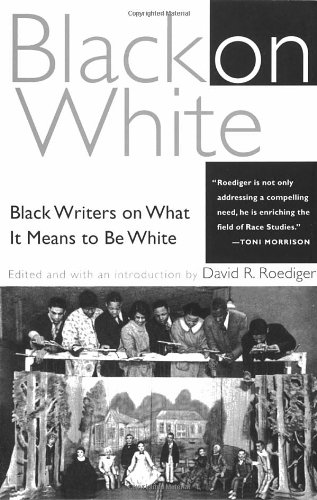
Black on White: Black Writers on What It Means to Be White
Authors:
David R. Roediger
Publisher:
Schocken
Publication Date:
Not available
ISBN:
0805211144
In this thought-provoking volume, David R. Roediger has brought together some of the most important black writers throughout history to explore the... question: What does it really mean to be white in America?From folktales and slave narratives to contemporary essays, poetry, and fiction, black writers have long been among America's keenest students of white consciousness and white behavior, but until now much of this writing has been ignored. Black on White reverses this trend by presenting the work of more than fifty major figures, including James Baldwin, Derrick Bell, Ralph Ellison, W.E.B. Du Bois, bell hooks, Toni Morrison, and Alice Walker to take a closer look at the many meanings of whiteness in our society.Rich in irony, artistry, passion, and common sense, these reflections on what Langston Hughes called "the ways of white folks" illustrate how whiteness as a racial identity derives its meaning not as a biological category but as a social construct designed to uphold racial inequality. Powerful and compelling, Black on White provides a much-needed perspective that is sure to have a major impact on the study of race and race relations in America.
Black Orpheus rhetoric and readings
Authors:
Not Available
Publisher:
Pearson Custom
Publication Date:
Not available
ISBN:
0536669074
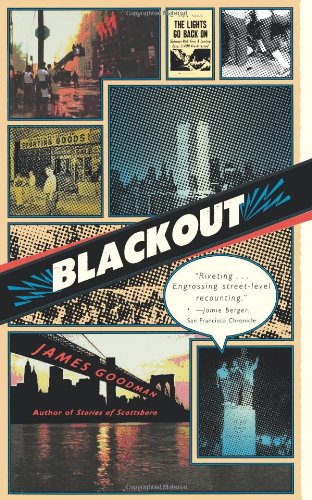
Blackout
Authors:
Dr. James Goodman
Publisher:
North Point Press
Publication Date:
Not available
ISBN:
0865477159
"Riveting . . . An engrossing, street-level recounting and ambivalent ode to a great city."--Jamie Berger, San Francisco Chronicle On July 13, 1977,... there was a blackout in New York City. With the dark came excitement, adventure, and fright in subway tunnels, office towers, busy intersections, high-rise stairwells, hotel lobbies, elevators, and hospitals. There was revelry in bars and restaurants, music and dancing in the streets. On block after block, men and women proved themselves heroes by helping neighbors and strangers make it through the night.Unfortunately, there was also widespread looting, vandalism, and arson. Even before police restored order, people began to ask and argue about why. Why did people do what they did when the lights went out? The argument raged for weeks but it was just like the night: lots of heat, little light-a shouting match between those who held fast to one explanation and those who held fast to another.James Goodman cuts between accidents, encounters, conversations, exchanges, and arguments to re-create that night and its aftermath in a dizzying accumulation of detail. Rejecting simple dichotomies and one-dimensional explanations for why people act as they do in moments of conflict and crisis, Goodman illuminates attitudes, ideas, and experiences that have been lost in facile generalizations and analyses. Journalistic re-creation at its most exciting, Blackout provides a whirlwind tour of 1970s New York and a challenge to conventional thinking.
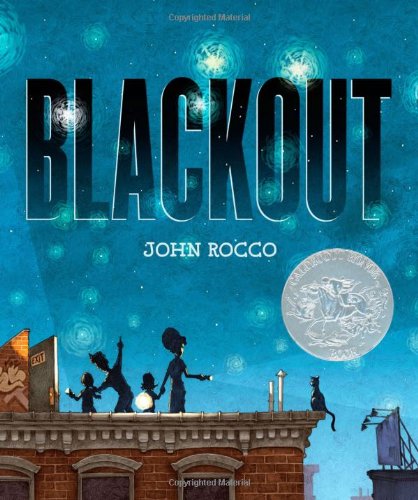
Blackout
Authors:
John Rocco
Publisher:
Hyperion Book CH
Publication Date:
Not available
ISBN:
1423121902
One hot summer night in the city, all the power goes out. The TV shuts off and a boy wails, "Mommm!" His sister can no longer use the phone, Mom can't... work on her computer, and Dad can't finish cooking dinner. What's a family to do? When they go up to the roof to escape the heat, they find the lights--in stars that can be seen for a change--and so many neighbors it's like a block party in the sky! On the street below, people are having just as much fun--talking, rollerblading, and eating ice cream before it melts. The boy and his family enjoy being not so busy for once. They even have time to play a board game together. When the electricity is restored, everything can go back to normal . . . but not everyone likes normal. The boy switches off the lights, and out comes the board game again. Using a combination of panels and full bleed illustrations that move from color to black-and-white and back to color, John Rocco shows that if we are willing to put our cares aside for a while, there is party potential in a summer blackout.
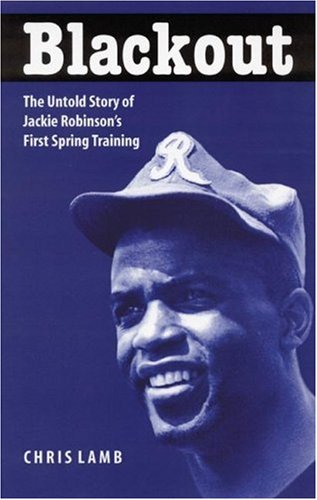
Blackout: The Untold Story of Jackie Robinson's First Spring Training
Authors:
Chris Lamb
Publisher:
Bison Books
Publication Date:
Not available
ISBN:
0803280475
In the spring of 1946, following the defeat of Hitler’s Germany, America found itself still struggling with the subtler but no less insidious... tyrannies of racism and segregation at home. In the midst of it all, Jackie Robinson, a full year away from breaking major league baseball’s color barrier with the Brooklyn Dodgers, was undergoing a harrowing dress rehearsal for integration—his first spring training as a minor league prospect with the Montreal Royals, Brooklyn’s AAA team. In Blackout, Chris Lamb tells what happened during these six weeks in segregated Florida—six weeks that would become a critical juncture for the national pastime and for an American society on the threshold of a civil rights revolution.Blackout chronicles Robinson’s tremendous ordeal during that crucial spring training—how he struggled on the field and off. The restaurants and hotels that welcomed his white teammates were closed to him, and in one city after another he was prohibited from taking the field. Steeping his story in its complex cultural context, Lamb describes Robinson’s determination and anxiety, the reaction of the black and white communities to his appearance, and the unique and influential role of the press—mainstream reporting, the alternative black weeklies, and the Communist Daily Worker—in the integration of baseball. Told here in detail for the first time, this story brilliantly encapsulates the larger history of a man, a sport, and a nation on the verge of great and enduring change.
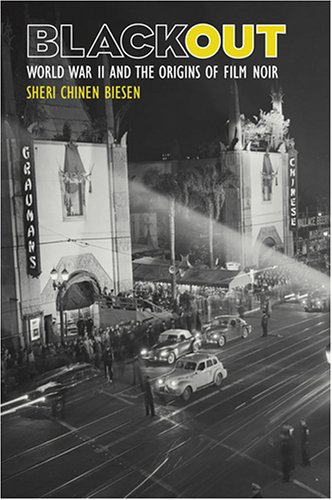
Blackout: World War II and the Origins of Film Noir
Authors:
Sheri Chinen Biesen
Publisher:
The Johns Hopkins University Press
Publication Date:
Not available
ISBN:
0801882184
Challenging conventional scholarship placing the origins of film noir in postwar Hollywood, Sheri Chinen Biesen finds the genre's roots firmly planted... in the political, social, and material conditions of Hollywood during the war. After Pearl Harbor, America and Hollywood experienced a sharp cultural transformation that made horror, shock, and violence not only palatable but preferable. Hard times necessitated cheaper sets, fewer lights, and fresh talent; censors as well as the movie-going public showed a new tolerance for sex and violence; and female producers experienced newfound prominence in the industry.Biesen brings prodigious archival research, accessible prose, and imaginative insights to both well-known films noir of the wartime period— The Maltese Falcon, The Big Sleep, and Double Indemnity—and others often overlooked or underrated— Scarlet Street, Ministry of Fear, Phantom Lady, and Stranger on the Third Floor.
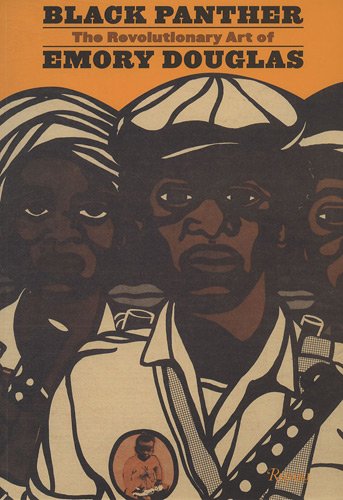
Black Panther: The Revolutionary Art of Emory Douglas
Authors:
Not Available
Publisher:
Rizzoli
Publication Date:
Not available
ISBN:
0847829448
The Black Panther Party for Self Defense, formed in the aftermath of the assassination of Malcolm X in 1965, remains one of the most controversial... movements of the 20th-century. Founded by the charismatic Huey P. Newton and Bobby Seale, the party sounded a defiant cry for an end to the institutionalized subjugation of African Americans. The Black Panther newspaper was founded to articulate the party's message and artist Emory Douglas became the paper's art director and later the party's Minister of Culture.Douglas's artistic talents and experience proved a powerful combination: his striking collages of photographs and his own drawings combined to create some of the era's most iconic images, like that of Newton with his signature beret and large gun set against a background of a blood-red star, which could be found blanketing neighborhoods during the 12 years the paper existed.This landmark book brings together a remarkable lineup of party insiders who detail the crafting of the party's visual identity.
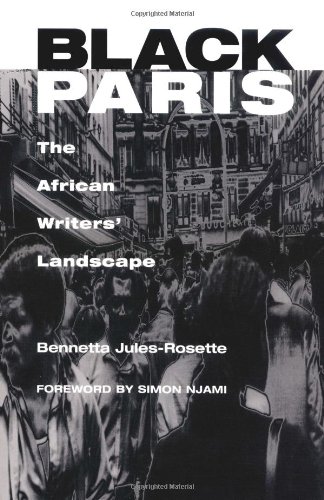
Black Paris: THE AFRICAN WRITERS' LANDSCAPE
Authors:
Bennetta Jules-Rosette
Publisher:
University of Illinois Press
Publication Date:
Not available
ISBN:
0252069358
"Black Paris" documents the struggles and successes of three generations of African writers as they strive to establish their artistic, literary, and... cultural identities in France. Based on long-term ethnographic, archival, and historical research, the work is enriched by interviews with many writers of the new generation. Bennetta Jules-Rosette explores African writing and identity in France from the early negritude movement and the founding of the Presence Africaine publishing house in 1947 to the mid-1990s. Examining the relationship between African writing and French anthropology as well as the emergence of new styles and discourses, Jules-Rosette covers French Pan-Africanism and the revolutionary writing of the 1960s and 1970s. She also discusses the new generation of African writers who appeared in Paris during the 1980s and 1990s.
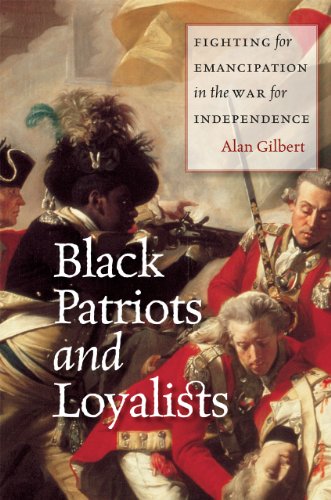
Black Patriots and Loyalists: Fighting for Emancipation in the War...
Authors:
Alan Gilbert
Publisher:
University Of Chicago Press
Publication Date:
Not available
ISBN:
0226293076
We commonly think of the American Revolution as simply the war for independence from British colonial rule. But, of course, that independence actually... applied to only a portion of the American population—African Americans would still be bound in slavery for nearly another century. In Black Patriots and Loyalists, Alan Gilbert asks us to rethink what we know about the Revolutionary War, to realize that while white Americans were fighting for their freedom, black Americans were joining the British imperial forces to gain theirs. There were actually two wars being waged at once: a political revolution for independence from Britain and a social revolution for emancipation and equality.Drawing upon recently discovered archival material, Gilbert traces the intense imperial and patriot rivalry over recruitment and emancipation that led both sides to depend on blacks. As well, he presents persuasive evidence that slavery could have been abolished during the Revolution itself if either side had fully pursued the military advantage of freeing slaves and pressing them into combat—as when Washington formed the all-black and Native American First Rhode Island Regimen and Lord Dunmore freed slaves and indentured servants to fight for the British. Gilbert’s extensive research reveals that free blacks on both sides played a crucial and underappreciated role in the actual fighting. Black Patriots and Loyalists contends that the struggle for emancipation was not only basic to the Revolution itself, but was a rousing force that would inspire freedom movements like the abolition societies of the North and the black loyalist pilgrimages for freedom in places such as Nova Scotia and Sierra Leone.In this thought-provoking history, Gilbert illuminates how the fight for abolition and equality—not just for the independence of the few but for the freedom and self-government of the many—has been central to the American story from its inception.
 '
'