production
/viewbook/list/all/?page=1727
/
/static/
None
BRAIN POWER: Learn to Improve Your Thinking Skills
Authors:
Karl Albrecht
Publisher:
Simon & Schuster
Publication Date:
Not available
ISBN:
0671761986
Do you want to expand your mental power? Think more clearly, logically, and creatively? Improve your memory? Solve problems and make decisions more... effectively? Brain Power introduces the six functional thinking abilities you need to become an adaptive, innovative thinker. As you develop your ability to think on your feet, to isolate and arrange facts, and to avoid logical pitfalls you will see how to use creative problem solving strategies, both in business and in private life. With practical exercises to improve your full range of mental capabilities from concentration to intuition, management consultant Karl Albrecht answers all your questions on becoming a more efficient and effective thinking. Offering a gold mine of ideas and techniques to use in most any situation, Brain Power provides fascinating illustrations, games, and puzzles that will stimulate and expand your brain power.

BRAIN QUICK STUDY
Authors:
Not Available
Publisher:
Not available
Publication Date:
Not available
ISBN:
Not available
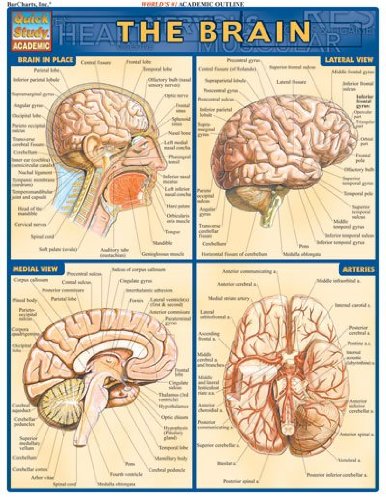
Brain (Quickstudy: Academic)
Authors:
Inc. BarCharts
Publisher:
QuickStudy
Publication Date:
Not available
ISBN:
1572225173
Complete, labeled illustrations of the parts of the brain in nine different views and sections. Illustrations by award-winning medical illustrator... Vincent Perez. Includes detailed diagrams of: · brain in place · lateral view · medial view · arteries · frontal section · anterior view · ventricles · horizontal section · inferior view

Brain Research and Childhood Education: Implications for Educators
Authors:
Doris Bergen
Publisher:
Association for Childhood Education International
Publication Date:
Not available
ISBN:
0871731541
Brain Rules: 12 Principles for Surviving and Thriving at Work,...
Authors:
John Medina
Publisher:
Pear Press
Publication Date:
Not available
ISBN:
0979777747
See how the brain works while using it in the process of reading this book! Most of us have no idea what's really going on inside our heads. Yet brain... scientists have uncovered details every business leader, parent, and teacher should know - like that physical activity boosts your brain power. How do we learn? What exactly do sleep and stress do to our brains? Why is multi-tasking a myth? Why is it so easy to forget - and so important to repeat new information? Is it true that men and women have different brains?In Brain Rules, Dr. John Medina, a molecular biologist, shares his lifelong interest in how the brain sciences might influence the way we teach our children and the way we work. In each chapter, he describes a brain rule - what scientists know for sure about how our brains work - and then offers transformative ideas for our daily lives. Medina's fascinating stories and sense of humour breathe life into brain science. You'll learn why Michael Jordan was no good at baseball. You'll peer over a surgeon's shoulder as he proves that we have a Jennifer Aniston neuron. You'll meet a boy who has an amazing memory for music but can't tie his own shoes.
Brain Rules: 12 Principles for Surviving and Thriving at Work,...
Authors:
John Medina
Publisher:
Pear Press
Publication Date:
Not available
ISBN:
0979777704
In Brain Rules, Dr. John Medina, a molecular biologist, shares his lifelong interest in how the brain sciences might influence the way we teach our... children and the way we work. In each chapter, he describes a brain rulewhat scientists know for sure about how our brains workand then offers transformative ideas for our daily lives.Medina’s fascinating stories and infectious sense of humor breathe life into brain science. You’ll learn why Michael Jordan was no good at baseball. You’ll peer over a surgeon’s shoulder as he proves that most of us have a Jennifer Aniston neuron. You’ll meet a boy who has an amazing memory for music but can’t tie his own shoes.You will discover how: * Every brain is wired differently * Exercise improves cognition * We are designed to never stop learning and exploring * Memories are volatile * Sleep is powerfully linked with the ability to learn * Vision trumps all of the other senses * Stress changes the way we learnIn the end, you’ll understand how your brain really worksand how to get the most out of it.
Brain Rules for Baby: How to Raise a Smart and Happy Child from...
Authors:
John Medina
Publisher:
Pear Press
Publication Date:
Not available
ISBN:
0979777755
What’s the single most important thing you can do during pregnancy? What does watching TV do to a child’s brain? What’s the best way to handle... temper tantrums? Scientists know.In his New York Times bestseller Brain Rules, Dr. John Medina showed us how our brains really workand why we ought to redesign our workplaces and schools. Now, in Brain Rules for Baby, he shares what the latest science says about how to raise smart and happy children from zero to 5. This book is destined to revolutionize parenting. Just one of the surprises: The best way to get your children into the college of their choice? Teach them impulse control.Brain Rules for Baby bridges the gap between what scientists know and what parents practice. Through fascinating and funny stories, Medina, a developmental molecular biologist and dad, unravels how a child’s brain develops--and what you can do to optimize it.You will view your childrenand how to raise themin a whole new light. You’ll learn:Where nature ends and nurture beginsWhy men should do more household choresWhat you do when emotions run hot affects how your child turns outTV is harmful for children under 2Your child’s ability to relate to others predicts her future math performanceSmart and happy are inseparable. Pursuing your child’s intellectual success at the expense of his happiness achieves neitherPraising effort is better than praising intelligenceThe best predictor of academic performance is not IQ. It’s self controlWhat you do right nowbefore pregnancy, during pregnancy, and through the first five yearswill affect your children for the rest of their lives. Brain Rules for Baby is an indispensable guide.
Brain Rules for Baby: How to Raise a Smart and Happy Child from...
Authors:
John Medina
Publisher:
Pear Press
Publication Date:
Not available
ISBN:
0983263302
What’s the single most important thing you can do during pregnancy? What does watching TV do to a child’s brain? What’s the best way to handle... temper tantrums? Scientists know.In his New York Times bestseller Brain Rules, Dr. John Medina showed us how our brains really workand why we ought to redesign our workplaces and schools. Now, in Brain Rules for Baby, he shares what the latest science says about how to raise smart and happy children from zero to five. This book is destined to revolutionize parenting. Just one of the surprises: The best way to get your children into the college of their choice? Teach them impulse control.Brain Rules for Baby bridges the gap between what scientists know and what parents practice. Through fascinating and funny stories, Medina, a developmental molecular biologist and dad, unravels how a child’s brain develops and what you can do to optimize it.You will view your childrenand how to raise themin a whole new light. You’ll learn:Where nature ends and nurture beginsWhy men should do more household choresWhat you do when emotions run hot affects howyour baby turns out, because babies need to feel safeabove allTV is harmful for children under 2Your child’s ability to relate to others predicts herfuture math performanceSmart and happy are inseparable. Pursuing your child’sintellectual success at the expense of his happinessachieves neitherPraising effort is better than praising intelligenceThe best predictor of academic performance is notIQ. It’s self-controlWhat you do right nowbefore pregnancy, during pregnancy, and through the first five yearswill affect your children for the rest of their lives. Brain Rules for Baby is an indispensable guide.
Brain Sense: The Science of the Senses and How We Process the World...
Authors:
Faith Hickman Brynie
Publisher:
AMACOM
Publication Date:
Not available
ISBN:
0814413242
Have you ever wondered why you remember color images and scenes so much better than those in black and white? The answer is in the way our brains... interpret and process the sights, smells, tastes, and touches that make up our lives. "Brainsense" explores brain function and the senses, and offers new insight about what makes us tick. Based on new research and interviews with renowned scientists, readers will discover how the brain really works. Divided into chapters, one for each sense, "Brainsense" offers a new perspective into how we process the world around us. Both enlightening and engaging, this book will help us understand the elusive mysteries of the brain.

Brain Sex: The Real Difference Between Men and Women
Authors:
Anne Moir
Publisher:
Delta
Publication Date:
Not available
ISBN:
0385311834
Why can't a woman be more like a man? What is this thing called "feminine intuition"? Why are men better at reading maps, and women at other people's... characters? The answers lie in the basic biological differences between the male and female brain, which, say the authors, make it impossible for the sexes to share equal emotional or intellectual qualities.
BrainSMART 60 Strategies for Increasing Student Learning
Authors:
Marcus Conyers
Publisher:
BrainSMART
Publication Date:
Not available
ISBN:
1589331729
This book is for you if you are a busy teacher who wants to increase student learning while instilling a love of learning. Forget mind-numbing rote... drills and test prep. Start using the BrainSMART approach we have shared with more than 150,000 educators and personally modeled with more than 5,000 students. Discover 6 MASTER keys to boosting student achievement by applying the principles of brain-based teaching. Master 12 principles for effective brain-based teaching. Apply 60 classroom-tested learning strategies. Boost optimism and persistence. Reduce behavior problems. Increase energy and joy in teaching and learning. Engage students in meaningful learning. Command attention with the CRAVE formula. Facilitate retention and recall of important information. Maximize transfer to success in school and in life.
BRAIN STORIES:A COMM. DISORDERS PERSPEC
Authors:
Not Available
Publisher:
Not available
Publication Date:
Not available
ISBN:
Not available
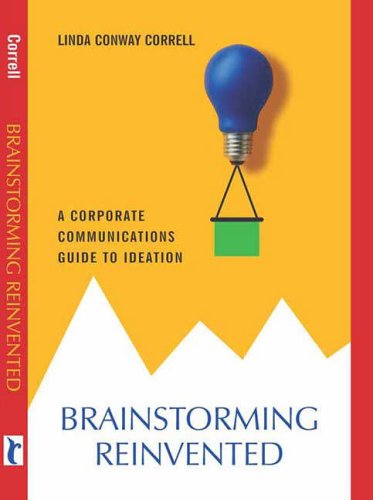
Brainstorming Reinvented: A Corporate Communications Guide to...
Authors:
Linda Conway Correll
Publisher:
Not available
Publication Date:
Not available
ISBN:
0761932704
Linda Correll offers a radical new way to speed up the creative process through the technique of `creative aerobics'. This concept uses four mental... exercises that develop elasticity between the left and the right brain - the analytical and creative sides - allowing them access to solutions outside their present problem-solving techniques. Key features of this technique are: it is process driven and participative; it increases productivity of ideas, without anxiety; and it is rooted in what participants do on a regular basis. It will be a useful book for all those who wish to explore creativity within themselves.
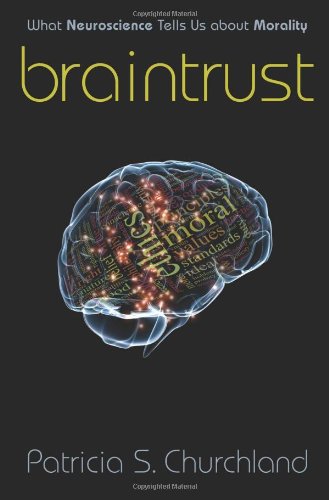
Braintrust: What Neuroscience Tells Us about Morality
Authors:
Patricia S. Churchland
Publisher:
Princeton University Press
Publication Date:
Not available
ISBN:
069113703X
What is morality? Where does it come from? And why do most of us heed its call most of the time? In Braintrust, neurophilosophy pioneer Patricia... Churchland argues that morality originates in the biology of the brain. She describes the "neurobiological platform of bonding" that, modified by evolutionary pressures and cultural values, has led to human styles of moral behavior. The result is a provocative genealogy of morals that asks us to reevaluate the priority given to religion, absolute rules, and pure reason in accounting for the basis of morality. Moral values, Churchland argues, are rooted in a behavior common to all mammals--the caring for offspring. The evolved structure, processes, and chemistry of the brain incline humans to strive not only for self-preservation but for the well-being of allied selves--first offspring, then mates, kin, and so on, in wider and wider "caring" circles. Separation and exclusion cause pain, and the company of loved ones causes pleasure; responding to feelings of social pain and pleasure, brains adjust their circuitry to local customs. In this way, caring is apportioned, conscience molded, and moral intuitions instilled. A key part of the story is oxytocin, an ancient body-and-brain molecule that, by decreasing the stress response, allows humans to develop the trust in one another necessary for the development of close-knit ties, social institutions, and morality. A major new account of what really makes us moral, Braintrust challenges us to reconsider the origins of some of our most cherished values.
BRAIN VERSE: CHILDREN'S POETRY AND ACT
Authors:
Not Available
Publisher:
Not available
Publication Date:
Not available
ISBN:
Not available
 '
'