production
/viewbook/list/all/?page=1766
/
/static/
None
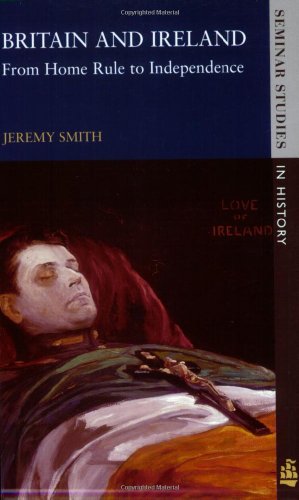
Britain and Ireland: From Home Rule to Independence
Authors:
Jeremy Smith
Publisher:
Longman
Publication Date:
Not available
ISBN:
0582301939
Jeremy Smith explores relations between Britain and Ireland during the late nineteenth and early twentieth century with a story that still raises... deep passions and bitter disagreements both among historians and within wider public opinion. This examination attempts to chart a more dispassionate course between the various contending positions and has enormous relevance to the unfolding events in both Northern Ireland and Britain as the united Kingdom moves towards a federal constitutional structure. Books in this Seminar Studies in History series bridge the gap between textbook and specialist survey and consists of a brief "Introduction" and/or "Background" to the subject, valuable in bringing the reader up-to-speed on the area being examined, followed by a substantial and authoritative section of "Analysis" focusing on the main themes and issues. There is a succinct "Assessment" of the subject, a generous selection of "Documents" and a detailed bibliography. Incorporates a large amount of research on Irish history during the last two decades and gives particular focus to the dramatic events between the Easter rising of 1916 and the intense negotiations surrounding the Treaty in the autumn of 1921. For those interested in the history between Ireland and Britain.
Britain and the End of the Roman Empire
Authors:
Ken Dark
Publisher:
Tempus Pub Ltd
Publication Date:
Not available
ISBN:
0752425323
The end of the Roman period and the early development of Post-Roman Kingdoms are two of the most important - and most debated - subjects for... archaeologists and historians. Questioning many current assumptions, this book presents a radical reinterpretation of Britain in the period 400-600. Drawing attention to far greater similarities between immediately post-Roman Britain and the rest of Europe than previously thought possible, it highlights the importance of fifth-sixth-century Britain in understanding wider themes regarding the end of the Western roman empire as a whole. A very wide range of archaeological and written evidence from the whole of Britain is discussed, rather than focusing on either Anglo-Saxon or Celtic archaeology alone. Burials, settlements and religious centres are brought into the discussion, alongside new material and more obscure data from scattered sources. The final occupation of Roman towns, forts and villas is examined, and post-Roman hill-forts such as Tintagel, Dinas Powys and Cadbury Congresbury is evaluated. Anglo-Saxon and early Christian cemeteries such as Spong Hill and Cannington are considered, and evidence for the earliest British monasteries explored. This book not only offers an exciting new interpretation of Britain in the fifth and sixth centuries AD but is probably the most comprehensive survey of the archaeological and written evidence for the period. It will be indispensable for professional and amateurs archaeologists alike and invaluable for students of British, Roman or Medieval archaeology and history at all levels.
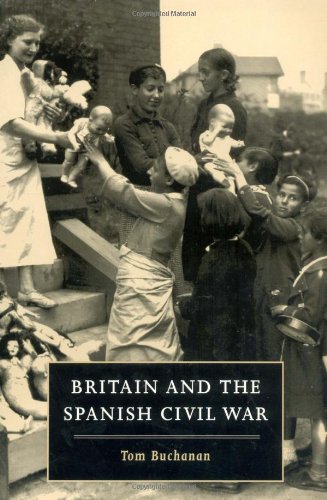
Britain and the Spanish Civil War
Authors:
Tom Buchanan
Publisher:
Cambridge University Press
Publication Date:
Not available
ISBN:
0521455693
No foreign conflict has had a greater impact on modern British politics than the Spanish Civil War (1936-9). It served to galvanize political activity... in Britain, both in support of the Republican government and of Franco's Nationalist rebels. Tom Buchanan draws heavily on new archival sources to reinterpret familiar aspects of this war, such as the role of the British government, the intellectuals, and the International Brigades, as well as to shed light on previously neglected subjects such as right-wing and religious opinion.
Britain and the World in the Twentieth Century: Ever Decreasing...
Authors:
Michael J Turner
Publisher:
Continuum
Publication Date:
Not available
ISBN:
1441111573
This is a detailed, single volume analysis of Britain's changing position in the world during the twentieth century. It places British policy making in... the appropriate domestic and international contexts, offers an alternative to the more negative, 'decline'-obsessed assessments of Britain's role and influence in global affairs. This book suggests that Britain's leaders did a better job than some historians think. Michael Turner, in order to understand why they took the options they did, investigates their motives and aims within the international environment within which they operated.
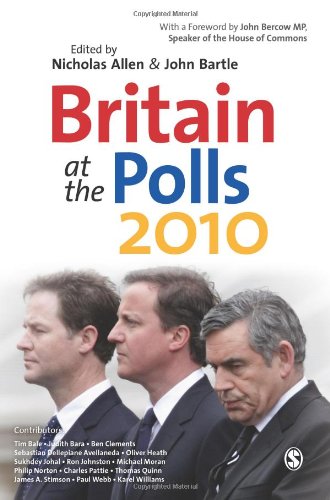
Britain at the Polls 2010
Authors:
Lev A. Osterman
Publisher:
Sage Publications Ltd
Publication Date:
Not available
ISBN:
1849208468
The ninth book in the long-running Britiain at the Polls series, the 2010 edition looks back at the political landscape since 2005 with special focus on... the transition from Tony Blair to Gordon Brown and the impact of events such as the the financial crisis, the MPs expenses scandal and the first ever leaders' debates. The 2010 election is analyzed in this context and the final chapters look ahead to assess the fortunes of the new governemnt. A strong line-up of contributors includes Philip Norton, Paul Webb, James A. Stimson, Michael Moran and Ron Johnston. Praise for the previous edition:'With a first-class set of contributors this well-written and accessible volume will be essential reading for all concerned with British elections, voting behavior and party politics.’ - Pippa Norris, Harvard University

Britain: Commended Country Hotels, Guest Houses and Restaurants
Authors:
British Tourist Authority
Publisher:
British Tourist Authority
Publication Date:
Not available
ISBN:
0856306088
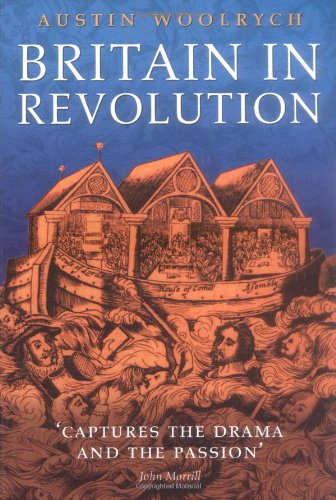
Britain in Revolution: 1625-1660
Authors:
Austin Woolrych
Publisher:
Oxford University Press, USA
Publication Date:
Not available
ISBN:
0199272689
This is the definitive history of the English Civil War, set in its full historical context from the accession of Charles I to the Restoration of... Charles II. These were perhaps the most turbulent years of British history with reverberations down the centuries. Austin Woolrych captures the drama and the passion, the momentum of events and the force of contingency. He brilliantly interweaves the history of the three kingdoms and peoples, gripping the reader with the fast-paced yet always balanced story.
Britain in the First Millennium (Britain and Europe)
Authors:
Edward James
Publisher:
Bloomsbury USA
Publication Date:
Not available
ISBN:
0340586877
This survey of medieval Britain presents the events comprising the two great invasions from Continental Europe as a coherent narrative. Unique both... for its broad historical perspective and for its wide geographic coverage, Edward James’ all-encompassing history spans the "long" millennium from the first century BC through the Norman Conquest and covers events across the whole of Britain, from Cornwall to the Shetlands, providing the European context for events in England while also examining the many ways Britain differed from the rest of Europe. Students of medieval Europe will find his book an invaluable synthesis. Edward James is Professor of Medieval History, University College Dublin. This survey of medieval Britain presents the events comprising the two great invasions from Continental Europe as a coherent narrative. Unique both for its broad historical perspective and for its wide geographic coverage, Edward James’ all-encompassing history spans the "long" millennium from the first century BC through the Norman Conquest and covers events across the whole of Britain, from Cornwall to the Shetlands, providing the European context for events in England while also examining the many ways Britain differed from the rest of Europe. Students of medieval Europe will find his book an invaluable synthesis. This survey of medieval Britain presents the events comprising the two great invasions from Continental Europe as a coherent narrative. From the first century BC through the Norman Conquest it covers events across the whole of Britain, from Cornwall to the Shetlands, providing the European context for events in England while also examining the many ways Britain differed from the rest of Europe.
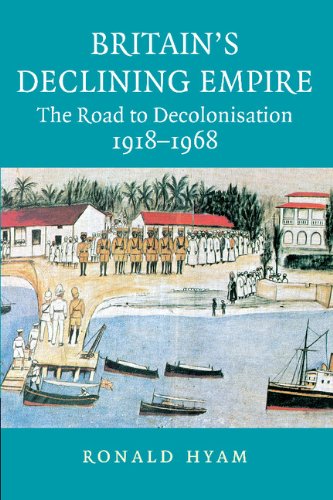
Britain's Declining Empire: The Road to Decolonisation, 1918-1968
Authors:
Ronald Hyam
Publisher:
Cambridge University Press
Publication Date:
Not available
ISBN:
0521685559
An authoritative political history of one of the world's most important empires on the road to decolonisation. Ronald Hyam's 2007 book offers a major... reassessment of the end of empire which combines a study of British policymaking with case studies on the experience of decolonization across Africa, Asia and the Caribbean. He describes the dysfunctional policies of an imperial system coping with postwar, interwar and wartime crises from 1918 to 1945 but the main emphasis is on the period after 1945 and the gradual unravelling of empire as a result of international criticism, and the growing imbalance between Britain's capabilities and its global commitments. He analyses the transfers of power from India in 1947 to Swaziland in 1968, the major crises such as Suez and assesses the role of leading figures from Churchill, Attlee and Eden to Macmillan and Wilson. This is essential reading for scholars and students of empire and decolonisation.
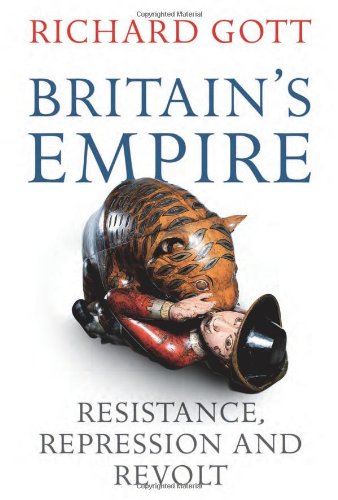
Britain's Empire: Resistance, Repression and Revolt
Authors:
Richard Gott
Publisher:
Verso
Publication Date:
Not available
ISBN:
1844677389
Magisterial history of the foundation of the British empire, and the forgotten story of resistance to its formation.This revelatory new history... punctures the still widely held belief that the British Empire was an enlightened and civilizing enterprise of great benefit to its subject peoples. Instead, Britain’s Empire reveals a history of systemic repression and almost continual violence, showing how British rule was imposed as a military operation and maintained as a military dictatorship. For colonized peoples, the experience was a horrific one—of slavery, famine, battle and extermination.Yet, as Richard Gott illustrates, the empire’s oppressed peoples did not go gently into that good night. Wherever Britain tried to plant its flag, there was resistance. From Ireland to India, from the American colonies to Australia, Gott chronicles the backlash. He shows, too, how Britain provided a blueprint for the genocides of twentieth-century Europe, and argues that its past leaders must rank alongside the dictators of the twentieth century as the perpetrators of crimes against humanity on an infamous scale. In tracing this history of resistance, all but lost to modern memory, Richard Gott recovers these forgotten peoples and puts them where they deserve to be: at the heart of the story of Britain’s empire.
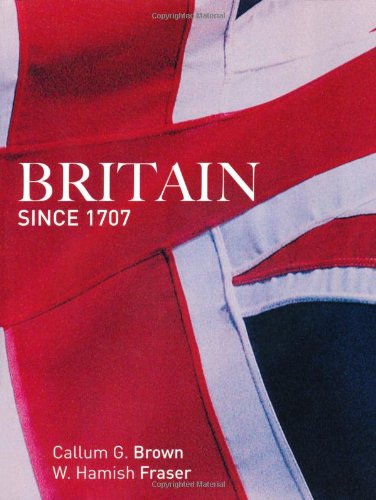
Britain Since 1707
Authors:
Callum Brown
Publisher:
Longman
Publication Date:
Not available
ISBN:
0582894158
Britain since 1707 is the first single-volume book to cover the complex and multi-layered history of Great Britain from its inception until 2007. ... Bringing together political, economic, social and cultural history, the book offers a reliable and balanced account of the nation over a 300 year period. It looks at major developments – such as the Enlightenment, the growth of democracy and gender change – while also tracing the distinctive experience of different, the book’s additional features include: social and ethnic groups through the decades. Fully integrating Scotland, Wales and the Irish experience, the book’s comprehensive sweep includes coverage of the industrial revolution, the British Empire, the two world wars and today’s multicultural society. Ideally structured to support courses and classes on British history · ‘Focus On’ sections with original documents and sources · Timelines and tables to aid understanding · Historical sources and further reading suggestions at the end of each chapter · Illuminating contemporary illustrations From Queen Anne to Gordon Brown, this wide-ranging and accessible book provides a complete and up-to-date history of Britain. Offering a coherent account of the evolution of the nation and its people, it will be essential reading for all students of British history. Callum G. Brown is professor of religious and cultural history at the University of Dundee. He is the author of eight books including Religion and Society in Twentieth-Century Britain (2006),Postmodernism for Historians (2004) and The Death of Christian Britain (2001). W. Hamish Fraser was, until his retirement, professor of modern history at the University of Strathclyde. His publications include A History of British Trade Unionism 1700-1998 (1999) and The Coming of the Mass Market (1981), and he has also edited volumes on the histories of Glasgow and Aberdeen.
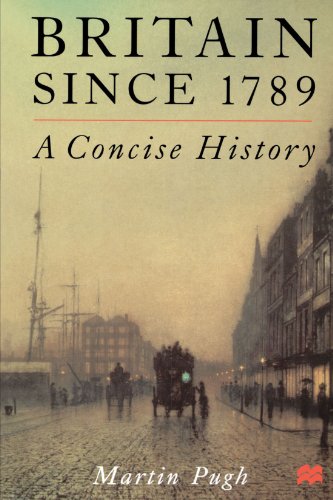
Britain Since 1789: A Concise History
Authors:
Martin Pugh
Publisher:
St. Martin's Press (As logo shown in photo)
Publication Date:
Not available
ISBN:
0312223595
This readable introduction to all the main themes and changes in British society between the late eighteenth century and the end of the 20th century is... an ideal volume for anyone embarking on a study of this complex subject. The author considers the extent and nature of Britain's relative economic decline since the late-Victorian period and examines imperial expansion up to 1914 and the trend towards decolonization after the second world war, culminating in an evaluation of Britain's dilemmas at the end of the 20th century.
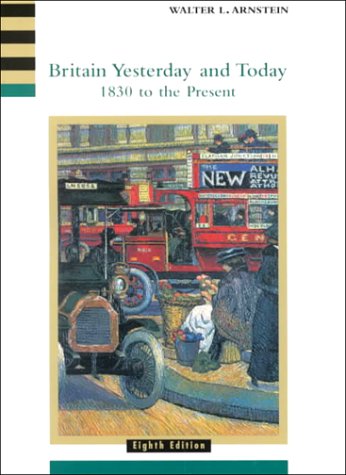
Britain Yesterday and Today: 1830 to the Present
Authors:
Walter L. Arnstein
Publisher:
Wadsworth Publishing
Publication Date:
Not available
ISBN:
0618001042
This text, which is the fourth volume in the best-selling History of England series, tells how a small and insignificant outpost of the Roman empire... evolved into a nation that has produced and disseminated so many significant ideas and institutions. This is the only comprehensive text available for the History of England survey course that has been revised and updated to include coverage of the entire 20th century.
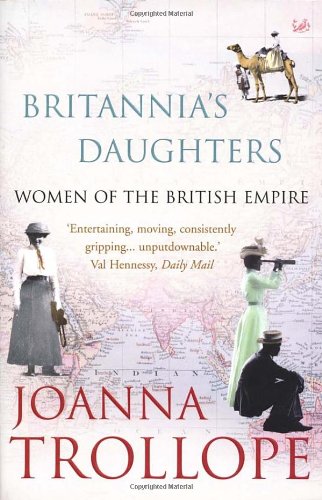
Britannia's Daughters
Authors:
Joanna Trollope
Publisher:
Not available
Publication Date:
Not available
ISBN:
1845950186
In Britannia’s Daughters, best-selling novelist Joanna Trollope examines the contribution of women in building and sustaining the British Empire. She... draws on a vast range of sources, including diaries and letters home. She provides a panoramic picture of the countless women who departed Britain for India, Australia, the Far East, Canada and Africa — often in search of opportunities unavailable at home.Here are penniless pioneers and governors’ wives, missionaries and prostitutes, explorers and army nurses. They people this book as they peopled the Empire — their astonishing courage and endurance, their remarkable personal stories are vividly and enthrallingly recaptured.
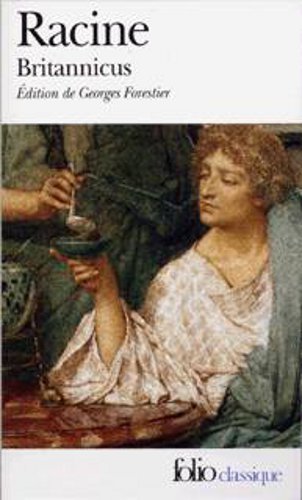
Britannicus (Folio (Domaine Public)) (French Edition)
Authors:
Jean Racine
Publisher:
Gallimard Education
Publication Date:
Not available
ISBN:
2070414396
Tyran sanguinaire, empereur féroce, despote criminel : le seul nom de Néron provoque des frémissements d'horreur. C'est ce que Racine a bien compris... : pour sa première tragédie romaine - terrain traditionnel de son vieux rival Corneille - Néron tombe à point nommé pour provoquer la crainte et la pitié. Il choisit donc d'en faire son héros maléfique, le double ignominieux de son frère Britannicus, innocent bientôt immolé à la formation machiavélique du jeune empereur. Car ce qui intéresse Racine, ce ne sont pas tant les crimes de Néron que les méandres de son âme. Il veut saisir et peindre sur le vif le moment où tout bascule, où l'élève de Sénèque choisit le crime contre la vertu, la ruse et la dissimulation contre la sincérité, le pouvoir par la force, sans la justice, dans l'abjection et dans la honte. Cela donne une des pièces les plus noires de Racine où même l'amour, dévasté par les poisons et les complots, n'a plus aucun avenir. Un théâtre de la cruauté qui s'inscrit dans la plus pure tradition de la tragédie.
Pour prolonger votre lecture, et découvrir des pièces moins connues, reportez-vous au premier tome des Oeuvres de Racine qui vient d'être réédité dans la Pléiade. --Karla Manuele --Ce texte fait référence à une édition épuisée ou non disponible de ce titre.
 '
'