production
/viewbook/list/all/?page=1781
/
/static/
None
Brown-Driver-Briggs Hebrew and English Lexicon
Authors:
Francis Brown
Publisher:
www.snowballpublishing.com
Publication Date:
Not available
ISBN:
1607963086
A trio of eminent Hebrew Bible scholars-Francis Brown, R. Driver, and Charles Briggs-spent over twenty years researching, writing, and preparing The... Brown-Driver-Briggs Hebrew and English Lexicon. Since it first appeared, BDB has been considered the finest and most comprehensive Hebrew lexicon available to the English-speaking student. Based upon the classic work of Wilhelm Gesenius, the "father of modern Hebrew lexicography," BDB gives not only dictionary definitions for each word, but relates each word to its Hebrew Bible usage and categorizes its nuances of meaning. BDB's exhaustive coverage of Hebrew Bible, Hebrew words, as well as its unparalleled usage of cognate languages and the wealth of background sources consulted and quoted, render BDB and invaluable resource for all students of the Bible.
BROWN-DRIVER-BRIGGS HEBREW ANDENGLISH LEXICON
Authors:
Francis Brown
Publisher:
Hendrickson Pub
Publication Date:
Not available
ISBN:
1565632060
A trio of eminent Old Testament scholars—Francis Brown, R. Driver, and Charles Briggs—spent over twenty years researching, writing, and... preparing The Brown-Driver-Briggs Hebrew and English Lexicon. Since it first appeared in the early part of the twentieth century, BDB has been considered the finest and most comprehensive Hebrew lexicon available to the English-speaking student. Based upon the classic work of Wilhelm Gesenius, the "father of modern Hebrew lexicography," BDB gives not only dictionary definitions for each word, but relates each word to its Old Testament usage and categorizes its nuances of meaning. BDB's exhaustive coverage of Old Testament Hebrew words, as well as its unparalleled usage of cognate languages and the wealth of background sources consulted and quoted, render BDB and invaluable resource for all students of the Bible.—From the publisher's preface

BROWN ECON 102 STUDENT PACKET ]CUSTOM[
Authors:
Not Available
Publisher:
Not available
Publication Date:
Not available
ISBN:
Not available
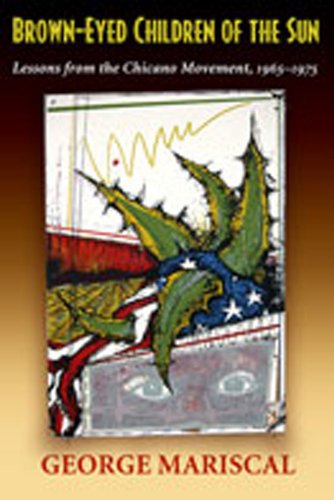
Brown-Eyed Children of the Sun: Lessons from the Chicano Movement,...
Authors:
George Mariscal
Publisher:
University of New Mexico Press
Publication Date:
Not available
ISBN:
0826338054
Brown-Eyed Children of the Sun is a new study of the Chicano/a movement, El Movimiento, and its multiple ideologies from a broad cultural perspective.... The late 1960s marked the first time U.S. society witnessed Americans of Mexican descent on a national stage as self-determined individuals and collective actors rather than second-class citizens. George Mariscal's book examines the Chicano movement's quest for equal rights and economic justice in the context of the Viet Nam War era.Mariscal outlines the social and political conditions that made El Movimiento possible, especially the Cold War, U.S. military interventions, the Black Civil Rights movement, and anti-colonial struggles in the so-called Third World. This context paved the way for U.S. minority groups to politicize their cultural production and elaborate radical identities. Mariscal analyzes many issues that scholars have heretofore ignored when studying El Movimiento.Mariscal argues convincingly that the term "nationalism" fails to adequately describe the complexity of the movement and shows how Chicano/a internationalism arose in response to the Cuban Revolution of 1959. He traces the ideological uses of the image of Cesar Chavez as a touchstone for debate within El Movimiento and explains how some activists such as Reies López Tijerina formed alliances across ethnic boundaries, specifically with African American militants. The final chapters look at attempts to democratize higher education in California and suggest ways in which the legacy of the movement might be relevant to contemporary political projects."George Mariscal gave us that extraordinary book Aztlan and Viet Nam. Here he turns his attention to a thoughtful analysis and description of the Chicano Movement of the Sixties and Seventies, in all its complexity, excitement, and promise. He finds fascinating connections between "el Movimiento" and certain historical figures like Che Guevara and Cesar Chavez. This book is a rich tapestry of provocative ideas and untold history."--Howard Zinn, author, A People's History of the United States
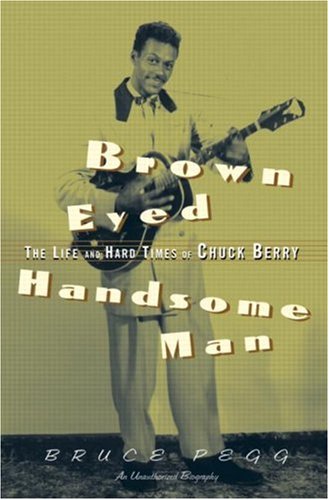
Brown Eyed Handsome Man: The Life and Hard Times of Chuck Berry
Authors:
Bruce Pegg
Publisher:
Routledge
Publication Date:
Not available
ISBN:
0415937515
Brown Eyed Handsome Man: The Life and Hard Times of Chuck Berry draws on dozens of interviews done by the author himself and voluminous public records... to paint a complete picture of this complicated figure. This biography uncovers the real Berry and provides us with a stirring, unvarnished portrait of both the man and the artist. Berry has long been one of pop music's most enigmatic personalities. Growing up in a middle-class, black neighborhood in St. Louis, his first major hit song, "Maybellene," was an adaptation of a white country song, wedded to a black-influenced beat. Thereafter came a string of brilliant songs celebrating teenage life in the '50s, including "School Day," "Johnny B. Goode," and "Sweet Little Sixteen." Berry's career rise was meteoric; but his fall came equally quickly, when his relations with an underage girl led to his conviction. It was not his first (nor his last) run in with the law. He scored his biggest hit in the early '70s with the comical (and some would say decidedly lightweight) song "My Ding-a-Ling." The following decades brought hundreds of nights of tours, with little attention from the recording industry. Bruce Pegg offers the definitive, though not always pretty, portrait of one of the greatest stars of rock and roll, a story that will appeal to all fans of American popular music.
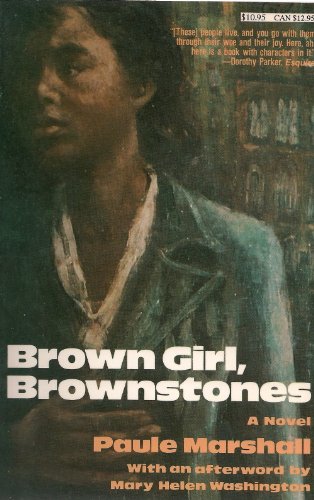
Brown Girl, Brownstones
Authors:
Paule Marshall
Publisher:
The Feminist Press at CUNY
Publication Date:
Not available
ISBN:
0912670967
The story of the coming of age of the daughter of Barbadian immigrants living in Brooklyn druing the Depression and the Second World War. She realizes... that only by accepting the dreams of both her parents can she gain independence. The author has previously written "Praisesong for the Widow".
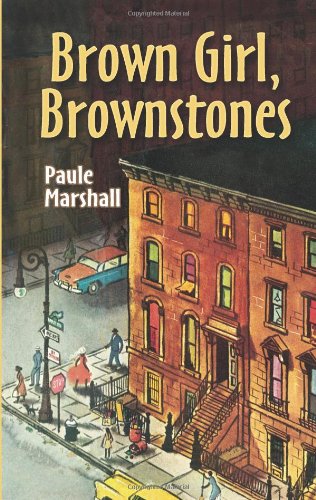
Brown Girl, Brownstones
Authors:
Paule Marshall
Publisher:
Dover Publications
Publication Date:
Not available
ISBN:
0486468321
Hailed by the Saturday Review as "passionate" and "compelling" and by The New Yorker as "remarkable for its courage," this 1959 coming-of-age story... centers on the daughter of Barbadian immigrants living in Brooklyn during the Depression and World War II. A precursor to feminist literature, this novel was written by and about an African-American woman.
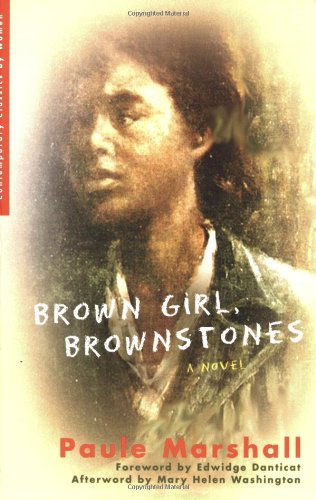
Brown Girl, Brownstones (Contemporary Classics by Women)
Authors:
Paule Marshall
Publisher:
The Feminist Press at CUNY
Publication Date:
Not available
ISBN:
1558614982
“Remarkable for its courage, its color and its natural control.”—The New Yorker“Unforgettable...written with pride and anger, with rebellion and... tears.”—The Herald TribuneThis beloved coming-of-age story set in Brooklyn during the Depression and World War II follows the life of Selina Boyce, a daughter of Barbadians immigrants. Her mother craves the American Dream while her father longs for his island birthplace. The new foreword by contemporary Caribbean author Edwidge Danticat explores the novel's themes of identity, sexuality and values as well as Selina's struggle against the racism and poverty surrounding her.
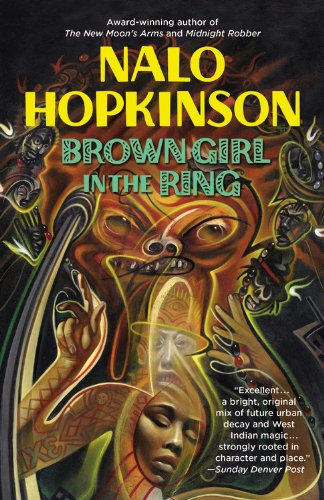
Brown Girl in the Ring
Authors:
Nalo Hopkinson
Publisher:
Warner Books
Publication Date:
Not available
ISBN:
0446674338
The rich and privileged have fled the city, barricaded it behind roadblocks, and left it to crumble. The inner city has had to rediscover old... ways-farming, barter, herb lore. But now the monied need a harvest of bodies, and so they prey upon the helpless of the streets. With nowhere to turn, a young woman must open herself to ancient truths, eternal powers, and the tragic mystery surrounding her mother and grandmother.She must bargain with gods, and give birth to new legends.
Brownian Motion and Stochastic Calculus (Graduate Texts in...
Authors:
Ioannis Karatzas
Publisher:
Springer
Publication Date:
Not available
ISBN:
0387976558
A graduate-course text, written for readers familiar with measure-theoretic probability and discrete-time processes, wishing to explore stochastic... processes in continuous time. The vehicle chosen for this exposition is Brownian motion, which is presented as the canonical example of both a martingale and a Markov process with continuous paths. In this context, the theory of stochastic integration and stochastic calculus is developed, illustrated by results concerning representations of martingales and change of measure on Wiener space, which in turn permit a presentation of recent advances in financial economics. The book contains a detailed discussion of weak and strong solutions of stochastic differential equations and a study of local time for semimartingales, with special emphasis on the theory of Brownian local time. The whole is backed by a large number of problems and exercises.
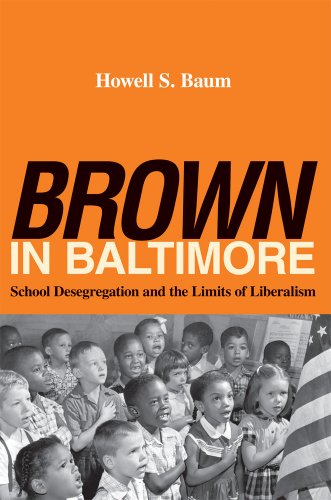
Brown in Baltimore: School Desegregation and the Limits of Liberalism
Authors:
Howell S. Baum
Publisher:
Cornell University Press
Publication Date:
Not available
ISBN:
0801476526
In the first book to present the history of Baltimore school desegregation, Howell S. Baum shows how good intentions got stuck on what Gunnar Myrdal... called the "American Dilemma." Immediately after the 1954 Brown v. Board of Education decision, the city's liberal school board voted to desegregate and adopted a free choice policy that made integration voluntary.Baltimore's school desegregation proceeded peacefully, without the resistance or violence that occurred elsewhere. However, few whites chose to attend school with blacks, and after a few years of modest desegregation, schools resegregated and became increasingly segregated. The school board never changed its policy. Black leaders had urged the board to adopt free choice and, despite the limited desegregation, continued to support the policy and never sued the board to do anything else.Baum finds that American liberalism is the key to explaining how this happened. Myrdal observed that many whites believed in equality in the abstract but considered blacks inferior and treated them unequally. School officials were classical liberals who saw the world in terms of individuals, not races. They adopted a desegregation policy that explicitly ignored students' race and asserted that all students were equal in freedom to choose schools, while their policy let whites who disliked blacks avoid integration. School officials' liberal thinking hindered them from understanding or talking about the city's history of racial segregation, continuing barriers to desegregation, and realistic change strategies.From the classroom to city hall, Baum examines how Baltimore's distinct identity as a border city between North and South shaped local conversations about the national conflict over race and equality. The city's history of wrestling with the legacy of Brown reveals Americans' preferred way of dealing with racial issues: not talking about race. This avoidance, Baum concludes, allows segregation to continue.
BROWN LEMAY CHEMISTRY 1
Authors:
Not Available
Publisher:
Not available
Publication Date:
Not available
ISBN:
Not available
BROWN LEMAY CHEMISTRY 2
Authors:
Not Available
Publisher:
Not available
Publication Date:
Not available
ISBN:
Not available
Brown River, White Ocean: An Anthology of Twentieth-Century...
Authors:
Luis H. Francia
Publisher:
Rutgers University Press
Publication Date:
Not available
ISBN:
0813519993
The 31 short stories and 108 poems in this anthology represent a literary history of English writing in the Philippines, from its introduction at the... turn of the century to the present. These works belong to the river of Philippine literary tradition, which includes, among others, literatures in Tagalog, Visayan, Spanish, and Ilokano. The works here contain images drawn from different social strata, different time periods, different locales. They represent the spectrum of contemporary Philippine society -- business people, doctors, soldiers, farmers, workers, slum dwellers, immigrants, artists, students. The themes are both modem and timeless -- incest, the burdens of tradition, the horrors of tyranny, exile, love. And the voices are familiar and yet touched with strangeness. In this anthology, from the earliest story, "Dead Stars, " by Paz Marquez Benitez, to Manuel Ortega Abis's recent poem "Strike, " the manifest culture is distinctly and uniquely Filipino.
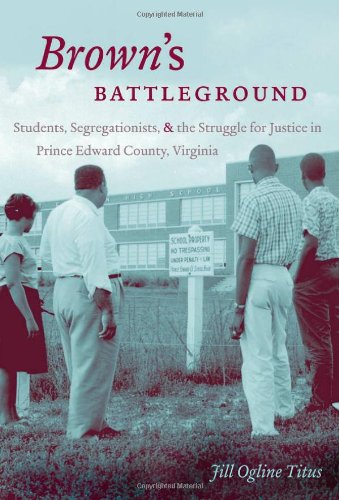
Brown's Battleground: Students, Segregationists, and the Struggle...
Authors:
Jill Titus
Publisher:
The University of North Carolina Press
Publication Date:
Not available
ISBN:
0807835072
When the U.S. Supreme Court handed down its decision in Brown v. Board of Education in 1954, Prince Edward County, Virginia, home to one of the five... cases combined by the Court under Brown, abolished its public school system rather than integrate. Jill Titus situates the crisis in Prince Edward County within the seismic changes brought by Brown and Virginia's decision to resist desegregation. While school districts across the South temporarily closed a building here or there to block a specific desegregation order, only in Prince Edward did local authorities abandon public education entirely--and with every intention of permanence. When the public schools finally reopened after five years of struggle--under direct order of the Supreme Court--county authorities employed every weapon in their arsenal to ensure that the newly reopened system remained segregated, impoverished, and academically substandard. Intertwining educational and children's history with the history of the black freedom struggle, Titus draws on little-known archival sources and new interviews to reveal the ways that ordinary people, black and white, battled, and continue to battle, over the role of public education in the United States.
 '
'