production
/viewbook/list/all/?page=1790
/
/static/
None
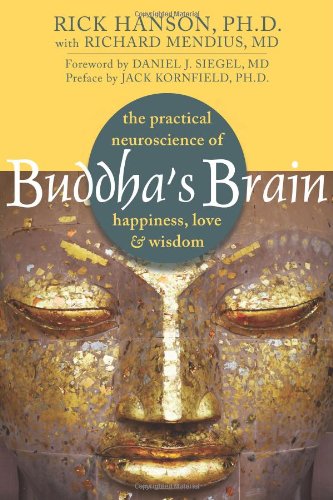
Buddha's Brain: The Practical Neuroscience of Happiness, Love, and...
Authors:
Rick Hanson
Publisher:
New Harbinger Publications
Publication Date:
Not available
ISBN:
1572246952
Jesus, Moses, the Buddha, and other great teachers were born with brains built essentially like anyone else's. Then they used their minds to change... their brains in ways that changed history. With the new breakthroughs in neuroscience, combined with the insights from thousands of years of contemplative practice, you, too, can shape your own brain for greater happiness, love, and wisdom. Buddha's Brain joins the forces of modern science with ancient teachings to show readers how to have greater emotional balance in turbulent times, as well as healthier relationships, more effective actions, and a deeper religious or spiritual practice. Well-referenced and grounded in science, the book is full of practical tools and skills readers can use in daily life to tap the unused potential of the brain and rewire it over time for greater peace and well-being. If you can change your brain, you can change your life.

Buddha's Dogs
Authors:
Susan Browne
Publisher:
Four Way
Publication Date:
Not available
ISBN:
1884800564
These poems are at once tender, vulnerable, biting, heartbreaking, and hilarious. One moment you are laughing, the next moment drying your eyes. Edward... Hirsch, judge of the Four Way Books 2002 Intro Prize says of Buddha's Dogs, "There's a ruthless authenticity--a deep cherishing--in Buddha's Dogs, a splendidly mature first book of poems that is filled with moments of Proustian recall, with the comedy and the anguish, the beauty and the burning of lived experience."
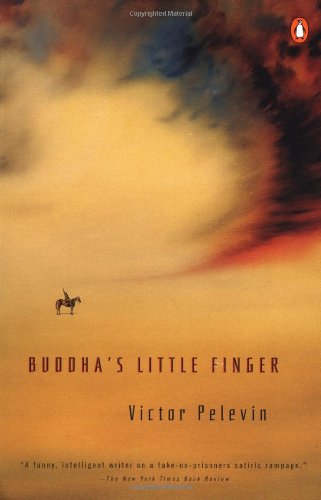
Buddha's Little Finger
Authors:
Victor Pelevin
Publisher:
Penguin Books
Publication Date:
Not available
ISBN:
0141002328
Russian novelist Victor Pelevin is rapidly establishing himself as one of the most brilliant young writers at work today. His comic inventiveness and... mind-bending talent prompted Time magazine to proclaim him a "psychedelic Nabokov for the cyber-age." In his third novel, Buddha's Little Finger, Pelevin has created an intellectually dazzling tale about identity and Russian history, as well as a spectacular elaboration of Buddhist philosophy. Moving between events of the Russian Civil War of 1919 and the thoughts of a man incarcerated in a contemporary Moscow psychiatric hospital, Buddha's Little Finger is a work of demonic absurdism by a writer who continues to delight and astonish.
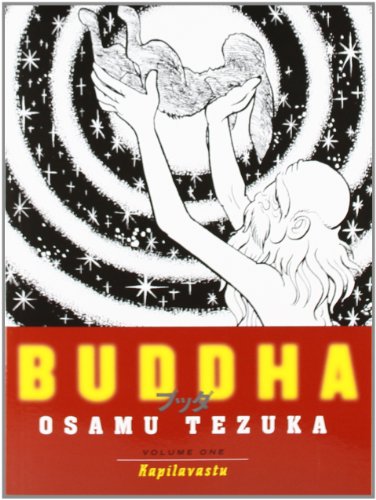
Buddha, Vol. 1: Kapilavastu
Authors:
Osamu Tezuka
Publisher:
Vertical
Publication Date:
Not available
ISBN:
193223456X
Osamu Tezuka’s vaunted storytelling genius, consummate skill at visual expression, and warm humanity blossom fully in his eight-volume epic of... Siddhartha’s life and times. Tezuka evidences his profound grasp of the subject by contextualizing the Buddha’s ideas; the emphasis is on movement, action, emotion, and conflict as the prince Siddhartha runs away from home, travels across India, and questions Hindu practices such as ascetic self-mutilation and caste oppression. Rather than recommend resignation and impassivity, Tezuka’s Buddha predicates enlightenment upon recognizing the interconnectedness of life, having compassion for the suffering, and ordering one’s life sensibly. Philosophical segments are threaded into interpersonal situations with ground-breaking visual dynamism by an artist who makes sure never to lose his readers’ attention.Tezuka himself was a humanist rather than a Buddhist, and his magnum opus is not an attempt at propaganda. Hermann Hesse’s novel or Bertolucci’s film is comparable in this regard; in fact, Tezuka’s approach is slightly irreverent in that it incorporates something that Western commentators often eschew, namely, humor.
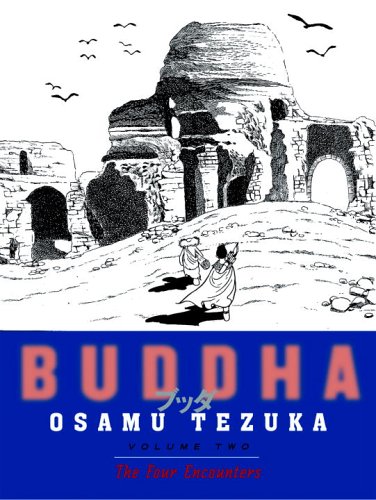
Buddha, Vol. 2: The Four Encounters
Authors:
Osamu Tezuka
Publisher:
Vertical
Publication Date:
Not available
ISBN:
1932234578
Osamu Tezuka’s vaunted storytelling genius, consummate skill at visual expression, and warm humanity blossom fully in his eight-volume epic of... Siddhartha’s life and times. Tezuka evidences his profound grasp of the subject by contextualizing the Buddha’s ideas; the emphasis is on movement, action, emotion, and conflict as the prince Siddhartha runs away from home, travels across India, and questions Hindu practices such as ascetic self-mutilation and caste oppression. Rather than recommend resignation and impassivity, Tezuka’s Buddha predicates enlightenment upon recognizing the interconnectedness of life, having compassion for the suffering, and ordering one’s life sensibly. Philosophical segments are threaded into interpersonal situations with ground-breaking visual dynamism by an artist who makes sure never to lose his readers’ attention.Tezuka himself was a humanist rather than a Buddhist, and his magnum opus is not an attempt at propaganda. Hermann Hesse’s novel or Bertolucci’s film is comparable in this regard; in fact, Tezuka’s approach is slightly irreverent in that it incorporates something that Western commentators often eschew, namely, humor.
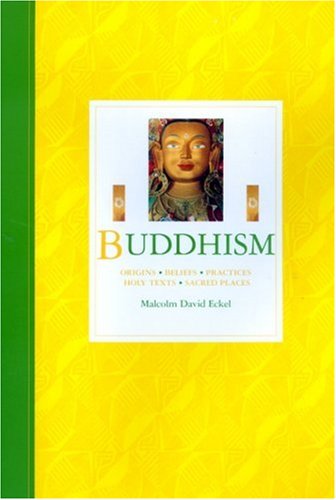
Buddhism
Authors:
Malcolm David Eckel
Publisher:
Oxford University Press, USA
Publication Date:
Not available
ISBN:
0195219074
Founded on the Four Noble Truths and the Eightfold Path, the faith taught by Siddhartha Gautama (the Buddha, or Awakened One) spread rapidly across Asia... and then across the globe, becoming one of the world's largest and most influential religions. Buddhism combines lavish colorful photography and an authoritative text to provide a sweeping survey of this rich and varied religious tradition. Eckel begins with an engaging portrait of the Buddha (who predated Jesus by 500 years), an Indian prince's son who embarked on an epic journey of enlightenment and discovered a way of overcoming suffering. The authors trace the flowering of Buddhist schools in his wake, from the major groups (Mahayana, Theravada, Tantric) to the minor (such as the Pure Land sect in Japan). With helpful sidebars, boxed features, and numerous illustrations, they explain Tantric Mandalas (sacred circles), the Sutras (holy writings), the sacred landscape, celestial beings in some Buddhist mythology, the path to Nirvana, and much more. They also discuss Buddhist temples, forms of worship and meditation, the cycle of rebirth, and roles and relationships in the Buddhist community (including Theravada, Buddhism's stress on the importance of becoming a monk for at least part of life). A helpful map reveals the course of Buddhism's expansion throughout Asia. As a belief system, as an influential way of seeing the world, as a unifying thread of Asian cultures, Buddhism remains vitally important. This lucid, eye-pleasing introduction explains and celebrates this major world religion, bringing to life the full variety of Buddhist tradition.
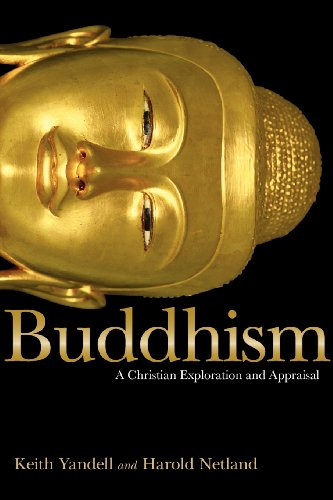
Buddhism: A Christian Exploration and Appraisal
Authors:
Keith Yandell
Publisher:
IVP Academic
Publication Date:
Not available
ISBN:
0830838554
The disproportionate influence of Buddhist thought and philosophy found in cultural circles such as education, entertainment and the media coupled with... the dramatic recent surge of asian immigrants, many of whom are Buddhist, has brought Buddhism to the forefront of Western culture. And more and more of those who have become disenfranchised from Christian spirituality are embracing Buddhism as a replacement way of organizing their life. In this clear and balanced introduction, Keith Yandell and Harold Netland set out to educate Christians about Buddhism, laying out the central metaphysical claims of this significant world religion, including a concluding chapter which offers an honest comparison with Christianity. The authors acknowledge some overlap of belief while also noting the clear and significant differences between the two religions. As both religions affirm, these distinctions have enormous consequences for the spiritual well-being of adherents. This book guides any reader who wants to understand the central tenets and claims of Buddhism more deeply and how learn how it compares to Christian faith.
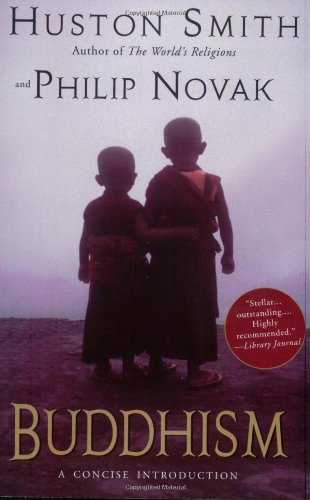
Buddhism: A Concise Introduction
Authors:
Huston Smith
Publisher:
HarperOne
Publication Date:
Not available
ISBN:
0060730676
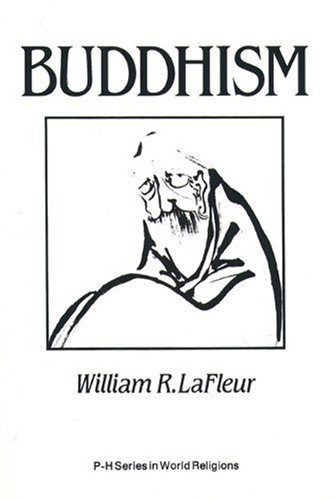
Buddhism: A Cultural Perspective
Authors:
William R. La Fleur
Publisher:
Pearson
Publication Date:
Not available
ISBN:
0130847240
This book begins with Buddhism's involvement in the culture and thought of India, and observes its moves into other, very different contexts:... China, Southeast Asia, Tibet, Japan, and even the West, to a limited extent. The book accepts the diversity within Buddhism, giving roughly equal treatment to its two major traditions -- the Theravada and the Mahayana. KEY TOPICS: Probes the philosophy and religion of Buddhism and how they relate to cultural traditions.

Buddhism: A History (Religions of the World)
Authors:
Ross Reat
Publisher:
J. Cape & Harrison Smith
Publication Date:
Not available
ISBN:
0875730027
N. Ross Reat seems to have accomplished the impossible: a one-volume survey of Buddhism that is accurate, inclusive and readable. In an excellent... narrative that links facts and ideas over three millennia, Buddhism: a History begins with four chapters on the background, inception and development of early Buddhism, then moves on through nine individual chapters on Buddhism in each of its major geographic locales, from Sri Lanka to Japan and even the West. A valuable work for student and casual reader alike.
Buddhism and Science: A Guide for the Perplexed (Buddhism and...
Authors:
Donald S. Lopez Jr.
Publisher:
University Of Chicago Press
Publication Date:
Not available
ISBN:
0226493199
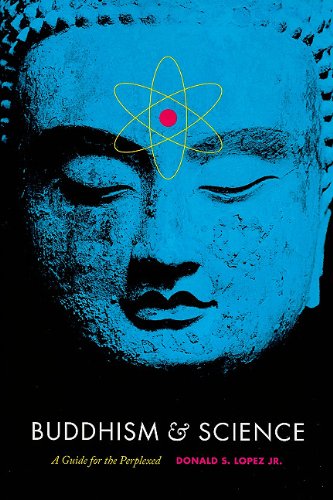
Beginning in the nineteenth century and continuing to the present day, both practitioners and admirers of Buddhism have proclaimed its compatibility... with science. In Buddhism and Science, Donald S. Lopez Jr. explores how and why these two seemingly disparate modes of understanding the inner and outer universe have been so persistently linked. He argues that by presenting an ancient Asian tradition as compatible with—and even anticipating—scientific discoveries, European enthusiasts and Asian elites have sidestepped debates on the relevance of religion in the modern world that began in the nineteenth century and that still flare today. As new discoveries continue to reshape our understanding of mind and matter, Buddhism and Science will be indispensable reading for those fascinated by religion, science, and their often vexed relation. “In Buddhism and Science, Donald Lopez fills a major gap, and he does so with his trademark rigor, concision, and élan. No serious student of science-and-religion can afford to skip this book.”—Jack Miles, general editor, Norton Anthology of World Religions
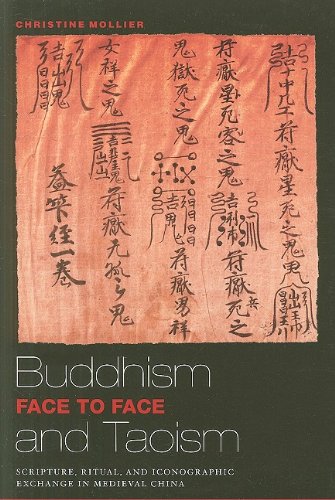
Buddhism and Taoism Face to Face: Scripture, Ritual, and...
Authors:
Christine Mollier
Publisher:
Univ of Hawaii Pr
Publication Date:
Not available
ISBN:
0824834119

Buddhism as Philosophy: An Introduction
Authors:
Mark Siderits
Publisher:
Hackett Pub Co Inc
Publication Date:
Not available
ISBN:
0872208737
There has been a recent upsurge in interest in Buddhist philosophy, but there is as yet no satisfactory text on the subject. "Buddhism as Philosophy"... fills that void. Unlike other texts that serve to introduce Buddhist thought, it is written by a philosopher and it shows how the Buddhist tradition deals with the same sorts of problems that get treated in Western philosophy and employs the same sorts of methods. This book does more than just report what Buddhist philosophers said; it presents the arguments of the Buddhist philosophers, in their own words, and it invites the reader to assess their overall cogency. In short, "Buddhism as Philosophy" investigates the Buddhist tradition by way of the characteristically philosophical concern for finding out the truth about complicated matters in metaphysics, epistemology and ethics.

Buddhism at Work
Authors:
George D. Bond
Publisher:
Kumarian Press
Publication Date:
Not available
ISBN:
1565491769
*Continues the story of the Sarvodaya Movement begun in Joanna Macy’s Dharma and Development*Up-to-date information stems from ten years of scholarly... and field research In one of the world’s most inspirational grassroots-development stories, Buddhism at Work outlines the vision and evolution of the Sarvodaya Shramadana Movement in Sri Lanka, as its members have sought to engage and awaken society with Buddhist and Gandhian ideals.Now an international movement and NGO, Sarvodaya calls for individuals and groups to achieve non-violent social transformation through cooperative work. Its vision and its voice are poised to contribute to the emerging global dialogue on peace, social justice, and community development. Buddhism at Work embraces a new hope for humanity.
Buddhism: A Very Short Introduction
Authors:
Damien Keown
Publisher:
Oxford University Press
Publication Date:
Not available
ISBN:
0192853864
This accessible volume covers both the teachings of the Buddha and the integration of Buddhism into daily life. What are the distinctive features of... Buddhism? What or who is the Buddha, and what are his teachings? How has Buddhist thought developed over the centuries, and how can contemporary dilemmas be faced from a Buddhist perspective? Words such as "karma" and "nirvana" have entered our vocabulary, but what do they really mean? Keown has taught Buddhism at an introductory level for many years, and in this book he provides a lively, challenging response to these frequently asked questions.About the Series: Combining authority with wit, accessibility, and style, Very Short Introductions offer an introduction to some of life's most interesting topics. Written by experts for the newcomer, they demonstrate the finest contemporary thinking about the central problems and issues in hundreds of key topics, from philosophy to Freud, quantum theory to Islam.
 '
'