production
/viewbook/list/all/?page=181
/
/static/
None
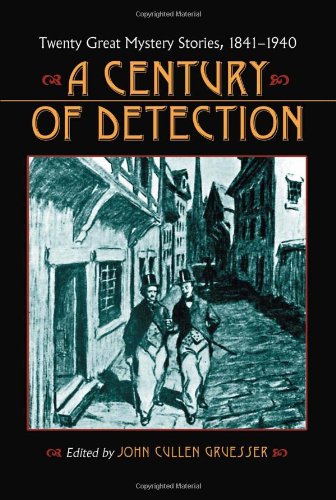
A Century of Detection: Twenty Great Mystery Stories, 1841-1940
Authors:
John Cullen Gruesser
Publisher:
McFarland
Publication Date:
Not available
ISBN:
0786446501
Appropriate both for the general reader and the student, this wide-ranging anthology of mystery stories provides a chronological and thematic survey of... early detection fiction. Included are classic texts by Edgar Allan Poe, Sir Arthur Conan Doyle, G.K. Chesterton, and Susan Glaspell; lesser-known gems by the likes of Wilkie Collins, Mark Twain, Dashiell Hammett, and Ralph Ellison; and innovative or historically significant stories by Mary Wilkins Freeman, Anna Katharine Green, Cornell Woolrich, and others. Six thematic categories foreground the genre's fluidity and evolution, with selections presenting detectives in an array of nationalities, genders and sexual orientations, socioeconomic classes, political points of view, and ethnic and racial backgrounds.
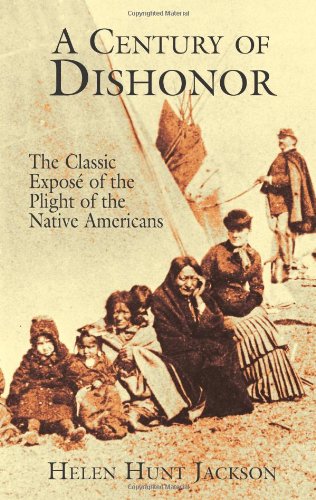
A Century of Dishonor: The Classic Expose of the Plight of the...
Authors:
Helen Hunt Jackson
Publisher:
Dover Publications
Publication Date:
Not available
ISBN:
048642698X
This monumental study chronicles the maltreatment of Indians as far back as the American Revolution. Focusing mainly on the Delaware and the Cheyenne,... the text reveals a succession of broken treaties, the government's forced removal of tribes from choice lands, and other examples of inhuman treatment of the nation's 300,000 Indians.
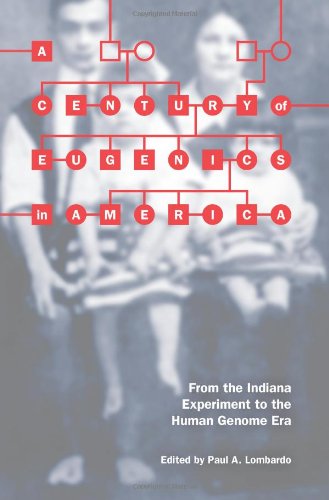
A Century of Eugenics in America: From the Indiana Experiment to...
Authors:
Not Available
Publisher:
Indiana University Press
Publication Date:
Not available
ISBN:
0253222699
In 1907, Indiana passed the world's first involuntary sterilization law based on the theory of eugenics. In time, more than 30 states and a dozen... foreign countries followed suit. Although the Indiana statute was later declared unconstitutional, other laws restricting immigration and regulating marriage on "eugenic" grounds were still in effect in the U.S. as late as the 1970s. A Century of Eugenics in America assesses the history of eugenics in the United States and its status in the age of the Human Genome Project. The essays explore the early support of compulsory sterilization by doctors and legislators; the implementation of eugenic schemes in Indiana, Georgia, California, Minnesota, North Carolina, and Alabama; the legal and social challenges to sterilization; and the prospects for a eugenics movement basing its claims on modern genetic science.
A Century of Genocide: Utopias of Race and Nation
Authors:
Eric D. Weitz
Publisher:
Princeton University Press
Publication Date:
Not available
ISBN:
0691122717
Why did the twentieth century witness unprecedented organized genocide? Can we learn why genocide is perpetrated by comparing different cases of... genocide? Is the Holocaust unique, or does it share causes and features with other cases of state-sponsored mass murder? Can genocide be prevented?Blending gripping narrative with trenchant analysis, Eric Weitz investigates four of the twentieth century's major eruptions of genocide: the Soviet Union under Stalin, Nazi Germany, Cambodia under the Khmer Rouge, and the former Yugoslavia. Drawing on historical sources as well as trial records, memoirs, novels, and poems, Weitz explains the prevalence of genocide in the twentieth century--and shows how and why it became so systematic and deadly.Weitz depicts the searing brutality of each genocide and traces its origins back to those most powerful categories of the modern world: race and nation. He demonstrates how, in each of the cases, a strong state pursuing utopia promoted a particular mix of extreme national and racial ideologies. In moments of intense crisis, these states targeted certain national and racial groups, believing that only the annihilation of these "enemies" would enable the dominant group to flourish. And in each instance, large segments of the population were enticed to join in the often ritualistic actions that destroyed their neighbors.This book offers some of the most absorbing accounts ever written of the population purges forever associated with the names Stalin, Hitler, Pol Pot, and Milosevic. A controversial and richly textured comparison of these four modern cases, it identifies the social and political forces that produce genocide.
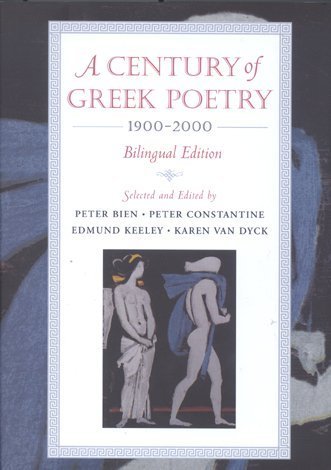
A Century of Greek Poetry, 1900-2000: 1900-2000
Authors:
Peter Bien
Publisher:
Cosmos Pub Co Inc
Publication Date:
Not available
ISBN:
1932455000
This unique bilingual anthology presents the achievements of Greek poetry in the 20th century. Included are 109 poets and 456 poems, with the Greek... original and the English translation on opposite pages. Included are the internationally recognized C.P. Cavafy, the Nobel Prize winners George Seferis and Odysseus Elytis, as well as all the major Greek poets of the 20th century. Many of the poems in the Greek original and many translations are published for the first time. The four editors, all award winning authors and translators, not only selected the poems but also have translated many of them. In all 63 translators contributede their work to this anthology. Also, included are Kimon Friar’s unpublished corrections/modifications to his original translations.
A Century of Horrors: Communism, Nazism, and the Uniqueness of the...
Authors:
Alain Besancon
Publisher:
Intercollegiate Studies Institute
Publication Date:
Not available
ISBN:
1933859180
The twentieth century bears the indelible imprint of both communism and Nazism. Today, it sometimes seems as if the former is all but forgotten, at... least among Western elites, while our cultural memory of the latter is an inextinguishable fire. This inequality is surprising and calls out for explanation, a task the French political thinker Alain Besançon attempts here in a wise and elegant meditation. In examining the horror and destruction caused by both of these terrible ideologies, Besançon finds that recourse to theology is necessary if we are to achieve even feeble illumination. He also explains why, even with the full knowledge of the extent of communism’s crimes, the uniqueness of the Shoah ought to be accepted without reservation.
A Century of Juvenile Justice
Authors:
Not Available
Publisher:
University Of Chicago Press
Publication Date:
Not available
ISBN:
0226727831
Since its inception in Illinois in 1899, the juvenile court has become a remarkable legal and social institution all over the developed world, one that... plays a singular role in modern government. At its founding, the juvenile court was intended to reverse longstanding legal traditions, and place the child's interests first in areas of law ranging from dependency to delinquency. Yet in recent years legal responses to youths' offences have undergone striking changes, as more juveniles are being transferred to adult courts and serving adult sentences.A Century of Juvenile Justice is the first standard, comprehensive and comparative reference work to span the history and current state of juvenile justice. An extraordinary assemblage of leading authorities have produced a accessible, illustrated document, designed as a reference for everyone from probation personnel and police to students, educators, lawyers, and social workers.Editors' introductions place into context each of the book's five sections, which consider the history of the ideas around which the system was organized and the institutions and practices that resulted; the ways in which this set of institutions and practices interacts with other aspects of government policy toward children in the U.S. and in other nations; and also the ways in which changing social and legal meanings of childhood and youth have continued to influence juvenile justice. The doctrine and institutions of juvenile justice in Europe, Japan, England, and Scotland are profiled in depth to show the range of modern responses to youth crime and child endangerment. This comparative material provides a fresh basis for judging the direction of policy in the U.S.Margaret K. Rosenheim is the Helen Ross professor Emerita in the School of Social Service Administration of the University of Chicago. Franklin Zimring is Professor of Law and Director of the Earl Warren Legal Institute at the University of California, Berkeley. David S. Tanenhaus is Assistant Professor of History at the University of Nevada, Las Vegas. Bernardine Dohrn is Director of the Children and Family Justice Center of Northwestern University Law School.Contributors:Anthony BottomsJaap DoekBernardine DohrnPeter EdelmanJohn EekelaarDavid FarringtonFrank FurstenbergMichael GrossbergJohn LaubPaul LermanRolf LoeberAkira MoritaMargaret K. RosenheimElizabeth ScottDavid S. TanenhausLee TeitelbaumMark TestaFranklin E. Zimring
A Century of Media, A Century of War
Authors:
Robin Andersen
Publisher:
Peter Lang Publishing
Publication Date:
Not available
ISBN:
0820478938
Forged over the course of a century, the connections between war and media run long and deep. As this book reveals, the history of war and its telling... has been a battle over public perception. The selection of which stories are told and which are ignored helps justify past battles and ensure future wars. Narratives of protest and pain, defeat and suffering, guilt and abuse struggle to be heard amid the empowering myths of war and heroism. As Robin Andersen argues, the history of struggle between war and its representation has changed the way war is fought and the way we tell the stories of war. Information management, once called censorship and propaganda, has developed in tandem with new media technologies. Now, digital imaging creates virtual battlefields as computer-based technologies transform the weapons of war. Along the way, images on the nightly news, on movie screens, and in video games have turned war into entertainment. In the grip of virtual war, it is difficult to realize the loss of compassion or the consequences for democracy.
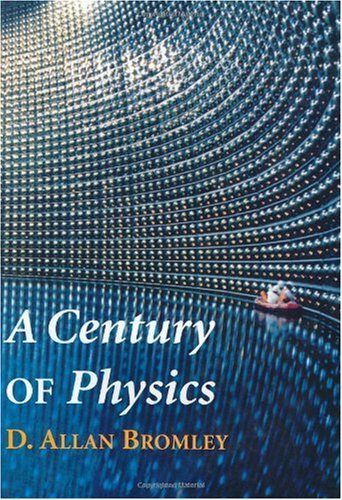
A Century of Physics
Authors:
D. Allan Bromley
Publisher:
Springer
Publication Date:
Not available
ISBN:
0387952470
In this "Cook’s Tour" of developments in physics and realted fields, D. Allan Bromley, Science Advisor to President Bush during 1989-1983 and past... president of the American Physical Society, conveys much of the excitement and wonder that research in physics generated in the 20th century and asks what new things are in store in the next century.
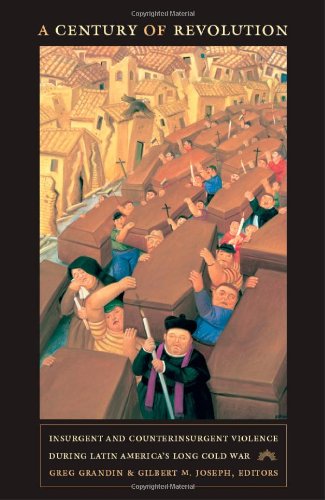
A Century of Revolution: Insurgent and Counterinsurgent Violence...
Authors:
Not Available
Publisher:
Duke University Press Books
Publication Date:
Not available
ISBN:
0822347377
Latin America experienced an epochal cycle of revolutionary upheavals and insurgencies during the twentieth century, from the Mexican Revolution of 1910... through the mobilizations and terror in Central America, the Southern Cone, and the Andes during the 1970s and 1980s. In his introduction to A Century of Revolution, Greg Grandin argues that the dynamics of political violence and terror in Latin America are so recognizable in their enforcement of domination, their generation and maintenance of social exclusion, and their propulsion of historical change, that historians have tended to take them for granted, leaving unexamined important questions regarding their form and meaning. The essays in this groundbreaking collection take up these questions, providing a sociologically and historically nuanced view of the ideological hardening and accelerated polarization that marked Latin America’s twentieth century. Attentive to the interplay among overlapping local, regional, national, and international fields of power, the contributors focus on the dialectical relations between revolutionary and counterrevolutionary processes and their unfolding in the context of U.S. hemispheric and global hegemony. Through their fine-grained analyses of events in Chile, Colombia, Cuba, El Salvador, Guatemala, Mexico, Nicaragua, and Peru, they suggest a framework for interpreting the experiential nature of political violence while also analyzing its historical causes and consequences. In so doing, they set a new agenda for the study of revolutionary change and political violence in twentieth-century Latin America.ContributorsMichelle ChaseJeffrey L. GouldGreg GrandinLillian GuerraForrest HyltonGilbert M. JosephFriedrich KatzThomas Miller KlubockNeil LarsenArno J. MayerCarlota McAllisterJocelyn OlcottGerardo RéniqueCorey RobinPeter Winn
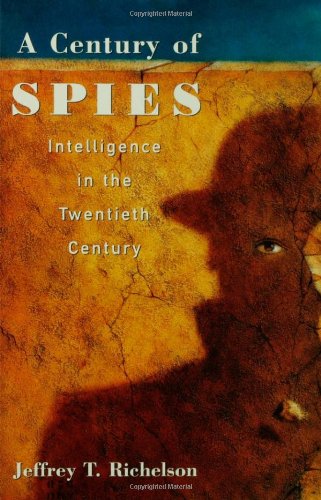
A Century of Spies: Intelligence in the Twentieth Century
Authors:
Jeffery T. Richelson
Publisher:
Oxford University Press, USA
Publication Date:
Not available
ISBN:
019511390X
Here is the ultimate inside history of twentieth-century intelligence gathering and covert activity. Unrivalled in its scope and as readable as any spy... novel, A Century of Spies travels from tsarist Russia and the earliest days of the British Secret Service to the crises and uncertainties of today's post-Cold War world, offering an unsurpassed overview of the role of modern intelligence in every part of the globe. From spies and secret agents to the latest high-tech wizardry in signals and imagery surveillance, it provides fascinating, in-depth coverage of important operations of United States, British, Russian, Israeli, Chinese, German, and French intelligence services, and much more. All the key elements of modern intelligence activity are here. An expert whose books have received high marks from the intelligence and military communities, Jeffrey Richelson covers the crucial role of spy technology from the days of Marconi and the Wright Brothers to today's dazzling array of Space Age satellites, aircraft, and ground stations. He provides vivid portraits of spymasters, spies, and defectors--including Sidney Reilly, Herbert Yardley, Kim Philby, James Angleton, Markus Wolf, Reinhard Gehlen, Vitaly Yurchenko, Jonathan Pollard, and many others. Richelson paints a colorful portrait of World War I's spies and sabateurs, and illuminates the secret maneuvering that helped determine the outcome of the war on land, at sea, and on the diplomatic front; he investigates the enormous importance of intelligence operations in both the European and Pacific theaters in World War II, from the work of Allied and Nazi agents to the "black magic" of U.S. and British code breakers; and he gives us a complete overview of intelligence during the length of the Cold War, from superpower espionage and spy scandals to covert action and secret wars. A final chapter probes the still-evolving role of intelligence work in the new world of disorder and ethnic conflict, from the high-tech wonders of the Gulf War to the surprising involvement of the French government in industrial espionage. Comprehensive, authoritative, and addictively readable, A Century of Spies is filled with new information on a variety of subjects--from the activities of the American Black Chamber in the 1920s to intelligence collection during the Cuban missile crisis to Soviet intelligence and covert action operations. It is an essential volume for anyone interested in military history, espionage and adventure, and world affairs.
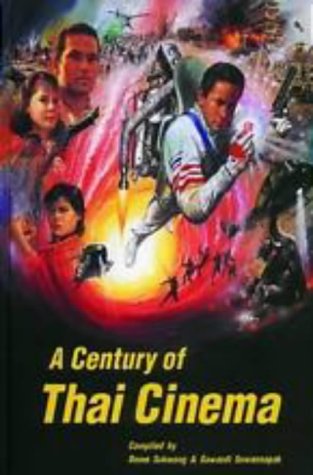
A Century of Thai Cinema (River Books)
Authors:
Dome Sukwong
Publisher:
River Books Press Dist A C
Publication Date:
Not available
ISBN:
0500976031
Thais began shooting films in 1900; cinema soon became a very popular form of entertainment, which had its "golden age" in the 1930s. This book provides... both a history of Thai cinema and a visual record of all the associated memorabilia, including movie posters.
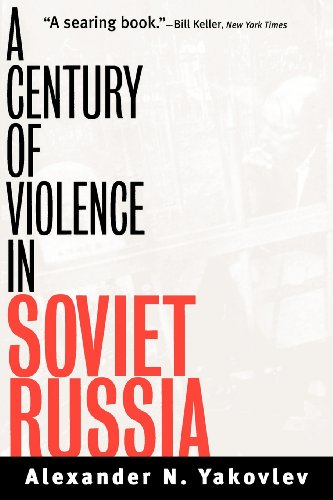
A Century of Violence in Soviet Russia
Authors:
Mr. Alexander N. Yakovlev
Publisher:
Yale University Press
Publication Date:
Not available
ISBN:
0300103220
The main architect of the concept of perestroika under Gorbachev, Alexander N. Yakovlev played a unique role in the transformation of the Soviet Union.... Now, drawing on his own experiences and on his privileged access to state and Party archives, he reflects on the evils of the system that shaped the country he loves. "A searing book."-Bill Keller, New York Times "Well documented. . . . [Yakovlev] provides a systematic and keenly insightful analysis of the Bolshevik Revolution and the Soviet system up to its collapse. . . . This is a book that deserves to be widely read."-Aurel Braun, Globe and Mail (Toronto) "Among the best 250 pages you will ever read on Stalin."-Simon Sebag Montefiore, Sunday Times "A fierce, raging indictment of the Soviet system."-Virginia Quarterly Review "The quest for truth and justice erupts with explosive force in [this]."-David Pryce-Jones, National Review
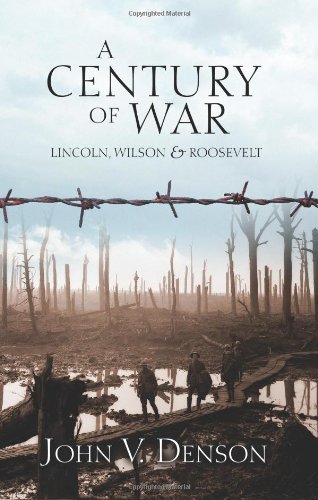
A Century of War: Lincoln, Wilson & Roosevelt
Authors:
John V. Denson
Publisher:
Not available
Publication Date:
Not available
ISBN:
1933550066
John Denson, in a book that covers the history of America's large wars from 1860 through the Cold War, describes the twentieth century was the bloodiest... in all history not coincidentally a century of statism. More than 170 million people were killed by governments with 10 million having been killed in World War I and 50 million killed in World II. Of the 50 million killed in World War II, nearly 70 percent were innocent civilians, many as a result of the bombing of cities by Great Britain and America. The horror of the twentieth century could hardly have been predicted in the nineteenth century, which saw the eighteenth century end with the American Revolution bringing about the creation of the first classical liberal government in the world. What bought it about? How can it be prevented in the future? These are the concerns that animate this work. Denson recounts how the wars that destroyed American liberty came about through a series of deceitful political ploys. He discusses how Lincoln worked to provoke the South into firing the first shot, and how he used that shot as the pretext for total war. Wilson learned from this experience in working to get the US involved in World War I, which established a precedent for the planning state. FDR similarly engaged in political maneuvering to prepare a reluctant public for war. Denson provides a close examination of the rise of executive dictatorship, and demonstrates how far from the founders' vision of government we have come. It explains how world peace can only come through the practice of free trade and free markets, and why large government can only create conflict both domestic and international. The Denson book is a wonderful presentation of a position that was more mainstream in the 1930s and the 1990s: the unity of libertarian economics with a pro-peace foreign policy position. This position is far too rare in American life. This eye-opening treatment of history will go a long way toward restoring this proper libertarian perspective in American life.
ACE Organic Student Access Kit for Organic Chemistry
Authors:
Paula Y. Bruice
Publisher:
Prentice Hall
Publication Date:
Not available
ISBN:
0321706935
Ace Student Access Kit is an online learning program for organic chemistry students at the university level. (Used at California State University at... Bakersfield.)
 '
'