production
/viewbook/list/all/?page=1811
/
/static/
None
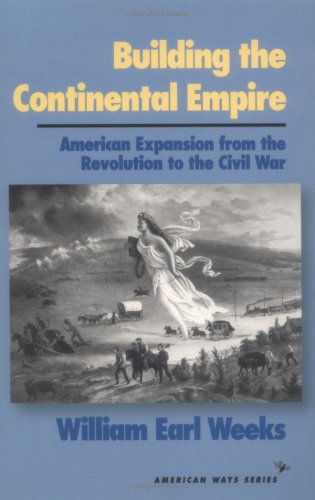
Building the Continental Empire: American Expansion from the...
Authors:
William Earl Weeks
Publisher:
Ivan R. Dee
Publication Date:
Not available
ISBN:
156663136X
In this fresh survey of foreign relations in the early years of the American republic, William Earl Weeks argues that the construction of the new nation... went hand in hand with the building of the American empire. Mr. Weeks traces the origins of this initiative to the 1750s, when the Founding Fathers began to perceive the advantages of colonial union and the possibility of creating an empire within the British Empire that would provide security and the potential for commercial and territorial expansion. After the adoption of the Constitution—and a far stronger central government than had been popularly imagined—the need to expand combined with a messianic American nationalism. The result was aggressive diplomacy by successive presidential administrations. From the acquisition of Louisiana and Florida to the Mexican War, from the Monroe Doctrine to the annexation of Texas, Mr. Weeks describes the ideology and scope of American expansion in what has become known as the age of Manifest Destiny. Relations with Great Britain, France, and Spain; the role of missionaries, technology, and the federal government; and the issue of slavery are key elements in this succinct and thoughtful view of the making of the continental nation.
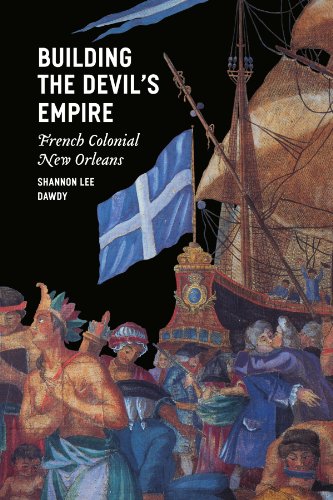
Building the Devil's Empire: French Colonial New Orleans
Authors:
Shannon Lee Dawdy
Publisher:
University Of Chicago Press
Publication Date:
Not available
ISBN:
0226138429
Building the Devil’s Empire is the first comprehensive history of New Orleans’s early years, tracing the town’s development from its origins in... 1718 to its revolt against Spanish rule in 1768. Shannon Lee Dawdy’s picaresque account of New Orleans’s wild youth features a cast of strong-willed captives, thin-skinned nobles, sharp-tongued women, and carousing travelers. But she also widens her lens to reveal the port city’s global significance, examining its role in the French Empire and the Caribbean, and she concludes that by exemplifying a kind of rogue colonialism—where governments, outlaws, and capitalism become entwined—New Orleans should prompt us to reconsider our notions of how colonialism works. "[A] penetrating study of the colony's founding."—Nation “A brilliant and spirited reinterpretation of the emergence of French New Orleans. Dawdy leads us deep into the daily life of the city, and along the many paths that connected it to France, the North American interior, and the Greater Caribbean. A major contribution to our understanding of the history of the Americas and of the French Atlantic, the work is also a model of interdisciplinary research and analysis, skillfully bringing together archival research, archaeology, and literary analysis.”—Laurent Dubois, Duke University

Building the Dream: A Social History of Housing in America
Authors:
Gwendolyn Wright
Publisher:
The MIT Press
Publication Date:
Not available
ISBN:
0262730642
This book is concerned essentially with the model of domestic environment in this country, as it has evolved from colonial architecture through current... urban projects.
Building the English Classroom: Foundations, Support, Success
Authors:
Bruce M. Penniman
Publisher:
National Council of Teachers of English
Publication Date:
Not available
ISBN:
0814103863
After nearly four decades in the classroom, Bruce M. Penniman knows what works (and what doesn't!) when it comes to teaching English.Penniman draws on... his own experiences--his successes, of course, but also the mistakes he's made and the misgivings he's had--to offer guidance and support for managing the myriad demands of teaching secondary English.From addressing the numerous subdisciplines within English to making individual accommodations, from dealing with being the primary locus of literacy instruction in the school to everyday organizational strategies, Penniman helps teachers find a way to impose order on what often seems like an overwhelming array of responsibilities.Focusing on all aspects of building a successful English classroom, Penniman offers unique and proven strategies on topics such as planning for the long term; designing writing programs and literature curricula; creating effective assessment systems; implementing instructional strategies for writing, literature, media/technology, and "basic skills"; examining the curriculum through the lens of multiculturalism; attending to the needs of all students--especially those who require accommodations; giving back to the profession and pursuing a professional life outside the classroom.
Building the High-Trust Organization: Strategies for Supporting...
Authors:
Pamela S Shockley-Zalabak
Publisher:
Jossey-Bass
Publication Date:
Not available
ISBN:
0470394722
Based on IABC sponsored research in over 60 organizations, this guide provides an easy-to-administer model and instrument for measuring and managing... trust in organizations. An explanation and practical applications accompany each of the model's five critical dimensions of trust: Competence, Openness and Honesty, Concern for Others, Reliability, and Identification. Using rich case examples and interviews, the book examines diverse approaches and opportunities for building trust--in peer groups, virtual environments, and with managers/supervisors, and top management. Individual interviews represent diverse organizational positions, responsibilities, perspectives, and geographic locations.Note: CD-ROM/DVD and other supplementary materials are not included as part of Kindle edition of this book.
Building the Judiciary: Law, Courts, and the Politics of...
Authors:
Justin Crowe
Publisher:
Princeton University Press
Publication Date:
Not available
ISBN:
0691152934
How did the federal judiciary transcend early limitations to become a powerful institution of American governance? How did the Supreme Court move from... political irrelevance to political centrality? Building the Judiciary uncovers the causes and consequences of judicial institution-building in the United States from the commencement of the new government in 1789 through the close of the twentieth century. Explaining why and how the federal judiciary became an independent, autonomous, and powerful political institution, Justin Crowe moves away from the notion that the judiciary is exceptional in the scheme of American politics, illustrating instead how it is subject to the same architectonic politics as other political institutions. Arguing that judicial institution-building is fundamentally based on a series of contested questions regarding institutional design and delegation, Crowe develops a theory to explain why political actors seek to build the judiciary and the conditions under which they are successful. He both demonstrates how the motivations of institution-builders ranged from substantive policy to partisan and electoral politics to judicial performance, and details how reform was often provoked by substantial changes in the political universe or transformational entrepreneurship by political leaders. Embedding case studies of landmark institution-building episodes within a contextual understanding of each era under consideration, Crowe presents a historically rich narrative that offers analytically grounded explanations for why judicial institution-building was pursued, how it was accomplished, and what--in the broader scheme of American constitutional democracy--it achieved.
Building the Kingdom: A History of Mormons in America
Authors:
Claudia Lauper Bushman
Publisher:
Oxford University Press, USA
Publication Date:
Not available
ISBN:
0195150228
Mormonism is one of the world's fastest growing religions, doubling its membership every 15 years. The Church of Jesus Christ of Latter-day Saints (the... formal denomination of the Mormon church) is now 10 million strong, with more than half of its membership coming from outside the United States. More than 88 million copies of The Book of Mormon have been printed, and it has been translated into more than 50 languages. Mormons in America tells the tumultuous story of this religious group, from its humble origins in small-town New York State in 1830 to its present heyday. Claudia and Richard Bushman introduce us to charismatic leaders like Joseph Smith and Brigham Young, go deep behind Mormon rites and traditions, take us along the adventurous trail of the Mormon pioneers into the West, evoke the momentous erection of Salt Lake City in the desert, and draw us into the dozens of skirmishes, verbal attacks, and court battles between Mormons and their neighbors, other religions, the media, and the American government.
Building the Learning Organization: Achieving Strategic Advantage...
Authors:
Michael J. Marquardt
Publisher:
Nicholas Brealey Publishing
Publication Date:
Not available
ISBN:
1904838324
This new edition of the essential best-practices toolkit shows how to transform an organization into one that continually learns from its experiences,... and more importantly, translates that knowledge into improved performance. Rich in hands-on tools, this much-anticipated update of the award-winning classic features lessons from world-class leaders such as Nokia, Alcoa, and others. With all new case studies, a revised section on technology, and more focus on action learning, Building the Learning Organization puts the power of the author's Systems Learning Organization model into the hands of any manager who wants to participate in building, maintaining, and sustaining the next generation of learning organizations.
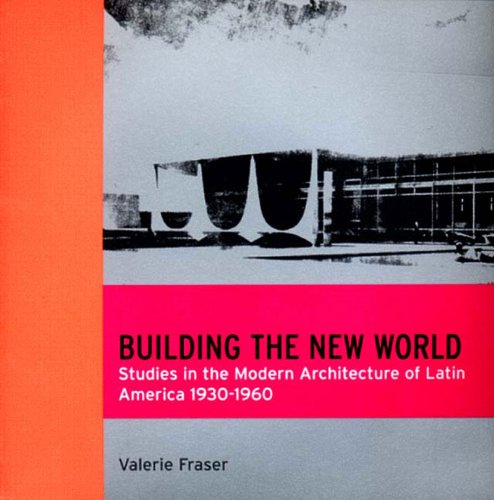
Building the New World: Modern Architecture in Latin America
Authors:
Valerie Fraser
Publisher:
Verso
Publication Date:
Not available
ISBN:
1859843077
Brasilia, Caracas, Mexico City, Rio de Janeiro ... cities synonymous with some of the most innovative and progressive architecture of the past... century.Brasilia, Caracas, Mexico City, Rio de Janeiro ... these are cities synonymous with some of the most innovative and progressive architecture of the twentieth century. The period between 1930 and 1960 in particular, when many Latin American economies expanded rapidly, was an era of incomparable inventiveness and creative production, as the various governments strove to shake off their colonial pasts and make public their modernising intentions.This book focuses on major state-funded architectural projects, featuring not only the high-profile prestigious building like the House of Representatives in Barsilia but also social architecture such as schools and los-cost housing developments. Architects like Pani, Costa, Reidy and Niemeyer, who undertook this work with considerable autonomy and significant financial resources, in effect became social planners, their avant-garde aesthetic and technical experimentation often being teamed with radical social agendas.By 1960, the year in which Brasilia was inaugurated, economic growth in the region was slowing and faith in the modernist project in general was faltering. The English-speaking world, which had previously endorsed and even envied Latin American architectural production, changed its opinion and largely dismissed it from the history of twentieth-century architecture. Building the New World redresses the balance. It provides an accessible introduction to the most important examples of state-funded modernism in Latin America during a period of almost unimaginable optimism, when politicians and architects saw architecture as, literally, a way of building themselves out of underdevelopment and into the new world of a culturally rich and socially inclusive future.
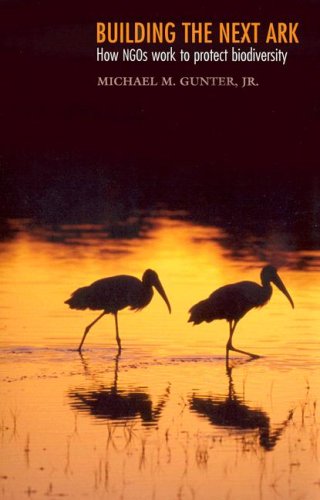
Building the Next Ark: How NGOs Work to Protect Biodiversity
Authors:
Michael M. Gunter Jr.
Publisher:
Dartmouth
Publication Date:
Not available
ISBN:
1584655909
A new ark is needed. With the extinction of perhaps 50,000 species per year, we are at a critical juncture in history. Ominous storm clouds have... gathered to threaten humanity's most basic resource of all, the diversity of life on earth. And the danger facing us--the possibility of losing forever hundreds of thousands of species with whom we share this planet--is magnified by the fact that this rapid decline of global biodiversity is too vast to be handled solely by states or their existing international institutions. Michael Gunter suggests that a fundamentally different route is needed to stem the ongoing extinction crisis. In an eye-opening appraisal of the current threat to global biodiversity, one that truly approaches a deluge of biblical proportions, he concludes that nongovernmental organizations (NGOs) are the best and perhaps only actors situated to negotiate the powerful array of political and economic interests involved in species loss as well as species preservation. Showing how NGOs fit into the landscape of international biodiversity protection and what makes them so effective, Gunter's innovative work demonstrates that NGOs provide invaluable assistance by fostering fundamental linkages between domestic and international, ecological and economic, and short- and long-term considerations. Such linkages are strategic. They defuse special-interest political agendas and open up avenues for discussing biodiversity issues worldwide. In short, they help build the next ark.Gunter focuses on the symbiotic relationship between a handful of specific mainstream and participatory strategies employed by a diverse group of well-known environmental NGOs (Sierra Club, World Wildlife Fund, The Nature Conservancy, Conservation International and Earthjustice Legal Defense Fund, to name but a few). Determining which strategies work and which do not, this text offers a detailed prescription for how NGOs can improve their species protection efforts. It looks at how NGOs work within the system. It looks at how NGOs work with people. And it looks at how NGOs must work on themselves. While scholars have previously outlined the essential functions of NGOs, Building the Next Ark is the first to look at how their day-to-day operations translate into truly effective biodiversity protection.
Building Theories of Organization: The Constitutive Role of...
Authors:
Not Available
Publisher:
Routledge
Publication Date:
Not available
ISBN:
0805847103
This volume explores the concept of communication as it applies to organizational theory. Bringing together multiple voices, it focuses on... communication’s role in the constitution of organization. Editors Linda L. Putnam and Anne Maydan Nicotera have assembled an all-star cast of contributors, each providing a distinctive voice and perspective. The contents of this volume compare and contrast approaches to the notion that communication constitutes organization. Chapters also examine the ways that those processes produce patterns that endure over time and that constitute the organization as a whole. This collection bridges different disciplines and serves a vital role in developing dimensions, characteristics, and relationships among concepts that address how communication constitutes organization. It will appeal to scholars and researchers working in organizational communication, organizational studies, management, sociology, social collectives, and organizational psychology and behavior.
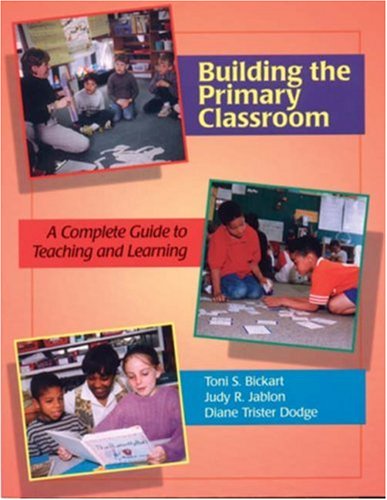
Building the Primary Classroom: A Complete Guide to Teaching and...
Authors:
Toni S. Bickart
Publisher:
Delmar Cengage Learning
Publication Date:
Not available
ISBN:
1879537389
Primary classrooms are just four walls until teachers enter. Step by step, teachers build their classrooms: They build the environment, they build... relationships with the children, they build partnerships with families, they build classroom communities, and most important, they build competent, successful learners. This acclaimed new book provides the framework and practical strategies primary teachers need to build great classrooms where teaching and learning are a shared responsibility. Building the Primary Classroom puts the best elements of classroom management and curriculum content together in one concise volume.
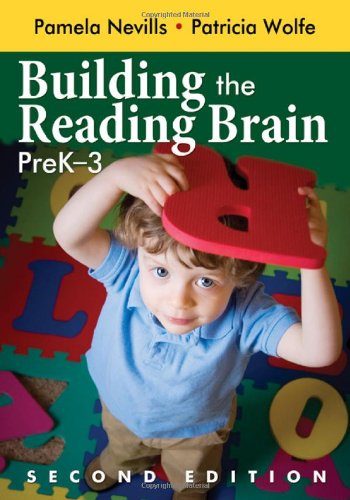
Building the Reading Brain, PreK-3
Authors:
Not Available
Publisher:
Corwin Press
Publication Date:
Not available
ISBN:
1412963265
The authors translate brain theory and research into developmentally appropriate practices that foster literacy skills from birth to age eight and... prepare students for reading success.

BUILDING THE RELATIONSHIPS WKBK & VIDEO
Authors:
Not Available
Publisher:
Cengage Learning
Publication Date:
Not available
ISBN:
0495754234
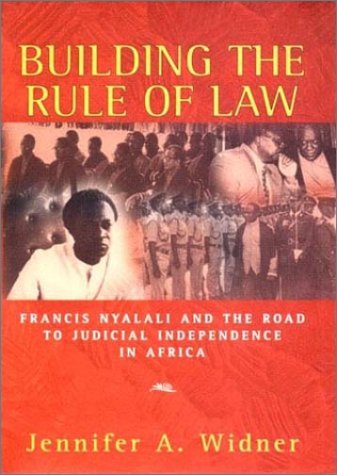
Building the Rule of Law: Francis Nyalai and the Road to Judicial...
Authors:
Jennifer A. Widner
Publisher:
W. W. Norton & Company
Publication Date:
Not available
ISBN:
0393976890
"[I]ndependence of the judiciary, impartiality of adjudication, fairness of trial, and integrity of the adjudicator are so universally accepted that... one may reasonably conclude that these principles are inherent to any justice system in a democracy…there is no doubt that these same principles are part of the African dream."—Francis Nyalali, Chief Justice of Tanzania, 1976–1999A new order is being forged in Africa. States across the continent are working, fighting, and negotiating in an effort to construct liberal societies and effective government. Organized around the life of Francis L. Nyalali, who served as Chief Justice of Tanzania from 1976 through 1999, Building the Rule of Law shows how judges negotiate new institutional relationships. Through the trials and disappointments of Frances Nyalali, we learn the intricate difficulty of erecting an independent judicial system. But in his success and the success of his homeland, we see the crucial role of justice in an effective democracy.
 '
'