production
/viewbook/list/all/?page=1907
/
/static/
None

BYU CUSTOM - SOLID STATE PHYSICS - ADVANCED UNDERGRADUATE STUDENTS 4E
Authors:
Not Available
Publisher:
Not available
Publication Date:
Not available
ISBN:
Not available
By Way of the Heart: Toward a Holistic Christian Spirituality
Authors:
S.J. Wilkie Au
Publisher:
Paulist Press
Publication Date:
Not available
ISBN:
0809131188
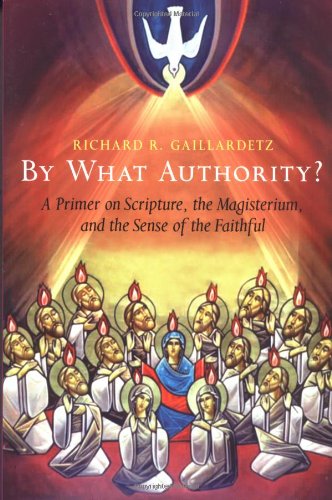
By What Authority?: A Primer on Scripture, the Magisterium, and the...
Authors:
Richard R. Gaillardetz
Publisher:
Liturgical Press
Publication Date:
Not available
ISBN:
0814628729
Authority is exercised in many ways and forms in the Catholic Church today. By What Authority? offers a helpful introduction to the forms of Church... authority that are concerned with authentic Christian belief. Gaillardetz (G l r d ) explains what it means to say that the Bible is inspired, how Scripture and tradition are related to one another, the role of the Pope and bishops in preserving the Christian faith, the levels of Church teaching authority, how to deal with disagreements with Church teaching, the distinctive role of the theologians, and the contribution of all the baptized in the formation of Church teaching. This book introduces readers to a basic understanding of the nature and exercise of authority in the Catholic Church as understood within the vision of the Church offered by the Second Vatican Council. The chapters conclude by outlining disputed issues regarding the topic of that chapter and a select list of opportunities for further reading. Chapters in Part One: The Authority of Scripture and Tradition are "What Does It Mean to Say the Bible is Inspired?" What Is the Canon of the Bible? and What Is the Relationship Between Scripture and Tradition? Chapters in Part Two: The Authority of Church Teaching and the Church's Teaching Office are How Do We Understand the Magisterium Today? How Do the Pope and Bishops Exercise Their Teaching Authority? and What Is Dogma and Doctrine? Chapters in Part Three: The Authority of the Believer and the Believing Community are What Is the Sense of the Faithful? Is There a Place for Disagreement in the Catholic Church? and What Is the Proper Relationship Between the Magisterium and Theologians?
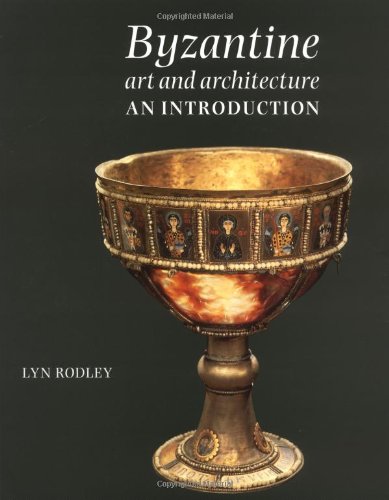
Byzantine Art and Architecture: An Introduction
Authors:
Lyn Rodley
Publisher:
Cambridge University Press
Publication Date:
Not available
ISBN:
0521357241
This book provides a standard introduction to Byzantine art and architecture for the university student and for anyone seriously interested in the... subject. It covers the whole Byzantine period from the fourth to the fourteenth century in a systematic manner, by period, dealing with material culture under main section headings (such as architecture, sculpture, monumental art, minor arts and manuscripts) for ease of reference. The text is illustrated by well over 300 maps, plans and halftones.
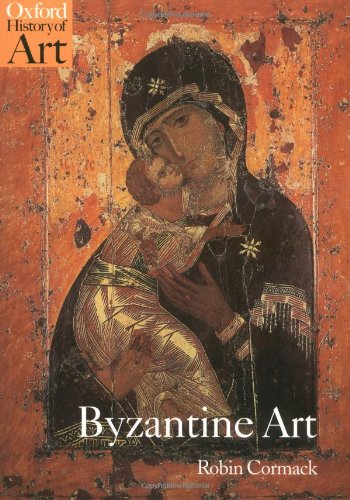
Byzantine Art (Oxford History of Art)
Authors:
Robin Cormack
Publisher:
Oxford University Press, USA
Publication Date:
Not available
ISBN:
0192842110
Mostly religious in function, but preserving the classicism of Greco-Roman art, Byzantine buildings and art objects communicate the purity and... certainties of the public face of early Christian art. Focusing on the art of Constantinople between 330 and 1453, this book probes the underlying motives and attitudes of the society which produced such rich and delicate art forms. It examines the stages this art went through as the city progressed from being the Christian center of the Eastern Roman Empire, to its crisis during attack from the new religion of Islam, to its revived medieval splendor and then, after the Latin capture of 1204 and the Byzantine reoccupation after 1261, to its arrival at a period of cultural reconciliation with East and West.
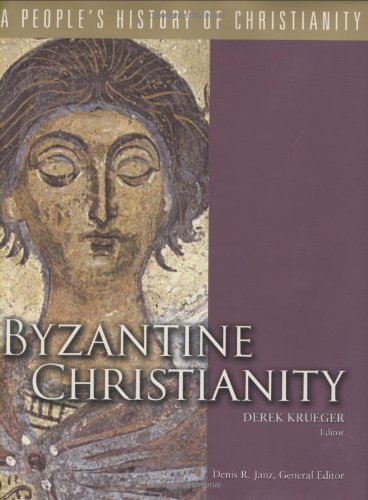
Byzantine Christianity, Volume 3 (People's History of Christianity)
Authors:
Not Available
Publisher:
Fortress Press
Publication Date:
Not available
ISBN:
0800634136
This third volume in the pioneering A People's History of Christianity series focuses on the religious lives of ordinary people and introduces the... religion of the Byzantine Christian laity by asking the questions: What did ordinary Christians do in church, in their homes and their workshops? How were icons used? How did the people celebrate, marry, and mourn? Where did they go on pilgrimage? Contributors include: Derek Krueger, University of North Carolina at Greensboro Vasiliki Limberis, Temple University Georgia Frank, Colgate University James Skedros, Holy Cross Greek Orthodox School of Theology Nicholas Constas, Harvard University Sharon Gerstel, University of Maryland Peter Hatlie, Univerity of Dallas at Rome Charles Barber, University of Notre Dame Brigitte Pitarakis, Centre National de la Recherche Scientifique, Paris Alice-Mary Talbot, Dumbarton Oaks Jaclyn Maxwell, Ohio University
Byzantine Coinage (Dumbarton Oaks Byzantine Collection Publications)
Authors:
Philip Grierson
Publisher:
Dumbarton Oaks Research Library and Collection
Publication Date:
Not available
ISBN:
0884022749
Byzantine Theology: Historical Trends and Doctrinal Themes
Authors:
John Meyendorff
Publisher:
Fordham University Press
Publication Date:
Not available
ISBN:
0823209679
For over a thousand years, Eastern Christendom had as its center the second capital of the Roman Empire-Constantinople, the New Rome,or Byzantium. The... geographical division between the Eastern and Western Churches was only one manifestation of deeper rifts, characterized by a long history of conflicts, suspicions, and misunderstandings. Although the art, monasticism, and spirituality of Byzantium have come to be recognized as inspirational and influential in the shaping of Eastern European civilization, and of the Middle Ages and the Renaissance as well, the West has been in the main ignorant of the historical evolution and the doctrinal significance of Byzantine theology.Here, for the first time in English, is presented a synthesis of Byzantine Christian thought. The reader is guided through its complexities to an understanding of Byzantium: its view of man and his destiny of deification; its ability to transcend the Western captivity; its survival under quite adverse historical circumstances. In the end, he may well find himself receptive to the basic positions of Byzantine thought, which have attained, in this time of need for the reintegration of Christianity itself, a surprising, contemporary relevance.
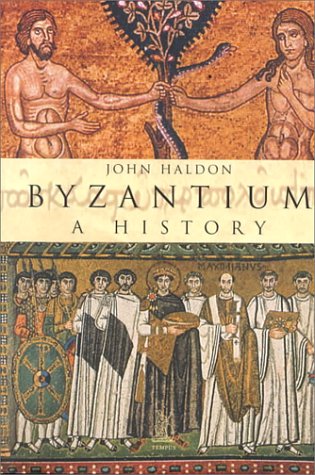
Byzantium: A History
Authors:
John Haldon
Publisher:
Tempus Publishing, Limited
Publication Date:
Not available
ISBN:
0752417770
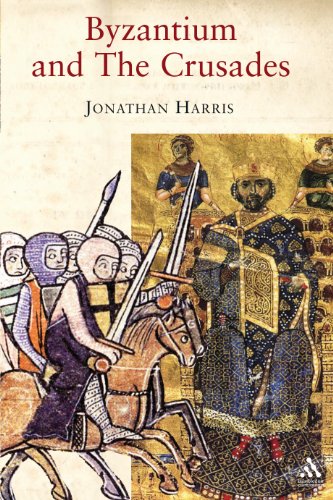
Byzantium and the Crusades (Crusader Worlds)
Authors:
Jonathan Harris
Publisher:
Continuum
Publication Date:
Not available
ISBN:
1852855010
The first great city to which the Crusaders came in 1096 was not Jerusalem but Constantinople. Almost as much as Jerusalem itself, Constantinople was... the key to the foundation, survival and ultimate eclipse of the crusading kingdom. The Byzantines had developed an ideology over seven hundred years which placed Constantinople, rather than Rome or Jerusalem, at the centre of the world. The attitudes of its rulers reflected this priority, and led to tension with the crusaders over military and diplomatic strategy. At the same time, the riches and sophistication of the great city made a lasting impression on the crusaders. In the end, the lure of the city's wealth was fatal to the claims of Christian unity. In April 1204, the Fourth Crusade under the Venetian doge Enricho Dandolo captured and sacked Constantinople, signalling the effective end of almost a thousand years of Byzantine dominance in the east.
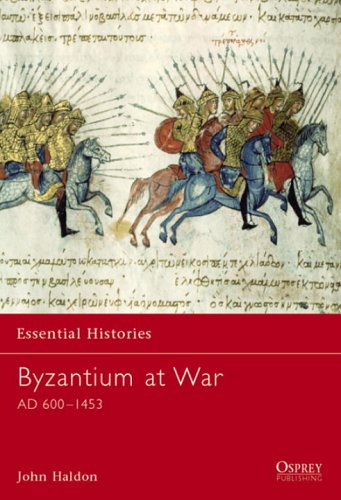
Byzantium at War
Authors:
John Haldon
Publisher:
Osprey Publishing
Publication Date:
Not available
ISBN:
1841763608
Byzantium survived for 800 years, yet its dominions and power fluctuated dramatically during that time. John Haldon tells the story from the days when... the Empire was barely clinging on to survival, to the age when its fabulous wealth attracted Viking mercenaries and Asian nomad warriors to its armies, their very appearance on the field enough to bring enemies to terms. In 1453 the last emperor of Byzantium, Constantine XII, died fighting on the ramparts, bringing to a romantic end the glorious history of this legendary empire.
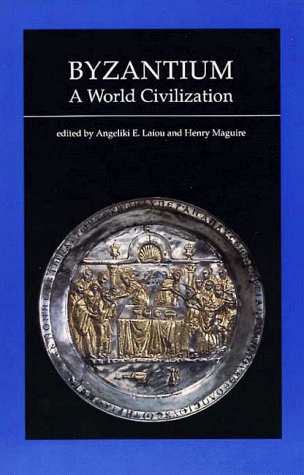
Byzantium, A World Civilization
Authors:
Not Available
Publisher:
Dumbarton Oaks Research Library and Collection
Publication Date:
Not available
ISBN:
0884022153
These seven chapters, originally given as lectures honoring the fiftieth anniversary of Dumbarton Oaks, cover a wide range of topics, from the... relationship of Byzantium with its Islamic, Slavic, and Western European neighbors to the modern reception of Byzantine art.
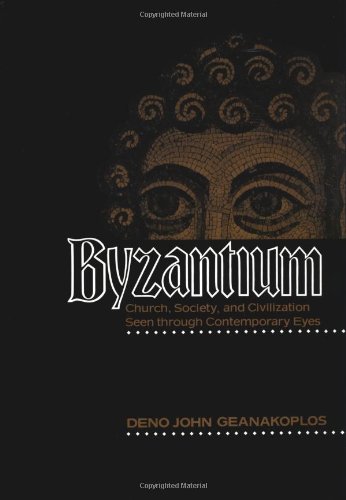
Byzantium: Church, Society, and Civilization Seen through...
Authors:
Deno John Geanakoplos
Publisher:
University Of Chicago Press
Publication Date:
Not available
ISBN:
0226284611
Deno John Geanakoplos here offers a prodigious collection of source materials on the Byzantine church, society, and civilization (many translated for... the first time into English), arranged chronologically and topically, and knit together with an analytical historical commentary. His selections from Byzantine writers as well as from more obscure documents and chronicles in Latin, Arabic, Slavic, Italian, Armenian, and French reflect all the diversity of Byzantine life—the military tactics of the long-invincible cataphract cavalry and the warships armed with Greek fire, the mysticism of Hesychast monks, the duties of imperial officers, the activities of daily life from the Hippodrome and Hagia Sophia to the marketplaces, baths, and brothels. Geanakoplos not only covers the traditional areas of political, ecclesiastical, socioeconomic, administrative, and military life, but also provides a vivid picture of Byzantine culture—education, philosophy, literature, theology, medicine, and science. Of particular interest are the insights into the empire's relations with the Latin West, the Slavs, the Arabs, the Turks, and other neighboring peoples.Byzantium is much more than a sourcebook. The running commentary reflects the most recent scholarly research in Byzantine studies and places each translated source in its precise historical context. Through the use of both primary sources and commentary, Geanakoplos has represented in all its richness and complexity one of the world's great civilizations. There is no comparable book on Byzantine history and civilization in any language.
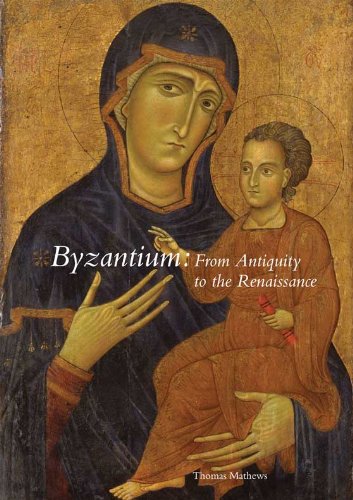
Byzantium: From Antiquity to the Renaissance
Authors:
Thomas F. Mathews
Publisher:
Yale University Press
Publication Date:
Not available
ISBN:
0300167660
With images culled from eleven hundred years of history, this comprehensive survey explores the Byzantine empire’s vast range of artistic splendors... that indelibly informed the art of modern Europe. Renowned scholar Thomas Mathews emphasizes that the Byzantines’ interest in humanism and painting the human figure became the essential bridge between classical and renaissance Europe. Starting with a brief history of Byzantium as a basis for understanding Byzantine theology and art, he places the empire’s artistic development within a broad cultural and historical context. Featuring more than one hundred color plates of mosaics, metalwork, architecture, frescoes and religious artifacts, as well as maps, diagrams, and a timeline, this definitive work provides a complete yet succinct introduction to the full range of Byzantine art and iconography.
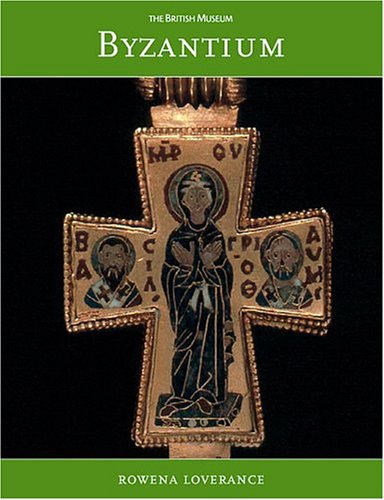
Byzantium: Revised Edition (British Museum Paperbacks)
Authors:
Rowena Loverance
Publisher:
Harvard University Press
Publication Date:
Not available
ISBN:
0674013891
The earthly empire of Byzantium dominated the political and religious history of Europe for over a thousand years. The Byzantines regarded their... earthly empire as a reflection of God's empire in heaven, and this ideology was manifested in their politics, religion, and art. In this introduction to the history of Byzantium, from the fourth to the fourteenth century, Rowena Loverance draws on the British Museum's rich collections of spectacular Byzantine silver, ivories, jewelry, and icons, as well as pieces from the empire's Persian and Germanic neighbors. This revised edition, featuring a new introduction, is updated to include the most recent finds and interpretations.
 '
'