production
/viewbook/list/all/?page=2066
/
/static/
None

Cathedral and the Bazaar
Authors:
Eric S. Raymond
Publisher:
www.snowballpublishing.com
Publication Date:
Not available
ISBN:
1607962284
"This is how we did it." --Linus Torvalds, creator of the Linux kernelIt all started with a series of odd statistics. The leading challenger to... Microsoft's stranglehold on the computer industry is an operating system called Linux, the product of thousands of volunteer programmers who collaborate over the Internet. The software behind a majority of all the world's web sites doesn't come from a big company either, but from a loosely coordinated group of volunteer programmers called the Apache Group. The Internet itself, and much of its core software, was developed through a process of networked collaboration.The key to these stunning successes is a movement that has come to be called open source, because it depends on the ability of programmers to freely share their program source code so that others can improve it. In 1997, Eric S. Raymond outlined the core principles of this movement in a manifesto called "The Cathedral and the Bazaar," which was published and freely redistributed over the Internet.Mr. Raymond's thinking electrified the computer industry. He argues that the development of the Linux operating system by a loose confederation of thousands of programmers--without central project management or control--turns on its head everything we thought we knew about software project management. Internet-enabled collaboration and free information sharing, not monopolistic control, is the key to innovation and product quality.This idea was interesting to more than programmers and software project leaders. It suggested a whole new way of doing business, and the possibility of unprecedented shifts in the power structures of the computer industry.The rush to capitalize on the idea of open source started with Netscape's decision to release its flagship Netscape Navigator product under open source licensing terms in early 1998. Before long, Fortune 500 companies like Intel, IBM, and Oracle were joining the party. By August 1999, when the leading Linux distributor, Red Hat Software, made its hugely successful public stock offering, it had become clear that open source was "the next big thing" in the computer industry.This revolutionary book starts out with "A Brief History of Hackerdom"--the historical roots of the open-source movement--and details the events that led to the recognition of the power of open source. It contains the full text of "The Cathedral & the Bazaar," updated and expanded for this book, plus Mr. Raymond's other key essays on the social and economic dynamics of open source software development.Open source is the competitive advantage in the Internet Age. The Cathedral & the Bazaar is a must for anyone who cares about the computer industry or the dynamics of the information economy. Already, billions of dollars have been made and lost based on the ideas in this book. Its conclusions will be studied, debated, and implemented for years to come.

Cathedral, Forge and Waterwheel: Technology and Invention in the...
Authors:
Joseph Gies
Publisher:
Harper Perennial
Publication Date:
Not available
ISBN:
0060925817
Cathedral Of The August Heat
Authors:
Pierre Clitandre
Publisher:
Readers International
Publication Date:
Not available
ISBN:
0930523318
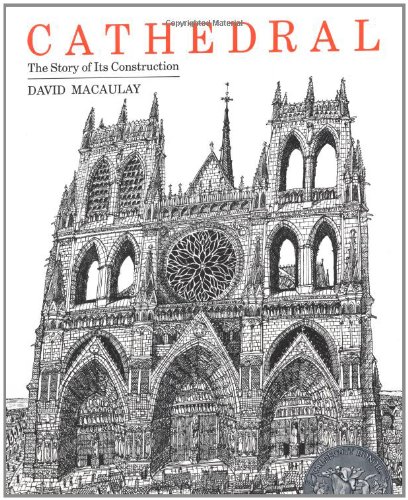
Cathedral: The Story of Its Construction
Authors:
David Macaulay
Publisher:
Sandpiper
Publication Date:
Not available
ISBN:
0395316685
This richly illustrated book shows the intricate step-by-step process of a cathedral's growth. This title has been selected as a Common Core Text... Exemplar (Grades 6-8, Informational Texts: Science, Mathematics, and Technical Studies)
Catherine of Siena
Authors:
Sigrid Undset
Publisher:
Ignatius Press
Publication Date:
Not available
ISBN:
1586174088
Sigrid Undset's Catherine of Siena is critically acclaimed as one of the best biographies of this famous fourteenth-century saint. Known for her... historical fiction, which won her the Nobel Prize for literature in 1928, Undset based this factual work on primary sources, her experiences living in Italy, and her profound understanding of the human heart. One of the greatest novelists of the twentieth century, Undset was no stranger to hagiography. Her meticulous research of medieval times, which bore such fruit in her masterpieces Kristin Lavransdatter and The Master of Hestviken, acquainted her with some of the holy men and women produced by the Age of Faith. Their exemplary lives left a deep impression upon the author, which she credited as one of her reasons for entering the Church in 1924. Catherine of Siena was a particular favorite of Undset, who also was a Third Order Dominican. An extraordinarily active, intelligent, and courageous woman, Catherine at an early age devoted herself to the love of God. The intensity of her prayer, sacrifice, and service to the poor won her a reputation for holiness and wisdom, and she was called upon to make peace between warring nobles. Believing that peace in Italy could only be achieved if the pope, then living in France, returned to Rome, Catherine boldly traveled to Avignon to meet with Pope Gregory XI. With sensitivity to the zealous love that permeated the life of Saint Catherine, Undset presents a most moving and memorable portrait of one of the greatest women of all time.
Catherine of Siena: Passion for the Truth--Compassion for Humanity
Authors:
Not Available
Publisher:
New City Press
Publication Date:
Not available
ISBN:
1565482352
This anthology of Catherine's letters, prayers, and The Dialogue is perfect for students of medieval spirituality, mysticism and theology, as well as... anyone interested in prayer and the spiritual life. `This is the best introduction to the prayer and ministry of St. Catherine that I have read! The texts are beautifully translated.'Benedict Ashley, O.P. Aquinas Institute of Theology `This anthology makes accessible to a large reading public the extraordinary sensitivity and affection of Catherine of Siena, gifts grounded in love.'New Oxford Review
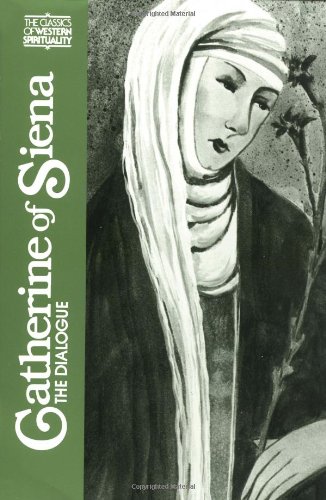
Catherine of Siena : The Dialogue (Classics of Western Spirituality)
Authors:
Catherine of Siena
Publisher:
Paulist Press
Publication Date:
Not available
ISBN:
0809122332
Catherine of Siena (1347-1380), mystic and Doctor of the Church, wrote The Dialogue, her crown9780809122332 ing spiritual work for "the instruction... and encouragement of all those whose spiritual welfare was her concern."

Catherine of Siena: Vision Through a Distant Eye
Authors:
Suzanne Noffke
Publisher:
Authors Choice Press
Publication Date:
Not available
ISBN:
0595391109
Catherine of Siena was in her own time and place reputed to be a genuinely holy woman. Precisely because of this her voice was heard where few... women’s voices would have gained an audience in the fourteenth century. Because she was also the first woman to write and be published in any of the emerging Italian dialects, she provides an early feminine perspective on and interpretation of the events, culture, and spirituality of her era—like ours an era of crisis and transition for church and society. This is the woman whose vision and voice this book evokes in view of feeding our own twentieth-century insight and speaking. The essays in Part One study various aspects of Catherine’s vision in her theology and spirituality. Part Two offers resources for further exploration of Catherine’s person and thought, of her world, and of what others have written of her in English, including an extensive annotated bibliography of works in English up to the date of the original publication of this book in 1996.
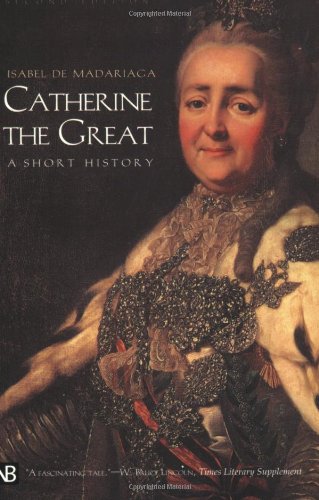
Catherine the Great: A Short History
Authors:
Professor Isabel de Madariaga
Publisher:
Yale University Press
Publication Date:
Not available
ISBN:
0300097220
Ivan IV, 'the Terrible' (1533-1584) is one of the key figures in Russian history, yet he has remained among the most neglected. Notorious for pioneering... a policy of unrestrained terror - and for killing his own son - he has been credited with establishing autocracy in Russia. This is the first attempt to write a biography of Ivan from birth to death, to study his policies, his marriages, his atrocities, his disordered personality, and to link them as a coherent whole. Isable de Madariaga situates Ivan within the background of Russian political developments in the sixteenth century. And, with revealing comparisons with English, Spanish and other European courts, she sets him within the international context of his time. The biography includes a new account of the role of astrology and magic at Ivan's court, and provides fresh insights into his foreign policy. Facing up to problems of authenticity (much of Ivan's archive was destroyed by fire in 1626) and controversies which have paralysed western scholarship, de Madariaga seeks to present Russia as viewed from the Kremlin rather than from abroad and comprehend the full tragedy of Ivan's reign.

Catherine the Great : Life and Legend
Authors:
John T. Alexander
Publisher:
Oxford University Press, USA
Publication Date:
Not available
ISBN:
0195061624
One of the most colorful characters in modern history, Catherine II of Russia began her life as a minor German princess, until the childless Empress... Elizabeth and Catherine's own scheming mother married her off to the Grand Duke Peter of Russia at age sixteen. By thirty-three, she had overthrown her husband in a bloodless coup and established herself as Empress of the multinational Russian Empire, the largest territorial political unit in modern history. Portrayed both as a political genius who restored to Russia the glory it had known in the days of Peter the Great and as a despotic foreign adventuress who usurped the Russian throne, murdered her rivals, and tyrannized her subjects, she was, by all accounts, an extraordinary woman. Catherine the Great, the first popular biography of the empress based on contemporary scholarship, provides a vivid portrait of Catherine as a mother, a lover, and, above all, an extremely savvy ruler. Concentrating on her long reign (1762-96), John Alexander examines all aspects of Catherine's life and career: the brilliant political strategies by which she won the acceptance of a nationalistic elite; her expansive foreign policy; the domestic reforms with which she revamped the Russian military, political structure, and economy; and, of course, her infamous love life. Beginning with an account of the dramatic palace revolt by which Catherine unseated her husband and a background chapter describing the circumstances of her early childhood and marriage, Alexander then proceeds chronologically through the thirty-four years of her reign. Presenting Catherine in more human terms than previous biographers have, Alexander includes numerous quotations from her reminiscences and notes. We learn, for instance, not only the names and number of her lovers, but her understanding of what many considered a shocking licentiousness. "The trouble is," she wrote, "that my heart would not willingly remain one hour without love." The result of twenty years' research by one of America's leading narrative historians of modern Russia, this truly impressive work offers a much-needed, balanced reappraisal of one of history's most scandal-ridden figures.
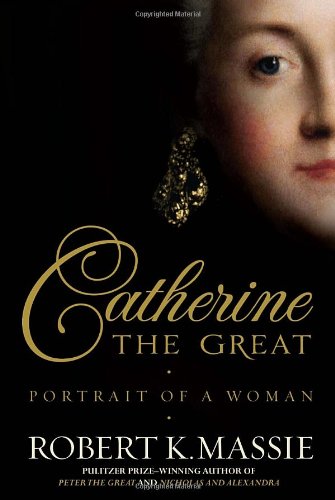
Catherine the Great: Portrait of a Woman
Authors:
Robert K. Massie
Publisher:
Random House
Publication Date:
Not available
ISBN:
0679456724
The Pulitzer Prize–winning author of Peter the Great, Nicholas and Alexandra, and The Romanovs returns with another masterpiece of narrative... biography, the extraordinary story of an obscure young German princess who traveled to Russia at fourteen and rose to become one of the most remarkable, powerful, and captivating women in history.Born into a minor noble family, Catherine transformed herself into Empress of Russia by sheer determination. Possessing a brilliant mind and an insatiable curiosity as a young woman, she devoured the works of Enlightenment philosophers and, when she reached the throne, attempted to use their principles to guide her rule of the vast and backward Russian empire. She knew or corresponded with the preeminent historical figures of her time: Voltaire, Diderot, Frederick the Great, Empress Maria Theresa of Austria, Marie Antoinette, and, surprisingly, the American naval hero, John Paul Jones.Reaching the throne fired by Enlightenment philosophy and determined to become the embodiment of the “benevolent despot” idealized by Montesquieu, she found herself always contending with the deeply ingrained realities of Russian life, including serfdom. She persevered, and for thirty-four years the government, foreign policy, cultural development, and welfare of the Russian people were in her hands. She dealt with domestic rebellion, foreign wars, and the tidal wave of political change and violence churned up by the French Revolution that swept across Europe. Her reputation depended entirely on the perspective of the speaker. She was praised by Voltaire as the equal of the greatest of classical philosophers; she was condemned by her enemies, mostly foreign, as “the Messalina of the north.”Catherine’s family, friends, ministers, generals, lovers, and enemies—all are here, vividly described. These included her ambitious, perpetually scheming mother; her weak, bullying husband, Peter (who left her lying untouched beside him for nine years after their marriage); her unhappy son and heir, Paul; her beloved grandchildren; and her “favorites”—the parade of young men from whom she sought companionship and the recapture of youth as well as sex. Here, too, is the giant figure of Gregory Potemkin, her most significant lover and possible husband, with whom she shared a passionate correspondence of love and separation, followed by seventeen years of unparalleled mutual achievement.The story is superbly told. All the special qualities that Robert K. Massie brought to Nicholas and Alexandra and Peter the Great are present here: historical accuracy, depth of understanding, felicity of style, mastery of detail, ability to shatter myth, and a rare genius for finding and expressing the human drama in extraordinary lives.History offers few stories richer in drama than that of Catherine the Great. In this book, this eternally fascinating woman is returned to life.
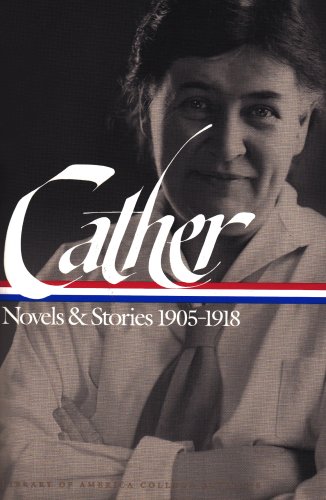
Cather Novels & Stories 1905-1918: The Troll Garden, O...
Authors:
Willa Cather
Publisher:
Library of America
Publication Date:
Not available
ISBN:
1883011744
The six works in this volume--"A Lost Lady," "The Professor's House," "Death Comes for the Archbishop," "Shadows on the Rock," "Lucy Gayheart," and... "Sapphira and the Slave Girl"--are at once intensely lyrical and highly controlled. Their fascination with the American Southwest, early Canada and Catholicism reflects the older Cather's search for alternatives to the grasping civilization she felt was increasingly replacing the spirit of the early pioneers. validation-form-field.keypoints: The Library of America is an award-winning, nonprofit program dedicated to publishing America's best and most significant writing in handsome, enduring volumes, featuring authoritative texts. Hailed as "the most important book-publishing project in the nation's history" (Newsweek), this acclaimed series is restoring America's literary heritage in "the finest-looking, longest-lasting edition ever made" (New Republic).

Catheters, Slurs, and Pickup Lines: Professional Intimacy in...
Authors:
Lisa C. Ruchti
Publisher:
Temple University Press
Publication Date:
Not available
ISBN:
1439907536
Every day, hospital nurses must negotiate intimate trust and intimate conflict in an effort to provide quality health care. However, interactions... between nurses and patients - which often require issues of privacy - are sometimes made more uncomfortable with inappropriate behaviour, as when a patient has a racist and/or sexist outburst. Not all nurses are prepared to handle such intimacy, but they can all learn how to "be caring." In Catheters, Slurs, and Pickup Lines, Lisa Ruchti carefully examines this fragile relationship between intimacy and professional care, and provides a language for patients, nurses, and administrators to teach, conduct, and advocate for knowledgeable and skilled intimate care in a hospital setting. She also recommends best training practices and practical and effective policy changes to handle conflicts. Ruchti shows that "caring" is not just a personality characteristic but is work that is structured by intersections of race, gender, and nationality. Lisa C. Ruchti is Assistant Professor in the Women's and Gender Studies Program and the Department of Anthropology and Sociology at West Chester University of Pennsylvania. Her research and teaching focus on the sociology of gender, intersectionality, and transnational feminist theories.
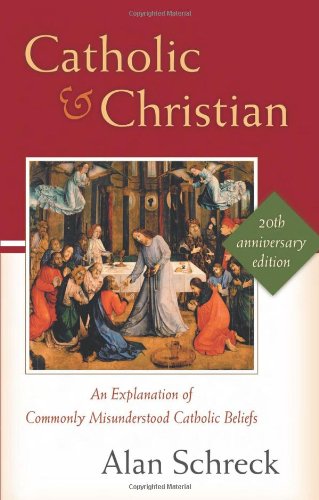
Catholic and Christian: An Explanation of Commonly Misunderstood...
Authors:
Alan Schreck Ph.D.
Publisher:
Servant Books
Publication Date:
Not available
ISBN:
0867165995
New Revised 20th Anniversary Edition!You're on the spot. Someone wants you to explain some aspect of Catholic belief. Do you really think the pope is... infallible? Why do Catholics pray to Mary? Where do sacraments come from? What do you think of the Bible? Are you saved? You wish some well-informed Catholic friend were around to help with the answers.Or perhaps you are asking the questions yourself. Where do Catholic beliefs come from? Why do we pray for the dead? How does the rosary fit into a biblical faith? The best-selling Catholic and Christian provides the answers you need. It is a readable and concise summary of commonly misunderstood Catholic beliefs the teachings and practices that don t get much attention in Sunday homilies and in religious education, but which puzzle Catholics and non-Catholics alike. This is a book for all Catholics who want to know more about their faith.
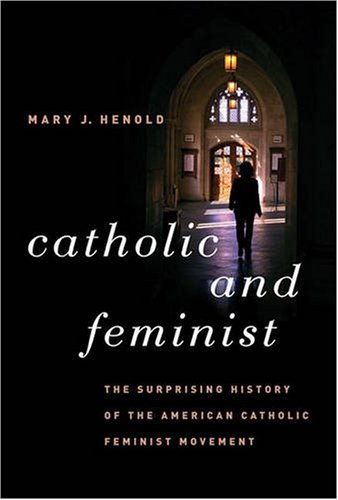
Catholic and Feminist: The Surprising History of the American...
Authors:
Mary J. Henold
Publisher:
The University of North Carolina Press
Publication Date:
Not available
ISBN:
0807832243
In 1963, as Betty Friedan's Feminine Mystique appeared and civil rights activists marched on Washington, a separate but related social movement emerged... among American Catholics, says Mary Henold. Thousands of Catholic feminists—both lay women and women religious—marched, strategized, theologized, and prayed together, building sisterhood and confronting sexism in the Roman Catholic Church. In the first history of American Catholic feminism, Henold explores the movement from the 1960s through the early 1980s, showing that although Catholic feminists had much in common with their sisters in the larger American feminist movement, Catholic feminism was distinct and had not been simply imported from outside. Catholic feminism grew from within the church, rooted in women's own experiences of Catholicism and religious practice, Henold argues. She identifies the Second Vatican Council (1962-65), an inspiring but overtly sexist event that enraged and exhilarated Catholic women in equal measure, as a catalyst of the movement within the church. Catholic feminists regularly explained their feminism in terms of their commitment to a gospel mandate for social justice, liberation, and radical equality. They considered feminism to be a Christian principle.Yet as Catholic feminists confronted sexism in the church and the world, Henold explains, they struggled to integrate the two parts of their self-definition. Both Catholic culture and feminist culture indicated that such a conjunction was unlikely, if not impossible. Henold demonstrates that efforts to reconcile faith and feminism reveal both the complex nature of feminist consciousness and the creative potential of religious feminism.
 '
'