production
/viewbook/list/all/?page=2071
/
/static/
None

CAT SKILLS:MASTERING THE CUNY CATW
Authors:
Not Available
Publisher:
Kendall Hunt Publishing
Publication Date:
Not available
ISBN:
1465203680
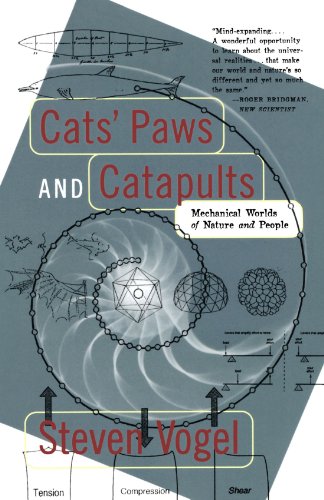
Cats' Paws and Catapults: Mechanical Worlds of Nature and People
Authors:
Steven Vogel
Publisher:
W. W. Norton & Company
Publication Date:
Not available
ISBN:
0393319903
"Full of ideas and well-explained principles that will bring new understanding of everyday things to both scientists and non-scientists alike."—R.... McNeill Alexander, NatureNature and humans build their devices with the same earthly materials and use them in the same air and water, pulled by the same gravity. Why, then, do their designs diverge so sharply? Humans, for instance, love right angles, while nature's angles are rarely right and usually rounded. Our technology goes around on wheels—and on rotating pulleys, gears, shafts, and cams—yet in nature only the tiny propellers of bacteria spin as true wheels. Our hinges turn because hard parts slide around each other, whereas nature's hinges (a rabbit's ear, for example) more often swing by bending flexible materials. In this marvelously surprising, witty book, Steven Vogel compares these two mechanical worlds, introduces the reader to his field of biomechanics, and explains how the nexus of physical law, size, and convenience of construction determine the designs of both people and nature. "This elegant comparison of human and biological technology will forever change the way you look at each."—Michael LaBarbera, American Scientist Illustrated
CATS: The Nine Lives of Innovation
Authors:
Stephen C. Lundin
Publisher:
McGraw-Hill
Publication Date:
Not available
ISBN:
0071602216
It's time to let the CATS out of the bag . . . Curiosity might have killed the proverbial cat, but without it very real achievements would never... occur. With this book as your guide, you’ll learn how to spark your innate curiosity, pounce on problems in ways you never imagined, and enjoy greater success and satisfaction at work—and in your personal life. Playful, profound, and positively upbeat, CATS provides what you need to tap into your power of innovation—and then unleash it in every member of your organization. While most business thinkers view this challenge from the top down, Stephen Lundin sees the subject from a CAT's-eye view, explaining how to get every employee--no matter what level--to think and act in innovative ways. Inside, he examines the four challenges to innovation and offers practical measures aimed at conquering them. You'll learn how to: Be brave ('fraidy cats never innovate) Stop being “normal” (make your own rules!) Embrace failure (it's the only way to learn) Foster creativity (don't be a control freak) Lundin then describes the Nine Lives of Innovation, each of which is a step toward realizing your inner CAT and becoming a fully contributing member of an innovative organization. Prowling inside every employee is a questioner, a creator, an innovator--claws out and ready to pounce. Become a CAT and you may fi nd yourself springing on ideas in a way that surprises you—and everyone around you.
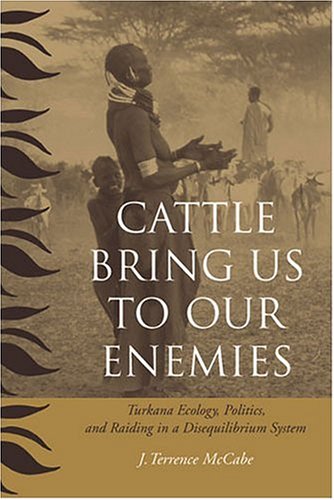
Cattle Bring Us to Our Enemies: Turkana Ecology, Politics, and...
Authors:
J. Terrence McCabe
Publisher:
University of Michigan Press
Publication Date:
Not available
ISBN:
0472068784
An in-depth look at the ecology, history, and politics of land use among the Turkana pastoral people in Northern KenyaBased on sixteen years of... fieldwork among the pastoral Turkana people, McCabe examines how individuals use the land and make decisions about mobility, livestock, and the use of natural resources in an environment characterized by aridity, unpredictability, insecurity, and violence. The Turkana are one of the world's most mobile peoples, but understanding why and how they move is a complex task influenced by politics, violence, historical relations among ethnic groups, and the government, as well as by the arid land they call home.As one of the original members of the South Turkana Ecosystem Project, McCabe draws on a wealth of ecological data in his analysis. His long-standing relationship with four Turkana families personalize his insights and conclusions, inviting readers into the lives of these individuals, their families, and the way they cope with their environment and political events in daily life.J. Terrence McCabe is Associate Professor of Anthropology, University of Colorado at Boulder.
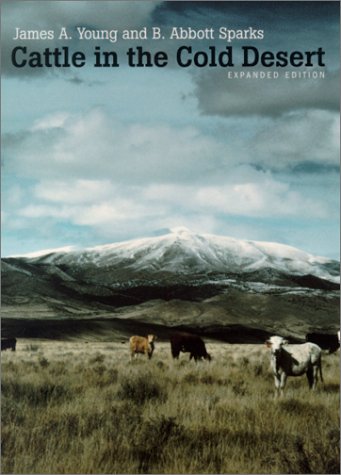
Cattle In The Cold Desert, Expanded Edition
Authors:
James A. Young
Publisher:
University of Nevada Press
Publication Date:
Not available
ISBN:
0874175038
First published in 1985, Cattle in the Cold Desert has deservedly become a classic in the environmental history of the Great Basin, brilliantly... combining a lively account of the development of the Great Basin grazing industry with a detailed scientific discussion of the ecology of its sagebrush/grassland plant communities. The volume traces the history of white settlement in the Great Basin from about 1860, along with the arrival of herds of cattle and sheep to exploit the forage resources of a pristine environment and, through the history of John Sparks, a pioneer cattleman, illustrates how the herdsmen interacted with the sagebrush/grasslands of the cold desert West. As the story unfolds on two levels-that of the herdsmen adapting their livelihood to the challenging conditions of the Great Basin's scanty forage, aridity, and fierce winters, and that of the fragile ecology of the desert plant communities responding to the presence of huge herds of livestock-we see the results of a grand experiment initiated by men willing to venture beyond the limits of accepted environmental potential to settle the Great Basin, as well as the often ruinous consequences of the introduction of domestic livestock into the plant communities of the region. The result is a remarkably balanced, astute, and insightful discussion of the grazing industry in the Intermountain West. This new paperback edition includes an additional chapter that addresses the impact of wild mustangs on the Great Basin rangelands, and an epilogue that discusses changes in rangeland management and in rangeland conditions, especially the impact of recent wildfires, since the book was first published. As concern over the future of the Great Basin's unique rangeland environment and its principal agricultural industry grows, Cattle in the Cold Desert remains essential reading for everyone who cares about this vast and underappreciated region of the American West.
Catullus
Authors:
Not Available
Publisher:
Oxford University Press, USA
Publication Date:
Not available
ISBN:
0198721471
This edition of eighty poems of Catullus is designed for college students. An introduction deals with the life of Catullus, his indebtedness to... Alexandrian poetry, and the later history of the poems. The commentary interprets the poems in the light of modern linguistic and literary scholarship. The Latin text comes from the Oxford Classical Text edition edited by Roger Mynors.
Catullus: A Legamus Transitional Reader (Legamus Transitional...
Authors:
Kenneth F. Kitchell
Publisher:
Bolchazy-Carducci Publishers
Publication Date:
Not available
ISBN:
086516634X
This reader contains selections from Catullus, designed for students moving from elementary or intermediate Latin into reading the authentic Latin of... Catullus. Passages are accompanied by pre-reading materials, grammatical exercises, complete vocabulary, notes designed for reading comprehension, and other reading aides. Introductory materials (including a section on Catullan meters) and illustrations are included.Special Features* pre-reading materials for each passage of Latin, designed to help the student understand the underlying cultural and literary concepts in the Latin passage* short explanations related to the grammatical and syntactical usages that will be found in the passage, accompanied by exercises* the first version of the Latin text with gapped words in parentheses and difficult noun-adjective pairings highlighted by the use of a different font* complete vocabulary and grammatical notes on the page facing the Latin passage. Any vocabulary word found in the passage but not in the notes is found in the pull-out vocabulary at the back of the book* the second version of the Latin text in its unchanged form* literary notes on the page facing the unchanged Latin text* post-reading materials for each passage designed to help the student understand Vergil's style of writing and to allow the student to reflect upon what has been read* the last four Latin passages do not contain any of the transitional aides such as gapped words or the use of fonts. Notes on grammar, vocabulary, and literary analysis continue to be on the page facing the passageComparison This series of transitional readers is the first to use proven reading techniques to aid students in making the transition from a basal textbook to an authentic Latin author. The Catullus Transitional Reader is the second book of the series to be published and is specifically designed to help students learn to read Catullus before they are enrolled in an AP Latin Poetry course. Also available:Vergil: A Legamus Transitional Reader - ISBN 0865165785Writing Passion: A Catullus Reader - 0865164835For over 30 years Bolchazy-Carducci Publishers has produced the highest quality Latin and ancient Greek books. From Dr. Seuss books in Latin to Plato's Apology, Bolchazy-Carducci's titles help readers learn about ancient Rome and Greece; the Latin and ancient Greek languages are alive and well with titles like Cicero's De Amicitia and Kaegi's Greek Grammar. We also feature a line of contemporary eastern European and WWII books. Some of the areas we publish in include: Selections From The Aeneid Latin Grammar & Pronunciation Greek Grammar & Pronunciation Texts Supporting Wheelock's Latin Classical author workbooks: Vergil, Ovid, Horace, Catullus, Cicero Vocabulary Cards For AP Selections: Vergil, Ovid, Catullus, Horace Greek Mythology Greek Lexicon Slovak Culture And History
CATULLUS AND HORACE: SELECTIONS FROM THEIR LYRIC POETRY (Latin...
Authors:
Addison Wesley
Publisher:
Addison Wesley
Publication Date:
Not available
ISBN:
0582367506
The rollicking comedies of Plautus, who brilliantly adapted Greek plays for Roman audiences c. 205–184 BCE, are the earliest Latin works to survive... complete and are cornerstones of the European theatrical tradition from Shakespeare and Molière to modern times. This first volume of a new Loeb edition of all 21 of Plautus’s extant comedies presents Amphitruo, Asinaria, Aulularia, Bacchides, and Captivi with freshly edited texts, lively modern translations, and ample explanatory notes. Accompanying the plays is a detailed introduction to Plautus’s œuvre as a whole, discussing his techniques of translation and adaptation, his use of Roman humor, stage conventions, language and meter, and his impact on the Greco-Roman comedic theater and beyond.
Catullus (Phoenix Supplementary Volumes)
Authors:
Gaius Valerius Catullus
Publisher:
University of Toronto Press, Scholarly Publishing Division
Publication Date:
Not available
ISBN:
080208592X
This work contains a major revision of Douglas Thomson's Catullus: A Critical Edition (1978), with the addition of a full commentary and a wholly new... introduction. For the introduction and for each of the poems there is an extensive and current bibliography.In the introduction, apart from sections on the life of Catullus, on the arrangement of the poems, and on their literary background, there is a lengthy discussion of the history of the text, as well as a review of the progress of Catullan studies from the editio princeps to the present day.There are about seventy changes from the previous edition in the text of the poems. The critical apparatus has also been extensively revised. In addition, the Table of Manuscripts, which has come to be regarded as standard, has been updated without alteration to the numbering sequence.Though this is not primarily intended as a 'school edition,' the commentary includes, in addition to critical judgments, translations and interpretations of words and phrases that may help to illuminate readings in the text.Catullus offers readers a new text of the poems, with a commentary, a codicology of the manuscript tradition, and a thorough review of Catullus scholarship.
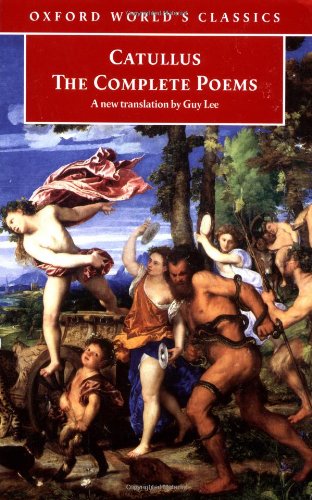
Catullus: The Complete Poems (Oxford World's Classics)
Authors:
Catullus
Publisher:
Oxford University Press, USA
Publication Date:
Not available
ISBN:
0192835874
Of all Greek and Latin poets Catullus is perhaps the most accessible to the modern reader. Dealing candidly with the basic human emotions of love and... hate, his virile, personal tone exerts a powerful appeal on all kinds of readers. The 116 poems collected in this new translation include the famous Lesbia poems and display the full range of Catullus's mastery of lyric meter, mythological themes, and epigrammatic invective and wit.
Catullus: The Poems
Authors:
Catullus
Publisher:
Bristol Classical Press
Publication Date:
Not available
ISBN:
1853994979
Catullus, Tibullus, Pervigilium Veneris (Loeb Classical Library No. 6)
Authors:
Gaius Valerius Catullus
Publisher:
Loeb Classical Library
Publication Date:
Not available
ISBN:
0674990072
Catullus (Gaius Valerius, 84–54 BCE), of Verona, went early to Rome, where he associated not only with other literary men from Cisalpine Gaul but also... with Cicero and Hortensius. His surviving poems consist of nearly sixty short lyrics, eight longer poems in various metres, and almost fifty epigrams. All exemplify a strict technique of studied composition inherited from early Greek lyric and the poets of Alexandria. In his work we can trace his unhappy love for a woman he calls Lesbia; the death of his brother; his visits to Bithynia; and his emotional friendships and enmities at Rome. For consummate poetic artistry coupled with intensity of feeling Catullus's poems have no rival in Latin literature. Tibullus (Albius, ca. 54–19 BCE), of equestrian rank and a friend of Horace, enjoyed the patronage of Marcus Valerius Messalla Corvinus, whom he several times apostrophizes. Three books of elegies have come down to us under his name, of which only the first two are authentic. Book 1 mostly proclaims his love for 'Delia', Book 2 his passion for 'Nemesis'. The third book consists of a miscellany of poems from the archives of Messalla; it is very doubtful whether any come from the pen of Tibullus himself. But a special interest attaches to a group of them which concern a girl called Sulpicia: some of the poems are written by her lover Cerinthus, while others purport to be her own composition. The Pervigilium Veneris, a poem of not quite a hundred lines celebrating a spring festival in honour of the goddess of love, is remarkable both for its beauty and as the first clear note of romanticism which transformed classical into medieval literature. The manuscripts give no clue to its author, but recent scholarship has made a strong case for attributing it to the early fourth-century poet Tiberianus.
CAT V5 R20 INTRO TO MODELING
Authors:
Not Available
Publisher:
Not available
Publication Date:
Not available
ISBN:
Not available
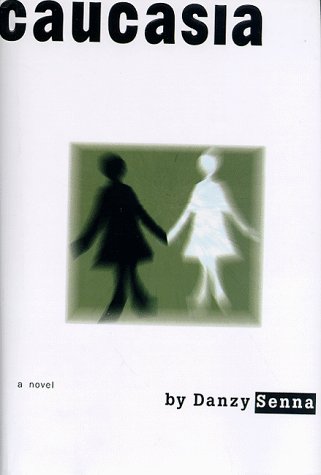
Caucasia: A Novel
Authors:
Danzy Senna
Publisher:
Riverhead Hardcover
Publication Date:
Not available
ISBN:
1573220914
Birdie and Cole are the daughters of a black father and a white mother, intellectuals and activists in the Civil Rights Movement in 1970s Boston. The... sisters are so close that they have created a private language, yet to the outside world they can't be sisters: Birdie appears to be white, while Cole is dark enough to fit in with the other kids at the Afrocentric school they attend. For Birdie, Cole is the mirror in which she can see her own blackness. Then their parents' marriage falls apart. Their father's new black girlfriend won't even look at Birdie, while their mother gives her life over to the Movement: at night the sisters watch mysterious men arrive with bundles shaped like rifles. One night Birdie watches her father and his girlfriend drive away with Cole-they have gone to Brazil, she will later learn, where her father hopes for a racial equality he will never find in the States. The next morning-in the belief that the Feds are after them-Birdie and her mother leave everything behind: their house and possessions, their friends, and-most disturbing of all-their identity. Passing as the daughter and wife of a deceased Jewish professor, Birdie and her mother finally make their home in New Hampshire. Desperate to find Cole, yet afraid of betraying her mother and herself to some unknown danger, Birdie must learn to navigate the white world-so that when she sets off in search of her sister, she is ready for what she will find.
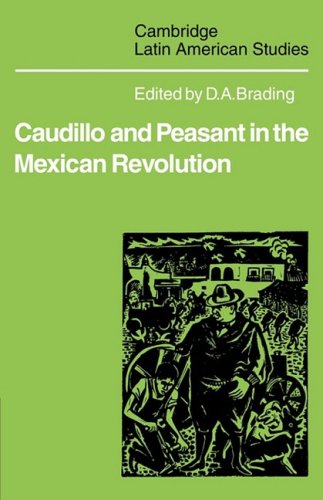
Caudillo and Peasant in the Mexican Revolution
Authors:
Not Available
Publisher:
Cambridge University Press
Publication Date:
Not available
ISBN:
052110209X
Until quite recently, the Mexican Revolution was usually defined as an agrarian movement, as a peasant war, with Emiliano Zapata, leader of the... villagers of Morelos, taken as its most typical figure. Yet this interpretation leaves many questions unanswered. It ignores the sheer diversity in both regional background and social goals of the revolutionary forces. It does not explain why the partition of the great estates and effective land distribution was delayed until the 1930s, almost two decades after the cessation of hostilities. More important, it fails to account for the emergence of a one party political system, in which the resources of the state are concentrated on industrialization and economic growth. This book consists of case-studies and general perspectives, all based on research, which follow the careers of several caudillos, some conservative, some progressive, with the aim of analysing the means by which these revolutionary chieftains first obtained power and then promoted or opposed the authority of the national state.
 '
'