production
/viewbook/list/all/?page=2074
/
/static/
None
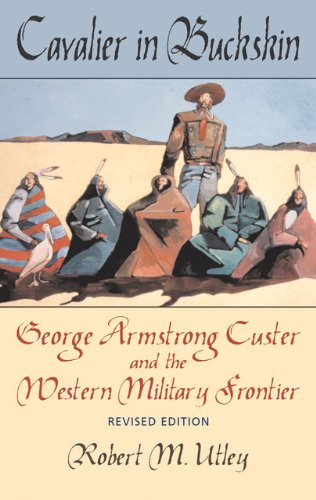
Cavalier in Buckskin: George Armstrong Custer and the Western...
Authors:
Robert M. Utley
Publisher:
University of Oklahoma Press
Publication Date:
Not available
ISBN:
0806133872
George Armstrong Custer. The name evokes instant recognition in almost every American and in people around the world. No figure in the history of the... American West has more powerfully moved the human imagination.When originally published in 1988, Cavalier in Buckskin met with critical acclaim. Now Robert M. Utley has revised his best-selling biography of General George Armstrong Custer. In his preface to the revised edition, Utley writes about his summers (1947-1952) spent as a historical aide at the Custer Battlefield-as it was then known-and credits the work of several authors whose recent scholarship has illuminated our understanding of the events of Little Bighorn. He has revised or expanded chapters, added new information on sources, and revised the map of the battlefield.

Cavalleria Rusticana and Other Stories (Penguin Classics)
Authors:
Giovanni Verga
Publisher:
Penguin Classics
Publication Date:
Not available
ISBN:
0140447415
The stories of Giovanni Verga (1840-1922) are wonderful evocations of ordinary Italian life, focusing in particular on his native, Sicily. In an... original and dynamic prose style, he portrays such eternal human themes as love, honour and adultery with rich and colourful language. The inspiration for Mascagni's opera, "Cavalleria Rusticana" depicts a young man's triumphal return home from the army, spoilt when he learns that his beloved is engaged to another man. Verga's acute awareness of the hardships and aspirations of peasant life can be seen in stories such as "Nedda", "Picturesque Lives" and "Black Bread", while others such as "The Reverend" and "Don Licciu Papa" show the dominance of the church and the law in the Sicilian communities he portrays so vividly.
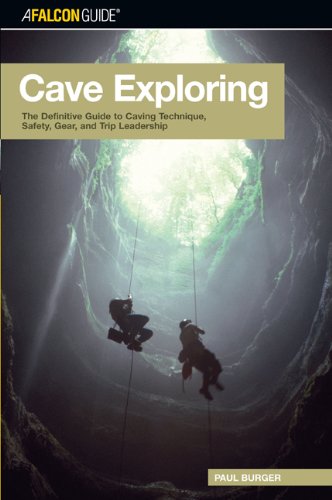
Cave Exploring: The Definitive Guide to Caving Technique, Safety,...
Authors:
Paul Burger
Publisher:
FalconGuides
Publication Date:
Not available
ISBN:
0762725605
This intructional guide to cave exploring will help readers select the right gear for a caving expedition and understand the proper techniques for... exploring safely and with minimal impact. Cave Exploring also discusses the very important topic of trip leadership, something most other caving books give only passing treatment to if any at all.

Cave Geology
Authors:
Arthur N. Palmer
Publisher:
CAVE BOOKS
Publication Date:
Not available
ISBN:
0939748665
Cave Geology is the definitive book on the subject by an internationally recognized authority. It can be easily understood by non-scientists but also... covers a wide range of topics in enough detail to be used by advanced researchers. Illustrated with more than 500 black-and-white photographs and 250 diagrams and maps.

Cave in the Snow: Tenzin Palmo's Quest for Enlightenment
Authors:
Vicki Mackenzie
Publisher:
Bloomsbury USA
Publication Date:
Not available
ISBN:
1582340455
This is the incredible story of Tenzin Palmo, a remarkable woman who spent 12 years alone in a cave 13,000 feet up in the Himalayas.At the age of 20,... Diane Perry, looking to fill a void in her life, entered a monastery in India--the only woman amongst hundreds of monks---and began her battle against the prejudice that had excluded women from enlightenment for thousands of years.Thirteen years later, Diane Perry a.k.a. Tenzin Palmo secluded herself in a remote cave 13,000 feet up in the Himalayas, where she stayed for twelve years. In her mountain retreat, she face unimaginable cold, wild animals, floods, snow and rockfalls, grew her own food and slept in a traditional wooden meditation box, three feet square. She never lay down.Tenzin emerged from the cave with a determination to build a convent in northern India to revive the Togdenma lineage, a long-forgotten female spiritual elite. She has traveled around the world to find support for her cause, meeting with spiritual leaders from the Pope to Desmond Tutu. She agreed to tell her story only to Vicky Mackenzie and a portion of the royalties from this book will help towards the completion of her convent.

Caveman Chemistry: 28 Projects, from the Creation of Fire to the...
Authors:
Kevin M. Dunn
Publisher:
Universal Publishers
Publication Date:
Not available
ISBN:
1581125666
Half a million years ago our ancestors learned to make fire from scratch. They crafted intricate tools from stone and brewed mind-altering elixirs from... honey. Their descendants transformed clay into pottery, wool into clothing, and ashes into cleansers. In ceramic crucibles they won metal from rock, the metals lead to colored glazes and glass. Buildings of brick and mortar enshrined books of parchment and paper. Kings and queens demanded ever more colorful clothing and accessories in order to out-class clod-hoppers and call-girls. Kingdoms rose and fell by the power of saltpeter, sulfur, and charcoal. And the demands of everyday folk for glass and paper and soap stimulated the first round of chemical industrialization. From sulfuric acid to sodium carbonate. From aniline dyes to analgesic drugs. From blasting powder to fertilizers and plastics. In a phrase, From Caveman to Chemist. Your guides on this journey are the four alchemical elements; Fire, Earth, Air and Water. These archetypical characters deliver first-hand accounts of the births of their respective technologies. The spirit of Fire, for example, was born in the first creature to cultivate the flame. This spirit passed from one person to another, from one generation to another, from one millennium to another, arriving at last in the pages of this book. The spirit of Earth taught folks to make tools of stone, the spirit of Air imparted knowledge of units and the spirit of Water began with the invention of spirits. Having traveled the world from age to age, who can say where they will find their next home? Perhaps they will find one in you.
Caveman Logic: The Persistence of Primitive Thinking in a Modern World
Authors:
Hank Davis
Publisher:
Prometheus Books
Publication Date:
Not available
ISBN:
1591027217
We see the face of the Virgin Mary staring up at us from a grilled cheese sandwich and sell the uneaten portion of our meal for $37,000 on eBay. While... science offers a wealth of rational explanations for natural phenomena, we often prefer to embrace the fantasies that reassured our distant ancestors. And we'll even go to war to protect our delusions against those who do not share them. These are examples of what evolutionary psychologist Hank Davis calls 'Caveman Logic'. Although some examples are funny, the condition itself is no laughing matter. In this engagingly written book, Davis encourages us to transcend the mental default settings and tribal loyalties that worked well for our ancestors back in the Pleistocene age. Davis laments a modern world in which more people believe in ESP, ghosts, and angels than in evolution. Superstition and religion get particularly critical treatment, although Davis argues that religion, itself, is not the problem but 'an inevitable by-product of how our minds misperform'. Davis argues, 'It's time to move beyond the one-size-fits-all, safety and comfort-oriented settings that got our ancestors through the terrifying Pleistocene night'. In contrast, Davis advocates a world in which 'Spirituality' is viewed as a dangerous rather than an admirable quality, and suggests ways in which we can overcome our innate predisposition toward irrationality. He concludes by pointing out that 'biology is not destiny'. Just as some of us succeed in watching our diets, resisting violent impulses, and engaging in unselfish behaviour, we can learn to use critical thinking and the insights of science to guide individual effort and social action in the service of our whole species.
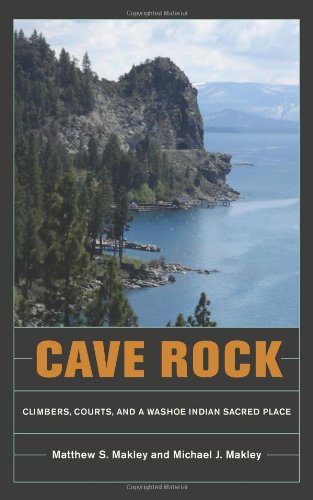
Cave Rock: Climbers, Courts, and a Washoe Indian Sacred Place
Authors:
Michael J. Makley
Publisher:
Univ of Nevada Pr
Publication Date:
Not available
ISBN:
0874178274
On August 27, 2007, the U.S. Ninth Circuit Court of Appeals upheld anearlier district court ruling that sport climbing on a Washoe Indian sacredplace in... western Nevada must cease. Cave Rock, a towering monolithjutting over the shore of Lake Tahoe, has been sacred to the Washoe peo-ple for over five thousand years. Long abused by road builders and van-dals, it earned new fame in the late twentieth century as a world-classsport rock-climbing site. Over twenty years of bitter disputes and con-frontation between the Washoe and the climbers ensued. The Washoeare a small community of fewer than 2,000 members; the climbers werebacked by a national advocacy and lobbying group and over a hundredpowerful corporations.Cave Rock follows the history of the fight between these two groups and examines the legal challenges and administrative actions that ultimatelyresulted in a climbing ban. After over two centuries of judicial decisionsallowing federal control, economic development, or public interests to out-weigh Indian claims to their sacred places, the Court s ruling was both un-precedented and highly significant. As the authors conclude, the long-termimplications of the ruling for the protection of Native rights are of equalconsequence.
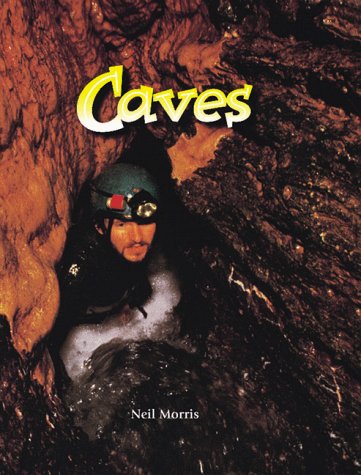
Caves
Authors:
Neil Morris
Publisher:
Crabtree Pub Co
Publication Date:
Not available
ISBN:
0865058423
The Wonders of our World Series offers young readers a lively and visually exciting introduction to the world around us and the forces at work shaping... our planet and its future. Ten books in this series offer fascinating full-color photographs of examples from around the world to help illustrate: -- the devastating impact volcanoes, extreme weather, and earthquakes can have-- why the earth's forests and waterways are in danger of destruction-- how the earth's powerful internal forces produce rocks and minerals from the ordinary to the dazzling-- how mountains, deserts, and caves are formedOften the favorite hideout for smugglers and pirates, Caves features examples of these secret places from around the world. Take an intriguing look at: -- different kinds of caves-- how they are created-- various rock formations found inside-- animal and plant life-- how human beings have used caves for shelter and safety
Caves to Cathedrals: Visual Arts in Ancient and Medieval Texts
Authors:
Not Available
Publisher:
Cognella Academic Publishing
Publication Date:
Not available
ISBN:
1609272137
Caves to Cathedrals: Visual Arts in Ancient and Medieval Texts is a compilation of primary sources, in English translation, that help clarify or... contextualize artistic production in the pre-modern Western world. The visual arts and sources regarding them, however, are more broadly defined here than is typical of most other sourcebooks. A wide array of ancient and medieval visual culture is considered, including fashion, stage scenery, and other types of display such as triumphal and funerary processions, a lavish dinner party, and gladiatorial games.Readers will also find texts with something of a practical or even archaeological bent: an eyewitness account of the eruption of Mount Vesuvius, excerpts from the law code of Hammurabi, and descriptions of such things as the process of mummification, how to make a stained glass window, and a Viking ship burial. The selected texts are often amusing and occasionally even a little shocking but always meant to make the past come to life. Caves to Cathedrals is an ideal textbook companion for Survey of Western Art courses.Lee Ann Turner is an associate professor in the Art Department at Boise State University, where she has taught the first half of the Survey of Western Art since 1996. There, she initiated the first, and so far only, History of Art degree in the state of Idaho. She received her PhD in Classical Archaeology from the University of Pennsylvania, where she also studied Latin and ancient Greek. She was a fellow of the American School of Classical Studies in Athens and has participated in either archaeological programs or field projects in Cyprus, Greece, Rome, and Crete.
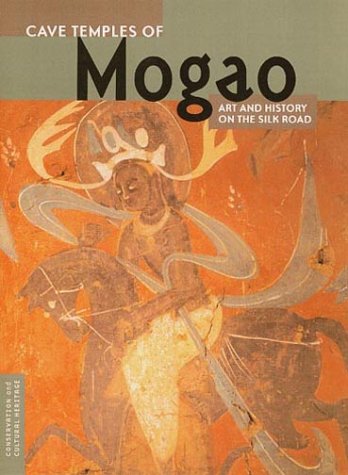
Cave Temples of Mogao: Art and History on the Silk Road...
Authors:
Roderick Whitfield
Publisher:
Getty Conservation Institute
Publication Date:
Not available
ISBN:
0892365854
The Mogao grottoes in China, situated near the oasis town of Dunhuang on the fabled Silk Road, constitute one of the world's most significant sites of... Buddhist art. In some five hundred caves carved into rock cliffs at the edge of the Gobi desert are preserved one thousand years of exquisite murals and sculpture. Mogao, founded by Buddhist monks as an isolated monastery in the late fourth century, evolved into an artistic and spiritual center whose renown extended from the Chinese capital to the far western kingdoms of the Silk Road. Among its treasures are miles of stunning wall paintings, more than two thousand statues, magnificent works on silk and paper, and thousands of ancient manuscripts, such as sutras, poems, and prayer sheets, which in 1900 were found sealed in one of the caves and then dispersed to museums throughout the world. Illustrated in color throughout, Cave Temples of Mogao combines lavish photographs of the caves and their art with the fascinating history of Mogao, Dunhuang, and the Silk Road to create a vivid portrait of this remarkable site. Chapters discuss the development of the cave temples, the iconography of the wall paintings, and the extraordinary story of the rare manuscripts, including the oldest printed book in existence, a ninth-century copy of the Diamond Sutra. The book also describes the long-term collaboration between the Getty Conservation Institute and Chinese authorities in conservation projects at Mogao as well as the caves and the museum that can be visited today. The publication of this book coincides with the centenary of the discovery of the manuscripts in the Library Cave.

Caviar and Ashes: A Warsaw Generation's Life and Death in Marxism,...
Authors:
Professor Marci Shore
Publisher:
Yale University Press
Publication Date:
Not available
ISBN:
0300143281
"In the elegant capital city of Warsaw, the editor Mieczyslaw Grydzewski would come with his two dachshunds to a café called Ziemianska." Thus begins... the history of a generation of Polish literati born at the fin de siècle. They sat in Café Ziemianska and believed that the world moved on what they said there. Caviar and Ashes tells the story of the young avant-gardists of the early 1920s who became the radical Marxists of the late 1920s. They made the choice for Marxism before Stalinism, before socialist realism, before Marxism meant the imposition of Soviet communism in Poland. It ended tragically.Marci Shore begins with this generation’s coming of age after the First World War and narrates a half-century-long journey through futurist manifestos and proletarian poetry, Stalinist terror and Nazi genocide, a journey from the literary cafés to the cells of prisons and the corridors of power. Using newly available archival materials from Poland and Russia, as well as from Ukraine and Israel, Shore explores what it meant to live Marxism as a European, an East European, and a Jewish intellectual in the twentieth century.

Caviar with Champagne: Common Luxury and the Ideals of the Good...
Authors:
Jukka Gronow
Publisher:
Berg Publishers
Publication Date:
Not available
ISBN:
1859736386
"Life has become more joyous, comrades."--Josef Stalin, 1936Stalin’s Russia is best known for its political repression, forced collectivization and... general poverty. Caviar with Champagne presents an altogether different aspect of Stalin’s rule that has never been fully analyzed - the creation of a luxury goods society. At the same time as millions were queuing for bread and starving, drastic changes took place in the cultural and economic policy of the country, which had important consequences for the development of Soviet material culture and the promotion of its ideals of consumption.The 1930s witnessed the first serious attempt to create a genuinely Soviet commercial culture that would rival the West. Government ministers took exploratory trips to America to learn about everything from fast food hamburgers to men’s suits in Macy’s. The government made intricate plans to produce high-quality luxury goods en masse, such as chocolate, caviar, perfume, liquor and assorted novelties. Perhaps the best symbol of this new cultural order was Soviet Champagne, which launched in 1936 with plans to produce millions of bottles by the end of the decade. Drawing on previously neglected archival material, Jukka Gronow examines how such new pleasures were advertised and enjoyed. He interprets Soviet-styled luxury goods as a form of kitsch and examines the ideological underpinnings behind their production.This new attitude toward consumption was accompanied by the promotion of new manners of everyday life. The process was not without serious ideological contradictions. Ironically, a factory worker living in the United States - the largest capitalist society in the world - would have been hard-pressed to afford caviar or champagne for a special occasion in the 1930s, but a Soviet worker theoretically could (assuming supplies were in stock). The Soviet example is unique since the luxury culture had to be created entirely from scratch, and the process was taken extremely seriously. Even the smallest decisions, such as the design of perfume bottles, were made at the highest level of government by the People’s Commissars. Sometimes the interpretation of 'luxury goods' bordered on the comical, such as the push to produce Soviet ketchup and wurst. This fascinating look at consumer culture under Stalin offers a new perspective on the Soviet Union of the 1930s, as well as new interpretations on consumption.
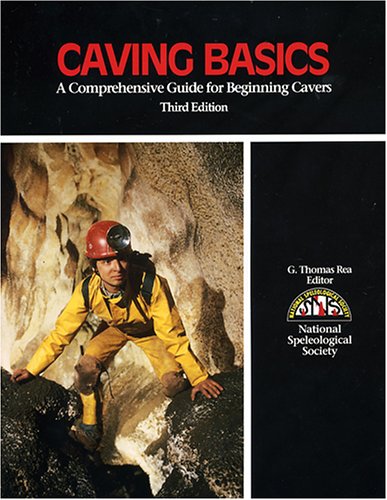
Caving Basics 3ED
Authors:
Jerry Hassemer
Publisher:
National Speleological Society
Publication Date:
Not available
ISBN:
1879961008
A very readable, yet thorough manual for beginning cavers. Detailed discussions with photographs and diagrams acquaint the reader with lighting... systems, helmets, clothing, and other caving equipment for both the horizontal and vertical caver. Also, there are chapters on the geology and biology of cave systems. Throughout the book, emphasis is placed on cave conservation and safety. Edited by G. Thomas Rea, Third Edition, viii + 187 pages, softbound.
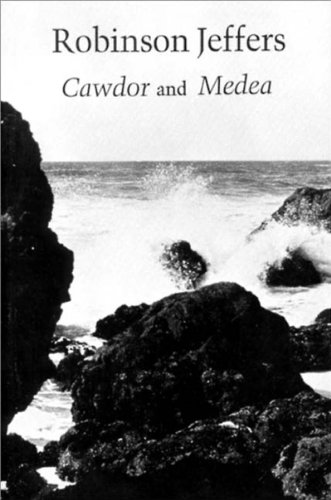
Cawdor and Medea: A Long Poem After Euripides a New Directions Book
Authors:
Robinson Jeffers
Publisher:
New Directions
Publication Date:
Not available
ISBN:
0811200736
Here for a new generation of readers and students are two major poetic works of Robinson Jeffers (1887-1962).The verse narrative Cawdor, set on the... ruthless California coast which Jeffers knew so well, tells a simple tale: an aging widower, Cawdor, unwilling to relinquish his youth, knowingly marries a young girl who does not love him. She falls in love with his son, Hood, and the narrative unfolds in tragedy of immense proportions. Medea is a verse adaptation of Euripides' drama and was created especially for the actress Judith Anderson. Their combined genius made the play one of the outstanding successes of the 1940s. In Medea, Jeffers relentlessly drove toward what Ralph Waldo Emerson had called "the proper tragic element"—terror.
 '
'