production
/viewbook/list/all/?page=2119
/
/static/
None

CHAKRA YOGA MAT
Authors:
Not Available
Publisher:
Not available
Publication Date:
Not available
ISBN:
Not available
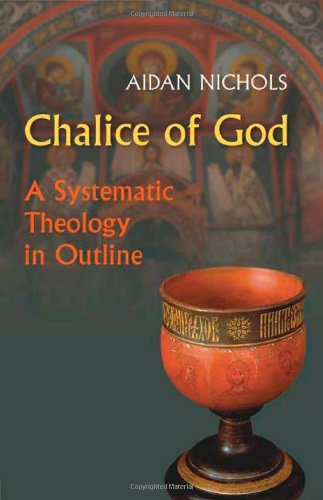
Chalice of God: A Systematic Theology in Outline
Authors:
Aidan Nichols
Publisher:
Liturgical Press
Publication Date:
Not available
ISBN:
0814634311
Over the course of a distinguished theological career, Aidan Nichols has produced an array of masterful contributions to the fields of systematic... theology, ecclesiology, theological aesthetics, ecumenism, liturgy, and Scripture. Now, in Chalice of God, he attempts to synthesize a lifetime of research, teaching, and scholarly reflection in a book that is both rigorously academic and intensely personal. This is Nichols theological manifesto for the twenty-first century. Drawing together the insights of high scholasticism, the mid-twentieth-century ressourcement movement, a holistic reading of Scripture typical of the best patristic exegesis, and the liturgical tradition and iconography of both East and West, he presents a sound architecture for contemporary Catholic theology. Chalice of God promises to enrich and challenge those who engage in the enterprise of theology for years to come.
CHALK AND WIRE
Authors:
Not Available
Publisher:
Not available
Publication Date:
Not available
ISBN:
Not available
CHALK AND WIRE:RENEWAL(CODE EMAILED)
Authors:
Not Available
Publisher:
Not available
Publication Date:
Not available
ISBN:
Not available

Chalking it up to experience
Authors:
Perry Anthony Castelli
Publisher:
Sheepdog Publishing of Lakeland
Publication Date:
Not available
ISBN:
0971497206
Originally published in two volumes, The Printing Press as an Agent of Change is now issued in a paperback edition containing both volumes. The work is... a full-scale historical treatment of the advent of printing and its importance as an agent of change. Professor Eisenstein begins by examining the general implications of the shift from script to print, and goes on to examine its part in three of the major movements of early modern times - the Renaissance, the Reformation, and the rise of modern science.
CHALK TALK
Authors:
Not Available
Publisher:
Not available
Publication Date:
Not available
ISBN:
Not available
CHALK TALK:SURVIVAL GD F/BEGINNING EDUC
Authors:
Not Available
Publisher:
Not available
Publication Date:
Not available
ISBN:
Not available
CHALK & WIRE 4-YEAR E-PORTFOLIO
Authors:
Not Available
Publisher:
Not available
Publication Date:
Not available
ISBN:
Not available
CHALK & WIRE E-PORTFOLIO ACCOUNTS
Authors:
Not Available
Publisher:
Not available
Publication Date:
Not available
ISBN:
Not available
CHALK & WIRE E-PORT RENEWAL SEMESTER
Authors:
Not Available
Publisher:
Not available
Publication Date:
Not available
ISBN:
Not available
Challenge 2000 (Vision 2000)
Authors:
Mark Link
Publisher:
Thomas More Pr
Publication Date:
Not available
ISBN:
0782903630
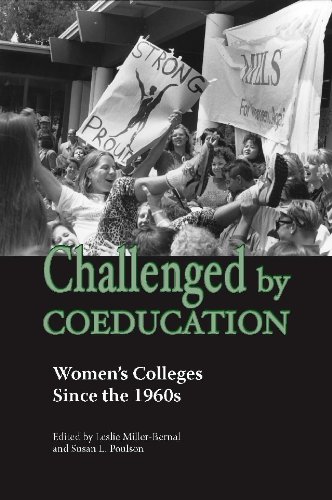
Challenged by Coeducation: Women's Colleges Since the 1960s
Authors:
Not Available
Publisher:
Vanderbilt University Press
Publication Date:
Not available
ISBN:
0826515436
Challenged by Coeducation details the responses of women's colleges to the most recent wave of Women's colleges originated in the mid-nineteenth century... as a response to women's exclusion from higher education. Women's academic successes and their persistent struggles to enter men's colleges resulted in coeducation rapidly becoming the norm, however. Still, many prestigious institutions remained single-sex, notably most of the Ivy League and all of the Seven Sisters colleges.In the mid-twentieth century colleges' concerns about finances and enrollments, as well as ideological pressures to integrate formerly separate social groups, led men's colleges, and some women's colleges, to become coeducational. The admission of women to practically all men's colleges created a serious challenge for women's colleges. Most people no longer believed women's colleges were necessary since women had virtually unlimited access to higher education. Even though research spawned by the women's movement indicated the benefits to women of a "room of their own," few young women remained interested in applying to women's colleges. Challenged by Coeducation details the responses of women's colleges to this latest wave of coeducation. Case studies written expressly for this volume include many types of women's colleges-Catholic and secular; Seven Sisters and less prestigious; private and state; liberal arts and more applied; northern, southern, and western; urban and rural; independent and coordinated with a coeducational institution. They demonstrate the principal ways women's colleges have adapted to the new coeducational era: some have been taken over or closed, but most have changed by admitting men and thereby becoming coeducational, or by offering new programs to different populations. Some women's colleges, mostly those that are in cities, connected to other colleges, and prestigious with a high endowment, still enjoy success.Despite their dramatic drop in numbers, from 250 to fewer than 60 today, women's colleges are still important, editors Miller-Bernal and Poulson argue. With their commitment to enhancing women's lives, women's colleges and formerly women's colleges can serve as models of egalitarian coeducation.
CHALLENGE OF AMERICAN GOVERNMENT
Authors:
Not Available
Publisher:
Not available
Publication Date:
Not available
ISBN:
Not available

CHALLENGE OF DEMOCRACY
Authors:
Not Available
Publisher:
Cengage Learning
Publication Date:
Not available
ISBN:
0495988545
CHALLENGE OF DEMOCRACY+CRSEMATE-W/EBK
Authors:
Not Available
Publisher:
Not available
Publication Date:
Not available
ISBN:
Not available
 '
'