production
/viewbook/list/all/?page=2219
/
/static/
None
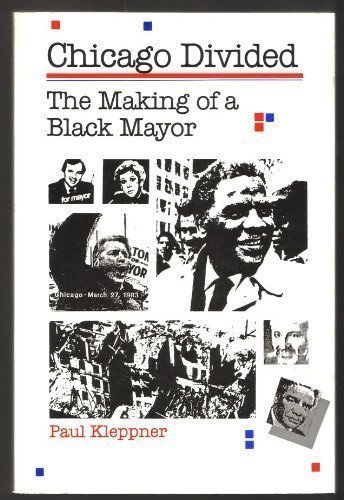
Chicago Divided: The Making of a Black Mayor
Authors:
Paul Kleppner
Publisher:
Northern Illinois University Press
Publication Date:
Not available
ISBN:
0875805329
n April 1983, Harold Washington became the first black mayor of Chicago. His victory came at the end of a rancorous campaign that attracted national... media coverage and left Chicago "a city divided against itself." Chicago Divided sensitively reconstructs the developments that led to Chicago's 1983 political season. Investigating the election and its background, Kleppner taps a formidable array of sources—including newspapers, court cases, public opinion polls, and voting returns—to analyze the causes and consequences of Chicago's electoral revolution.
Chicago (French's musical library)
Authors:
Fred Ebb
Publisher:
Samuel French, Inc.
Publication Date:
Not available
ISBN:
0573680817
Based on the play by Maurine Dallas Watkins 9m, 10f Premiering in 1975 and the hit of the 1997 Broadway season in a production that originated at City... Center's Encore! series, Chicago won six Tony Awards including Best Revival and later the Academy Award as Best Picture of the Year. In roaring twenties Chicago, chorine Roxie Hart murders a faithless lover and convinces her hapless husband Amos to take the rap...until he finds out he's been duped and turns on Roxie. Convicted and sent to death row, Roxie and another "Merry Murderess" Velma Kelly, vie for the spotlight and the headlines, ultimately joining forces in search of the "American Dream": fame, fortune and acquittal. This sharp edged satire features a dazzling score that sparked immortal staging by Bob Fosse. "'A pulse racing revival that flies us right into musical heaven." -The New York Times "Wildly entertaining...[with a] dazzling score." -New York Daily News
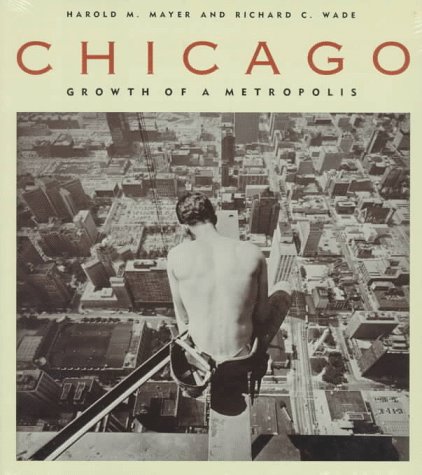
Chicago: Growth of a Metropolis
Authors:
Harold M. Mayer
Publisher:
University Of Chicago Press
Publication Date:
Not available
ISBN:
0226512746
This is the story of Chicago and how it grew. In a little over a century it rose from a mere frontier outpost to become one of the great cities of the... world. No single book can possibly encompass the immense scope of this development or convey the endless diversity of the life of Chicago's people. But with the help of the camera it is possible to capture many dimensions of this extraordinary story.This volume, however, which comprises over 1,000 pictures and 50 maps, tries to do more than show physical development—it attempts to suggest how the city expanded and why it looks the way it does. Because it asks different questions, this book differs markedly from other "pictorial histories" of American cities. Instead of emphasizing society and customs, this volume deals with the physical conditions of life. In place of the conventional interest in "founding fathers" and leading families, it is more concerned with street scenes and ordinary people. Without neglecting downtown, it also reaches into the residential areas and neighborhood shopping centers. Moreover, this volume is concerned with suburbs and "satellite" towns as well as the historic city."Chicago: Growth of a Metropolis is an incredible book. Like its subject it is excessive, and nothing succeeds like excess. It is handsomely designed, with a thousand photographs that document the physical growth and the spatial patterns of the city. . . . A dimensionalism comes through that no other city has. Carl Sandburg sang it in his poetry, and the book does more to grasp it . . . than any other book I have seen."—Hugh Newell Jacobson, New Republic
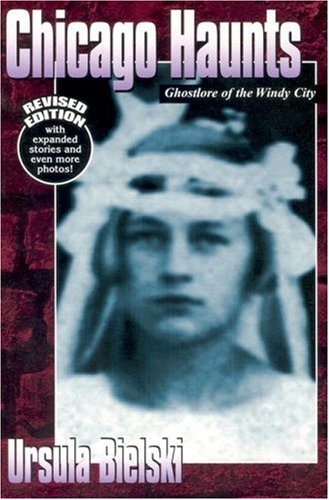
Chicago Haunts: Ghostlore of the Windy City
Authors:
Ursula Bielski
Publisher:
Thunder Bay Pr
Publication Date:
Not available
ISBN:
0964242672
With the first edition of Chicago Haunts, author Ursula Bielski captured 160 years of Chicago's haunted history in the first volume ever devoted to this... intriguing subject. Combining lively storytelling with in-depth historical research, exclusive interviews, and insights from parapsychology, Bielski penned a unique and fascinating exploration of the region's supernatural folklore.
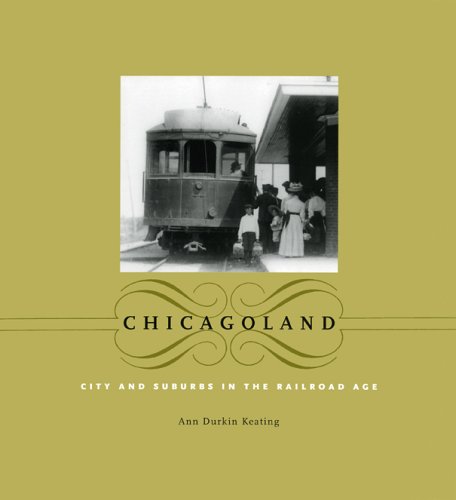
Chicagoland: City and Suburbs in the Railroad Age (Historical...
Authors:
Ann Durkin Keating
Publisher:
University Of Chicago Press
Publication Date:
Not available
ISBN:
0226428826
Formed by images of crowded city streets and towering skyscrapers, our understanding of nineteenth-century Chicago completely neglects the fact that the... city itself was only the center of a web of neighborhoods, farm communities, and industrial towns—many connected to the city by the railroad. Farmers used trains to transport produce into the city daily; businessmen rode the rails home to their commuter suburbs; and families took vacations mere miles outside the Loop.Historian and coeditor of the acclaimed Encyclopedia of Chicago, Ann Durkin Keating resurrects for us here the bustling network that defined greater Chicagoland. Taking a new approach to the history of the city, Keating shifts the focus to the landscapes and built environments of the metropolitan region. Organized by four categories of settlements-farm centers, industrial towns, commuter suburbs, and recreational and institutional centers-that framed the city, Chicagoland offers the collective history of 230 neighborhoods and communities, the people who built them, and the structures they left behind that still stand today.Keating reanimates nineteenth-century Chicagoland with more than a hundred photographs and maps; we find here the taverns, depots, and way stations that were the hubs of the region's vibrant, mobile life. Keating also includes an appendix of driving tours so readers can see this history for themselves. Chicagoland takes us into the buildings and sites that are still part of our landscape and repopulates them with the stories and characters behind their creation. The result is a wide-angle historical view of Chicago, an entirely new way to understand the region.
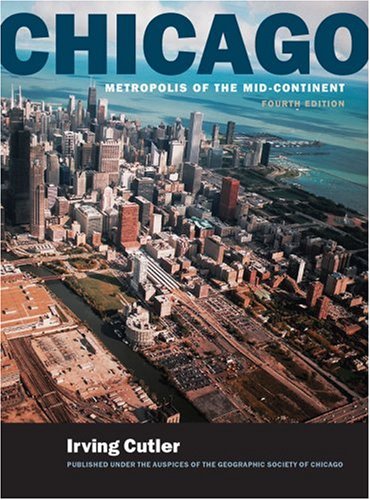
Chicago: Metropolis of the Mid-Continent, 4th Edition
Authors:
Professor Emeritus Irving Cutler
Publisher:
Southern Illinois University Press
Publication Date:
Not available
ISBN:
0809327023
Chicago: Metropolis of the Mid-Continent provides a comprehensive portrayal of the growth and development of Chicago from the mudhole of the prairie to... today’s world-class city. This completely revised fourth edition skillfully weaves together the geography, history, economy, and culture of the city and its suburbs with a special emphasis on the role of the many ethnic and racial groups that comprise the real Chicago” of its neighborhoods. Cutler demonstrates how the geography of Chicagoland” and the influx of a diverse population spurred transportation, industrial technology, the economy, and sporadic planning to foster rapid urban growth, which brought both great progress and severe problems.Through insightful analysis, Cutler also traces the demographic and societal changes to Chicago, critically examining such problems as the environment, education, racial tension, crime, welfare, housing, employment, and transportation. Richly illustrated with nearly three hundred drawings, photos, maps, and tables, the volume includes six appendices with sections dedicated to Chicago facts, population growth and income data, weather and climate, significant dates, and historic sites.
Chicago Poems (Dover Thrift Editions)
Authors:
Carl Sandburg
Publisher:
Dover Publications
Publication Date:
Not available
ISBN:
0486280578
Written in the poet's unique personal idiom, these early poems include "Chicago," "Fog," "To a Contemporary Bunkshooter," "Who Am I?" and "Under the... Harvest Moon," as well as many others on themes of war, immigrant life, death, love, loneliness and the beauty of nature. New introductory Note. Alphabetical lists of titles and first lines. Includes 2 selections from the Common Core State Standards Initiative.
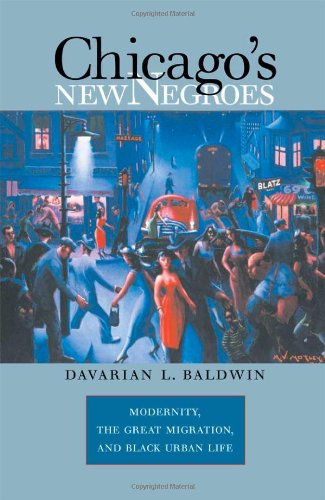
Chicago's New Negroes: Modernity, the Great Migration, and Black...
Authors:
Davarian L. Baldwin
Publisher:
The University of North Carolina Press
Publication Date:
Not available
ISBN:
0807857998
Pushing the traditional boundaries of the Harlem Renaissance to new frontiers, Baldwin identifies a fresh model of urban culture rich with politics,... ingenuity, and entrepreneurship.
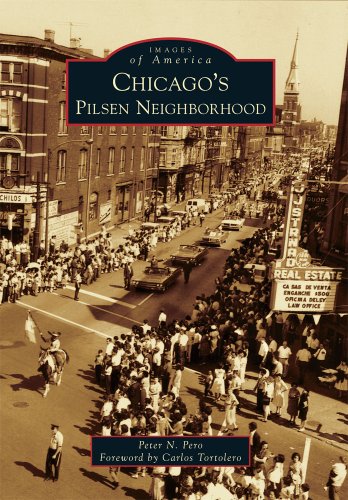
Chicago's Pilsen Neighborhood (Images of America Series) (Images of...
Authors:
Peter N. Pero
Publisher:
Arcadia Publishing
Publication Date:
Not available
ISBN:
0738583340
For nearly 150 years, Pilsen has been a port of entry for thousands of immigrants. Mexicans, Czechs, Poles, Lithuanians, Croatians, and Germans are some... of the ethnic groups who passed through this "Ellis Island" on Chicago's Near Westside. Early generations came searching for work and found plenty of jobs in the lumber mills, breweries, family-run shops and large factories that took root here. Today most jobs exist outside of Pilsen, but the neighborhood is still home to a loyal population. Pilsen is compact but abounds with close-knit families, elaborate churches, mom-and-pop stores, and sturdy brick homes. Nearly 200 photographs from libraries, personal scrapbooks, and museums provide the evidence. Some notable people who walked the streets of Pilsen include Anton Cermak, Amalia Mendoza, George Hallas, Cesar Chavez, Judy Barr Topinka, and Stuart Dybek. Today the Pilsen schools are nurturing another generation of artists, athletes, and activists. Many Chicagoans and tourists from outside the city are rediscovering this colorful and historic neighborhood. Let this history book serve as their guide.
Chicago Stories (Prairie State Books)
Authors:
James T. Farrell
Publisher:
University of Illinois Press
Publication Date:
Not available
ISBN:
0252019814
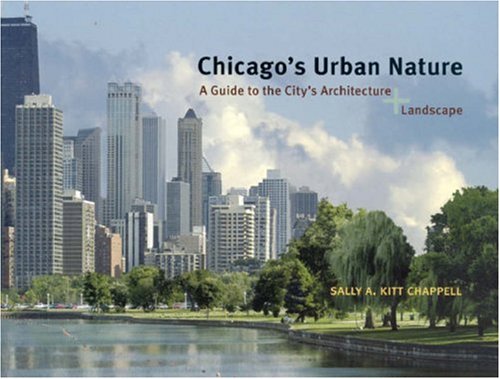
Chicago's Urban Nature: A Guide to the City's Architecture + Landscape
Authors:
Sally A. Kitt Chappell
Publisher:
University Of Chicago Press
Publication Date:
Not available
ISBN:
0226101401
Chicago—whose motto is “City in a Garden”—is currently at the forefront of a global movement to end the division between town and country. In... Chicago’s Urban Nature, Sally A. Kitt Chappell provides a beautifully illustrated guide to the city’s stunning blend of nature and architecture.At the heart of this new urban concept is the idea of connection, bringing buildings and landscapes, culture and nature, commerce and leisure into an energetic harmony. With Chicago’s Urban Nature in hand, you’ll see those connections woven through the fabric of the city. Chappell provides new insights into such historic Chicago sites as Jens Jensen’s Garfield Park Conservatory, Frederick Law Olmsted’s Jackson Park, and Alfred Caldwell’s Lily Pond, then takes us to the innovative contemporary green spaces they influenced, from City Hall’s rooftop garden to the North Lawndale Green Youth Farm to Chicago’s heralded new Millennium Park. These beautiful green spaces, with their unprecedented melding of art, architecture, and ecology, have become far more than places of escape for Chicagoans—they’re now fully integrated into the urban scene, an essential part of the cultural life of the modern city.Packed with maps and recommended tours, and bursting with splendid photos, this is an essential guidebook for day-trippers, lifelong Chicago residents, and professionals in landscape architecture, urbanism, and design.
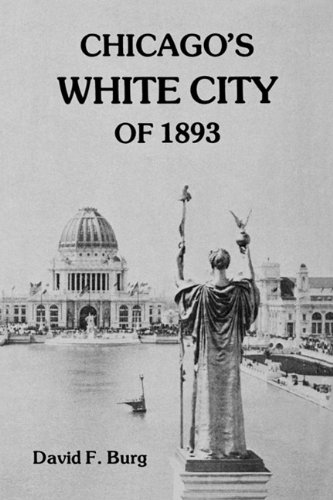
Chicago's White City of 1893 (Reprint)
Authors:
David F. Burg
Publisher:
The University Press of Kentucky
Publication Date:
Not available
ISBN:
0813101409
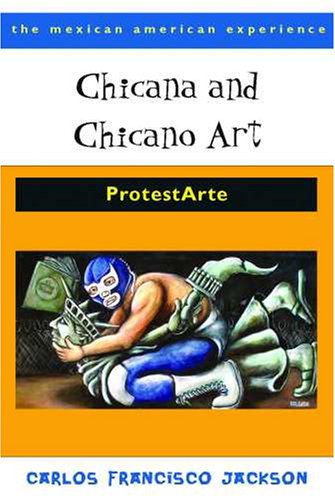
Chicana and Chicano Art: ProtestArte (The Mexican American Experience)
Authors:
Carlos Francisco Jackson
Publisher:
University of Arizona Press
Publication Date:
Not available
ISBN:
0816526478
This is the first book solely dedicated to the history, development, and present-day flowering of Chicana and Chicano visual arts. It offers readers an... opportunity to understand and appreciate Chicana/o art from its beginnings in the 1960s, its relationship to the Chicana/o Movement and its leading artists, themes, current directions, and cultural impacts. Although the word "Chicano" once held negative connotations, students--along with civil rights activists and artists--adopted it in the late 1960s in order to reimagine and redefine what it meant to be Mexican American in the United States. Chicanismo is the ideology and spirit behind the Chicano Movement and Chicanismo unites the artists whose work is revealed and celebrated in this book. Jackson's scope is wide. He includes paintings, prints, murals, altars, sculptures, and photographs--and, of course, the artists who created them. Beginning with key influences, he describes the importance of poster and mural art, focusing on the work of the Mexican artist José Guadalupe Posada and the significance of Mexican and Cuban talleres (print workshops). He examines the importance of art collectives in the United States, as well as Chicano talleres and community art centers, for the growth of the Chicano art movement. In conclusion, he considers how Chicano art has been presented to the general American public.As Jackson shows, the visual arts have both reflected and created Chicano culture in the United States. For college students--and for all readers who want to learn more about this fascinating subject--his book is an ideal introduction to an art movement with a social conscience.
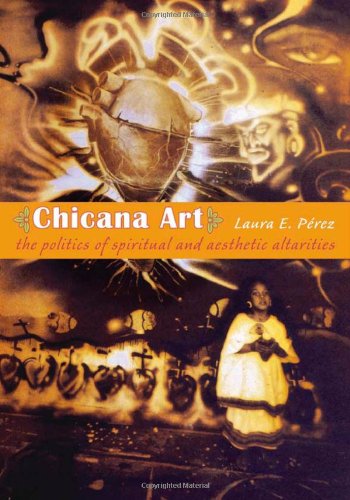
Chicana Art: The Politics of Spiritual and Aesthetic Altarities...
Authors:
Laura E. Pérez
Publisher:
Duke University Press Books
Publication Date:
Not available
ISBN:
0822338688
In Alma Lopez’s digital print Lupe & Sirena in Love (1999), two icons—the Virgin of Guadalupe and the mermaid Sirena, who often appears on... Mexican lottery cards—embrace one another, symbolically claiming a place for same-sex desire within Mexican and Chicano/a religious and popular cultures. Ester Hernandez’s 1976 etching Libertad/Liberty depicts a female artist chiseling away at the Statue of Liberty, freeing from within it a regal Mayan woman and, in the process, creating a culturally composite Lady Liberty descended from indigenous and mixed bloodlines. In her painting Coyolxauhqui Last Seen in East Oakland (1993), Irene Perez reimagines as whole the body of the Aztec warrior goddess dismembered in myth. These pieces are part of the dynamic body of work presented in this pioneering, lavishly illustrated study, the first book primarily focused on Chicana visual arts.Creating an invaluable archive, Laura E. Pérez examines the work of more than forty Chicana artists across a variety of media including painting, printmaking, sculpture, performance, photography, film and video, comics, sound recording, interactive CD-ROM, altars and other installation forms, and fiction, poetry, and plays. While key works from the 1960s and 1970s are discussed, most of the pieces considered were produced between 1985 and 2001. Providing a rich interpretive framework, Pérez describes how Chicana artists invoke a culturally hybrid spirituality to challenge racism, bigotry, patriarchy, and homophobia. They make use of, and often radically rework, pre-Columbian Mesoamerican and other non-Western notions of art and art-making, and they struggle to create liberating versions of familiar iconography such as the Virgin of Guadalupe and the Sacred Heart. Filled with representations of spirituality and allusions to non-Western visual and cultural traditions, the work of these Chicana artists is a vital contribution to a more inclusive canon of American arts.
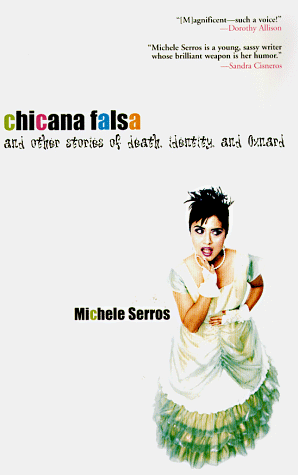
Chicana Falsa : And Other Stories of Death, Identity, & Oxnard
Authors:
Michele M. Serros
Publisher:
Riverhead Trade
Publication Date:
Not available
ISBN:
1573226858
From the white boy who transforms himself into a full-fledged Chicano, to the self-assured woman who effortlessly terrorizes her Anglo boss, to the... junior-high friend who berated her "sloppy Spanish" and accused her of being a "Chicana Falsa," the people and places that Michele Serros brings to vivid life in this collection of poems and stories introduce a unique new viewpoint to the American literary landscape. Witty, tender, irreverent, and emotionally honest, her words speak to the painful and hilarious identity crises particular to the coming of age of an adolescent caught between two cultures.
 '
'