production
/viewbook/list/all/?page=2258
/
/static/
None
China on the World Stage
Authors:
Not Available
Publisher:
Foreign Affairs
Publication Date:
Not available
ISBN:
0876094337
The twenty-first century has been marked by great shifts of power in trade, wealth, and political discourse. China is at the crux of this change, and... has quickly become a power of immeasurable influence. However, it is still unclear how China's rise will rebalance the international order. Originally published in Foreign Affairs, the preeminent magazine on foreign policy and international relations, the essays in this book assess the geopolitical consequences of China's rise to power, the development and environmental challenges China faces at home, and its relations with major players like the United States, Russia, and Taiwan. Taken together, the articles portray a global system in deep flux. How individuals and countries adapt is likely to define conflict and peace for the foreseeable future.
China Pop: How Soap Operas, Tabloids and Bestsellers Are...
Authors:
Jianying Zha
Publisher:
New Press, The
Publication Date:
Not available
ISBN:
1565842502
China Pop is a highly original and lively look at the ways that contemporary China is changing. Jianying Zha, hailed by The Nation as "incisive, witty... and eloquent all at once," examines a wide range of developments largely unknown to Western readers: the careful planning of television soap operas to placate popular unrest after Tiananmen, the growth of the sex tabloid and pornography industries, and the politics of censorship and commercial success of the film directors Chen Kaige (Farewell My Concubine) and Zhang Yimou (Ju Dou and Raise the Red Lantern).
China Reporting: An Oral History of American Journalism in the...
Authors:
Stephen R. MacKinnon
Publisher:
University of California Press
Publication Date:
Not available
ISBN:
0520069676
China Reporting documents the gathering of American journalists, diplomats and China scholars, "old China hands" all, who met in 1982 to discuss their... experience in China.
China Revised Edition: Tradition and Transformation, Revised Edition
Authors:
John King Fairbank
Publisher:
Houghton Mifflin Harcourt (HMH)
Publication Date:
Not available
ISBN:
0395496926
This package contains the following components: -0205705154: Western Heritage, The: Volume 1 -0136034713: MyHistoryLab with Pearson eText -- for... World / Western Civ., 2-semester
China Rising: Peace, Power, and Order in East Asia
Authors:
David C. Kang
Publisher:
Columbia University Press
Publication Date:
Not available
ISBN:
0231141890
Throughout the past three decades East Asia has seen more peace and stability than at any time since the Opium Wars of 1839-1841. During this period... China has rapidly emerged as a major regional power, averaging over nine percent economic growth per year since the introduction of its market reforms in 1978. Foreign businesses have flocked to invest in China, and Chinese exports have begun to flood the world. China is modernizing its military, has joined numerous regional and international institutions, and plays an increasingly visible role in international politics. In response to this growth, other states in East Asia have moved to strengthen their military, economic, and diplomatic relations with China. But why have these countries accommodated rather than balanced China's rise?David C. Kang believes certain preferences and beliefs are responsible for maintaining stability in East Asia. Kang's research shows how East Asian states have grown closer to China, with little evidence that the region is rupturing. Rising powers present opportunities as well as threats, and the economic benefits and military threat China poses for its regional neighbors are both potentially huge; however, East Asian states see substantially more advantage than danger in China's rise, making the region more stable, not less. Furthermore, although East Asian states do not unequivocally welcome China in all areas, they are willing to defer judgment regarding what China wants and what its role in East Asia will become. They believe that a strong China stabilizes East Asia, while a weak China tempts other states to try to control the region. Many scholars downplay the role of ideas and suggest that a rising China will be a destabilizing force in the region, but Kang's provocative argument reveals the flaws in contemporary views of China and the international relations of East Asia and offers a new understanding of the importance of sound U.S. policy in the region.
China Road: A Journey into the Future of a Rising Power
Authors:
Rob Gifford
Publisher:
Random House Trade Paperbacks
Publication Date:
Not available
ISBN:
0812975243
Route 312 is the Chinese Route 66. It flows three thousand miles from east to west, passing through the factory towns of the coastal areas, through the... rural heart of China, then up into the Gobi Desert, where it merges with the Old Silk Road. The highway witnesses every part of the social and economic revolution that is turning China upside down.In this utterly surprising and deeply personal book, acclaimed National Public Radio reporter Rob Gifford, a fluent Mandarin speaker, takes the dramatic journey along Route 312 from its start in the boomtown of Shanghai to its end on the border with Kazakhstan. Gifford reveals the rich mosaic of modern Chinese life in all its contradictions, as he poses the crucial questions that all of us are asking about China: Will it really be the next global superpower? Is it as solid and as powerful as it looks from the outside? And who are the ordinary Chinese people, to whom the twenty-first century is supposed to belong? Gifford is not alone on his journey. The largest migration in human history is taking place along highways such as Route 312, as tens of millions of people leave their homes in search of work. He sees signs of the booming urban economy everywhere, but he also uncovers many of the country’s frailties, and some of the deep-seated problems that could derail China’s rise. The whole compelling adventure is told through the cast of colorful characters Gifford meets: garrulous talk-show hosts and ambitious yuppies, impoverished peasants and tragic prostitutes, cell-phone salesmen, AIDS patients, and Tibetan monks. He rides with members of a Shanghai jeep club, hitchhikes across the Gobi desert, and sings karaoke with migrant workers at truck stops along the way.As he recounts his travels along Route 312, Rob Gifford gives a face to what has historically, for Westerners, been a faceless country and breathes life into a nation that is so often reduced to economic statistics. Finally, he sounds a warning that all is not well in the Chinese heartlands, that serious problems lie ahead, and that the future of the West has become inextricably linked with the fate of 1.3 billion Chinese people.“Informative, delightful, and powerfully moving . . . Rob Gifford’s acute powers of observation, his sense of humor and adventure, and his determination to explore the wrenching dilemmas of China’s explosive development open readers’ eyes and reward their minds.” –Robert A. Kapp, president, U.S.-China Business Council, 1994-2004From the Hardcover edition.
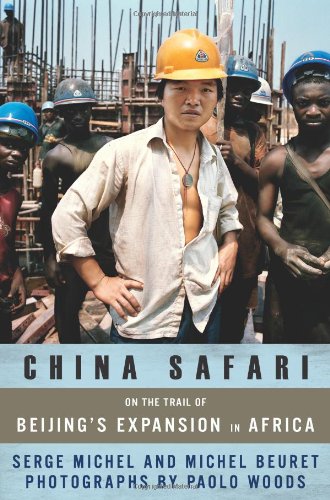
China Safari: On the Trail of Beijing's Expansion in Africa
Authors:
Serge Michel
Publisher:
Nation Books
Publication Date:
Not available
ISBN:
1568584261
China has now taken Great Britain’s place as Africa’s third largest business partner. Where others only see chaos, the Chinese see opportunities.... With no colonial past and no political preconditions, China is bringing investment and needed infrastructure to a continent that has been largely ignored by Western companies or nations.Traveling from Beijing to Khartoum, Algiers to Brazzaville, the authors tell the story of China’s economic ventures in Africa. What they find is tantamount to a geopolitical earthquake: The possibility that China will help Africa direct its own fate and finally bring light to the so-called dark continent,” making it a force to be reckoned with internationally.
China Safari- On the Trail of Beijing's Expansion in Africa (09) by...
Authors:
Michel
Publisher:
Nation s, Paperback(2010)
Publication Date:
Not available
ISBN:
1568586140
This title looks at the dramatic - and largely unknown - rise of China's economic empire into Africa and how it will change the 21st century and impact... America's role in Africa. This is the dramatic - and largely unknown - story of the rise of China's economic empire in Africa, and how it will transform geopolitics. China has now taken Britain's place as Africa's third largest business partner. Where others only see chaos, the Chinese see opportunities. With no colonial past and no political preconditions, China is bringing investment and needed infrastructure to a continent that has been largely ignored by Western companies or nations. Travelling from Beijing to Khartoum, Algiers to Brazzaville, the authors tell the story of China's economic ventures in Africa. What they find is tantamount to a geopolitical earthquake: The possibility that China will help Africa direct its own fate and finally bring light to the so-called 'dark continent', making it a force to be reckoned with internationally.
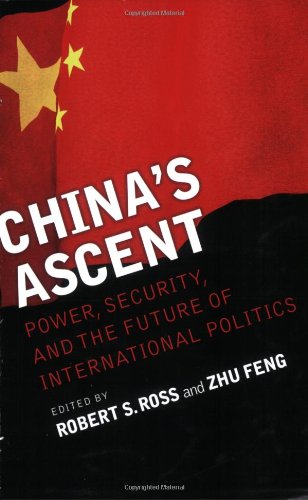
China's Ascent: Power, Security, and the Future of International...
Authors:
Not Available
Publisher:
Cornell University Press
Publication Date:
Not available
ISBN:
0801474442
Assessments of China's importance on the world stage usually focus on a single dimension of China's increasing power, rather than on the multiple... sources of China's rise, including its economic might and the continuing modernization of its military. This book offers multiple analytical perspectives-constructivist, liberal, neorealist-on the significance of the many dimensions of China's regional and global influence.Distinguished authors consider the likelihood of conflict and peaceful accommodation as China grows ever stronger. They look at the changing position of China "from the inside": How do Chinese policymakers evaluate the contemporary international order and what are the regional and global implications of that worldview? The authors also address the implications of China's increasing power for Chinese policymaking and for the foreign policies of Korea, Japan, and the United States.Contributors: Robert Art, Brandeis University; Avery Goldstein, University of Pennsylvania; G. John Ikenberry, Princeton University; Byung-Kook Kim, Korea University; Jonathan Kirshner, Cornell University; Jeffrey W. Legro, University of Virginia; Jack S. Levy, Rutgers University; Qin Yaqing, China Foreign Affairs University; Robert S. Ross, Boston College; Akio Takahara, University of Tokyo; Tang Shiping, Nanyang Technological University, Singapore; Wei Ling, China Foreign Affairs University; Zhu Feng, Peking University
China Scene: An Advanced Chinese Multimedia Course (DVD-Rom)
Authors:
Hong Gang Jin
Publisher:
Cheng & Tsui
Publication Date:
Not available
ISBN:
0887273335
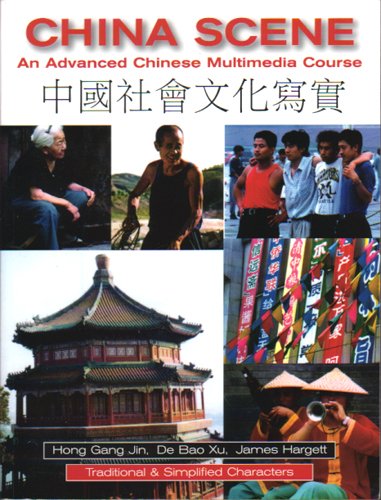
China Scene: An Advanced Chinese Multimedia Course (Traditional...
Authors:
Hong Gang Jin
Publisher:
Cheng & Tsui Company
Publication Date:
Not available
ISBN:
0887273300
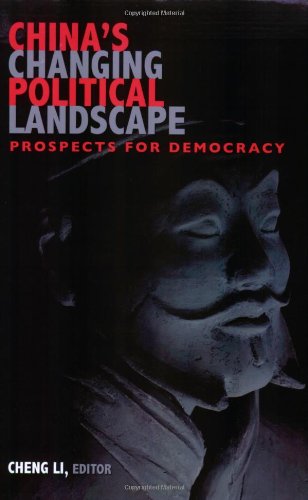
China's Changing Political Landscape: Prospects for Democracy
Authors:
Cheng Li
Publisher:
Brookings Institution Press
Publication Date:
Not available
ISBN:
0815752091
While China's economic rise is being watched closely around the world, the country's changing political landscape is intriguing as well. Forces... unleashed by market reforms are profoundly recasting state-society relations. Will the Middle Kingdom transition to political democracy rapidly, slowly, or not at all? In China's Changing Political Landscape, leading experts examine the prospects for democracy in the world's most populous nation. China's political transformation is unlikely to follow a linear path. There are a number of possible scenarios the nation's political development might follow, and which road China ultimately takes will depend on the interplay of socioeconomic forces, institutional developments, leadership succession, and demographic trends. Cheng Li and his colleagues break down a number of issues in Chinese domestic politics, including changing leadership dynamics; the rise of business elites; increased demand for the rule of law; the commercialization of the media; and shifting civil-military relations. Although the contributors clash on many issues, they do agree on one thing: the political trajectory of this economic powerhouse will have profound implications, not only for 1.3 billion Chinese people, but also for the world as a whole. Contributors: Richard Baum (UCLA), Chu Yun-han (National Taiwan University), Jacques deLisle (University of Pennsylvania), Erica Downs (Brookings), Joseph Fewsmith (Boston University), Jing Huang (Brookings), Alice Miller (Stanford University), James Mulvenon (Center for Intelligence Research and Analysis), Andrew Nathan (Columbia University), Barry Naughton (University of California-San Diego), Minxin Pei (Carnegie Endowment), David Shambaugh (George Washington University), Dorothy Solinger (University of California-Irvine), Yu Keping (Translation Bureau of the Chinese Communist Party Central Committee).
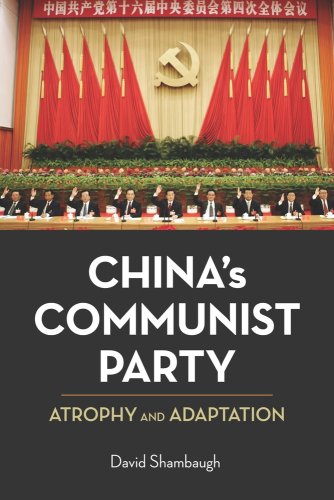
China's Communist Party: Atrophy and Adaptation
Authors:
David Shambaugh
Publisher:
University of California Press
Publication Date:
Not available
ISBN:
0520260074
Few issues affect the future of China--and hence all the nations that interact with China--more than the nature of its ruling party and government. In... this timely study, David Shambaugh assesses the strengths and weaknesses, durability, adaptability, and potential longevity of China's Communist Party (CCP). He argues that although the CCP has been in a protracted state of atrophy, it has undertaken a number of adaptive measures aimed at reinventing itself and strengthening its rule. Shambaugh's investigation draws on a unique set of inner-Party documents and interviews, and he finds that China's Communist Party is resilient and will continue to retain its grip on power.Copub: Woodrow Wilson Center Press
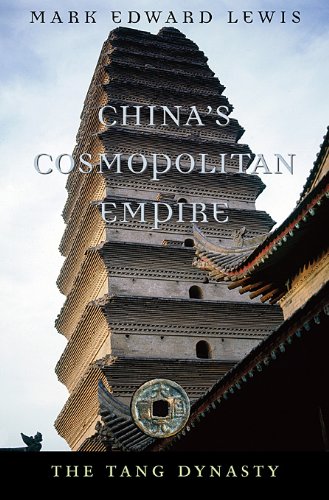
China's Cosmopolitan Empire: The Tang Dynasty (History of Imperial...
Authors:
Mark Edward Lewis
Publisher:
Belknap Press of Harvard University Press
Publication Date:
Not available
ISBN:
0674064011
The Tang dynasty is often called China’s “golden age,” a period of commercial, religious, and cultural connections from Korea and Japan to the... Persian Gulf, and a time of unsurpassed literary creativity. Mark Lewis captures a dynamic era in which the empire reached its greatest geographical extent under Chinese rule, painting and ceramic arts flourished, women played a major role both as rulers and in the economy, and China produced its finest lyric poets in Wang Wei, Li Bo, and Du Fu. The Chinese engaged in extensive trade on sea and land. Merchants from Inner Asia settled in the capital, while Chinese entrepreneurs set off for the wider world, the beginning of a global diaspora. The emergence of an economically and culturally dominant south that was controlled from a northern capital set a pattern for the rest of Chinese imperial history. Poems celebrated the glories of the capital, meditated on individual loneliness in its midst, and described heroic young men and beautiful women who filled city streets and bars. Despite the romantic aura attached to the Tang, it was not a time of unending peace. In 756, General An Lushan led a revolt that shook the country to its core, weakening the government to such a degree that by the early tenth century, regional warlordism gripped many areas, heralding the decline of the Great Tang.
China's Cultural Revolution, 1966-1969: Not a Dinner Party (East...
Authors:
Not Available
Publisher:
M.E. Sharpe
Publication Date:
Not available
ISBN:
1563247372
The first Westerner to meet Mao Tse-tung and the Chinese Communist leaders in 1936, Edgar Snow came away with the first authorized account of Mao’s... life, as well as a history of the famous Long March and the men and women who were responsible for the Chinese revolution. Out of that experience came Red Star Over China, a classic work that remains one of the most important books ever written about the birth of the Communist movement in China. This edition includes extensive notes on military and political developments in China, further interviews with Mao Tse-tung, a chronology covering 125 years of Chinese revolution, and nearly a hundred detailed biographies of the men and women who were instrumental in making China what it is today.
 '
'