production
/viewbook/list/all/?page=2289
/
/static/
None
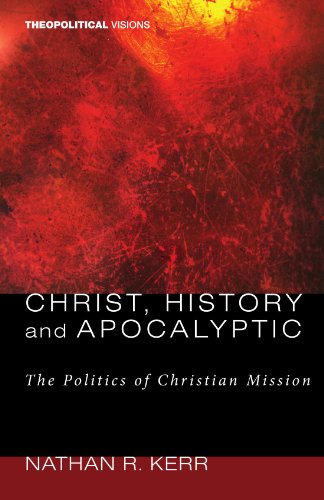
Christ, History and Apocalyptic: The Politics of Christian Mission...
Authors:
Nathan Kerr
Publisher:
Cascade Books
Publication Date:
Not available
ISBN:
1606081993
Nathan Kerr asks what mode of thinking about history and the historicist character of human agents an environment renders the 'truth' of the earliest... Christian confession true for our world today. In this latest volume in the "Veritas" series, the author offers a defense of Christian apocalyptic as a mode of taking seriously the public, social, and political character of the Church's confession under the pressure of the modern historical consciousness.
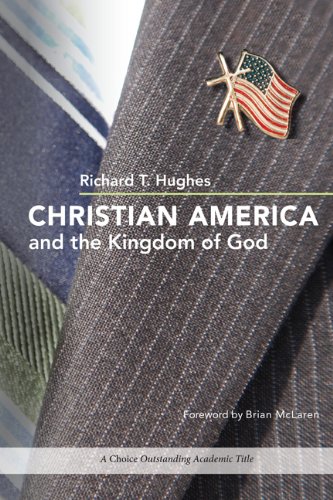
Christian America and the Kingdom of God
Authors:
Richard T. Hughes
Publisher:
University of Illinois Press
Publication Date:
Not available
ISBN:
0252078896
The idea of the United States as a Christian nation is a powerful, seductive, and potentially destructive theme in American life, culture, and... politics. Many fundamentalist and evangelical leaders routinely promote this notion, and millions of Americans simply assume the Christian character of the United States. And yet, as Richard T. Hughes reveals in this powerful book, the biblical vision of the "kingdom of God" stands at odds with the values and actions of an American empire that sanctions war instead of peace, promotes dominance and oppression instead of reconciliation, and exalts wealth and power instead of justice for the poor and needy. With conviction and careful consideration, Hughes reviews the myth of Christian America from its earliest history in the founding of the republic to the present day. Extensively analyzing the Old and New Testaments, Hughes provides a solid, scripturally-based explanation of the kingdom of God--a kingdom defined by love, peace, patience, and generosity. Throughout American history, however, this concept has been appropriated by religious and political leaders and distorted into a messianic nationalism that champions the United States as God's "chosen nation" and bears little resemblance to the teachings of Jesus. Pointing to a systemic biblical and theological illiteracy running rampant in the United States, Hughes investigates the reasons why so many Americans think of the United States as a Christian nation despite the Constitution's outright prohibition against establishing any national religion by law or coercion. He traces the development of fundamentalist Christianity throughout American history, noting especially the increased power and widespread influence of fundamentalism at the dawn of the twenty-first century, embodied and enacted by the administration of President George W. Bush and America's reaction to the terrorist attacks on September 11, 2001.
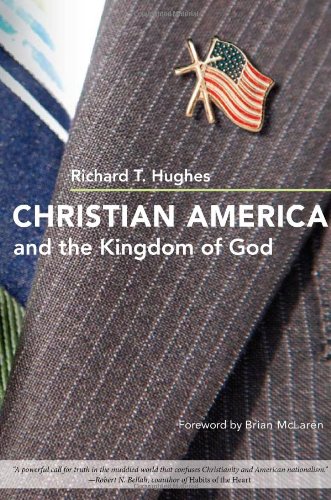
Christian America and the Kingdom of God
Authors:
Richard T. Hughes
Publisher:
University of Illinois Press
Publication Date:
Not available
ISBN:
0252032853
The idea of the United States as a Christian nation is a powerful, seductive, and potentially destructive theme in American life, culture, and... politics. And yet, as Richard T. Hughes reveals in this powerful book, the biblical vision of the "kingdom of God" stands at odds with the values and actions of an American empire that sanctions war instead of peace, promotes dominance and oppression instead of reconciliation, and exalts wealth and power instead of justice for the poor and needy. With extensive analysis of both Christian scripture and American history from the founding of the republic to the present day, Christian America and the Kingdom of God illuminates the devastating irony of a "Christian America" that so often behaves in unchristian ways.
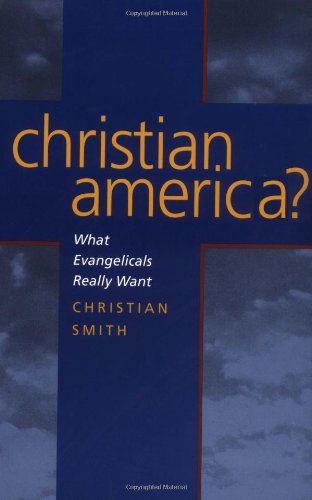
Christian America?: What Evangelicals Really Want
Authors:
Christian Smith
Publisher:
University of California Press
Publication Date:
Not available
ISBN:
0520234707
In recent decades Protestant evangelicalism has become a conspicuous and--to many Americans, worrisome--part of this country's cultural and political... landscape. But just how unified is the supposed constituency of the Christian Coalition? And who exactly are the people the Christian Right claims to represent? In the most extensive study of American evangelicals ever conducted, Christian Smith explores the beliefs, values, commitments, and goals of the ordinary men and women who make up this often misunderstood religious group. The result is a much-needed contribution to the discussion of issues surrounding fundamental American freedoms and the basic identity of the United States as a pluralistic nation.Based on data from a three-year national study, including more than 200 in-depth interviews of evangelicals around the country, Christian America? assesses the common stereotype of evangelicals as intolerant, right-wing, religious zealots seeking to impose a Christian moral order through political force. What Smith finds instead are people vastly more diverse and ambivalent than this stereotype suggests. On issues such as religion in education, "family values," Christian political activism, and tolerance of other religions and moralities, evangelicals are highly disparate and conflicted. As the voices of interviewees make clear, the labels "conservative" and "liberal" are too simplistic for understanding their approaches to public life and political action.
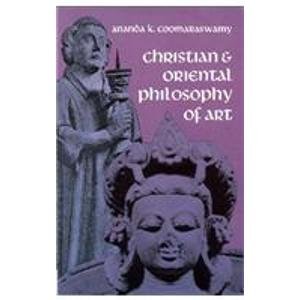
Christian and Oriental Philosophy of Art
Authors:
Ananda K. Coomaraswamy
Publisher:
Dover Publications
Publication Date:
Not available
ISBN:
0486203786
Nine of the most famous essays by one of the preeminent philosophers and art historians of the pre-modern world, both east and west. Coomaraswamy... explores such subjects as the true function of aesthetics in art, the importance of symbolism, the role of traditional culture in enriching art, the nature of medieval art, and more.
Christian Apologetics
Authors:
Cornelius Van Til
Publisher:
P & R Publishing
Publication Date:
Not available
ISBN:
0875525113
Frame sheds needed light on the message and method of genuinely Christian apologetics. Giving special attention to application of the truth, he... insightfully examines apologetics as proof, defense, and offense. Frame clarifies the relationships of reason, proofs, and evidences to faith, biblical authority, and the lordship of Christ. He offers a fresh look at probability arguments and gives special attention to the problem of evil.
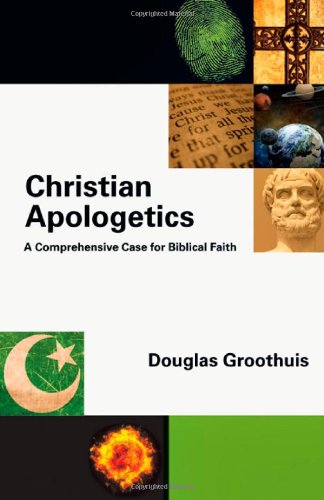
Christian Apologetics: A Comprehensive Case for Biblical Faith
Authors:
Douglas Groothuis
Publisher:
IVP Academic
Publication Date:
Not available
ISBN:
0830839356
2012 Book Award of Merit winner! The Christian worldview proposes answers to the most enduring human questions. But are those answers reliable? In... this systematic text, Douglas Groothuis makes a comprehensive apologetic case for Christian theism--proceeding from a defense of objective truth to a presentation of the key arguments for God from natural theology to a case for the credibility of Jesus, the incarnation and the resurrection. Throughout, Groothuis considers alternative views and how they fare intellectually.
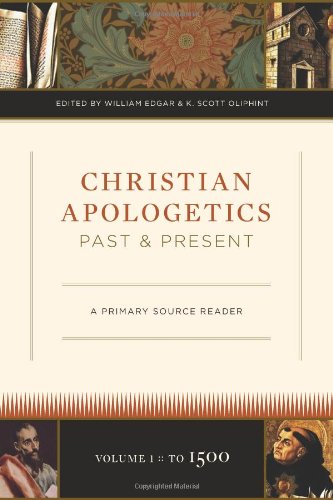
Christian Apologetics Past and Present (Volume 1, To 1500): A...
Authors:
William Edgar
Publisher:
Crossway
Publication Date:
Not available
ISBN:
1581349068
An unprecedented anthology of apologetics texts with selections from the first century AD through the Middle Ages. Includes introductory material,... timelines, maps, footnotes, and discussion questions.The apostle Peter tells us always to be ready to give a defense to anyone who asks us to account for our hope as Christians (1 Peter 3:15). While the gospel message remains the same, such arguments will look different from one age to another.In the midst of a recent revival in the field of apologetics, few things could be more useful than an acquaintance with some of these arguments for the Christian belief through the ages. This first of two proposed volumes features primary source documents from the time of the early church (100-400) and the Middle Ages (400-1500). Featured apologists include Aristides, Justin Martyr, Irenaeus, Tertullian, Origen, Athanasius, Augustine, Anselm, and Thomas Aquinas.The authors provide a preface to each major historical section, with a timeline and a map, then an introduction to each apologist. Each primary source text is followed by questions for reflection or discussion purposes.
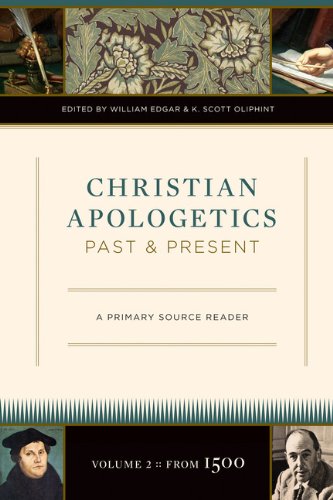
Christian Apologetics Past and Present (Volume 2, From 1500): A...
Authors:
Not Available
Publisher:
Crossway
Publication Date:
Not available
ISBN:
1581349076
Amid a revival of apologetics, “few things could be more useful than an acquaintance with how Christian faith was defended down through the ages,”... say the editors in their introduction to this two-part anthology. “Access to both historical and contemporary texts gives us fresh insight into how our fathers in the faith responded to the questions facing them.” Volume 2 in this one-of-a-kind resource takes a sweeping look at apologetics from the Reformation to the present. Readings from twenty-six apologists, including Martin Luther, John Calvin, Blaise Pascal, Jonathan Edwards, Søren Kierkegaard, Francis Schaeffer, Alvin Plantinga, and William Lane Craig are included. With editorial commentary and questions for reflection, Christian Apologetics Past and Present will prove a valuable text for students as well as a unique resource for those interested in defending the faith.
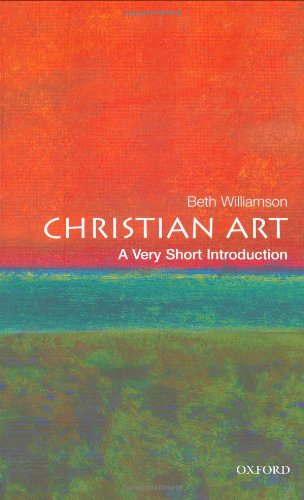
Christian Art: A Very Short Introduction (Very Short Introductions)
Authors:
Beth Williamson
Publisher:
Oxford University Press, USA
Publication Date:
Not available
ISBN:
019280328X
This Very Short Introduction decodes the key themes, signs, and symbols found in Christian art: the Eucharist, the image of the Crucifixion, the Virgin... Mary, the Saints, Old and New Testament narrative imagery, and iconography. It also explores the theological and historical background of Christian imagery, from the devotional works of the Medieval and Renaissance periods, to the twenty-first century.Williamson uses examples from, amongst others, Cimabue, Michelangelo, and Rosetti. She concludes by outlining the co-existence in contemporary 'post-Christian' culture of the deliberately controversial works of artists such as Andres Serrano and Chris Ofili, alongside the consciously devotional works of those such as Eric Gill and Peter Blake.
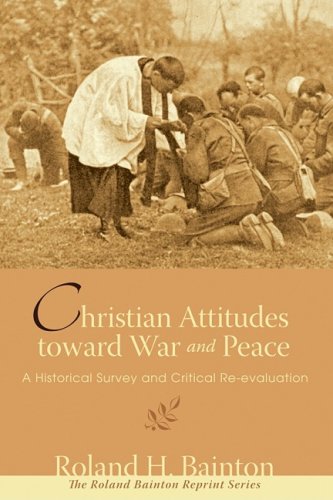
Christian Attitudes Toward War and Peace: A Historical Survey and...
Authors:
Roland H. Bainton
Publisher:
Wipf & Stock Publishers
Publication Date:
Not available
ISBN:
1556357885
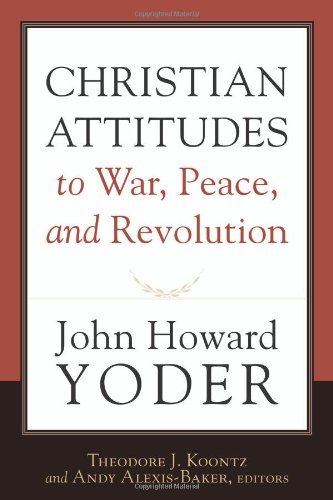
Christian Attitudes to War, Peace, and Revolution
Authors:
John Howard Yoder
Publisher:
Brazos Press
Publication Date:
Not available
ISBN:
1587432315
John Howard Yoder was one of the most important thinkers on just war and pacifism in the late twentieth century. This newly compiled collection of... Yoder's lectures and writings on these issues describes, analyzes, and evaluates various patterns of thought and practice in Western Christian history. The volume, now made widely available for the first time, makes Yoder's stimulating insights more accessible to a broader audience and substantially contributes to ongoing discussions concerning the history, theology, and ethics of war and peace. Theologians and ethicists, students of Yoder's thought, and all readers seeking a better understanding of war and pacifism will value this work.
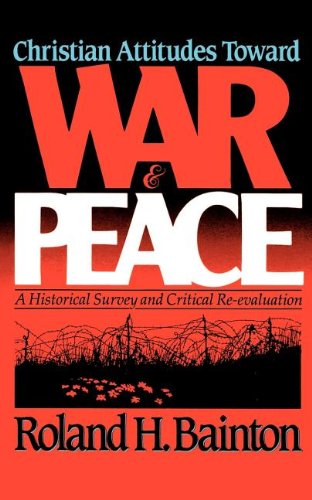
Christian Attitude Toward War And Peace
Authors:
Roland H. Bainton
Publisher:
Nashville/NY: Abingdon Press c
Publication Date:
Not available
ISBN:
0687070279
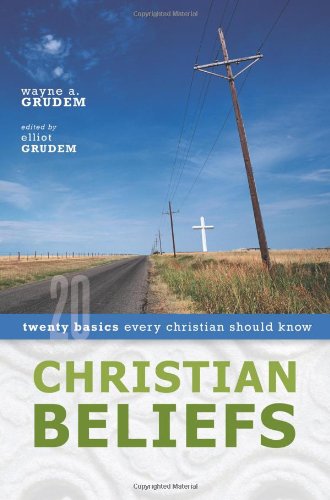
Christian Beliefs: Twenty Basics Every Christian Should Know
Authors:
Wayne Grudem
Publisher:
Zondervan
Publication Date:
Not available
ISBN:
0310255996
Christian Essentials Made Plain and Simple God doesn't call every Christian to go off to seminary, but there are certain matters of doctrine---that is,... the church's teaching---that every Christian simply must know. Theology is important because what we believe affects how we live. If you're a relatively new believer in Jesus, or if you're a more mature Christian looking for a quick brush-up on basics of the faith, Christian Beliefs is for you. This readable guide to twenty basic Christian beliefs is a condensation of Wayne Grudem's award-winning book on systematic theology, prized by pastors and teachers everywhere. He and his son, Elliot, have boiled down the essentials of Christian theology for the average layperson and made them both clear and applicable to life. You will learn about the Bible, the characteristics of God, what it means that we are created in the image of God, what God has done for us in Christ, the purpose of the church, and much more. Each chapter includes questions for personal review or group discussion. These truly are twenty basic beliefs that every Christian should know. Wayne Grudem is a master teacher with the ability to explain profound truths in simple language. He is a man of deep conviction and theological passion---and those who read this book will be both educated and encouraged in the faith. R. Albert Mohler Jr., President, The Southern Baptist Theological Seminary, Louisville, Kentucky Based on Systematic Theology, this summary will certainly help beginners with Christ to get the hang of their faith. J. I. Packer, Regent College, Vancouver, British Columbia As Wayne Grudem's Systematic Theology contracts into a compact book, I do not lose my enthusiasm for the truth he loves and the clarity of his words. John Piper, Bethlehem Baptist Church, Minneapolis, Minnesota

Christian Bioethics: A Guide for the Perplexed (Guides for the...
Authors:
Agneta Sutton
Publisher:
T&T Clark
Publication Date:
Not available
ISBN:
0567031977
The subject of Christian Bioethics: A Guide for the Perplexed is bioethics in a wide sense including issues in medical ethics and questions concerning... our relationship with animals, plants and, indeed, the whole planet earth. The key question is that of the value of life. This, then, yields the questions of what respect we owe to human and other forms of life and of how we should care for the world in general. These questions are approached from a Christian perspective and also from more strictly philosophical perspectives. Thus, arguments from a Christian perspective regarding our relationships with fellow humans, other creatures and the planet, are coupled with discussions of different kinds of argument and counter-argument.
 '
'