production
/viewbook/list/all/?page=2326
/
/static/
None
Cities and Urban Life Plus MySearchLab with eText (6th Edition)
Authors:
John J. Macionis
Publisher:
Pearson
Publication Date:
Not available
ISBN:
0205902588
A comprehensive introduction to urban sociology Cities and Urban Life, written by two of the best-known authors in the field, provides a... comprehensive introduction to urban sociology, urban anthropology and urban studies. The focus of the text is sociological, but it also incorporates research and theory from other disciplines. Learning Goals Upon completing this book, readers will be able to: Understand how cities and urban life vary according to time and place Understand how cities reflect society and culture Use a global perspective to explore urban sociology Explore how cities reflect the human condition Note: MySearchLab with eText does not come automatically packaged with this text. To purchase MySearchLab, please visit: www.mysearchlab.com or you can purchase a valuepack of the text + MySearchLab (at no additional cost): ValuePack ISBN-10: 0205902588 / ValuePack ISBN-13: 9780205902583
Cities as Sustainable Ecosystems: Principles and Practices
Authors:
Peter Newman
Publisher:
Island Press
Publication Date:
Not available
ISBN:
1597261882
Modern city dwellers are largely detached from the environmental effects of their daily lives. The sources of the water they drink, the food they eat,... and the energy they consume are all but invisible, often coming from other continents, and their waste ends up in places beyond their city boundaries. Cities as Sustainable Ecosystems shows how cities and their residents can begin to reintegrate into their bioregional environment, and how cities themselves can be planned with nature’s organizing principles in mind. Taking cues from living systems for sustainability strategies, Newman and Jennings reassess urban design by exploring flows of energy, materials, and information, along with the interactions between human and non-human parts of the system. Drawing on examples from all corners of the world, the authors explore natural patterns and processes that cities can emulate in order to move toward sustainability. Some cities have adopted simple strategies such as harvesting rainwater, greening roofs, and producing renewable energy. Others have created biodiversity parks for endangered species, community gardens that support a connection to their foodshed, and pedestrian-friendly spaces that encourage walking and cycling. A powerful model for urban redevelopment, Cities as Sustainable Ecosystems describes aspects of urban ecosystems from the visioning process to achieving economic security to fostering a sense of place.

Cities, Change, and Conflict
Authors:
Nancy Kleniewski
Publisher:
Wadsworth Publishing
Publication Date:
Not available
ISBN:
0495812226
CITIES, CHANGE, AND CONFLICT - A POLITICAL ECONOMY OF URBAN LIFE discusses the importance of cities for the economic, cultural, and political life of... modern societies. The authors consistently use the political economy perspective to introduce students to the basic concepts and research in urban sociology, while also acknowledging the contributions of the human ecology perspective. Through the use of case studies, the presentation remains accessible and down-to-earth, engaging the student in the material.
Cities, Change, and Conflict: A Political Economy of Urban Life
Authors:
Nancy Kleniewski
Publisher:
Wadsworth Publishing
Publication Date:
Not available
ISBN:
0495003700
CITIES, CHANGE, AND CONFLICT - A POLITICAL ECONOMY OF URBAN LIFE discusses the importance of cities for the economic, cultural, and political life of... modern societies. The author consistently uses the political economy perspective to introduce students to the basic concepts and research in urban sociology, while also acknowledging the contributions of the human ecology perspective. Through the use of case studies, the presentation remains accessible and down-to-earth, engaging the student in the material.
Cities For A Small Planet (Icon Editions)
Authors:
Richard Rogers
Publisher:
Basic Books
Publication Date:
Not available
ISBN:
0813335531
Nothing else damages the earth’s environment more than our cities. As the world’s population has grown, our cities have burgeoned, and their impact... on the environment worsened. Meanwhile, from the isolated, gated communities within Houston and Los Angeles, to the millions of residents of Bombay living in squalor, the city has failed to serve its ideal functionas the cradle of civilization, the engine of culture, and the inspiration for community and citizenship. In Cities for a Small Planet, Sir Richard Rogers, one of the world’s leading architects and the designer of the Pompidou Center in Paris, demonstrates how future cities could provide the springboard for restoring humanity’s harmony with its environment.Rogers outlines the disastrous impact cities have had and will continue to have on our world, from waste-saturated Tokyo Bay, to the massive plumes of pollution caused by London’s traffic, to the depleted water resources of Mexico City. He traces these problems to the underlying social and cultural values that create themunchecked commercial zeal, selfish individualism, and a lack of community. Bringing to bear concepts such as that of open-minded” spaceplaces within cities that serve multiple functions such as markets, parks, and sidewalk cafeshe explains how urban design can be used to give citizens a sense of shared experience. The city built with comfortable and safe public space can bring diverse groups together and breed a sense of tolerance, awareness, identity, and mutual respect. He calls for a new theoretical shift in the way cities do business and interact with the environment, arguing that many products come to market and are sold without figuring their social or environmental cost.Rogers goes on to describe the city of the future: one that is sustainable within its own environment; that can make a positive impact on its surroundings; that encourages communication among its citizens; that is compact and focused around neighborhoods; and that is beautiful, a city whose buildings and spaces spark the creative potential of its inhabitants.As our population grows larger, our planet grows smaller. Cities for a Small Planet is a passionate and eloquent blueprint for the cities we must create in response, cities that provide for the needs of both their residents and the earth on which they live.
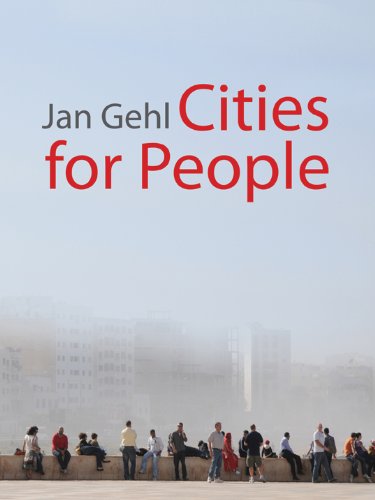
Cities for People
Authors:
Jan Gehl
Publisher:
Island Press
Publication Date:
Not available
ISBN:
159726573X
For more than forty years Jan Gehl has helped to transform urban environments around the world based on his research into the ways people actually... use—or could use—the spaces where they live and work. In this revolutionary book, Gehl presents his latest work creating (or recreating) cityscapes on a human scale. He clearly explains the methods and tools he uses to reconfigure unworkable cityscapes into the landscapes he believes they should be: cities for people.Taking into account changing demographics and changing lifestyles, Gehl emphasizes four human issues that he sees as essential to successful city planning. He explains how to develop cities that are Lively, Safe, Sustainable, and Healthy. Focusing on these issues leads Gehl to think of even the largest city on a very small scale. For Gehl, the urban landscape must be considered through the five human senses and experienced at the speed of walking rather than at the speed of riding in a car or bus or train. This small-scale view, he argues, is too frequently neglected in contemporary projects. In a final chapter, Gehl makes a plea for city planning on a human scale in the fast- growing cities of developing countries. A “Toolbox,” presenting key principles, overviews of methods, and keyword lists, concludes the book. The book is extensively illustrated with over 700 photos and drawings of examples from Gehl’s work around the globe.
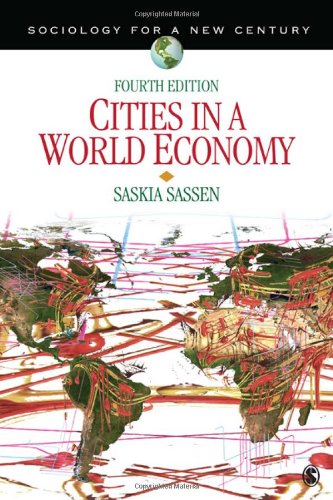
Cities in a World Economy (Sociology for a New Century Series)
Authors:
Saskia J. Sassen
Publisher:
Sage Publications, Inc
Publication Date:
Not available
ISBN:
1412988039
The Fourth Edition of Cities in a World Economy shows how certain characteristics of flows of money, information, and people have led to the emergence... of a new social formation: global cities, new types of migrations, financial crises, environmental catastrophes, and the multiplication of communication technologies. These developments give new meaning to such fixtures of urban sociology as the centrality of place and the importance of geography in our social world.
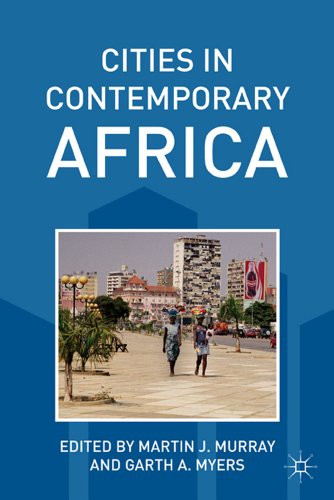
Cities in Contemporary Africa
Authors:
Not Available
Publisher:
Palgrave Macmillan
Publication Date:
Not available
ISBN:
0230116647
This book offers a broad range of scholarly interpretations of the evolving forms, the changing dynamics, and the unexpected surprises that characterize... contemporary African cities. It wrestles with important questions concerning how large numbers of people without regular work nevertheless find ways to survive and even prosper. It balances investigations of particular cities in sub-Saharan Africa with considerations of a diversity of topics, themes and multi-city comparisons, including themes in: culture, imagination, place and space; political economy and work livelihoods; and urban planning and governance. The collection is both theoretically informed and empirically grounded. Aimed at mid-level undergraduate students, these essays, taken as a whole, provide an understanding of what is happening in African cities today, and why.

Cities in the International Marketplace: The Political Economy of...
Authors:
H. V. Savitch
Publisher:
Princeton University Press
Publication Date:
Not available
ISBN:
0691120145
Does globalization menace our cities? Are cities able to exercise democratic rule and strategic choice when international competition increasingly... limits the importance of place? Cities in the International Marketplace looks at the political responses of ten cities in North America and Western Europe as they grappled with the forces of global restructuring during the past thirty years. H. V. Savitch and Paul Kantor conclude that cities do have choices in city building and that they behave strategically in the international marketplace.Rather than treating cities through case studies, this book undertakes rigorous systematic comparison. In doing so it provides an innovative theory that explains how city governments bargain in the capital investment process to assert their influence. The authors examine the role of economic conditions and intergovernmental politics as well as local democratic institutions and cultural values. They also show why cities vary in their approaches to urban development. They portray how cities are constrained by the dynamics of the global economy but are not its prisoners. Further, they explain why some urban communities have more maneuverability than do others in the economic development game. Local governance, culture, and planning can combine with economic fortune and national urban policies to provide resources that expand or contract the scope for choice. This clearly written book analyzes the political economy of development in Detroit, Houston, and New York in the United States; Toronto in Canada; Paris and Marseilles in France; Milan and Naples in Italy; and Glasgow and Liverpool in Great Britain.
Cities in the Pre-Modern Islamic World: The Urban Impact of...
Authors:
Not Available
Publisher:
Routledge
Publication Date:
Not available
ISBN:
0415553814
This volume is an inter-disciplinary endeavour which brings together recent research on aspects of urban life and structure by architectural and textual... historians and archaeologists, engendering exciting new perspectives on urban life in the pre-modern Islamic world. Its objective is to move beyond the long-standing debate on whether an ‘Islamic city’ existed in the pre-modern era and focus instead upon the ways in which religion may (or may not) have influenced the physical structure of cities and the daily lives of their inhabitants. It approaches this topic from three different but inter-related perspectives: the genesis of ‘Islamic cities’ in fact and fiction; the impact of Muslim rulers upon urban planning and development; and the degree to which a religious ethos affected the provision of public services. Chronologically and geographically wide-ranging, the volume examines thought-provoking case studies from seventh-century Syria to seventeenth-century Mughal India by established and new scholars in the field, in addition to chapters on urban sites in Spain, Morocco, Egypt and Central Asia. Cities in the Pre-Modern Islamic World will be of considerable interest to academics and students working on the archaeology, history and urbanism of the Middle East as well as those with more general interests in urban archaeology and urbanism.
Cities in the Wilderness: A New Vision of Land Use in America
Authors:
Bruce Babbitt
Publisher:
Island Press
Publication Date:
Not available
ISBN:
1597261513
Cities, Mayors, and Race Relations: Task Forces as Agents of...
Authors:
Richard Middleton
Publisher:
Not available
Publication Date:
Not available
ISBN:
0761841091
Cities, Mayors, and Race Relations analyzes the politics behind improving race relations in local communities through the use of mayoral task forces. By... investigating three communities with unique cultural, social, economic, and racial characteristics, author Richard T. Middleton provides insight into why some communities are more likely to realize success in influencing policy makers to adopt policy innovations aimed at improving race relations than are others. This book chronicles how political culture, level of racial threat, factors central to task force formation, and staffing affect the likelihood that mayoral leadership and use of government organized nongovernmental organizations will persuade local level actors to adopt policies aimed at improving race relations. To study this phenomenon, Cities, Mayors, and Race Relations focuses on three cities: Madison, Wisconsin, Columbia, Missouri, and Kansas City, Missouri.
Cities of God: The Real Story of How Christianity Became an Urban...
Authors:
Rodney Stark
Publisher:
HarperOne
Publication Date:
Not available
ISBN:
0061349887
How did the preaching of a peasant carpenter from Galilee spark a movement that would grow to include over two billion followers? Who listened to this... "good news," and who ignored it? Where did Christianity spread, and how? Based on quantitative data and the latest scholarship, preeminent scholar and journalist Rodney Stark presents new and startling information about the rise of the early church, overturning many prevailing views of how Christianity grew through time to become the largest religion in the world. Drawing on both archaeological and historical evidence, Stark is able to provide hard statistical evidence on the religious life of the Roman Empire to discover the following facts that set conventional history on its head: Contrary to fictions such as The Da Vinci Code and the claims of some prominent scholars, Gnosticism was not a more sophisticated, more authentic form of Christianity, but really an unsuccessful effort to paganize Christianity. Paul was called the apostle to the Gentiles, but mostly he converted Jews. Paganism was not rapidly stamped out by state repression following the vision and conversion of the Roman Emperor Constantine in 312 AD, but gradually disappeared as people abandoned the temples in response to the superior appeal of Christianity. The "oriental" faiths—such as those devoted to Isis, the Egyptian goddess of love and magic, and to Cybele, the fertility goddess of Asia Minor—actually prepared the way for the rapid spread of Christianity across the Roman Empire. Contrary to generations of historians, the Roman mystery cult of Mithraism posed no challenge to Christianity to become the new faith of the empire— it allowed no female members and attracted only soldiers. By analyzing concrete data, Stark is able to challenge the conventional wisdom about early Christianity offering the clearest picture ever of how this religion grew from its humble beginnings into the faith of more than one-third of the earth's population.
Cities of Legend: The Mycenaean World (Classical World Series)
Authors:
K.A. Wardle
Publisher:
Bristol Classical Press
Publication Date:
Not available
ISBN:
1853993557
Little over one hundred years has passed since Schliemann first excavated at Mycenae and revealed the riches of its rulers, buried in the Shaft Graves... three and a half thousand years ago. Continuing discoveries have demonstrated the achievements and connections of Mycenaean civilization. The decipherment of their script, Linear B, as an early form of Greek, has shown that the Mycenaeans were the ancestors of the Greeks of the Classical period and has revealed the complexity of the administration of their palaces.This introduction to the Mycenaean world brings together the latest research to provide a clear account of its history and of the real Bronze Age cities which lie behind the Homeric legends. Mycenaean economy and society, technology and trade, burials and buildings, warfare and religion are all explored in illustrating the character and achievements of this brilliant forerunner of Classical Greece. The final chapter is devoted to the no-longer-so Dark Age, during which Greek society was transformed and the Homeric epic reached its final form.
Cities of Light and Heat: Domesticating Gas and Electricity in...
Authors:
Mark H. Rose
Publisher:
Pennsylvania State Univ Pr
Publication Date:
Not available
ISBN:
0271024828
Cities of Light and Heat takes us to Kansas City and Denver during the late nineteenth century when gas and electricity were introduced to these... 'instant cities' of the west. With rich detail, Mark Rose shows how the new technology spread during the next century from a few streets and businesses within the city limits to countless private homes in the suburbs. In Kansas City and Denver, as in most communities throughout the U.S., business executives, city leaders, and engineers acted as early promoters of the new technology. But by the early 1900s educators, home builders, architects, and salespersons were becoming increasingly important as gas and electric utilities and appliances reached more and more American homes. But these voices for the new technology brought with them their own social attitudes and cultural values. By mid-century, whether in the classroom or in advertisements, Americans were regularly encouraged to fit the new technology within prevailing notions of cleanliness, comfort, convenience, and gender. Although in hindsight the spread of modern technology might seem inevitable to us, Rose shows how even the leaders of the nation's great gas and electric corporations with their vast production and distribution facilities were subject to geography, competing ideologies, urban politics, and even the choices of ordinary consumers. Rose thus locates the driving force behind the diffusion of technology in the neighborhoods, kitchens, and offices of the city. Cities of Light and Heat shows the importance of culture, politics, and urban growth in shaping technological change in the cities of North America.
 '
'