production
/viewbook/list/all/?page=2386
/
/static/
None
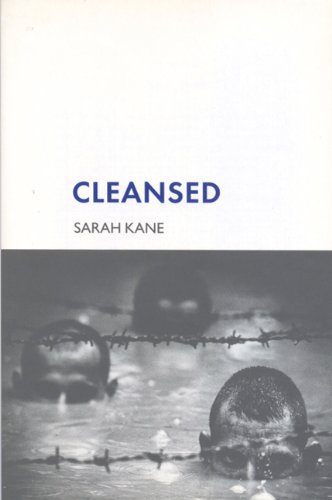
Cleansed
Authors:
Sarah Kane
Publisher:
Methuen Drama
Publication Date:
Not available
ISBN:
0413733300
This stunning play from the controversial author of Blasted premièred at the Royal Court Theatre, London in spring 1998A provocative play from the... notorious author of Blasted, which probes the nightmarish world of twenty-somethings coming to grips with sexuality, social ostracism and the effects of drugs. Cleansed premièred at the Royal Court Theatre in spring 1998.Kane's first play Blasted caused major controversy, furore and acclaim amongst critics and throughout the theatre world
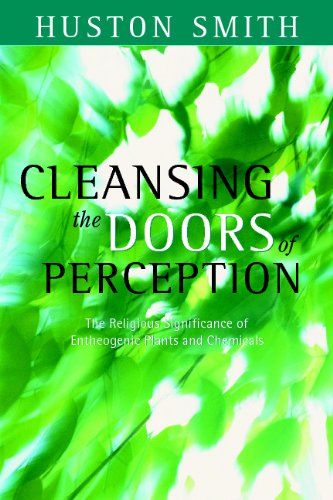
Cleansing the Doors of Perception: The Religious Significance of...
Authors:
Huston Smith
Publisher:
Sentient Publications
Publication Date:
Not available
ISBN:
1591810086
In this book, renowned philosopher and scholar of religion Huston Smith, takes a serious look at the use of psychedelic drugs as a means to achieve... mystical union with the divine. In a unique blend of direct experience and academic depth, Smith examines this controversial subject and describes the historic and turbulent academic experiments of the sixties in which he was both a subject and an observer. Smith begins by telling the story of his own initiation into the world of psychedelic drugs in the company of Timothy Leary—a meeting arranged by Aldous Huxley—and the profound effect it had on his understanding of reality. In wrestling with the question—Do drugs have religious import?—he draws on history, theology, philosophy, psychology, and anthropology. He tells of fascinating experiments that attempted to shed light on this question, such as the one in which he participated as a guide, where twenty volunteers—mostly seminary students—were given psilocybin before they attended a traditional Good Friday church service. He discusses as well the use of peyote in Native American sacred rituals and the hallucinogenic plant soma in ancient India. Throughout, he does not approach the question of drugs and religion from any fixed standpoint. Instead, he mines his own experiences and his relationships to pioneers in this field to come up with insights on this intriguing subject that are not available in any other book written for the general public.
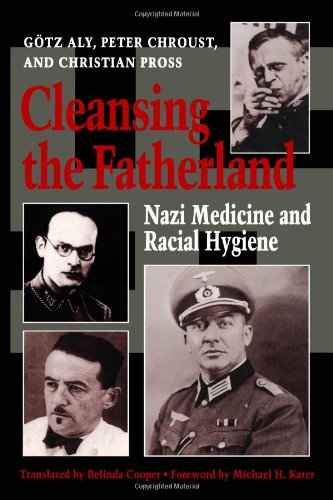
Cleansing the Fatherland: Nazi Medicine and Racial Hygiene
Authors:
Götz Aly
Publisher:
The Johns Hopkins University Press
Publication Date:
Not available
ISBN:
0801848245
"The chapters in this volume painfully drive home the point that certainly as far as Germany is concerned, the lessons of the Third Reich have not yet... been learned... These significant attempts by younger recruits to the larger medical establishment to change things through eye-opening reflection and analysis, however uncomfortable, need support."—Michael H. Kater, author of Doctors under Hitler, in the foreword.The infamous Nuremberg Doctors' Trials of 1946-47 revealed horrifying crimes —ranging from grotesque medical experiments on humans to mass murder—committed by physicians and other health care workers in Nazi Germany. But far more common, argue the authors of Cleansing the Fatherland, were the doctors who profited professionally and financially from the killings but were never called to task—and, indeed, were actively shielded by colleagues in postwar German medical organizations. The authors examine the role of German physicians in such infamous operations as the "T 4" euthanasia program (code-named for the Berlin address of its headquarters at Number 4 Tiergartenstrasse). They also reveal details of countless lesser known killings—all ordered by doctors and all in the name of public health. Maladjusted adolescents, the handicapped, foreign laborers too illto work, even German civilians who suffered mental breakdowns after air raids were "selected for treatment." (One physician who persisted in speaking of "killings" was officially reprimanded for his "negative attitude.")The book also includes original documents—never before published in English—that give unique and chilling insight into the everyday workings of Nazi medicine. Among them:• Minutes from a 1940 meeting of the Conference of German Mayors, at which a Nazi official gives the assembled politicians detailed instructions for the secret burial of murdered mental patients.• A pre-Nazi era questionnaire sent by the head of a state mental institution to parents of disabled children. (Sample question: "Would you agree to a painless shortening of your child's life after an expert had determined him incurably imbecilic?" Sample answer: "Yes, but I would prefer not to know.") • The diary of Dr. Hermann Voss, chief anatomist at the Reichs University of Posen (and later a highly respected physician in postwar Germany), who delights in the flowers blooming outside his window and worries that the overstock of Polish cadavers from his Gestapo suppliers might cause his crematory oven to break down.• Letters of Dr. Friedrich Mennecke, director of the notorious Eichberg Clinic, who writes with cloying sentimentality to the wife he calls "mommy" and comments offhandedly about visiting concentration camps to select "patients" for death. Today, as reports of mass death in Europe are once again cast in terms of public hygiene, and as euthanasia is advocated—even applauded—on U.S. television, the relevance of what Michael H.Kater here calls "the lessons of the Third Reich" is perhaps greater than ever. Against this background, Cleansing the Fatherland sends a stark message that is difficult to ignore.
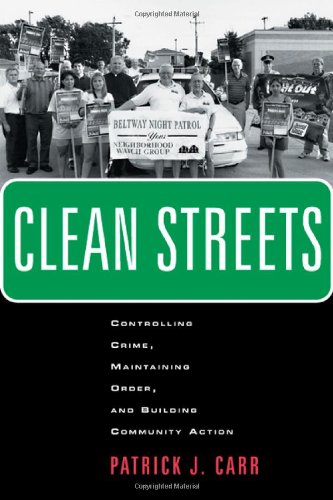
Clean Streets: Controlling Crime, Maintaining Order, and Building...
Authors:
Patrick J. Carr
Publisher:
NYU Press
Publication Date:
Not available
ISBN:
0814716636
With the close proximity of gangs and the easy access to drugs, keeping urban neighborhoods safe from crime has long been a central concern for... residents. In Clean Streets, Patrick Carr draws on five years of research in a white, working-class community on Chicago’s South side to see how they tried to keep their streets safe. Carr details the singular event for this community and the resulting rise of community activism: the shootings of two local teenage girls outside of an elementary school by area gang members. As in many communities struck by similar violence, the shootings led to profound changes in the community's relationship to crime prevention. Notably, their civic activism has proved successful and, years after the shooting, community involvement remains strong.Carr mines this story of an awakened neighborhood for unique insights, contributing a new perspective to the national debate on community policing, civic activism, and the nature of social control. Clean Streets offers an important story of one community's struggle to confront crime and to keep their homes safe. Their actions can be seen as a model for how other communities can face up to similarly difficult problems.
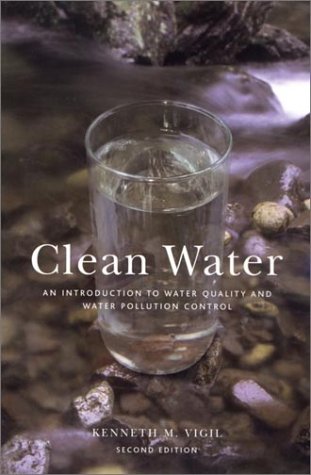
Clean Water, 2nd ed: An Introduction to Water Quality and Water...
Authors:
Kenneth M. Vigil
Publisher:
Oregon State University Press
Publication Date:
Not available
ISBN:
0870714988
"Clean Water" is a book for anyone who is concerned about this precious resource and wants to become better informed. In straightforward language,... Kenneth Vigil provides a comprehensive introduction to the many scientific, regulatory, and geographic issues associated with water quality and water pollution control. Most other books on water quality and pollution control are highly technical and very specific, and are aimed at engineers, scientists, or attorneys. "Clean Water," on the other hand, is a comprehensive discussion of the subject intended for a wider audience of science students, educators, and concerned citizens. Using photos and diagrams to illustrate and explain concepts, Vigil provides sufficient detail to educate readers about many broad topics and includes additional references at the end of each chapter for exploring specific topics in more detail. "Clean Water" summarizes the basic fundamentals of water chemistry and microbiology and outlines important water quality rules and regulations, all in concise, understandable prose. It describes the basic scientific principles behind water pollution control and the broader approach of addressing water pollution problems through watershed management. There are sections on drinking water and a concluding chapter entitled "Getting Personal about Clean Water" about citizen involvement at home and in the community.
Clean, Well-Lighted Sentences: A Guide to Avoiding the Most Common...
Authors:
Janis Bell
Publisher:
W. W. Norton & Company
Publication Date:
Not available
ISBN:
0393337154
An extraordinary handbook: with clarity and humor, it tells the story that even good writers have been longing to hear.This is not a comprehensive... tracking of every nut and bolt that ever came loose within an English sentence; it is a focused discussion of the narrow range of problems that American writers typically face. From confusion over grammar to tangles with usage, to questions about punctuation, Janis Bell addresses them with transparency and grace. She discusses the issues, gives plenty of examples, provides quizzes and answers, and makes sure that readers are engaged throughout.
Clearance & Copyright: Everything You Need to Know for Film and...
Authors:
Michael C. Donaldson
Publisher:
Silman-James Pr
Publication Date:
Not available
ISBN:
1879505983
Now extensively revised, updated, and expanded, "Clearance and Copyright" is the industry-standard guide to almost every conceivable rights issue that... filmmakers, video-makers, and television producers might encounter: from the initial acquisition of material through the rights situations that arise during pre-production, production, post-production and release. Legalese-free, well-written, it's a must-read for all producers, directors, and writers -- whether they make feature films, shorts, documentaries, television programs, music videos, or Internet content -- and those who advise them. Armed with this book, you can protect yourself and your work from disastrous legal actions and save thousands of dollars in attorney fees. You can even learn how to save money by exercising your rights to use certain materials without paying anyone.
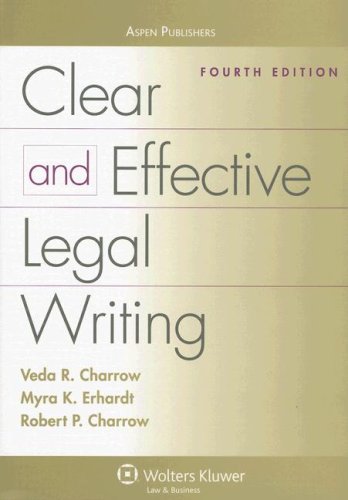
Clear and Effective Legal Writing
Authors:
Veda R. Charrow
Publisher:
Aspen Publishers
Publication Date:
Not available
ISBN:
0735552290
In its Fourth Edition, <b>Clear and Effective Legal Writing</b> continues to give students a classic introduction to legal analysis and... legal writing. Concise and accessible, the text focuses on memo and brief writing while reinforcing key writing skills. This proven teaching tool provides the student with excellent examples and numerous skill-honing exercises.<p class=copymedium> <b>Offering comprehensive coverage from case synthesis and case briefing to preparing Supreme Court briefs, this text:</b> <li class=copymedium>starts with an overview of legal analysis, and then walks students through the writing process: understanding context, organizing effectively, writing clearly and effectively, and reviewing and editing <li class=copymedium>describes differences between legal language and ordinary discourse, and the linguistic theory underlying the origins of legal language <li class=copymedium>seamlessly combines legal reasoning with legal writing and helps the student understand the relationship between the two <li class=copymedium>provides straightforward rules for writing effective legal documents, with scores of examples of the good, the bad, and the humorous <li class=copymedium>includes numerous exercises throughout the book to help students reinforce their skills <li class=copymedium>dissects and annotates actual trial court memoranda and Supreme Court briefs highlighting the strengths and weaknesses of each example <li class=copymedium>provides an insightful interview with the Clerk of the Supreme Court of the United States on what the Court expects to see in brief and the assistance that his office provides to all litigants appearing before the Court <li class=copymedium>shows how to transform a memorandum into an advocacy document <li class=copymedium>provides guidance for writing well in an appendix with overview of English sentence structure</ul> <p class=copymedium><b>New to the Fourth Edition:</b> <li class=copymedium>updated examples throughout <li class=copymedium>an updated legal process portion taking into account changes in law and updating examples <li class=copymedium>a new set of Supreme Court briefs with annotations <li class=copymedium>additional material addressing how the Internet is affecting court filings and formatting</ul>
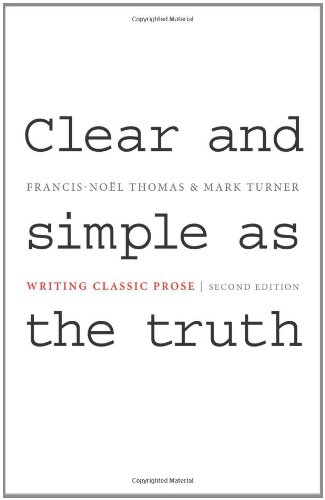
Clear and Simple as the Truth: Writing Classic Prose (Second Edition)
Authors:
Francis-Noël Thomas
Publisher:
Princeton University Press
Publication Date:
Not available
ISBN:
0691147434
For more than a decade, Clear and Simple as the Truth has guided readers to consider style not as an elegant accessory of effective prose but as its... very heart. Francis-Noël Thomas and Mark Turner present writing as an intellectual activity, not a passive application of verbal skills. In classic style, the motive is truth, the purpose is presentation, the reader and writer are intellectual equals, and the occasion is informal. This general style of presentation is at home everywhere, from business memos to personal letters and from magazine articles to student essays. Everyone talks about style, but no one explains it. The authors of this book do; and in doing so, they provoke the reader to consider style, not as an elegant accessory of effective prose, but as its very heart. At a time when writing skills have virtually disappeared, what can be done? If only people learned the principles of verbal correctness, the essential rules, wouldn't good prose simply fall into place? Thomas and Turner say no. Attending to rules of grammar, sense, and sentence structure will no more lead to effective prose than knowing the mechanics of a golf swing will lead to a hole-in-one. Furthermore, ten-step programs to better writing exacerbate the problem by failing to recognize, as Thomas and Turner point out, that there are many styles with different standards. The book is divided into four parts. The first, "Principles of Classic Style," defines the style and contrasts it with a number of others. "The Museum" is a guided tour through examples of writing, both exquisite and execrable. "The Studio," new to this edition, presents a series of structured exercises. Finally, "Further Readings in Classic Prose" offers a list of additional examples drawn from a range of times, places, and subjects. A companion website, classicprose.com, offers supplementary examples, exhibits, and commentary, and features a selection of pieces written by students in courses that used Clear and Simple as the Truth as a textbook.
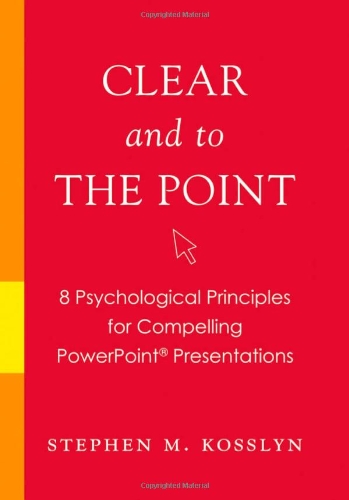
Clear and to the Point: 8 Psychological Principles for Compelling...
Authors:
Stephen M. Kosslyn
Publisher:
Oxford University Press, USA
Publication Date:
Not available
ISBN:
0195320697
True or False? Most PowerPoint presentations are: ·compelling ·illuminating ·informative ·clear and to the point Answer: False Make a change... following the principles of Stephen Kosslyn: ·a world authority on the visual brain ·a clear and engaging writer Making PowerPoint presentations that are clear, compelling, memorable, and even enjoyable is not an obscure art. In this book, Stephen Kosslyn, a renowned cognitive neuroscientist, presents eight simple principles for constructing a presentation that takes advantage of the information modern science has discovered about perception, memory, and cognition. Using hundreds of images and sample slides, he shows the common mistakes many people make and the simple ways to fix them. For example, never use underlining to emphasize a word--the line will cut off the bottom of letters that have descending lines (such as p and g), which interferes with the brain's ability to recognize text. Other tips include why you should state your conclusion at the beginning of a presentation, when to use a line graph versus a bar graph, and how to use color correctly. By following Kosslyn's principles, anyone will be able to produce a presentation that works!

CLEARCHAT STYLE HEAD PHONES W/MIC
Authors:
Not Available
Publisher:
Not available
Publication Date:
Not available
ISBN:
Not available
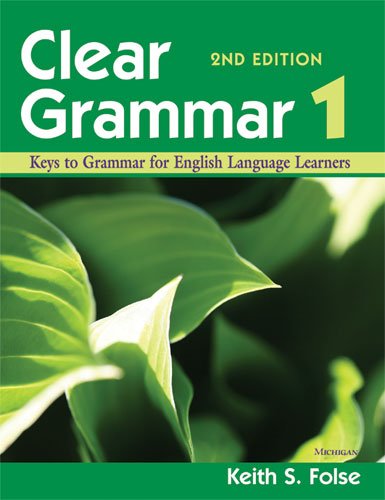
Clear Grammar 1, 2nd edition: Keys to Grammar for English Language...
Authors:
Keith S. Folse
Publisher:
University of Michigan Press/ELT
Publication Date:
Not available
ISBN:
0472032410
Clear Grammar is a four-level grammar series that features a unique combination of useful grammar information written in clear language with activities... that promote more accurate and fluent vocabulary usage, writing, speaking, and reading. Important features of all four new editions of Clear Grammar include: More user-friendly charts to accompany grammar explanations High-frequency, corpus-based vocabulary related to each grammar point Grammar discovery tasks using students’ inductive learning skills A greater variety and increased number of activities, including more practice online Many more activities at the longer discourse level The addition of reading practice at the end of the unit, as well a critical-reading task More writing practice, including one on editing student writing and another for original student writing Two vocabulary practice activities, including a focus on collocations, in each unit, as well as many one-minute mini lessons showing the connection between grammar and vocabulary More speaking practice, with activities that require students to speak and listen to each other while using the target grammar Support for teachers in the form of indicators that reference how to teach the grammar points in the Clear Grammar series from Keys to Teaching Grammar for English Language Learners by Keith S. Folse (978-0-472-03220-4). Clear Grammar 1 offers students and teachers a solid introduction to beginning-level grammar. It also includes an introduction to the present perfect. Clear Grammar 1, 2nd Ed., includes Present tense of be and regular verbs Possessive adjectives and demonstrative words Descriptive adjectives Past tense of be, regular, and irregular verbs Wh- questions Present progressive Count vs. non-count nouns Prepositions Be going to + Verb Review of verb tenses The book's companion website includes the additional grammar/vocabulary activities indicated in the textbook.
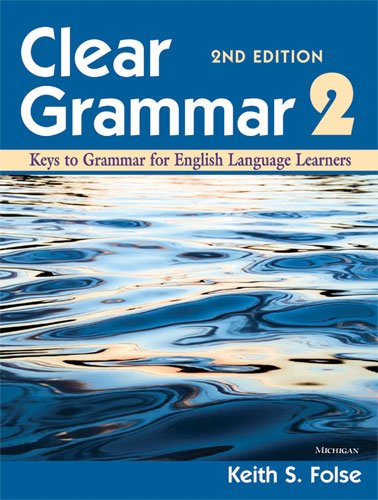
Clear Grammar 2: Keys To Grammar For English Language Learners
Authors:
Keith S. Folse
Publisher:
University of Michigan Press/ELT
Publication Date:
Not available
ISBN:
0472032429
Clear Grammar is a four-level grammar series that features a unique combination of useful grammar information written in clear language with... activities that promote more accurate and fluent vocabulary usage, writing, speaking, and reading. Important features of all four new editions of Clear Grammar include: More user-friendly charts to accompany grammar explanations High-frequency, corpus-based vocabulary related to each grammar point Grammar discovery tasks using students’ inductive learning skills A greater variety and increased number of activities, including more practice online Many more activities at the longer discourse level The addition of reading practice at the end of the unit, as well a critical-reading task More writing practice, including one on editing student writing and another for original student writing Two vocabulary practice activities, including a focus on collocations, in each unit, as well as many one-minute mini lessons showing the connection between grammar and vocabulary More speaking practice, with activities that require students to speak and listen to each other while using the target grammar Support for teachers in the form of indicators that reference how to teach the grammar points in the Clear Grammar series from Keys to Teaching Grammar for English Language Learners by Keith S. Folse (978-0-472-03220-4). Clear Grammar 2 offers students and teachers a solid introduction to low-intermediate grammar. Clear Grammar 2, 2nd Ed., includes * Articles * Past tense of irregular verbs * Present perfect tense * Adverbs of frequency * Nouns used as adjectives * Object pronouns * Past progressive tense * One and Other * Possessives *Comparatives and superlatives *ModalsThe book's companion website includes the additional grammar/vocabulary activities that are referenced in the textbook.
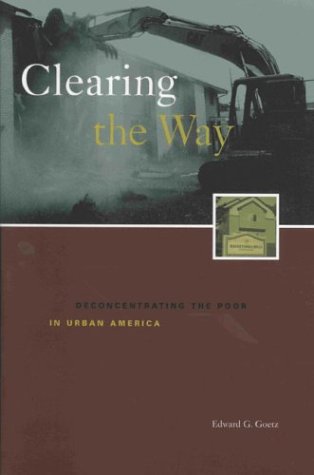
Clearing the Way: Deconcentrating the Poor in Urban America
Authors:
Edward G. Goetz
Publisher:
Urban Inst Pr
Publication Date:
Not available
ISBN:
0877667128
Singer, composer, actress, lover, wife, writer, pleasure seeker, drug addict, icon, commodity, myth and mystery: Billie Holiday is still one of the most... famous jazz vocalists of all time. But Holiday's image -- the gifted torch singer with insatiable appetites for food, sex, alcohol and drugs -- is not the full story. Farah Jasmine Griffin's enchanting investigation of Holiday, her world and how she is remembered, at last fully liberates Lady Day from the tragic songstress myth. Griffin argues that the stereotype of a black woman who can always take center stage to command an audience because of her incredible ability to feel, but not to think, continues to hide the real Holiday from public view. Instead of a mindless "natural" with incredible talent but no discipline, Griffin's Holiday is a jazz virtuoso whose passion and technique made every song she sang forever hers. Instead of being helpless against the racism, sexism and poverty that dominated her life, Holiday is an artist, willing to pay a tremendous price to change the sound of jazz forever. And far from being a victim of overwhelming obstacles, Lady Day is an independent spirit whose greatest legacy is that all hurdles can be overcome, whatever the odds. Holiday's voice has permeated American music from Frank Sinatra to Macy Gray. But, until now, Holiday's influence has never been reconciled with her image. Farah Jasmine Griffin unravels the threads that make up the Holiday mystique and weaves together a new, true Lady Day that jazz fans will both love and respect.
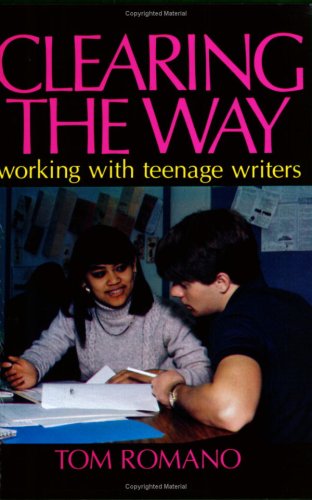
Clearing the Way: Working with Teenage Writers
Authors:
Tom Romano
Publisher:
Heinemann
Publication Date:
Not available
ISBN:
0435084399
Clearing the Way is written for English teachers whose job is to help teenagers become better writers. Tom Romano, a full time high school English... teacher when he wrote this book, has worked with hundreds of teenage writers. He knows well the problems and triumphs of teaching writing. In Clearing the Way teachers will find specific ideas and strategies, a workable philosophy for teaching writing, and, best of all, vivid stories and case histories of real teenagers. Romano discusses the importance of respecting students' words, the use of writing to learn and discover, the teacher-student conference, writing processes in theory and practice, the evaluation and grading of writing, the place of writing in literature classes, and the powerful creative current that can be transmitted among teenage writers. Whatever the topic, Romano illustrates his ideas with many examples of teenagers' own writing.
 '
'