production
/viewbook/list/all/?page=2399
/
/static/
None
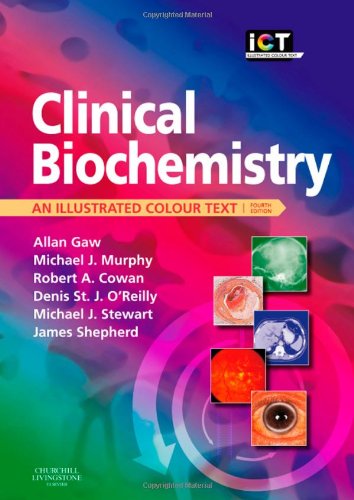
Clinical Biochemistry: An Illustrated Colour Text, 4e
Authors:
Allan Gaw MD PhD MRCPath MFPM MICR
Publisher:
Churchill Livingstone
Publication Date:
Not available
ISBN:
0443069328
This edition covers all aspects of the subject needed by medical students. It is a volume in the Illustrated Colour Text series, with the subject matter... divided into double-page spreads; this makes the information very accessible to the reader. Full use is made of flow charts and other graphics; clinical "boxes;" summary points; case histories; and clinical photographs. The whole orientation of the book is to concentrate on how clinical biochemistry relates to the care of the patient and to ensure that the medical student understands how to interpret laboratory.Covers clinical biochemistry from the point of view of the clinician using the diagnostic servicePresents topics in easily accessible two-page spreadsIncludes mini case histories, key point boxes, flowcharts, and summary pointsWell illustrated with four-color drawings and clinical photographsNew appendix added of annotated web resources for students to take further many of the topics covered in the book.To reflect the difficulties people have sometimes in analyzing hyper- and hypo-kalaemia, the existing spread is split into two - one spread on hyperkalaemia and another on hypokalaemia. The spread on hypertension will be revised and updated to reflect the fact that biochemistry is used as much or more in guiding treatment as it is in screening for secondary hypertension.Spreads on Myocardial Infarction, Cancer and Tumour Markers will all substantially revised and updated.

Clinical Biochemistry for Health Science Students
Authors:
HRUBEY TODD
Publisher:
Kendall Hunt Publishing
Publication Date:
Not available
ISBN:
1465204687
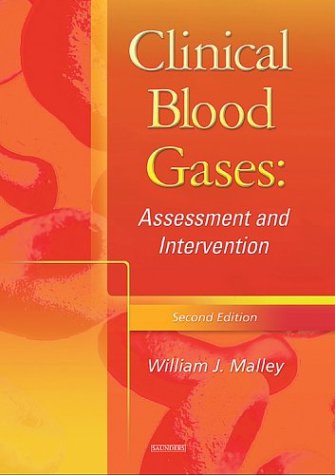
Clinical Blood Gases: Assessment & Intervention, 2e
Authors:
William J. Malley
Publisher:
Saunders
Publication Date:
Not available
ISBN:
072168422X
This text provides a thorough resource on arterial blood gases, covering the full scope of applications. This book is the first of its kind to focus on... the needs of educators, students, and practitioners alike. The new edition has been completely updated, providing the latest information from the field, including facts on technical issues, basic physiology, clinical oxygenation, clinical acid base, non-invasive techniques, just to name a few. Instructor resources are available; please contact your Elsevier sales representative for details.An Evolve Course Management System is available, allowing instructors to customize their own course content, conduct interactive exercises with students, and much more.This book's amazing content coverage offers a wealth of useful material, including illustrations, tables, examples, and case studies.This new edition is up-to-date with the latest in technology and information, ensuring the most current information is available.New figures and tables enhance the understanding of chapter material.The addition of an NBRC (National Board of Respiratory Care) Challenge at end of each chapter helps readers learn, understand, and put the information together to master the subject.The incorporation of two new On Call Cases per chapter provides further opportunity to practice clinical application of content learned, as well as helping readers utilize their critical thinking skills.Reorganized and improved table of contents presents the material in a more logical, efficient manner.
Clinical Blood Gases - Pageburst Digital Book (Retail Access Card):...
Authors:
William J. Malley
Publisher:
Saunders
Publication Date:
Not available
ISBN:
1455734500
This is a Pageburst digital textbook; This text provides a thorough resource on arterial blood gases, covering the full scope of applications. This book... is the first of its kind to focus on the needs of educators, students, and practitioners alike. The new edition has been completely updated, providing the latest information from the field, including facts on technical issues, basic physiology, clinical oxygenation, clinical acid base, non-invasive techniques, just to name a few. Instructor resources are available; please contact your Elsevier sales representative for details.An Evolve Course Management System is available, allowing instructors to customize their own course content, conduct interactive exercises with students, and much more.This book's amazing content coverage offers a wealth of useful material, including illustrations, tables, examples, and case studies.This new edition is up-to-date with the latest in technology and information, ensuring the most current information is available.New figures and tables enhance the understanding of chapter material.The addition of an NBRC (National Board of Respiratory Care) Challenge at end of each chapter helps readers learn, understand, and put the information together to master the subject.The incorporation of two new On Call Cases per chapter provides further opportunity to practice clinical application of content learned, as well as helping readers utilize their critical thinking skills.Reorganized and improved table of contents presents the material in a more logical, efficient manner.
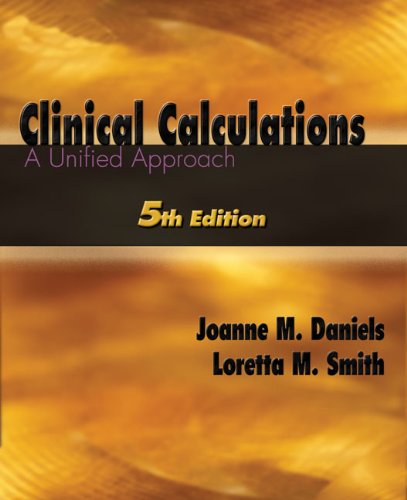
Clinical Calculations: A Unified Approach
Authors:
Joanne M. Daniels
Publisher:
Delmar Cengage Learning
Publication Date:
Not available
ISBN:
140185849X
The original is now a classic. Clinical Calculations was the first text to introduce the dimensional analysis method of calculating dosages, an approach... rapidly becoming the method of choice for nurses. The fifth edition of this trailblazer showcases its proven strengths: a clear writing style, workbook-style format, strong IV therapy content, and clinical applicability. Critical thinking is encouraged in conjunction with memorized rules by asking learners to always consider whether their answers make sense. It does this within the context of providing the core knowledge-base for dosage calculation and administration for learners of all levels and experience. Chapters cover the range of practice, including systems of measurement, oral and parenteral medications, basic and advanced intravenous medications, and pediatric dosage. Just as the title suggests, this resource is the ideal tool for calculation in a clinical setting. With copious reference tools, outlined injection sites for IV therapy, and unique performance criteria for evaluating nurse competency, the tradition of excellence and innovation continues.
CLINICAL CALCULATIONS - E-BOOK (DUP)
Authors:
Not Available
Publisher:
Not available
Publication Date:
Not available
ISBN:
Not available
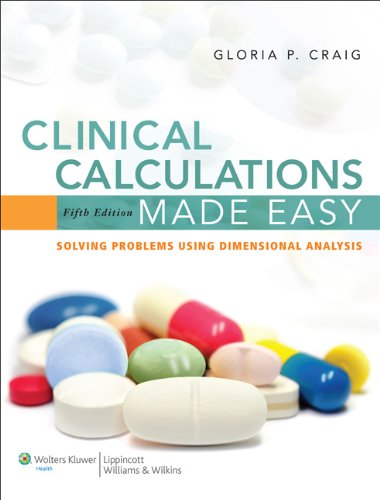
Clinical Calculations Made Easy: Solving Problems Using Dimensional...
Authors:
Gloria P. Craig
Publisher:
Lippincott Williams & Wilkins
Publication Date:
Not available
ISBN:
1608317900
Clinical Calculations Made Easy is a compact, easy-to-use, pocket-sized guide/reference to dosage calculation and drug administration. It includes a... review of basic math skills, measurement systems, and drug calculations/preparations.
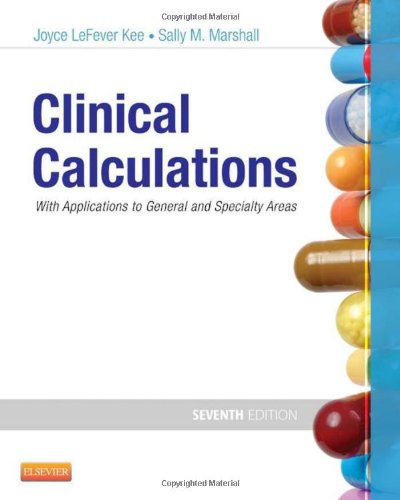
Clinical Calculations: With Applications to General and Specialty...
Authors:
Joyce LeFever Kee MS RN
Publisher:
Saunders
Publication Date:
Not available
ISBN:
1455703842
The only text that covers all four major methods of drug calculation, Clinical Calculations: With Applications to General and Specialty Areas, 7th... Edition emphasizes patient safety above all else. It reflects the medications used in clinical practice today, with clear guidelines on the latest drug administration forms, techniques, and devices for both general and specialty areas. Plus, its user-friendly format and abundance of practice problems make it easy to understand and apply key drug calculation concepts. Coverage of all 4 major drug calculation methods - ratio & proportion, formula, fractional equation, and dimensional analysis - allows you to apply the method that works best for you. A section on specialty areas and lifespan prepares you for the wide range of clinical calculations needed to practice in pediatric, critical care, labor & delivery, and community settings. Caution boxes alert you to problems or issues related to various drugs and their administration. A comprehensive post-test enables you to test your understanding of key concepts from the text. Current drug information ensures you are familiar with the most commonly used drugs in clinical practice. Up-to-date content on the latest drug administration techniques and devices helps you master the various forms of drug administration, including oral, intravenous, intra-muscular, subcutaneous, and other routes. Remember boxes identify pertinent concepts you should commit to memory.Note boxes emphasize important points related to concepts presented in each chapter.NEW! Prevention of Medication Errors chapter emphasizes patient safety to help you avoid common drug calculation and administration mistakes. NEW! Updated recommendations from The Joint Commission and the Institute for Safe Medication Practices offer helpful guidelines for reducing medication errors to ensure safe patient care outcomes.NEW! Updated medication label and equipment photos reflect the latest medications and technology used in drug administration.
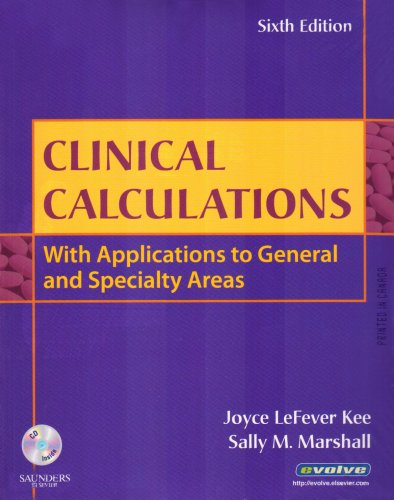
Clinical Calculations: With Applications to General and Specialty...
Authors:
Joyce LeFever Kee
Publisher:
Saunders
Publication Date:
Not available
ISBN:
1416047409
Covering all four major drug calculation methods, this resource makes it easy to learn and apply drug calculations used in nursing practice today. Clear... explanations of ratio & proportion, formula, fractional equation, and dimensional analysis allow you to choose the method that works best for you. A variety of realistic practice problems cover specialty areas and lifespan issues including pediatric, critical care, labor and delivery, and community settings.Specialty areas and lifespan issues are addressed with drug calculation problems on pediatrics, critical care, pediatric critical care, labor and delivery, and the community setting.All four major drug calculation methods are included - ratio & proportion, formula, fractional equation, and dimensional analysis - allowing you to choose the method that works best for you.Caution boxes provide safety alerts for various medications and their administration.Coverage of the latest drug administration techniques and devices includes detailed explanations of oral, intravenous, intra-muscular, subcutaneous and other routes used in drug administration.A comprehensive post-test allows you to test your knowledge of all major topics covered in the text.Updated and easier to use, a companion CD supports the book with realistic exercises, 565 practice problems, and a comprehensive post-test.Useful appendices include step-by-step guidelines for the administration of oral, injectable, and intravenous medications, along with at-a-glance access to the BSA Nomogram for Adults and the West Nomogram for Infants and Children.Guidelines set by The Joint Commission are followed, helping you to reduce medication errors and increase patient safety by using only the recommended abbreviations, acronyms, and symbols.Calculations now address obese and debilitated patients by including Body Mass Index (BMI), Ideal Body Weight (IBW), and Adjusted Body Weight (ABW) methods of calculation.Updated coverage of Pediatric Critical Care and Labor and Delivery reflects current parameters and guidelines for practice.Coverage of hydration replacement shows how to determine the fluid needs of adults and the elderly.Coverage of administering medication and medication solutions in the home prepares you for care of patients in home health care settings.Coverage of calculating BMI with standard criteria helps you assess a patient's overall health and measure obesity.Updated drug labels, illustrations, and photos of pumps and IV equipment reflect the latest drugs and technology used in the market.
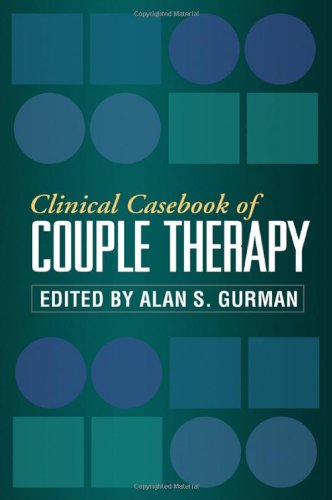
Clinical Casebook of Couple Therapy
Authors:
Not Available
Publisher:
The Guilford Press
Publication Date:
Not available
ISBN:
1606236768
An ideal supplemental text, this instructive casebook presents in-depth illustrations of treatment based on the most important couple therapy models. An... array of leading clinicians offer a window onto how they work with clients grappling with mild and more serious clinical concerns, including conflicts surrounding intimacy, sex, power, and communication; parenting issues; and mental illness. Featuring couples of varying ages, cultural backgrounds, and sexual orientations, the cases shed light on both what works and what doesn't work when treating intimate partners. Each candid case presentation includes engaging comments and discussion questions from the editor.

Clinical Case Formulations: Matching the Integrative Treatment Plan...
Authors:
Barbara Lichner Ingram
Publisher:
Wiley
Publication Date:
Not available
ISBN:
0471743143
A step-by-step model for individualized case conceptualizationThis innovative new guide addresses the essential question facing every therapist with a... new client: How do I create a treatment plan that is the best match for my client? This unique resource provides a systematic method to integrate ideas, skills, and techniques from different theoretical approaches, empirical research, and clinical experience to create a case formulation that is tailor-made for the client.Clinical Case Formulations is divided into three parts:* Getting Started--provides an overview that sets forth a framework for case formulation and data gathering.* 28 Core Clinical Hypotheses--offers a meta-framework embracing all theories, orientations, and mental health intervention models and presents clinical hypotheses within seven categories: Biological Hypotheses; Crisis, Stressful Situations, and Transitions; Behavioral and Learning Models; Cognitive Models; Existential and Spiritual Models; Psychodynamic Models; and Social, Cultural, and Environmental Factors. These hypotheses are combined and integrated to develop a coherent conceptualization of the client's problems.* Steps to a Complete Case Formulation--provides a structured framework known as the Problem-Oriented Method (POM). Using the POM and integrating multiple hypotheses, the therapist learns how to think intelligently, critically, and creatively in order to develop a tailor-made treatment plan. A list of thirty-three standards for evaluating the application of this method is provided.With this practical guide you will learn to conceptualize your clients' needs in ways that lead to effective treatment plans while finding the tools for troubleshooting when interventions fail to produce expected benefits.
Clinical Case Formulations: Matching the Integrative Treatment Plan...
Authors:
Barbara Lichner Ingram
Publisher:
Wiley
Publication Date:
Not available
ISBN:
1118038223
Praise for Clinical Case FormulationsMatching the Integrative Treatment Plan to the Client, Second Edition"[Barbara Ingram has put] a career into the... development of this book and it is wonderful! My students love that it was written with them in mind and they love the statements designed to reduce anxiety and normalize the learning process. This is an excellent book!"—Amy M. Rees-Turyn, PhD Associate Professor of Counseling Psychology, Lewis & Clark CollegeA step-by-step model for individualized case conceptualizationFully revised and updated, the second edition of Clinical Case Formulations provides step-by-step tools and insightful guidance for moving from first contact with a client to the development of an effective, personalized treatment plan. Addressing the essential question every therapist faces—How do I create a treatment plan that is the best match for my client?—this unique resource provides a systematic and thoughtful method for integrating ideas, skills, and techniques from different theoretical approaches. It combines empirical research and clinical experience to create a case formulation that is tailor-made for the client.This comprehensive resource offers two tools to guide case formulations: a problem-oriented framework, with a list of 28 standards for evaluating its application, and a set of 30 core clinical hypotheses derived from the knowledge bases of psychology, psychiatry, counseling, and social work professions.The new edition includes:Hypotheses on Emotional Focus, Trauma, and Metacognitive PerspectiveMore detailed attention given to empirically supported therapies such as Dialectical Behavior Therapy (DBT) and Acceptance and Commitment Therapy (ACT)Discussion on the importance of bringing cultural competence to case formulation tasks with every clientSkill-building activities throughout the textOffering a thorough framework to help clients experience effective clinical service, practitioners will learn to conceptualize clients' needs in ways that lead to strong and individualized treatment plans, as well as advice and guidance on what to do when selected interventions fail to produce the expected benefits.
Clinical Case Management with Persons Having Mental Illness A...
Authors:
Joseph Walsh
Publisher:
Brooks Cole
Publication Date:
Not available
ISBN:
0534348521
This text equips future mental health practitioners with a model and theory for case management with those with mental illness. The author helps readers... feel more competent working with the these clients, giving readers skills that establish and sustain clinical relationships over months or years. The author provides intervention techniques for clients with a variety of mental illnesses (including schizophrenia, bipolar disorder, major depression, schizotypal personality, paranoid ideation). This text differs from other texts by applying the theory of symbolic interactionism, emphasizing the need for establishing a productive relationship with clients as a prerequisite to any other intervention.
Clinical Case Studies for the Family Nurse Practitioner (Case...
Authors:
Not Available
Publisher:
Wiley-Blackwell
Publication Date:
Not available
ISBN:
0813811449
Clinical Case Studies for the Family Nurse Practitioner is a key resource for advanced practice nurses and graduate students seeking to test their... skills in assessing, diagnosing, and managing cases in family and primary care. Composed of more than 70 cases ranging from common to unique, the book compiles years of experience from experts in the field.Clinical Case Studies for the Family Nurse Practitioner is organized chronologically, presenting cases from neonatal to geriatric care in a standard approach built on the SOAP format. This includes differential diagnosis and a series of critical thinking questions ideal for self-assessment or classroom use.

Clinical Case Studies For The Nutrition Care Process
Authors:
Elizabeth Zorzanello Emery
Publisher:
Jones & Bartlett Learning
Publication Date:
Not available
ISBN:
0763761842
Designed For Graduate Nutrition Students, Dietetic Interns, And Practicing Dietitians, Clinical Case Studies For The Nutrition Care Process Presents... Realistic Scenarios For A Variety Of Cases Organized In The Format Of The Nutrition Care Process. Cases Are Drawn From The Author S Experience And Collected From Practitioners Who Are Experts In Their Field, Providing A Variety Of Interesting Scenarios. Topics Such As Adolescent Obesity And Dietary Management In Diabetes Are Explored. As A Part Of The American Dietetic Association S Nutrition Care Process (NCP), Dietitians, Educators, And Students Have Been Asked To Adopt A New Standardized Language For Nutrition Diagnosis. While This Process Utilizes Many Aspects Of The Traditional Care Model, Dietitians May Be Unsure Of How To Implement The Completely New Aspect Of Standardized Language And Nutrition Diagnosis. Not Only Does This Book Include An Introductory Section On The Nutrition Care Process, But Readers Will Learn How To Use The Standardized Terms, Develop A Nutrition Diagnosis, And Apply The Standardized Language To Specific Clinical Cases.
 '
'