production
/viewbook/list/all/?page=2464
/
/static/
None
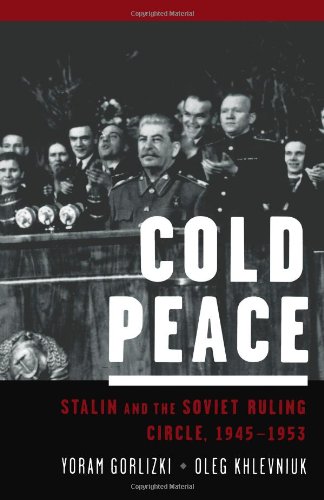
Cold Peace: Stalin and the Soviet Ruling Circle, 1945-1953
Authors:
Yoram Gorlizki
Publisher:
Oxford University Press, USA
Publication Date:
Not available
ISBN:
0195304209
Following his country's victory over Nazi Germany, Joseph Stalin was widely hailed as a great wartime leader and international statesman. Unchallenged... on the domestic front, he headed one of the most powerful nations in the world. Yet, in the period from the end of World War II until his death, Stalin remained a man possessed by his fears. In order to reinforce his despotic rule in the face of old age and uncertain health, he habitually humiliated and terrorized members of his inner circle. He had their telephones bugged and even forced his deputy, Viacheslav Molotov, to betray his own spouse as a token of his allegiance. Often dismissed as paranoid and irrational, Stalin's behavior followed a clear political logic, contend Yoram Gorlizki and Oleg Khlevniuk. Stalin's consistent and overriding goal after the war was to consolidate the Soviet Union's status as a superpower and, in the face of growing decrepitude, to maintain his own hold as leader of that power. To that end, he fashioned a system of leadership that was at once patrimonial-repressive and quite modern. While maintaining informal relations based on personal loyalty at the apex of the system, in the postwar period Stalin also vested authority in committees, elevated younger specialists, and initiated key institutional innovations with lasting consequences. Close scrutiny of Stalin's relationships with his most intimate colleagues also shows how, in the teeth of periodic persecution, Stalin's deputies cultivated informal norms and mutual understandings which provided the foundations for collective rule after his death. Based on newly released archival documents, including personal correspondence, drafts of Central Committee paperwork, new memoirs, and interviews with former functionaries and the families of Politburo members, this book will appeal to all those interested in Soviet history, political history, and the lives of dictators. Cold Peace was a CHOICE Outstanding Academic Title for 2005.
Cold Regions Pavement Engineering
Authors:
Guy Dore
Publisher:
McGraw-Hill Professional
Publication Date:
Not available
ISBN:
0071600884
Build Roads That Stand Up to Any Weather Condition The first book dedicated solely to this important topic, Cold Regions Pavement Engineering... helps ensure that road quality is not compromised by cold temperatures and other environmental factors. Using the latest research from the United States, Canada, and Europe, the authors supply all the information needed to make wise decisions in situations where freezing temperatures, unstable soil, precipitation, ice, and small populations are complicating factors, along with limited funding-a common problem when designing roads in cold regions. Posing specific design and maintenance problems encountered in the field, the authors present the techniques and materials to solve them. Cold Regions Pavement Engineering is a long-needed resource. Inside: Design methodologies and maintenance techniques Key information on material selection Calculations for proper structural design Strategies for constructing new roads Advice in rehabilitating old or damaged surfaces Case studies of problems and their solutions Cold Regions Pavement Engineering includes: • Pavement Materials and Performance • Investigation and Testing o Calculation of Engineering Parameters • Design Considerations • Mix and Pavement Design • Maintenance and Rehabilitation • Pavements on Permafrost
Cold Regions Utilities Monograph
Authors:
Not Available
Publisher:
Amer Society of Civil Engineers
Publication Date:
Not available
ISBN:
0784401926
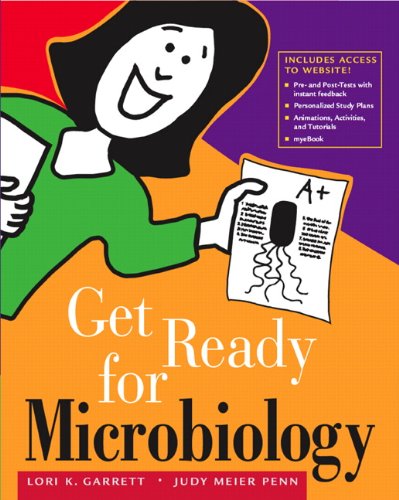
Key Benefit: Get Ready for Microbiology helps readers quickly prepare for their microbiology course and provides useful materials for future reference.... The workbook gets readers up to speed with chapters on study skills, math skills, microbiology terminology, basic chemistry, basic biology, and basic cell biology before a final chapter that introduces students to microbiology. Each chapter includes a pre-test (Your Starting Point), guided explanations, interactive practice exercises with answers explained (Time to Try; Picture This; Reality Check), quizzes with answers given (Quick Check), motivations for learning (Why Should I Care?), and end-of-chapter cumulative tests with answers given at the back of the book (What did you Learn?). This Media Update features a Companion Website with pre- and post-tests with instant feedback, personalized study plans, animations, activities, tutorials, and myeBook with live links. Key Topics: Study Skills: Feeding Your Brain, Basic Math Review: Crunching the Numbers, Terminology: The ABC’s of Microbiology, Chemistry: The Science of Stuff, Biology Basics: How Life Works, Cell Biology: Life’s Little Factories, Microbiology Basics: Tiny Organisms of Huge Importance Market Description: Intended for readers interested in getting a head-start on learning microbiology
Cold Running Creek
Authors:
Zelda Lockhart
Publisher:
LaVenson Press
Publication Date:
Not available
ISBN:
0978910214
During one of the most tumultuous times for the North American continent (pre and post Civil War) three generations of women, both Native American and... African American, struggle to be free. Raven, the main character of the first two chapters of the novel, is the daughter of Choctaw Native Americans who have escaped the relocation from Mississippi to Oklahoma Territory in hopes of negotiating their rights in the political maze of their changing landscape. in the event of faltered plans, her mother and father, ishki and inki, have charged Raven with the responsibility of her two younger siblings. The three children are the sole survivors of the resulting tragedy. Though eventually Raven marries a half French, half Choctaw man of prominence, and becomes the proud Misses of LeFlore plantation, she bares the initial, seemingly indelible wounds of the novel, and extends those to her daughter, Lilly, a half black, half Choctaw infant who Raven raises as the full-blood heir to LeFlore. As the upshot of a second political miscalculation of American conquest, Lilly is captured and sold into the last three years of slavery. Though her actual bondage is short, her escape from her own enslavement spans to mid-life. She is always waiting for something to change. One day, she abandons her two daughters and commits a dreadful act against her husband. Though horrifying, her lashing out is the very catalyst for her freedom. In an ending that peaks to a crescendo of redemption, Lilly's salvation brings with it freedom for two generations of male and female ancestors of both Choctaw and African heritage. Cold Running Creek is enlightening in its untold historical truths, and relevant to all time with its soul-stirring revelations. With a chorus of swamps, voodoo, floods, creeks and rivers, Cold Running Creek is rich, passionate, and leaves the reader breathless.
Cold Spring Harbor Laboratory Research Notebook
Authors:
Not Available
Publisher:
Jones & Bartlett Learning
Publication Date:
Not available
ISBN:
0763701653
Perfect For All Biology Laboratory Write-Ups, This Exceptional Notebook Is Easy To Use For Both Students And Researchers. The Notebook Features... Recycled, Carbonless Paper And Duplicate Pages That Are Micro-Perforated And Three-Hole Punched For Easy Removal And Organization.
Cold War Canada: The Making of a National Insecurity State, 1945-1957
Authors:
Gary Marcuse
Publisher:
University of Toronto Press, Scholarly Publishing Division
Publication Date:
Not available
ISBN:
0802079504
Canadians might expect that a history of Canada's participation in the Cold War would be a self-congratulatory exercise in documenting the liberality... and moderation of Canada set against the rapacious purges of the McCarthy era in the United States. Though Reg Whitaker and Gary Marcuse agree that there is some evidence for Canadian moderation, they argue that the smug Canadian self-image is exaggerated. Cold War Canada digs past the official moderation and uncovers a systematic state-sponsored repression of communists and the Left directed at civil servants, scientists, trade unionists, and political activists. Unlike the United States, Canada's purges were shrouded in secrecy imposed by the government and avidly supported by the RCMP security service. Whitaker and Marcuse manage to reconstruct several of the significant anti-communist campaigns. Using declassified documents, interviews, and extensive archival sources, the authors reconstruct the Gouzenko spy scandal, trace the growth of security screening of civil servants, and re-examine purges in the National Film Board and the trade unions, attacks on peace activist James G. Endicott, and the trials of Canadian diplomat Herbert Norman.Based on these examples Whitaker and Marcuse outline the creation of Canada's Cold War policy, the emergence of the new security state, and the alignment of Canada with the United States in the global Cold War. They demonstrate that Canada did take a different approach toward the threat of communism, but argue that the secret repression and silent purges used to stifle dissent and debate about Canada's own role in the Cold War had a chilling effect on the practice of liberal democracy and undermined Canadian political and economic sovereignty.
Cold War Civil Rights: Race and the Image of American Democracy...
Authors:
Mary L. Dudziak
Publisher:
Princeton University Press
Publication Date:
Not available
ISBN:
0691095132
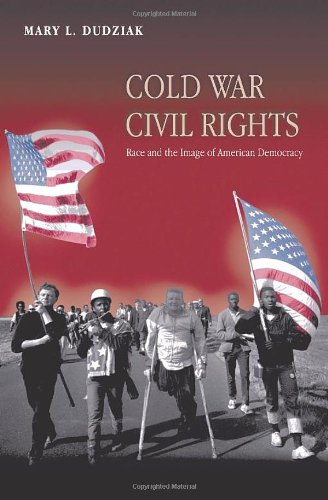
In 1958, an African-American handyman named Jimmy Wilson was sentenced to die in Alabama for stealing two dollars. Shocking as this sentence was, it was... overturned only after intense international attention and the interference of an embarrassed John Foster Dulles. Soon after the United States' segregated military defeated a racist regime in World War II, American racism was a major concern of U.S. allies, a chief Soviet propaganda theme, and an obstacle to American Cold War goals throughout Africa, Asia, and Latin America. Each lynching harmed foreign relations, and "the Negro problem" became a central issue in every administration from Truman to Johnson.In what may be the best analysis of how international relations affected any domestic issue, Mary Dudziak interprets postwar civil rights as a Cold War feature. She argues that the Cold War helped facilitate key social reforms, including desegregation. Civil rights activists gained tremendous advantage as the government sought to polish its international image. But improving the nation's reputation did not always require real change. This focus on image rather than substance--combined with constraints on McCarthy-era political activism and the triumph of law-and-order rhetoric--limited the nature and extent of progress.Archival information, much of it newly available, supports Dudziak's argument that civil rights was Cold War policy. But the story is also one of people: an African-American veteran of World War II lynched in Georgia; an attorney general flooded by civil rights petitions from abroad; the teenagers who desegregated Little Rock's Central High; African diplomats denied restaurant service; black artists living in Europe and supporting the civil rights movement from overseas; conservative politicians viewing desegregation as a communist plot; and civil rights leaders who saw their struggle eclipsed by Vietnam.Never before has any scholar so directly connected civil rights and the Cold War. Contributing mightily to our understanding of both, Dudziak advances--in clear and lively prose--a new wave of scholarship that corrects isolationist tendencies in American history by applying an international perspective to domestic affairs.
Cold War Civil Rights: Race and the Image of American Democracy...
Authors:
Mary L. Dudziak
Publisher:
Princeton University Press
Publication Date:
Not available
ISBN:
0691152438
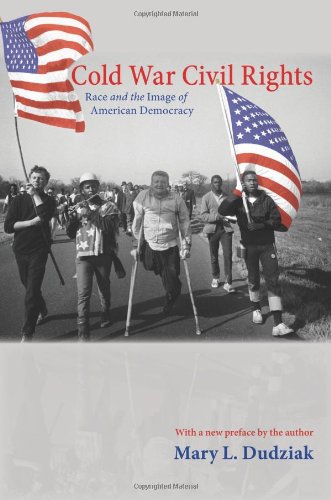
In 1958, an African-American handyman named Jimmy Wilson was sentenced to die in Alabama for stealing two dollars. Shocking as this sentence was, it... was overturned only after intense international attention and the interference of an embarrassed John Foster Dulles. Soon after the United States' segregated military defeated a racist regime in World War II, American racism was a major concern of U.S. allies, a chief Soviet propaganda theme, and an obstacle to American Cold War goals throughout Africa, Asia, and Latin America. Each lynching harmed foreign relations, and "the Negro problem" became a central issue in every administration from Truman to Johnson. In what may be the best analysis of how international relations affected any domestic issue, Mary Dudziak interprets postwar civil rights as a Cold War feature. She argues that the Cold War helped facilitate key social reforms, including desegregation. Civil rights activists gained tremendous advantage as the government sought to polish its international image. But improving the nation's reputation did not always require real change. This focus on image rather than substance--combined with constraints on McCarthy-era political activism and the triumph of law-and-order rhetoric--limited the nature and extent of progress. Archival information, much of it newly available, supports Dudziak's argument that civil rights was Cold War policy. But the story is also one of people: an African-American veteran of World War II lynched in Georgia; an attorney general flooded by civil rights petitions from abroad; the teenagers who desegregated Little Rock's Central High; African diplomats denied restaurant service; black artists living in Europe and supporting the civil rights movement from overseas; conservative politicians viewing desegregation as a communist plot; and civil rights leaders who saw their struggle eclipsed by Vietnam. Never before has any scholar so directly connected civil rights and the Cold War. Contributing mightily to our understanding of both, Dudziak advances--in clear and lively prose--a new wave of scholarship that corrects isolationist tendencies in American history by applying an international perspective to domestic affairs. In her new preface, Dudziak discusses the way the Cold War figures into civil rights history, and details this book's origins, as one question about civil rights could not be answered without broadening her research from domestic to international influences on American history.
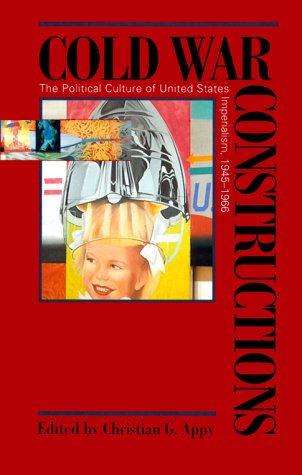
Cold War Constructions (Culture, Politics, and the Cold War)
Authors:
Not Available
Publisher:
Univ of Massachusetts Pr
Publication Date:
Not available
ISBN:
1558492186
In The Weight of the Past, Michael Lambek explores the complex ways that history shapes, constrains, and enables daily life. Focusing on ritual... performances of spirit mediumship in a multifaceted religious landscape, Lambek's analysis reveals the multiple ways that Sakalava "bear" history. In Mahajanga, Madagascar, to bear history is at once a weighty obligation, a creative re-birthing, a scrupulous cultivation, and an exuberant performance of the past.This book describes the division of labor, creative production, and ethical practice entailed in imagining, embodying, and serving the past. It is at once a vivid ethnography of Sakalava life and a significant intervention in anthropological debates on culture and history, structure and practice, advocating a theoretical approach informed by Aristotelian categories of understanding.
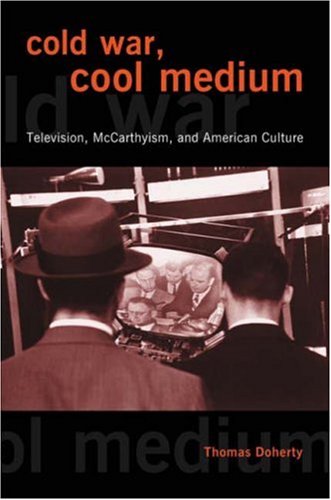
Cold War, Cool Medium: Television, McCarthyism, and American...
Authors:
Thomas Doherty
Publisher:
Columbia University Press
Publication Date:
Not available
ISBN:
023112953X
Conventional wisdom holds that television was a co-conspirator in the repressions of Cold War America, that it was a facilitator to the blacklist and... handmaiden to McCarthyism. But Thomas Doherty argues that, through the influence of television, America actually became a more open and tolerant place. Although many books have been written about this period, Cold War, Cool Medium is the only one to examine it through the lens of television programming. To the unjaded viewership of Cold War America, the television set was not a harbinger of intellectual degradation and moral decay, but a thrilling new household appliance capable of bringing the wonders of the world directly into the home. The "cool medium" permeated the lives of every American, quickly becoming one of the most powerful cultural forces of the twentieth century. While television has frequently been blamed for spurring the rise of Senator Joseph McCarthy, it was also the national stage upon which America witnessed -- and ultimately welcomed -- his downfall. In this provocative and nuanced cultural history, Doherty chronicles some of the most fascinating and ideologically charged episodes in television history: the warm-hearted Jewish sitcom The Goldbergs; the subversive threat from I Love Lucy; the sermons of Fulton J. Sheen on Life Is Worth Living; the anticommunist series I Led 3 Lives; the legendary jousts between Edward R. Murrow and Joseph McCarthy on See It Now; and the hypnotic, 188-hour political spectacle that was the Army-McCarthy hearings. By rerunning the programs, freezing the frames, and reading between the lines, Cold War, Cool Medium paints a picture of Cold War America that belies many black-and-white clichés. Doherty not only details how the blacklist operated within the television industry but also how the shows themselves struggled to defy it, arguing that television was preprogrammed to reinforce the very freedoms that McCarthyism attempted to curtail.
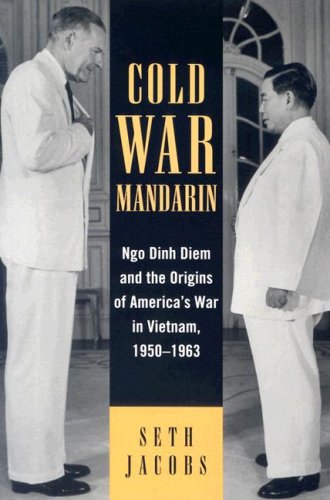
Cold War Mandarin: Ngo Dinh Diem and the Origins of America's War...
Authors:
Seth Jacobs
Publisher:
Rowman & Littlefield Publishers
Publication Date:
Not available
ISBN:
0742544486
For almost a decade, the tyrannical Ngo Dinh Diem governed South Vietnam as a one-party police state while the U.S. financed his tyranny. In this new... book, Seth Jacobs traces the history of American support for Diem from his first appearance in Washington as a penniless expatriate in 1950 to his murder by South Vietnamese soldiers on the outskirts of Saigon in 1963.Drawing on recent scholarship and newly available primary sources, Cold War Mandarin explores how Diem became America's bastion against a communist South Vietnam, and why the Kennedy and Eisenhower administrations kept his regime afloat. Finally, Jacobs examines the brilliantly organized public-relations campaign by Saigon's Buddhists that persuaded Washington to collude in the overthrow--and assassination--of its longtime ally. In this clear and succinct analysis, Jacobs details the "Diem experiment," and makes it clear how America's policy of "sink or swim with Ngo Dinh Diem" ultimately drew the country into the longest war in its history.
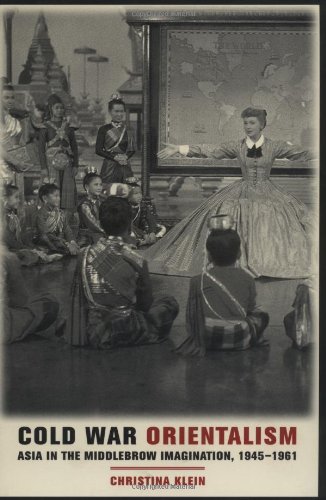
Cold War Orientalism: Asia in the Middlebrow Imagination, 1945-1961
Authors:
Christina Klein
Publisher:
University of California Press
Publication Date:
Not available
ISBN:
0520232305
In the years following World War II, American writers and artists produced a steady stream of popular stories about Americans living, working, and... traveling in Asia and the Pacific. Meanwhile the U.S., competing with the Soviet Union for global power, extended its reach into Asia to an unprecedented degree. This book reveals that these trends--the proliferation of Orientalist culture and the expansion of U.S. power--were linked in complex and surprising ways. While most cultural historians of the Cold War have focused on the culture of containment, Christina Klein reads the postwar period as one of international economic and political integration--a distinct chapter in the process of U.S.-led globalization.Through her analysis of a wide range of texts and cultural phenomena--including Rodgers and Hammerstein's South Pacific and The King and I, James Michener's travel essays and novel Hawaii, and Eisenhower's People-to-People Program--Klein shows how U.S. policy makers, together with middlebrow artists, writers, and intellectuals, created a culture of global integration that represented the growth of U.S. power in Asia as the forging of emotionally satisfying bonds between Americans and Asians. Her book enlarges Edward Said's notion of Orientalism in order to bring to light a cultural narrative about both domestic and international integration that still resonates today.
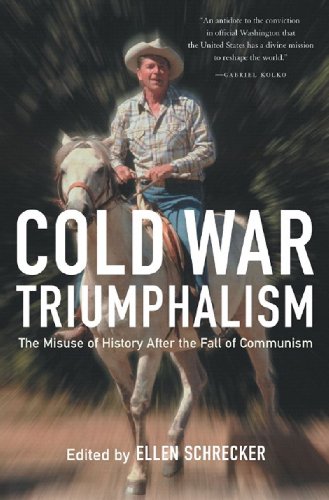
Cold War Triumphalism: The Misuse of History After the Fall of...
Authors:
Not Available
Publisher:
New Press, The
Publication Date:
Not available
ISBN:
1595580832
The book that is provoking a major reexamination of the legacy of the Cold War.In 2002, President George W. Bush declared, "The great struggles of the... twentieth century between liberty and totalitarianism ended with a decisive victory for the forces of freedom—and a single sustainable model for national success: freedom, democracy, and free enterprise." Cold War Triumphalism exposes the ideological roots of such unabashed triumphalist accounts, and counters the current attempt to rewrite the history of the Cold War struggle.Assembling some of the nation's leading historians of U.S. foreign policy, the Cold War, and recent American history, Cold War Triumphalism captures a generation of critical scholarship on America's rise to global dominance after World War II. At a time when history is increasingly invoked to vindicate the war on terrorism, neoliberal globalization, and recent American military ventures, this book provides a necessary challenge to right-wing mythologizing. Widely praised when first published in hardcover, this book is essential reading for anyone seeking to understand American global politics in the twenty-first century.

Cole and Zollinger textbook of surgery
Authors:
Warren H Cole
Publisher:
Appleton-Century-Crofts
Publication Date:
Not available
ISBN:
0390202584
Coleridge's Poetry and Prose (Norton Critical Edition)
Authors:
Samuel Taylor Coleridge
Publisher:
W. W. Norton & Company
Publication Date:
Not available
ISBN:
0393979040
Coleridge combined the genius of a poet with the mind of a philosophical critic.His writings are wide-ranging in form and content, and vast in number.... Norton’s long-awaited edition is the most comprehensive and user-friendly student edition available. Supporting apparatus includes detailed headnotes, footnotes (both Coleridge’s and the editors’), biographical register, glossary, and an index of poems and first lines. "Criticism" includes twenty assessments of Coleridge’s poetry and prose by British and American authors. A Chronology and Selected Bibliography are also included.
 '
'