production
/viewbook/list/all/?page=2479
/
/static/
None
Collected Works of Oscar Wilde (Wordsworth Special Editions)...
Authors:
Oscar Wilde
Publisher:
Wordsworth Editions Ltd
Publication Date:
Not available
ISBN:
1853263974
Wilde's works are suffused with his aestheticism, brilliant craftsmanship, legendary wit and, ultimately, his tragic muse. He wrote tender fairy stories... for children employing all his grace, artistry and wit, of which the best-known is The Happy Prince. Counterpoints to this were his novel The Picture of Dorian Gray, which shocked and outraged many readers of his day, and his stories for adults which exhibited his fascination with the relations between serene art and decadent life. Wilde took London by storm with his plays, particularly his masterpiece The Importance of Being Earnest. His essays - in particular De Profundis- and his Ballad of Reading Gaol, both written after his release from prison, strikingly break the bounds of his usual expressive range. His other essays and poems are all included in this comprehensive collection of the works of one of the most exciting writers of the late nineteenth century.
Collected Works of St. Teresa of Avila (Collected Works of St....
Authors:
Teresa of Avila
Publisher:
ICS Publications
Publication Date:
Not available
ISBN:
0960087664
Contains Way of Perfection, Interior Castle, and Meditations on the Song of Songs.Includes general and biblical index.This volume contains two of... Teresa's most popular works: The Way of Perfection and The Interior Castle. Shortly after writing The Book of Her Life for her confessor, St. Teresa wrote The Way of Perfection at the request of her nuns who were eager to learn about prayer and contemplation. Throughout this work she teaches her nuns about prayer and also teaches us. Toward the end of her life, after she had experienced both the spiritual betrothal and spiritual marriage, Teresa wrote The Interior Castle, her own panoramic view of her relationship with God, from the lowest stages to the highest. Teresa here demonstrates her great gift for writing about that relationship and attracting us to explore the possibility of pursuing it. Along with these two classics, Volume Two also includes one of Teresa's minor works, her Meditations on the Song of Songs. Includes general and biblical index.
Collected Works of Velimir Khlebnikov, Volume III: Selected Poems
Authors:
Velimir Khlebnikov
Publisher:
Harvard University Press
Publication Date:
Not available
ISBN:
0674140486
Dubbed "a Columbus of new poetic continents" because of his search for a poetics as diverse as the universe itself, Velimir Khlebnikov is the creator... of some of the most extraordinary poems in the Russian language. Sometimes surreal, sometimes esoteric, but always dazzlingly innovative, the 192 poems in this volume range broadly from the lyrical to the epic. One of the founders of Russian Futurism, Khlebnikov spent his entire brief life searching for a new poetic language to express his convictions about the rhythm of history and the connection between the truth of a poet's language and the cosmic truth about the universe. His poetry is characterized by often radical experimentation with language and words, a forceful utopian vision, complex theories of time and history, and multiple poetic personae: from an infantry commander to a Carthaginian war hero, from Cleopatra's paramour to the letters of the alphabet. Completing the Collected Works of Velimir Khlebnikov, Selected Poems gives us insight into the imagination of a remarkable artist.

Collected Writings of Chairman Mao - Politics and Tactics
Authors:
Mao Zedong
Publisher:
El Paso Norte Press
Publication Date:
Not available
ISBN:
1934255254
Mao Zedong (also known as Mao Tse-tung) is regarded as one of the most controversial figures in modern world history. Having conquered the country, he... ruled the People's Republic of China from its establishment as a Communist state in 1949 until the time of his death in 1976. Brilliant and ruthless, his legacy includes guerrilla warfare tactics, violent cultural revolutions, and enduring Communist propaganda. He was named one of the 100 most influential figures of the 20th century by Time Magazine. Eric Margolis, of the Huffington Post writes of Chairman Mao: "Mao was an accomplished poet, writer and historian, a profound thinker, and a superb military strategist. He crushed the US-backed Nationalist's 4.3-million strong armies in a series of titanic battles, forcing his rival, Chiang Kai-shek, to flee to Taiwan... The Great Helmsman united fractured, war-torn China, restoring its pride and self-confidence after two centuries of humiliation. Mao thwarted both Soviet and U.S. efforts to turn China into a client state, and built up China's military power... Mao's aides dared not tell him millions were starving. Red Emperor Mao was prodigal with his people's lives, and, according to aides who were close to him, was shockingly indifferent to their suffering. Mao horrified even brutal Soviet leaders by saying he was prepared to lose half his people to emerge victorious from a nuclear war... The first volume in this special collection contains six important lectures and essays by Chairman Mao. *Part 1 - Basic Tactics *Part 2 - On Correcting Mistaken Ideas in the Party *Part 3 - The Chinese Revolution and the Chinese Communist Party *Part 4 - The Role of the Chinese Communist Party *Part 5 - The Orientation of the Youth Movement *Part 6 - Win the Masses Excerpt from "Collected Writings of Chairman Mao - Politics and Tactics" by Mao Zedong. Reprinted by permission. All rights reserved. WE MUST ORGANIZE THE MASSES AND UNITE WITH THEM Modern warfare is not a matter in which armies alone can determine victory or defeat. Especially in guerrilla combat, we must rely on the force of the popular masses, for it is only thus that we can have a guarantee of success. The support of the masses offers us great advantages as regards transport, assistance to wounded, intelligence, disruption of the enemy's position, etc. At the same time, the enemy can be put into an isolated position, thus further increasing our advantages. If, by misfortune, we are defeated, it will also be possible to escape or to find concealment. Consequently, we must not lightly give battle in places where the masses are not organized and linked to us. WE MUST NOT FEAR THE ENEMY When we see the enemy, simply because he has a weapon in his hands, we must not be frightened to death, like a rat who sees a cat. We must not be afraid of approaching him or infiltrating into his midst, in order to carry out sabotage. We are men; our enemies are also men; we are all men, so what should we fear? The fact that he has weapons? We can find a way to seize his weapons. All we are afraid of is getting killed by the enemy. But when we undergo the oppression of the enemy to such a point as this, how can anyone still fear death? And if we do not fear death, then what is there to fear about the enemy? So when we see the enemy, whether he is many or few, we must act as though he can satisfy our hunger, and immediately swallow him.
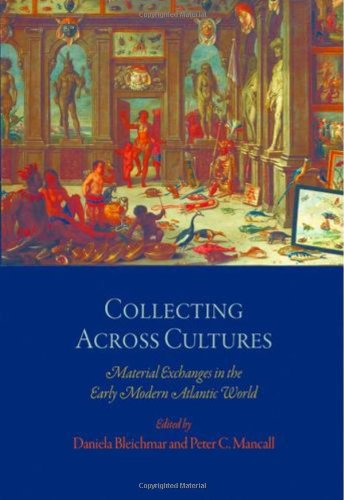
Collecting Across Cultures: Material Exchanges in the Early Modern...
Authors:
Not Available
Publisher:
University of Pennsylvania Press
Publication Date:
Not available
ISBN:
0812243056
In the early modern age more people traveled farther than at any earlier time in human history. Many returned home with stories of distant lands and at... least some of the objects they acquired during their journeys. And those who did not travel eagerly acquired wondrous materials that arrived from faraway places. Objects traveled various routes—personal, imperial, missionary, or trade—and moved not only across space but also across cultures.Histories of the early modern global culture of collecting have focused for the most part on European Wunderkammern, or "cabinets of curiosities." But the passion for acquiring unfamiliar items rippled across many lands. The court in Java marveled at, collected, and displayed myriad goods brought through its halls. African princes traded captured members of other African groups so they could get the newest kinds of cloth produced in Europe. Native Americans sought colored glass beads made in Europe, often trading them to other indigenous groups. Items changed hands and crossed cultural boundaries frequently, often gaining new and valuable meanings in the process. An object that might have seemed mundane in some cultures could become a target of veneration in another.The fourteen essays in Collecting Across Cultures represent new work by an international group of historians, art historians, and historians of science. Each author explores a specific aspect of the cross-cultural history of collecting and display from the dawn of the sixteenth century to the early decades of the nineteenth century. As the essays attest, an examination of early modern collecting in cross-cultural contexts sheds light on the creative and complicated ways in which objects in collections served to create knowledge—some factual, some fictional—about distant peoples in an increasingly transnational world.
Collecting & Interpreting Qualitative Materials (2nd, 03) by...
Authors:
Denzin
Publisher:
Sage s Inc, Paperback(2003)
Publication Date:
Not available
ISBN:
0761926941
The Landscape of Qualitative Research, Second Edition, the first volume in the paperback version of the The Handbook of Qualitative Research, Second... Edition, takes a look at the field from a broadly theoretical perspective, and is composed of the Handbook's Parts I ("Locating the Field"), II ("Major Paradigms and Perspectives"), and VI ("The Future of Qualitative Research"). The Landscape of Qualitative Research, Second Edition attempts to put the field of qualitative research in context. Part I locates the field, starting with history, then action research and the academy, research for whom?, and the politics and ethics of qualitative research. Part II isolates what we regard as the major historical and contemporary paradigms now structuring and influencing qualitative research in the human disciplines. The chapters move from competing paradigms (positivist, postpositivist, constructivist, critical theory) to specific interpretive perspectives, feminisms, racialized discourses, cultural studies, sexualities, and queer theory. Part III considers the future of qualitative research. The Handbook of Qualitative Research, Second Edition is widely considered to be the state of the art in evaluating the field of qualitative inquiry. Now published in paperback in response to the needs of classroom teachers, The Landscape of Qualitative Research, Second Edition will be an ideal supplement for a course on research methods, across a wide number of academic disciplines.
Collecting and Interpreting Qualitative Materials
Authors:
Not Available
Publisher:
Sage Publications, Inc
Publication Date:
Not available
ISBN:
1412957575
Collecting and Interpreting Qualitative Materials, Third Edition is the third volume of the paperback versions of The SAGE Handbook of Qualitative... Research, Third Edition. This portion of the handbook considers the tasks of collecting, analyzing, and interpreting empirical materials, and comprises the Handbook's Parts IV (“Methods of Collecting and Analyzing Empirical Materials”) and V (“The Art and Practices of Interpretation, Evaluation, and Presentation”).Collecting and Interpreting Qualitative Materials, Third Edition introduces the researcher to basic methods of gathering, analyzing and interpreting qualitative empirical materials. Part I moves from interviewing to observing, to the use of artifacts, documents and records from the past; to visual, and autoethnographic methods. It then takes up analysis methods, including computer-assisted methodologies, as well as strategies for analyzing talk and text. Key Feature of the Third Edition• Contains a new Reader's Guide prepared by the editors that helps students and researchers navigate through the chapters, locating the different methodologies, methods, techniques, issues, and theories relevant to their work. • Presents an abbreviated Glossary of terms that offer students and researchers a ready resource to help decode the language of qualitative research. • Offers recommended Readings that provide readers with additional sources on specific topic areas linked to their research. Intended AudienceThis text is designed for graduate students taking classes in social research methods and qualitative methods as well as researchers throughout the social sciences and in some fields within the humanities.
Collecting Nature: The American Environmental Movement and the...
Authors:
Andrew G. Kirk
Publisher:
Univ Pr of Kansas
Publication Date:
Not available
ISBN:
0700611231
It was like no other library: not a musty, mute archive but a bustling center of activity and voice of advocacy. It brought together otherwise combative... parties--sportsmen, lumbermen, librarians, politicians, even disputing activists--as it helped redefine what environmentalism means in America. Denver's Conservation Library was established in 1960 as a repository for environmental and conservation documents. In chronicling its history, Andrew Kirk also traces the cultural history of American environmentalism as viewed through the lens of this unique institution. He tells how this library created by an older generation of technophobic men evolved into a cutting-edge laboratory for alternative technology research run by young women, mirroring tumultuous changes in American culture and social movements over the past four decades. Kirk reveals how the Conservation Library Collection merged with various constituencies vying to shape it for their own purposes, and how it reflected the thinking of influences as diverse as John Muir and Stewart Brand. He introduces key players such as founder Arthur Carhart and administrator Kay Collins, then tells how the CLC was transformed into the Regional Energy/Environment Information Center, suffered cutbacks in the Reagan era that brought on its demise, and lately began a quiet resurgence as the archive it was originally intended to be. Collecting Nature shows that the CLC was a microcosm for the environmental movement itself, as well as a clear barometer of its gender and generational shifts. Kirk's eloquent narrative reveals much about the ideological bases and promises of environmentalism, while showing how the movement grew from its conservationist and preservationist roots. In the process, Kirk contributes to the debate over the evolution of environmental thinking, with an eye toward resolving the differences among competing perspectives. Through the story of this unique institution, he shows us how we have come to define conservation, wilderness, and even nature itself. This book is part of the Development of Western Resources series.
Collecting Qualitative Data: A Field Manual for Applied Research
Authors:
Greg S. (Stephen) Guest
Publisher:
Sage Publications, Inc
Publication Date:
Not available
ISBN:
1412986842
Collecting Qualitative Data: A Field Manual for Applied Research provides a very practical, step-by-step guide to collecting and managing qualitative... data. The data collection chapters focus on the three most often used forms of qualitative data collection: participant observation, in-depth interviews, and focus groups. The book also contains chapters on other practical aspects of qualitative field research often neglected in textbooks, including sampling, data management, research ethics, and supplementary data collection activities. Designed as an instructional field manual, this textbook includes many checklists and tips for how to use each technique while doing research. It also includes numerous real-life examples and cases, making it easy for readers to see the broader picture.
Collecting the New: Museums and Contemporary Art
Authors:
Not Available
Publisher:
Princeton University Press
Publication Date:
Not available
ISBN:
0691133735
Collecting the New is the first book on the questions and challenges that museums face in acquiring and preserving contemporary art. Because such art... has not yet withstood the test of time, it defies the traditional understanding of the art museum as an institution that collects and displays works of long-established aesthetic and historical value. By acquiring such art, museums gamble on the future. In addition, new technologies and alternative conceptions of the artwork have created special problems of conservation, while social, political, and aesthetic changes have generated new categories of works to be collected. Following Bruce Altshuler's introduction on the European and American history of museum collecting of art by living artists, the book comprises newly commissioned essays by twelve distinguished curators representing a wide range of museums. First considered are general issues including the acquisition process, and collecting by universal survey museums and museums that focus on modern and contemporary art. Following are groups of essays that address collecting in particular media, including prints and drawings, new (digital) media, and film and video; and national- and ethnic-specific collecting (contemporary art from Asia, Africa, and Latin America, and African-American art). The closing essay examines the conservation problems created by contemporary works--for example, what is to be done when deterioration is the artist's intent? The contributors are Christophe Cherix, Vishakha N. Desai, Steve Dietz, Howard N. Fox, Chrissie Iles and Henriette Huldisch, Pamela McClusky, Gabriel Pérez-Barreiro, Lowery Stokes Sims, Robert Storr, Jeffrey Weiss, and Glenn Wharton.
Collection Conundrums: Solving collections Management Mysteries
Authors:
Rebecca A. Buck
Publisher:
Amer Assn of Museums
Publication Date:
Not available
ISBN:
1933253088
Collection Conundrums: Solving Museum Registration Mysteries provides guidelines for investigating the oddities found in every museum collection -... objects without record, identification or sometimes even a location - and determining what to do. Written by registrars Rebecca Buck and Jean A. Gilmore, editors of the best-selling The New Museum Registration Methods, this new volume contains essential information for museums large and small, new and old. The text offers solutions to the problems of old loans, undocumented objects found in collections, items lost in inventory, supplementary collections and more, as well as guidelines on how to keep problems from occurring in the first place. Features a history of registration methods and the standards for collection documentation and care, along with sample documents such as loan agreements, co-tenancy agreements, storage agreements and deed of gift. Recommended for everyone involved in collections planning and management.
Collection de Mémoires Relatifs à l'Histoire de Belgique
Authors:
Société de l'Histoire de Belgique
Publisher:
BiblioLife
Publication Date:
Not available
ISBN:
1110019211
This is a pre-1923 historical reproduction that was curated for quality. Quality assurance was conducted on each of these books in an attempt to remove... books with imperfections introduced by the digitization process. Though we have made best efforts - the books may have occasional errors that do not impede the reading experience. We believe this work is culturally important and have elected to bring the book back into print as part of our continuing commitment to the preservation of printed works worldwide.
Collection Development and Management for 21st Century Library...
Authors:
Vicki L. Gregory
Publisher:
Neal-Schuman Publishers, Inc.
Publication Date:
Not available
ISBN:
1555706517
Covering virtually every aspect of its subject, Collection Development and Management for 21st Century Library Collections is a soup-to-nuts guide... perfect for students and beginning librarians, yet full of sage advice and new ideas for experienced practitioners. This landmark new text was overseen by a stellar editorial advisory board: Karen Brown (Dominican University), Kay Ann Cassell (Rutgers University), Alma Dawson (Lousiana State University), Ann O Neill (Emporia State University), and Patricia Oyler (Simmons College). Vicki Gregory, Professor at the University of South Florida, takes a process approach to her subject, making the book easy to consult about a specific question or problem. Practical and to the point, here's an authoritative guide to collection development and management that covers the entire gamut: Chapter 1: The Impact of New Technologies on Trends in Collection Development and Management; Chapter 2: Needs Assessment in Collection Development; Chapter 3: Collection Development Policies; Chapter 4: Selection Sources and Processes; Chapter 5: Acquisitions; Chapter 6: Budgeting and Fiscal Management; Chapter 7: Assessment and Evaluation of the Collection, including Deselection (Weeding); Chapter 8: Cooperative Collection Development and Resource Sharing; Chapter 9: Marketing the Collection and Outreach to the Community; Chapter 10: Legal Issues in Collection Development; Chapter 11: Diversity and ADA Issues; Chapter 12: Gifts and Exchanges; Chapter 13: Professional Ethics and Intellectual Freedom; Chapter 14: Preservation; Chapter 15: Future of Collection Development and Management. Each chapter includes discussion questions, activities, references, and selected readings. Special features include samples of a needs assessment report, a collection development policy, an approval plan, and an electronic materials license.
Collection Development for the School Library Media Program: A...
Authors:
Mona Kerby
Publisher:
Amer Library Assn
Publication Date:
Not available
ISBN:
0838983758
Collection Development Using the Collection Mapping Technique: A...
Authors:
David V. Loertscher
Publisher:
Hi Willow Research & Pub
Publication Date:
Not available
ISBN:
1933170433
More than a decade ago, David Loertscher introduced the concept of collection mapping in two different books mostly to the audience of school... librarians. It received some attention at that time because it contained a simple method of dividing the collection into various segments that became a part of a visual representation of collection strengths and weaknesses. Much has happened in the last decade that has put into major questions what it is libraries should own and what it should provide access to across a wide spectrum of information and for what types of devices. For this new revision of the collection mapping idea, Laura Wimberley has added her expertise and together the authors have designed a book that would be useful to all types of libraries. It's object is to take into consideration many of the traditional ideas of collection development that still make sense, but also to push the envelope in the idea of collection development. This book has been designed to use as a textbook for beginning practitioners, and also for experienced collection developers who want to challenge their traditional practices. We believe this is critical in an era where many patrons consider the Google search as their own definitive free access to the world of information. We hope that the issues we raise will stimulate discussion on the book's companion wiki.
 '
'