production
/viewbook/list/all/?page=2523
/
/static/
None
Colonial and Postcolonial Fiction An Anthology (Garland Reference...
Authors:
Robert Ross
Publisher:
Routledge
Publication Date:
Not available
ISBN:
081533320X
Fiction from the old British Commonwealth once took second place to the literature of England and the United States, but his is no longer the case.... Writers from around the globe-Africa, Canada, Australia, Pakistan, New Zealand, and the Caribbean-have recorded their encounters with colonialism from its beginnings to its collapse and aftermath to produce an impressive body of work that internationalizes literature in English."Colonial and Postcolonial Fiction in English "draws from this great common wealth of writing of offer 35 selections by major writers from both indigenous and settler cultures, from the nineteenth century through the contemporary era.The anthology is organized into sets of short stories and stand-alone selections from significant novels; colonial, postcolonial, immigrant, and personal encounters are represented. Each section includes a general introduction to help readers place the works in historical and cultural perspective. Biographical and critical material is provided for each writer, along with commentary on each selection.This anthology is an appropriate textbook for courses in Colonial and Postcolonial Studies and in Literature and Cultural Studies. It will also interest general readers.
Colonial and Postcolonial Literature
Authors:
Elleke Boehmer
Publisher:
Oxford University Press, USA
Publication Date:
Not available
ISBN:
0199253714
Colonial and Postcolonial Literature is the leading critical overview of and historical introduction to colonial and postcolonial literary studies.... Highly praised from the time of its first publication for its lucidity, breadth, and insight, the book has itself played a crucial part in founding and shaping this rapidly expanding field. The author, an internationally renowned postcolonial critic, provides a broad contextualizing narrative about the evolution of colonial and postcolonial writing in English. Illuminating close readings of texts by a wide variety of writers--from Kipling and Conrad through to Kincaid, from Ngugi to Noonuccal and Naipaul--explicate key theoretical terms such as "subaltern," "colonial resistance," "writing back," and "hybridity." This revised edition includes new critiques of postcolonial women's writing, an expanded and fully annotated bibliography, and a new chapter and conclusion on postcolonialism exploring keynote debates in the field relating to sexuality, transnationalism, and local resistance.
Colonial Blackness: A History of Afro-Mexico (Blacks in the Diaspora)
Authors:
Herman L. Bennett
Publisher:
Indiana University Press
Publication Date:
Not available
ISBN:
0253353386
Asking readers to imagine a history of Mexico narrated through the experiences of Africans and their descendants, this book offers a radical... reconfiguration of Latin American history. Using ecclesiastical and inquisitorial records, Herman L. Bennett frames the history of Mexico around the private lives and liberty that Catholicism engendered among enslaved Africans and free blacks, who became majority populations soon after the Spanish conquest. The resulting history of 17th-century Mexico brings forth tantalizing personal and family dramas, body politics, and stories of lost virtue and sullen honor. By focusing on these phenomena among peoples of African descent, rather than the conventional history of Mexico with the narrative of slavery to freedom figured in, Colonial Blackness presents the colonial drama in all its untidy detail.
Colonial Blackness: A History of Afro-Mexico (Blacks in the Diaspora)
Authors:
Bennett
Publisher:
Indiana University Press
Publication Date:
Not available
ISBN:
0253223318
Asking readers to imagine a history of Mexico narrated through the experiences of Africans and their descendants, this book offers a radical... reconfiguration of Latin American history. Using ecclesiastical and inquisitorial records, Herman L. Bennett frames the history of Mexico around the private lives and liberty that Catholicism engendered among enslaved Africans and free blacks, who became majority populations soon after the Spanish conquest. The resulting history of 17th-century Mexico brings forth tantalizing personal and family dramas, body politics, and stories of lost virtue and sullen honor. By focusing on these phenomena among peoples of African descent, rather than the conventional history of Mexico with the narrative of slavery to freedom figured in, Colonial Blackness presents the colonial drama in all its untidy detail.
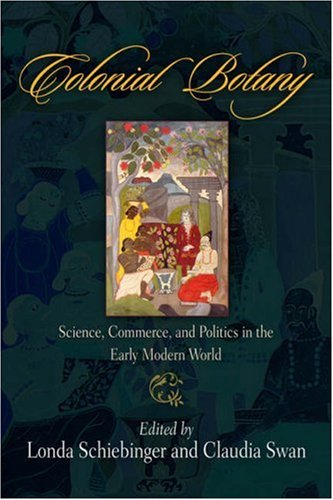
Colonial Botany: Science, Commerce, and Politics in the Early...
Authors:
Not Available
Publisher:
University of Pennsylvania Press
Publication Date:
Not available
ISBN:
0812220099
In the early modern world, botany was big science and big business, critical to Europe's national and trade ambitions. Tracing the dynamic relationships... among plants, peoples, states, and economies over the course of three centuries, this collection of essays offers a lively challenge to a historiography that has emphasized the rise of modern botany as a story of taxonomies and "pure" systems of classification. Charting a new map of botany along colonial coordinates, reaching from Europe to the New World, India, Asia, and other points on the globe, Colonial Botany explores how the study, naming, cultivation, and marketing of rare and beautiful plants resulted from and shaped European voyages, conquests, global trade, and scientific exploration.From the earliest voyages of discovery, naturalists sought profitable plants for king and country, personal and corporate gain. Costly spices and valuable medicinal plants such as nutmeg, tobacco, sugar, Peruvian bark, peppers, cloves, cinnamon, and tea ranked prominently among the motivations for European voyages of discovery. At the same time, colonial profits depended largely on natural historical exploration and the precise identification and effective cultivation of profitable plants. This volume breaks new ground by treating the development of the science of botany in its colonial context and situating the early modern exploration of the plant world at the volatile nexus of science, commerce, and state politics.Written by scholars as international as their subjects, Colonial Botany uncovers an emerging cultural history of plants and botanical practices in Europe and its possessions.
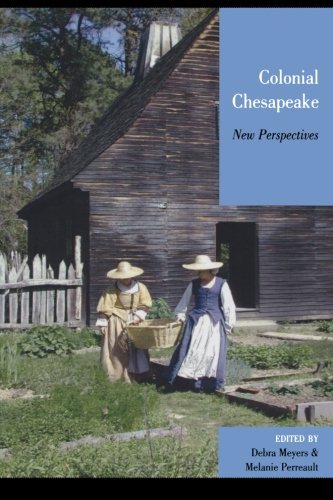
Colonial Chesapeake: New Perspectives
Authors:
Not Available
Publisher:
Lexington Books
Publication Date:
Not available
ISBN:
0739110926
In Colonial Chesapeake: New Perspectives leading scholars offer interdisciplinary revisionist essays on the political, cultural and social history of... early Maryland and Virginia, calling special attention to the importance of power relations, reproductive politics, and identity politics in the shaping of the area. Using primary documents, which are included with the essays, this collection suggests that the multicultural Chesapeake created significant cultural, intellectual, and social norms that shaped the diverse world of the American people. This anthology uses these perspectives to represent the multitude of experiences in the region, and in doing so captures the essence of race, class, and ethnic and gender diversity that made up life in early Chesapeake Maryland and Virginia. Students and scholars in American history, as well as anthropology, will find this book essential in understanding the political history of the colonial Chesapeake area.
Colonial Ch'olti': The Seventeenth-Century Moran Manuscript
Authors:
John S. Robertson
Publisher:
Univ of Oklahoma Pr (Txt)
Publication Date:
Not available
ISBN:
0806141182
At the time of the Spanish conquest, Ch'olti' was spoken throughout much of the southern Maya lowlands in what is present-day Petén and... Chiquimula, and is closely related to that spoken by the authors of the Classic Maya inscriptions. This book presents for the first time a facsimile, transcription, English and Spanish translation, and grammatical analysis of the Morán Manuscript, a Colonial-era document that provides the sole attestation of Ch'olti'. In addition to its value as a chronicle of the Colonial period, the Morán Manuscript is crucial to our understanding of the Classic Maya, particularly their language, captured in thousands of intricately carved and painted hieroglyphic inscriptions. Robertson, Law, and Haertel, regarded as the ablest interpreters of Ch'olti' now working in Mayan linguistics, provide not only a painstaking presentation of language data but also a detailed history of the manuscript itself. They discuss the document's probable authorship, investigate where and by whom Ch'olti' was spoken at contact, and infer how speakers maintained their expressive capabilities in the face of colonial oppression. The transcribed Ch'olti' texts feature an orthographically standardized version with a morpheme-by-morpheme gloss, a literal English translation that preserves many of the poetic structures and metaphors, and a flowing translation in both English and Spanish. The publication of this document marks a major contribution to the fields of Maya epigraphy, Mayan linguistics, ethnohistory, and Mesoamerican languages. It will serve as the definitive presentation of the Morán Manuscript and stand as a major contribution to further understanding the language of the Maya inscriptions in Mexico and Guatemala.
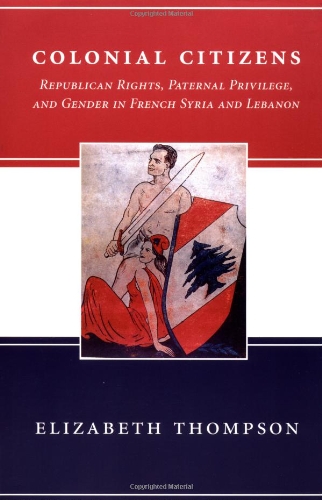
Colonial Citizens
Authors:
Elizabeth Thompson
Publisher:
Columbia University Press
Publication Date:
Not available
ISBN:
0231106610
French rule in Syria and Lebanon coincided with the rise of colonial resistance around the world and with profound social trauma after World War I. In... this tightly argued study, Elizabeth Thompson shows how Syrians and Lebanese mobilized, like other colonized peoples, to claim the terms of citizenship enjoyed in the European metropole. The negotiations between the French and citizens of the Mandate set the terms of politics for decades after Syria and Lebanon achieved independence in 1946. Colonial Citizens highlights gender as a central battlefield upon which the relative rights and obligations of states and citizens were established. The participants in this struggle included not only elite nationalists and French rulers, but also new mass movements of women, workers, youth, and Islamic populists. The author examines the "gendered battles" fought over France's paternalistic policies in health, education, labor, and the press. Two important and enduring political structures issued from these conflicts:• First, a colonial welfare state emerged by World War II that recognized social rights of citizens to health, education, and labor protection. • Second, tacit gender pacts were forged first by the French and then reaffirmed by the nationalist rulers of the independent states. These gender pacts represented a compromise among male political rivals, who agreed to exclude and marginalize female citizens in public life. This study provides a major contribution to the social construction of gender in nationalist and postcolonial discourse. Returning workers, low-ranking religious figures, and most of all, women to the narrative history of the region -- figures usually omitted -- Colonial Citizens enhances our understanding of the interwar period in the Middle East, providing needed context for a better understanding of statebuilding, nationalism, Islam, and gender since World War II.
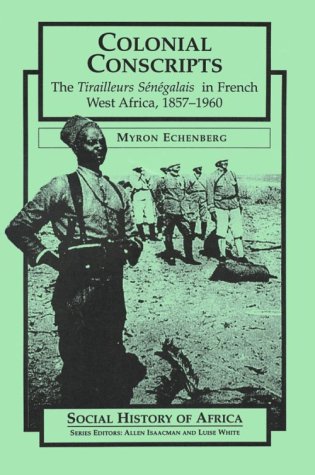
Colonial Conscripts: The Tirailleurs Senegalais in French West...
Authors:
Myron Echenberg
Publisher:
Heinemann
Publication Date:
Not available
ISBN:
0435080520
In Colonial Conscripts, Myron Echenberg traces the social history of a large and diverse group of West Africans who served in Senegalese regiments of... the French colonial army. Examining both how the soldiers and veterans lived out their lives in service and how the military institution functioned, Dr Echenberg also reviews the African military within a framework bounded by such issues as labor, migration, and demography. The main focus is on how rank-and-file African soldiers, officers, and veterans responded to their ambiguous and often contradictory position within the colonial social formation.
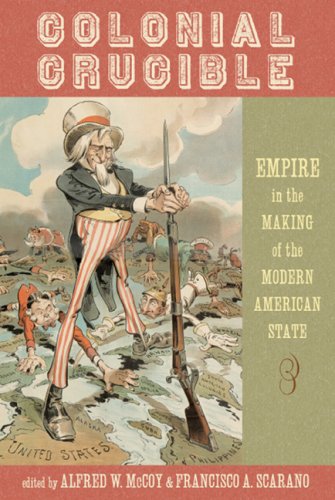
Colonial Crucible: Empire in the Making of the Modern American State
Authors:
Not Available
Publisher:
University of Wisconsin Press
Publication Date:
Not available
ISBN:
0299231046
At the end of the nineteenth century the United States swiftly occupied a string of small islands dotting the Caribbean and Western Pacific, from Puerto... Rico and Cuba to Hawaii and the Philippines. Colonial Crucible: Empire in the Making of the Modern American State reveals how this experiment in direct territorial rule subtly but profoundly shaped U.S. policy and practice—both abroad and, crucially, at home. Edited by Alfred W. McCoy and Francisco A. Scarano, the essays in this volume show how the challenge of ruling such far-flung territories strained the U.S. state to its limits, creating both the need and the opportunity for bold social experiments not yet possible within the United States itself. Plunging Washington’s rudimentary bureaucracy into the white heat of nationalist revolution and imperial rivalry, colonialism was a crucible of change in American statecraft. From an expansion of the federal government to the creation of agile public-private networks for more effective global governance, U.S. empire produced far-reaching innovations. Moving well beyond theory, this volume takes the next step, adding a fine-grained, empirical texture to the study of U.S. imperialism by analyzing its specific consequences. Across a broad range of institutions—policing and prisons, education, race relations, public health, law, the military, and environmental management—this formative experience left a lasting institutional imprint. With each essay distilling years, sometimes decades, of scholarship into a concise argument, Colonial Crucible reveals the roots of a legacy evident, most recently, in Washington’s misadventures in the Middle East.
Colonial Discourse and Post-Colonial Theory: A Reader
Authors:
Patrick Williams
Publisher:
Columbia University Press
Publication Date:
Not available
ISBN:
0231100213
Equally suitable for undergraduates and specialists in the humanities, this collection provides an in-depth introduction to debates within post-colonial... theory and criticism. The readings are drawn from a diverse selection of Third World and Western thinkers, both historical and contemporary. "Post-colonialism" is taken by the editors to include Third World and diasporic experience; like "colonialism," it is understood to contain a complex set of cultural, ethnographic, political, and economic processes and conflicts.This volume explores such issues as the nature of colonized cultures and anti-colonial resistance; subaltern historiography; constructions of Western subjectivity, knowledge, and gender; the formation of post-colonial intellectuals; the metropolitan institutionalization of post-colonialism; neo-colonialism; and the nature of minority and post-colonial identity and discourse. One section is devoted to the application of theoretical formulations to cultural criticism, and contains a number of textual analyses. A general introduction to the volume as well as introductions to each section provide historical, theoretical, and poltical contexts for the readings. The book concludes with an extensive bibliography.
Colonial Effects
Authors:
Joseph A. Massad
Publisher:
Columbia University Press
Publication Date:
Not available
ISBN:
023112323X
Colonial Effects analyzes the creation and definition of modern Jordanian identity. Massad studies two key institutions-- the law and the military--and... uses them to create an original and precise analysis of the development of Jordanian national identity in the postcolonial period.Joseph A. Massad engages recent scholarly debates on nationalism and richly fulfills the analytical promise of Michel Foucault's insight that modern institutions and their power to have productive, not merely repressive or coercive, capacities -- though Massad also stresses their continued repressive function.His argument is advanced by a consideration of evidence, including images produced by state tourist agencies aimed at attracting Western visitors, the changing and precarious position of women in the newly constructed national space, and such practices as soccer games, music, songs, food, clothing, and shifting accents and dialects.
Colonial Encounters in the Age of High Imperialism
Authors:
Scott B. Cook
Publisher:
Pearson
Publication Date:
Not available
ISBN:
0673992292
Colonial Encounters in the Age of High Imperialism is the first book in the Longman World History Series, edited by Michael Adas. This title... examines the world-transforming experience of Western imperialism during the period from 1870 to 1914. Case studies focus specifically on Belgium and the Congo, Hawaii and the United States, and India and Britain and examine the experiences of both colonizers and colonized, men and women, elite officials and faceless laborers.

Colonial Entanglement: Constituting a Twenty-First-Century Osage...
Authors:
Jean Dennison
Publisher:
The University of North Carolina Press
Publication Date:
Not available
ISBN:
0807872903
From 2004 to 2006 the Osage Nation conducted a contentious governmental reform process in which sharply differing visions arose over the new... government's goals, the Nation's own history, and what it means to be Osage. The primary debates were focused on biology, culture, natural resources, and sovereignty. Osage anthropologist Jean Dennison documents the reform process in order to reveal the lasting effects of colonialism and to illuminate the possibilities for indigenous sovereignty. In doing so, she brings to light the many complexities of defining indigenous citizenship and governance in the twenty-first century. By situating the 2004-6 Osage Nation reform process within its historical and current contexts, Dennison illustrates how the Osage have creatively responded to continuing assaults on their nationhood. A fascinating account of a nation in the midst of its own remaking, Colonial Entanglement presents a sharp analysis of how legacies of European invasion and settlement in North America continue to affect indigenous people's views of selfhood and nationhood.
Colonial Habits: Convents and the Spiritual Economy of Cuzco, Peru
Authors:
Kathryn Burns
Publisher:
Duke University Press Books
Publication Date:
Not available
ISBN:
0822322919
In Colonial Habits Kathryn Burns transforms our view of nuns as marginal recluses, making them central actors on the colonial stage. Beginning with the... 1558 founding of South America’s first convent, Burns shows that nuns in Cuzco played a vital part in subjugating Incas, creating a creole elite, and reproducing an Andean colonial order in which economic and spiritual interests were inextricably fused. Based on unprecedented archival research, Colonial Habits demonstrates how nuns became leading guarantors of their city’s social order by making loans, managing property, containing “unruly” women, and raising girls. Coining the phrase “spiritual economy” to analyze the intricate investments and relationships that enabled Cuzco’s convents and their backers to thrive, Burns explains how, by the late 1700s, this economy had faltered badly, making convents an emblem of decay and a focal point for intense criticism of a failing colonial regime. By the nineteenth century, the nuns had retreated from their previous roles, marginalized in the construction of a new republican order. Providing insight that can be extended well outside the Andes to the relationships articulated by convents across much of Europe, the Americas, and beyond, Colonial Habits will engage those interested in early modern economics, Latin American studies, women in religion, and the history of gender, class, and race.
 '
'