production
/viewbook/list/all/?page=257
/
/static/
None
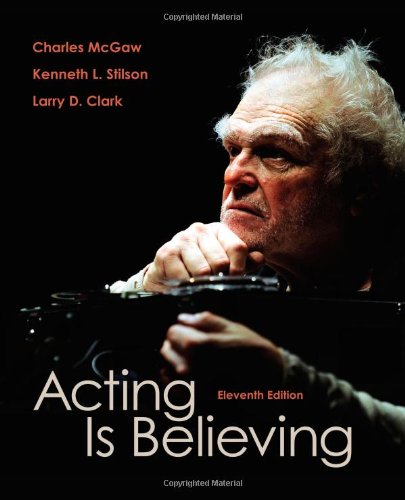
Acting Is Believing
Authors:
Charles McGaw
Publisher:
Wadsworth Publishing
Publication Date:
Not available
ISBN:
0495898074
Did you know that "an actor must believe to make his audience believe?" This is the key concept behind ACTING IS BELIEVING. Authors Charles McGaw and... Larry D. Clark have influenced thousands of actors, and Kenneth Stilson's update which includes new exercises and updated scripts bring modern relevance to the text. Inside, you'll learn the Stanislavski method and how to perfect using it, along with hundreds of other tips to help you be the flawless actor you are meant to be.
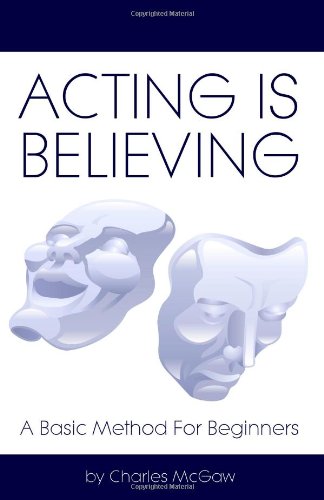
Acting Is Believing: A Basic Method For Beginners
Authors:
Charles McGaw
Publisher:
CreateSpace Independent Publishing Platform
Publication Date:
Not available
ISBN:
1438260822
Although the materials in this book are organized in such a way as to make them practical for classroom use, they are intended for any reader who is... interested in a basic approach to the art of acting; and though the book has been written with the stage actor in mind, the methods described may be used as well by the actor in any other field. The basic approach to acting is the same for the proscenium stage, theatre-in-the-round, motion pictures, television, and radio. The differences lie in the differing technical adjustments required by these various mediums. The approach here presented is based, to a considerable extent, on the methods of Stanislavski. The borrowings have been recognized throughout, and the debt to Stanislavski and to certain of his followers is gratefully acknowledged. In no sense, however, does the book pretend to be an interpretation of the Stanislavski “system.” It attempts only to draw upon some aspects of the system which have proved to be practical in helping beginning actors to develop an effective technique for bringing a character into existence on the stage. In some instances the vocabulary of Stanislavski's translators has been employed. Other terms have been used wherever they seemed to have greater clarity. Stanislavski's influence has been admittedly great, but the extent of that influence on the modern theatre is difficult to determine. It would seem that his principal contribution consists, not in his having originated a “system,” but rather in his detailed analysis and careful setting down of the attitudes and techniques which have been used more or less consciously by fine actors in all periods of theatrical history. Such knowledge as one can obtain of the working methods of great actors of the past indicates that they have always made imaginative use of their own experiences and that they have always striven for truth and a sense of reality in their performances. Furthermore, a study of all of the writings of Stanislavski gives ample evidence of his awareness that an actor's characterization must be theatrically effective as well as truthfully conceived. This book is based upon the following assumptions: 1), Although genius in acting may be a quality that defies analysis, the art as it is generally practiced consists of certain basic skills that may be mastered to some degree by anyone who sincerely wants to do so. 2) Mastery of those skills is much harder and more demanding work than most would-be actors realize. 3) The aspiring actor must recognize that, although rehearsals and performances before an audience are vitally important to his growth, he must also develop his skills through individual practice and effort. Only in this way can he succeed in his aim of becoming a creative artist. Part I, The Actor and Himself, is intended to help the young actor to develop himself individually. Part II, The Actor and the Play, is intended to help the actor to use his individual creative skills to express the meaning of the play as it has been conceived by the dramatist. Part III, The Actor and the Production, is designed to help the actor in his relations with the director and to aid him in making the necessary adjustments to the technical elements of a theatrical production. The exercises throughout have been taken directly from modern and classic plays so that the actor may always understand the applicability of the theory he is attempting to put into practice.
Acting Is Everything: An Actor's Guidebook for a Successful Career...
Authors:
Judy Kerr
Publisher:
September Publishing
Publication Date:
Not available
ISBN:
0962949663
The accomplished author shares her lifetime of techniques and tricks of the trade. For the student and professional actor, here’s the ultimate guide... for planning, promoting and expanding an acting career. What you need to know to truly master acting is everything you need to know to master your life because acting is everything. When actors are ready to make acting not only a career, but a lifestyle as well, then this book can be a lifetime guide. It includes up-to-date resources for everything from * headshots * fake cigarettes * changing one’s name * acting nude * great plastic surgeons. It’s all here, including incredible web sites and valuable phone numbers. A wonderful intro to the world of show biz. -- Jerry Seinfeld First rate primer, excellent refresher course. -- Jason Alexander
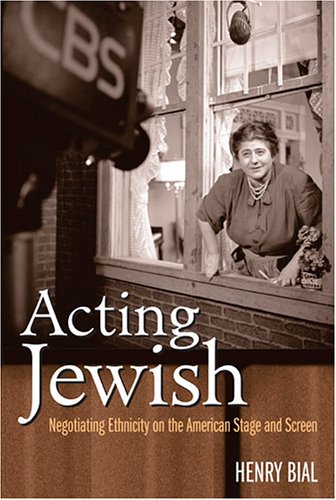
Acting Jewish: Negotiating Ethnicity on the American Stage and Screen
Authors:
Henry Bial
Publisher:
University of Michigan Press
Publication Date:
Not available
ISBN:
047206908X
The history of the American entertainment industry and the history of the Jewish people in the United States are inextricably intertwined. Jews have... provided Broadway and Hollywood with some of their most enduring talent, from writers like Arthur Miller, Wendy Wasserstein, and Tony Kushner; to directors like Jerome Robbins and Woody Allen; to performers like Gertrude Berg, John Garfield, Lenny Bruce, and Barbra Streisand. Conversely, show business has provided Jews with a means of upward mobility, a model for how to "become American," and a source of cultural pride.Acting Jewish documents this history, looking at the work of Jewish writers, directors, and actors in the American entertainment industry with particular attention to the ways in which these artists offer behavioral models for Jewish-American audiences. The book spans the period from 1947 to the present and takes a close look at some of America's favorite plays (Death of a Salesman, Fiddler on the Roof, Angels in America), films (Gentleman's Agreement, Annie Hall), and television shows (The Goldbergs, Seinfeld), identifying a double-coding by which performers enact, and spectators read, Jewishness in contemporary performance-and, by extension, enact and read other minority identities. The book thus explores and illuminates the ever-changing relationship between Jews and mainstream American culture."Fascinating and original . . . Bial's command of sources is impressive, and his concept of 'double-coding' is convincing . . . the book should have no trouble finding a large audience."-Barbara Grossman, author of Funny Woman: The Life and Times of Fanny BriceHenry Bial is Assistant Professor of Theatre and Film, University of Kansas. He is editor of the Performance Studies Reader and co-editor of the Brecht Sourcebook.
Acting Lessons for Teachers: Using Performance Skills in the Classroom
Authors:
Robert T. Tauber
Publisher:
Praeger
Publication Date:
Not available
ISBN:
0275992047
Acting Lessons for Teachers presents a solid theoretical foundation for the pedagogical benefits of enthusiastic teaching. Simply put, students are more... engaged, misbehave less, and learn better from teachers who teach enthusiastically. A teacher's enthusiasm for his or her subject matter can be contagious. Since the dynamic of the classroom is similar to that of the stage in terms of speaker-listener relationships, the acting craft offers teachers a model for the skills and strategies that could be incorporated in their work to convey more enthusiasm for the material and for the students.This book presents concrete descriptions of the specific acting strategies that would benefit the teacher: physical and vocal animation, teacher role-playing, strategic entrances and exits, humor, props, suspense and surprise, and creative use of space. Special attention is given to the potential advantage of instructional technology as a modern-day prop. Strategies are explained in terms of their importance and ease of incorporation into the classroom. Each is proposed as a skill that can be learned by any teachers who have the desire to enliven their teaching. Student descriptions of their own experience with teachers' use of acting strategies add real examples for each lesson. Finally, testimony of award-winning classroom teachers from a variety of disciplines and age levels provides evidence of the wide and easy applicability of these strategies.
Acting: Make It Your Business - How to Avoid Mistakes and Achieve...
Authors:
Paul Russell
Publisher:
Back Stage Books
Publication Date:
Not available
ISBN:
0823099555
Acting: Make It Your Business, written by an award-winning, veteran casting director, puts the power to land jobs and thrive in any medium - stage,... film, TV, or the Internet - directly into the hands of the actor. This blunt, wise, and often hilarious guide overflows with cutting-edge audition, marketing, and networking strategies, combining traditional techniques with those best suited for the digital age. Well-known actors and powerful agents make cameos throughout, offering newcombers and working professionals alike a clear-eyed, uncensored perspective on survival and advancement within the entertainment industry."Huorous and witty . . . Actors everywhere who are trying to succeed in the business, young or old, on stage or on camera, in New York or anywhere in the world, take note: This is your road map."- Bernard Telsey, casting director (Rent, Sex & The City: The Movie, Wicked)"All the right questions asked and answered . . . and with a generous portion of good humor."- Suzanne Ryan, casting director (Law & Order)"Paul's book made me proud to be a part of the acting community in this business we call 'show.'"- Karen Ziemba, actress, Tony and Drama Desk Award Winner
Acting Narrative Speeches: The Actor As Storyteller
Authors:
Tim McDonough
Publisher:
Meriwether Pub
Publication Date:
Not available
ISBN:
1566080762
Narrative speeches, both classical and contemporary, are used to reveal how an actor can discover the inherent energy, the essence and the subtextual... colours of every word and sentences of a dramatic speech. This book clearly demonstrates that any memorable performance needs far more than acting technique alone. In eighteen chapters actor/director/teacher McDonough defines in depth how an actor can find the often overlooked subtleties that create characters with dimension and moments of heightened reality.
Acting One
Authors:
Robert Cohen
Publisher:
McGraw-Hill Humanities/Social Sciences/Languages
Publication Date:
Not available
ISBN:
076741859X
Used to teach beginning acting on more campuses than any other text, Acting One contains twenty-eight lessons based on experiential exercises. The text... covers basic skills such as talking, listening, tactical interplay, physicalizing, building scenes, and making good choices.
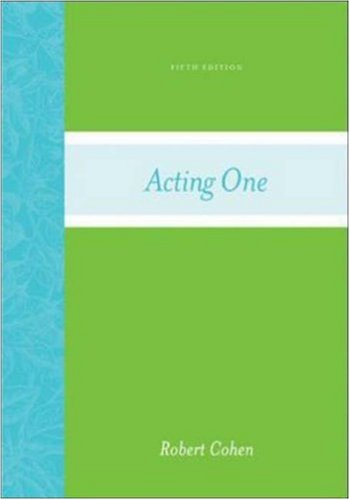
Acting One
Authors:
Robert Cohen
Publisher:
McGraw-Hill Humanities/Social Sciences/Languages
Publication Date:
Not available
ISBN:
0073514160
Used to teach beginning acting on more campuses than any other text, Acting One covers the basic elements of realistic acting in twenty-eight lessons... – all based on experiential exercises. The text covers basic skills such as talking, listening, tactical interplay, physicalizing, building scenes, and making good choices.
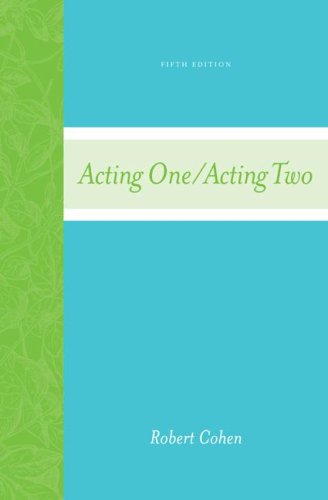
Acting One/Acting Two
Authors:
Robert Cohen
Publisher:
McGraw-Hill Humanities/Social Sciences/Languages
Publication Date:
Not available
ISBN:
0073288543
The new, fifth edition of Robert Cohen's Acting One, the text used to teach acting on more campuses than any other, has now been combined for the first... time with his Acting Two, (the second edition of his previously-titled Advanced Acting). Together, Acting One/Acting Two provides a comprehensive and fully integrated system of all acting, from the most realistic to the most stylized. Part One (Acting One) covers basic skills such as talking, listening, tactical interplay, physicalizing, building scenes, and making powerful acting choices. Part Two (Acting Two) provides a series of exercises that encourage the student actor's self-extension into radically different styles (historical, literary, fantastical) and characterizations; then coaches the student through scenework in a variety of historical periods (Greek, Commedia, Elizabethan, Molière, Restoration, Belle Epoque), as well as modern hyper-realistic theatrical forms such as the theatres of alienation and the absurd, and exemplary recent dramas by Tony Kushner, Margaret Edson, August Wilson and Doug Wright.
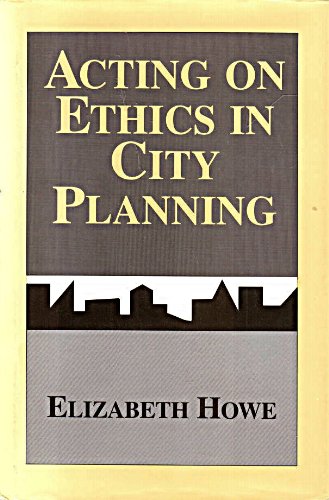
Acting on Ethics in City Planning
Authors:
Elizabeth Howe
Publisher:
Center for Urban Policy Research
Publication Date:
Not available
ISBN:
0882851470
How do practicing planners understand the ethics of their profession? What do they do when confronted with ethical conflicts in their day-today work?... How can the planning profession help planners make ethical decisions? In this insightful, lively, and compassionate book, Elizabeth Howe explores how planners define ethical issues and make ethical choices. Howe is not concerned with a distant or abstract ethics but rather with the actual ethical dilemmas planners face in everyday practice. This book is about real people making difficult choices in real situations. The cases Howe examines derive from nearly 150 hours of personal interviews with 96 professional planners, and responses to follow-up questionnaires. One planner, for example, realized that complete and accurate reporting of a technical analysis would have politically damaging consequences. Another found that her promise of confidentiality to a developer conflicted with her commitment to fairness and an open planning process. For a third, loyalty to elected officials was at odds with his deeply held belief that the public interest would be furthered through construction of affordable housing. To what extent did planners define these as ethical issues, what did they think about them, and how did they act? Howe's answers to these questions are perceptive and revealing. In Part I, she probes the nature of ethical issues through a hierarchy of principles including lawfulness, justice, accountability, and serving the public interest. Part II reveals that planners' actions vary considerably depending on how they view the role of planners (from technician to activist) and on their approach to ethics. She explores the determinants of ethical action in Part III. This book should be read by every practicing planner wondering how others deal with the workaday world. It is required reading for every student seeking a glimpse of the profession outside the classroom. And it will inform and reward all those concerned with the necessity of acting on ethics in an imperfect world.
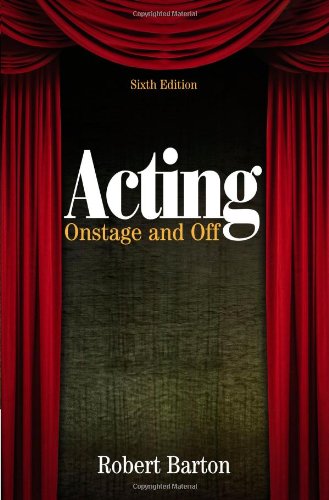
Acting: Onstage and Off
Authors:
Robert Barton
Publisher:
Wadsworth Publishing
Publication Date:
Not available
ISBN:
0495898864
Demonstrating how offstage performance can be effectively adapted for the theatre, as well as how onstage training can be applied toward leading a full... life outside the theatre, ACTING: ONSTAGE AND OFF is a humorous yet informative book that discusses the interplay between life on and off the stage. You'll learn everything from the phases of actor training to body-relaxation techniques.
Acting: Onstage and Off
Authors:
Robert Barton
Publisher:
Wadsworth Publishing
Publication Date:
Not available
ISBN:
0495566047
Demonstrating how offstage performance can be effectively adapted for the theatre, as well as how onstage training can be applied toward leading a full... life outside the theatre, ACTING: ONSTAGE AND OFF is a humorous yet informative book that discusses the interplay between life on and off the stage. You'll learn everything from the phases of actor training to body-relaxation techniques.
Acting: Onstage and Off
Authors:
Robert Barton
Publisher:
Wadsworth Publishing
Publication Date:
Not available
ISBN:
0534637086
ACTING: ONSTAGE AND OFF demonstrates how offstage performance can be effectively adapted for the theatre, as well as how onstage training can be applied... toward leading a full life outside the theatre. Barton's humorous and conversational writing style helps students learn all phases of actor training, including scene study, auditioning, observation, and mind, voice and body relaxation techniques. The use of examples from daily life instead of dramatic literature facilitates student understanding and leads to meaningful class discussion based on everyday experiences.

Acting Onstage & Off (E-Bk/Jb)
Authors:
Not Available
Publisher:
Not available
Publication Date:
Not available
ISBN:
111156180X
 '
'