production
/viewbook/list/all/?page=2658
/
/static/
None
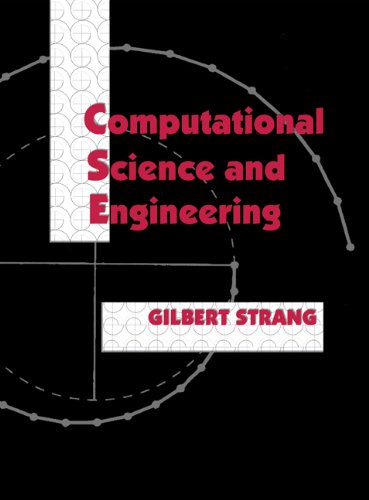
Computational Science and Engineering
Authors:
Gilbert Strang
Publisher:
Wellesley-Cambridge Press
Publication Date:
Not available
ISBN:
0961408812
This book presents the full range of computational science and engineering -- the equations, numerical methods, and algorithms with MATLAB® codes. The... author has taught this material to thousands of engineers and scientists. The book is solution-based and not formula-based: it covers applied linear algebra and fast solvers, differential equations with finite differences and finite elements, Fourier analysis, optimization, and more. Contents Chapter 1: Applied Linear Algebra; Chapter 2: A Framework for Applied Mathematics; Chapter 3: Boundary Value Problems; Chapter 4: Fourier Series and Integrals; Chapter 5: Analytic Functions; Chapter 6: Initial Value Problems; Chapter 7: Solving Large Systems; Chapter 8: Optimization and Minimum Principles.
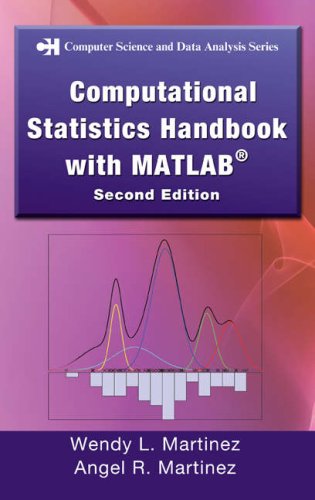
Computational Statistics Handbook with MATLAB, Second Edition...
Authors:
Wendy L. Martinez
Publisher:
Chapman and Hall/CRC
Publication Date:
Not available
ISBN:
1584885661
As with the bestselling first edition, Computational Statistics Handbook with MATLAB®, Second Edition covers some of the most commonly used... contemporary techniques in computational statistics. With a strong, practical focus on implementing the methods, the authors include algorithmic descriptions of the procedures as well as examples that illustrate the use of the algorithms in data analysis. Updated for MATLAB® R2007a and the Statistics Toolbox, Version 6.0, this edition incorporates many additional computational statistics topics. New to the Second Edition • New functions for multivariate normal and multivariate t distributions • Updated information on the new MATLAB functionality for univariate and bivariate histograms, glyphs, and parallel coordinate plots • New content on independent component analysis, nonlinear dimensionality reduction, and multidimensional scaling • New topics on linear classifiers, quadratic classifiers, and voting methods, such as bagging, boosting, and random forests • More methods for unsupervised learning, including model-based clustering and techniques for assessing the results of clustering • A new chapter on parametric models that covers spline regression models, logistic regression, and generalized linear models • Expanded information on smoothers, such as bin smoothing, running mean and line smoothers, and smoothing splines With numerous problems and suggestions for further reading, this accessible text facilitates an understanding of computational statistics concepts and how they are employed in data analysis.
Computational Statistics (Wiley Series in Probability and Statistics)
Authors:
Geof H. Givens
Publisher:
Wiley-Interscience
Publication Date:
Not available
ISBN:
0471461245
A comprehensive, classroom-tested introduction to modern computational statisticsThis comprehensive introduction enables readers to develop a... multifaceted and thorough knowledge of modern statistical computing and computational statistics. Backed by many years of classroom experience, the authors help readers gain a practical understanding of how and why modern statistical methods work, enabling readers to apply these methods effectively. Detailed examples are drawn from diverse fields such as bioinformatics, ecology, medicine, computer vision, and stochastic finance.The text emphasizes areas that are central to understanding the evolving field of computational statistics including areas where routine application of software often fails to solve complex problems. Topics covered include ordinary and combinatorial optimization, algorithms for missing data, numerical and Monte Carlo integration, simulation, introductory and advanced Markov chain Monte Carlo, bootstrapping, density estimation, and smoothing.Knowledge of computer languages is not required, making examples and algorithms easier for readers to follow. Everything needed to quickly learn and apply the material is provided and is presented in a fluid, jargon-free style with fascinating real-world examples and problem sets that have been tested in the classroom for more than a decade.Computational Statistics is recommended for graduate-level courses in statistics, computer science, mathematics, engineering, and other quantitative sciences. Advanced undergraduate students can also use this text to learn the basics and for deeper study as they progress. Chapters are written to stand independently, allowing instructors to build their own courses by selecting topics. Statisticians and quantitative empirical scientists will refer to this desktop reference often. By providing readers with a thorough understanding of contemporary statistical techniques, the book gives readers a solid foundation for contributing their own ideas and finding new applications for this dynamic field.
Computational Techniques for Fluid Dynamics, Vol. 1: Fundamental...
Authors:
Clive A.J. Fletcher
Publisher:
Springer
Publication Date:
Not available
ISBN:
3540530584
This well-known 2-volume textbook provides senior undergraduate and postgraduate engineers, scientists and applied mathematicians with the specific... techniques, and the framework to develop skills in using the techniques in the various branches of computational fluid dynamics. Volume 1 systematically develops fundamental computational techniques, partial differential equations including convergence, stability and consistency and equation solution methods. A unified treatment of finite difference, finite element, finite volume and spectral methods, as alternative means of discretion, is emphasized. For the second edition the author also compiled a separately available manual of solutions to the many exercises to be found in the main text.
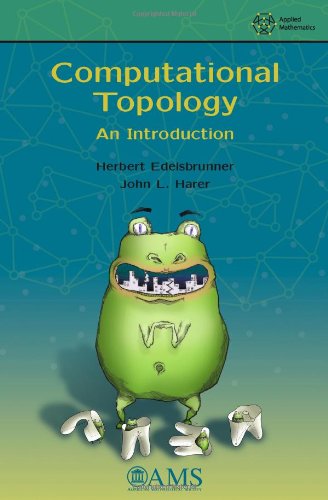
Computational Topology
Authors:
Herbert Edelsbrunner and John L. Harer
Publisher:
American Mathematical Society
Publication Date:
Not available
ISBN:
0821849255
Combining concepts from topology and algorithms, this book delivers what its title promises: an introduction to the field of computational topology.... Starting with motivating problems in both mathematics and computer science and building up from classic topics in geometric and algebraic topology, the third part of the text advances to persistent homology. This point of view is critically important in turning a mostly theoretical field of mathematics into one that is relevant to a multitude of disciplines in the sciences and engineering. The main approach is the discovery of topology through algorithms. The book is ideal for teaching a graduate or advanced undergraduate course in computational topology, as it develops all the background of both the mathematical and algorithmic aspects of the subject from first principles. Thus the text could serve equally well in a course taught in a mathematics department or computer science department.
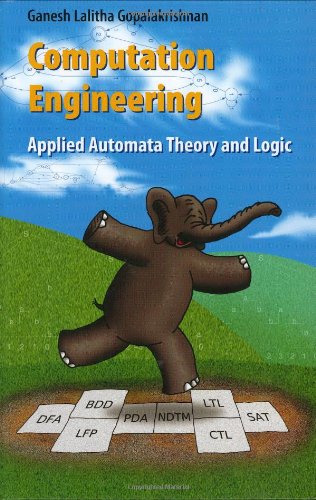
Computation Engineering: Applied Automata Theory and Logic
Authors:
Ganesh Gopalakrishnan
Publisher:
Springer
Publication Date:
Not available
ISBN:
0387244182
Although it is critical in today’s world that students who take automata theory and logic courses retain what they have learned and understand how to... use their knowledge, many textbooks typically emphasize automata theory only, not logic, thus losing a valuable opportunity to tie these subjects together and reinforce learning. This textbook uses interactive tools throughout, such as simple BDD and SAT tools. By providing a blend of theory and practical applications the material is presented as both inviting and current. Key concepts are illustrated in multiple domains so that information is reinforced and students can begin to tie theory and logic together.
Computation in Modern Physics
Authors:
William R. Gibbs
Publisher:
World Scientific Publishing Company
Publication Date:
Not available
ISBN:
9812568514
The first half of this text is designed as a course for first year graduate students in the sciences. Problems are chosen to illustrate mathematical and... physical subjects. In this first half only a moderate background in physics and mathematics is assumed. Integration, Monte Carlo techniques, the solution of linear systems and finite element methods are treated with enough depth to allow the student to understand them. An introduction to modelling with differential methods, digital signal processing and chaos is given. One chapter provides an introduction to common computer architectures. In the second half a thorough understanding of quantum mechanics is assumed with the Schroedinger equation being treated with scattering and bound state conditions. The time-dependent Schroedinger equation is also solved. A thorough introduction to the solution of the quantum-mechanical bound state with variational and Monte Carlo Green's function is given, with two examples being the solution of the bound state nuclear helium 4 and the energy of atomic liquid helium 4 at zero temperature. The exact solution of the low energy scattering problem is presented. Algorithms for the Borel and Pade methods for the summation of divergent series are studied. In the final chapter, methods for the solution of hadronic scattering from nuclei are treated including single, double and multiple scattering as well as the derivation and calculation of multiple scattering through fundamental optical models. The first half of the book will be suitable for a general course in computational methods while the second half can serve as a second semester course for Physics majors intending to do work in hadronic physics or scattering.
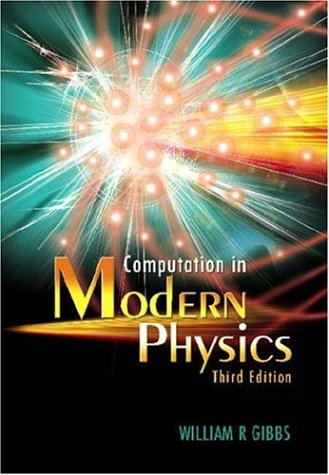
Computation in Modern Physics
Authors:
William R. Gibbs
Publisher:
World Scientific Pub Co Inc
Publication Date:
Not available
ISBN:
9812567992
This textbook is suitable for two courses in computational physics. The first is at an advanced introductory level and is appropriate for seniors or... first year graduate students. The student is introduced to integral and differential techniques, Monte Carlo integration, basic computer architecture, linear algebra, finite element techniques, digital signal processing and chaos. In this first part of the book, no knowledge of quantum mechanics is assumed. The third edition has expanded treatments of the subjects in each of the first nine chapters and a new section on modern parallel computing, in particular, Beowulf clusters. The second course (the last four chapters) deals with problems in the strong interaction using quantum mechanical techniques, with emphasis on solutions of many-body scattering problems and several-body bound state calculations with Monte Carlo techniques. It also contains a chapter dealing with the numerical summation of divergent series.

COMPUTATION NOTEBOOK
Authors:
Not Available
Publisher:
Not available
Publication Date:
Not available
ISBN:
Not available
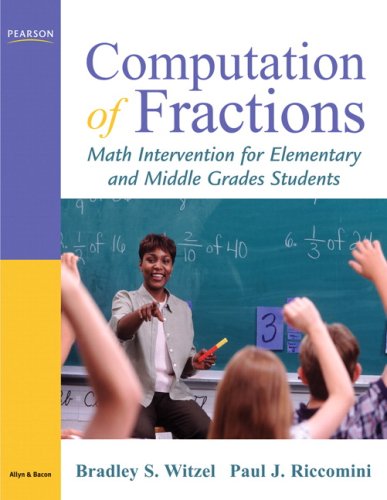
Computation of Fractions: Math Intervention for Elementary and...
Authors:
Bradley S. Witzel
Publisher:
Pearson
Publication Date:
Not available
ISBN:
020556738X
Drawing on their years of classroom experience working with struggling students and their teachers, Dr. Brad Witzel and Dr. Paul Riccomini present... elementary and middle school teachers with practical strategies and activities for promoting academic success and mastery of key mathematical concepts. They offer insight into what really helps students learn math including friendly descriptions of the concrete to representational to abstract sequence of instruction, procedural instruction that can be expanded from one topic to the next, assessment guides for placement and measurement, and retention of content through mixed reviews and assessments. In addition, the authors provide teachers with clear direction to implement each research-based lesson plan with answer sheets to grade student work as well as pictures of manipulations and accompanying vocabulary so that teachers know exactly how to show concrete and pictorial steps. Give your students who struggle with fractions the support they need! Aligns each lesson to the CRA instruction sequence and effectively leads teachers through classroom instruction. Offers step-by-step direction to coach teachers through each lesson plan. Includes a complete list of manipulative resources for each lesson.
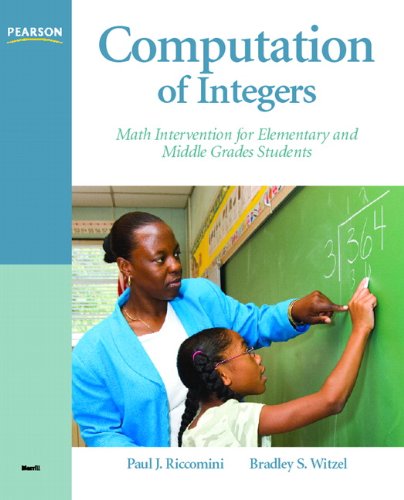
Computation of Integers: Math Intervention for Elementary and...
Authors:
Paul J. Riccomini
Publisher:
Pearson
Publication Date:
Not available
ISBN:
0205567398
This practical new text will empower those educators responsible for math instruction to successfully teach students in grades six through eight, as... well as other students, to master computation of integers. Integration of picture-led, step-by-step instruction with accompanying dialogue will aid educators to deliver the exact vocabulary and stepwise procedures necessary for success—that of their students learning the mathematical process to computing integers. Written for math educators including elementary, middle school, special education teachers, tutors and home school teachers, this accessible guide will improve instructors’ ability to teach integers, and the confidence in their students to master the subject matter. Special pedagogical features include: Student Work Pages for every lesson! Scripted, step-by-step examples outline how to teach each stage using hands-on, pictorial and abstract approaches. Concrete to Representational to Abstract sequence of instruction (CRA) in each section of the book and materials. Instructional lessons with assessment matching inform both the student and the teacher what learning occurred and where to start in order to master the skill. Cumulative reviews to help eachstudent successfully retain information.
COMPUTATION OF MODELING MOLECULES
Authors:
Not Available
Publisher:
Not available
Publication Date:
Not available
ISBN:
Not available
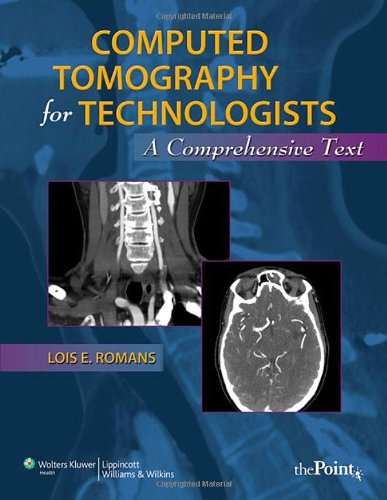
Computed Tomography for Technologists: A Comprehensive Text
Authors:
Lois Romans
Publisher:
Lippincott Williams & Wilkins
Publication Date:
Not available
ISBN:
0781777518
Ideally suited for CT courses in radiologic technology programs, or for stand-alone CT programs, this text prepares students both for mastery of the... American Registry of Radiologic Technologists (ARRT) General Radiography and Computed Tomography exams. The text also includes features and resources to ease the transition into actual clinical setting. Organized around the three major ARRT content categories, Romans incorporates student-friendly Clinical Application boxes to add real-world relevance. Highlighted key terms, Key Concept boxes, and chapter review questions, suggested reading, and other features help to ensure mastery of the topic.
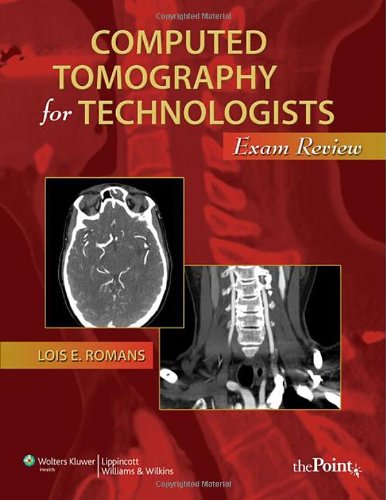
Computed Tomography for Technologists: Exam Review (Point...
Authors:
Lois Romans
Publisher:
Lippincott Williams & Wilkins
Publication Date:
Not available
ISBN:
0781777968
Leveraging the organization and focus on exam preparation found in the comprehensive text, this Exam Review will help any student to successfully... complete the ARRT General Radiography and Computed Tomography exams. The book includes a bulleted format review of content, Registry-style questions with answers and rationales, and a mock exam following the ARRT format. The companion website offers an online testing simulation engine.
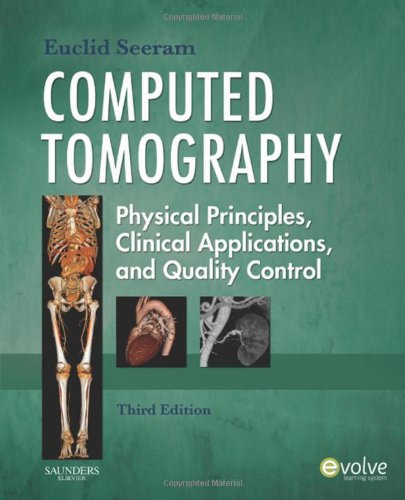
Computed Tomography: Physical Principles, Clinical Applications,...
Authors:
Euclid Seeram RT(R) BSc MSc FCAMRT
Publisher:
Saunders
Publication Date:
Not available
ISBN:
1416028951
Radiologic technologists play an important role in the care and management of patients undergoing advanced imaging procedures. This new edition provides... the up-to-date information and thorough coverage you need to understand the physical principles of computed tomography (CT) and safely produce high-quality images. You'll gain valuable knowledge about the practice of CT scanning, effective communication with other medical personnel, and sectional anatomic images as they relate to CT.Comprehensively covers CT at just the right depth for technologists - going beyond superficial treatment to accommodate all the major advances in CT. One complete CT resource covers what you need to know!Brings you up to date with the latest in multi-slice spiral CT and its applications - the only text to include full coverage of this important topic.Features a chapter devoted to quality control testing of CT scanners (both spiral CT and conventional scan-and-stop), helping you achieve and maintain high quality control standards.Provides the latest information on: advances in volume CT scanning; CT fluoroscopy; multi-slice spiral/helical CT; and multi-slice applications such as 3-D imaging, CT angiography, and virtual reality imaging (endoscopy) - all with excellent coverage of state-of-the-art principles, instrumentation, clinical applications and quality control.Two new chapters cover recent developments and important principles of multislice CT and PET/CT, giving you in-depth coverage of these quickly emerging aspects of CT.Nearly 100 new line drawings and images illustrate difficult concepts, helping you learn and retain information.All-new material updates you on today's CT scanners, CT and PACS, image quality and quality control for multislice CT scanners, and clinical applications.
 '
'