production
/viewbook/list/all/?page=2692
/
/static/
None

CONCEPTUAL PHYSICS PACKAGE W/ REBATE CARD
Authors:
Not Available
Publisher:
Not available
Publication Date:
Not available
ISBN:
Not available
CONCEPTUAL PHYSICS PKG '12 ]CUSTOM[
Authors:
Not Available
Publisher:
Not available
Publication Date:
Not available
ISBN:
Not available
CONCEPTUAL PHYSICS (SET:TEXT/PRACTICE & WEBASSIGN)
Authors:
Not Available
Publisher:
Not available
Publication Date:
Not available
ISBN:
Not available
CONCEPTUAL PHYSICS (SET: TXT/PRACTICING)(NASTA)
Authors:
Not Available
Publisher:
Not available
Publication Date:
Not available
ISBN:
Not available
CONCEPTUAL PHYSICS (SPEC USED)
Authors:
Not Available
Publisher:
Not available
Publication Date:
Not available
ISBN:
Not available
CONCEPTUAL PHYSICS UAA PACK
Authors:
Not Available
Publisher:
Not available
Publication Date:
Not available
ISBN:
Not available
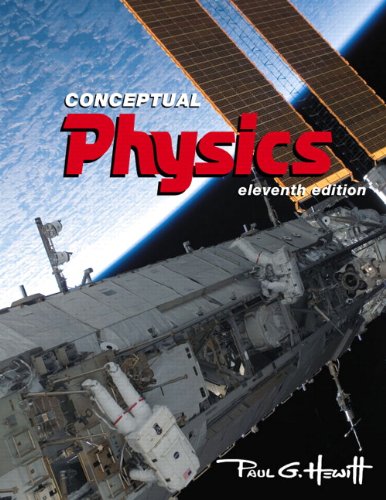
Conceptual Physics with MasteringPhysics®
Authors:
Paul G. Hewitt
Publisher:
Addison-Wesley
Publication Date:
Not available
ISBN:
0321776720
Since defining this course 30 years ago, Paul Hewitt’s best-selling text continues to be the benchmark book that two-thirds of professors use and by... which all others are judged. In Conceptual Physics with MasteringPhysics®, 11/e Paul Hewitt shows how a compelling text and the most advanced media can be integrated to empower professors as they bring physics to life for non-science majors, both in and out of class. For the Eleventh Edition , Hewitt helps students connect physics to their everyday experiences and the world around them, and provides additional help on solving mathematical problems. Hewitt’s text is famous for engaging students with analogies and imagery from real-world situations that build a strong conceptual understanding of physical principles ranging from classical mechanics to modern physics. With this strong foundation, students are better equipped to understand the equations and formulas of physics, and are motivated to explore the thought-provoking exercises and fun projects in each chapter. The new edition features a fresh new design, content that is more focused on physics applications, updated pedagogical features, and access to MasteringPhysics. 0321776720 / 9780321776723 Conceptual Physics with MasteringPhysics® Package consists of: 0321784456 / 9780321784452 MasteringPhysics® with Pearson eText -- Valuepack Access Card -- for Conceptual Physics 0321787951 / 9780321787958 Conceptual Physics
Conceptual Physics with Practice Book (11th Edition)
Authors:
Paul G. Hewitt
Publisher:
Addison-Wesley
Publication Date:
Not available
ISBN:
0321707206
0321707206 / 9780321707208 Conceptual Physics with The Practice Book, 11/e Package consists of 0321568095 / 9780321568090 Conceptual Physics... 0321662563 / 9780321662569 Practice Book for Conceptual Physics, The
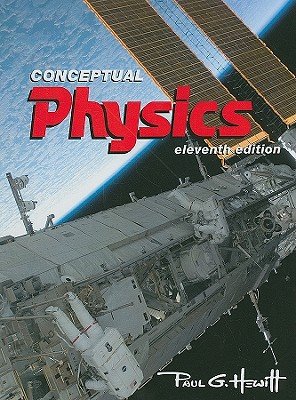
Conceptual Physics with WebAssign Access Code Card-One Term Version...
Authors:
Paul G. Hewitt
Publisher:
Addison-Wesley
Publication Date:
Not available
ISBN:
0321675932
CONCEPTUAL PHYSICS W/MP ACCESS CODE (HOMEWORK)
Authors:
Not Available
Publisher:
Not available
Publication Date:
Not available
ISBN:
Not available
CONCEPTUAL PHYSICS W/MSTRG & LAB MANUAL PKG
Authors:
Not Available
Publisher:
Not available
Publication Date:
Not available
ISBN:
Not available
CONCEPTUAL PHYSICS W/PRACTICING PHYSICS
Authors:
Not Available
Publisher:
Not available
Publication Date:
Not available
ISBN:
Not available
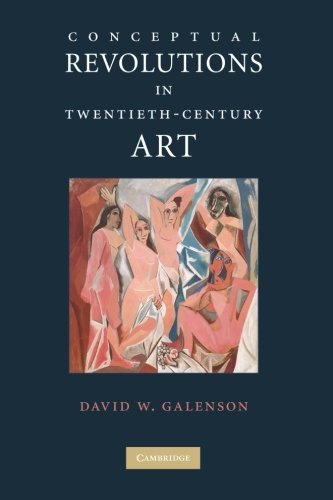
Conceptual Revolutions in Twentieth-Century Art
Authors:
David W. Galenson
Publisher:
Cambridge University Press
Publication Date:
Not available
ISBN:
0521129095
From Picasso's Cubism and Duchamp's readymades to Warhol's silkscreens and Smithson's earthworks, the art of the twentieth century broke completely with... earlier artistic traditions. A basic change in the market for advanced art produced a heightened demand for innovation, and young conceptual innovators - from Picasso and Duchamp to Rauschenberg and Warhol to Cindy Sherman and Damien Hirst - responded not only by creating dozens of new forms of art, but also by behaving in ways that would have been incomprehensible to their predecessors. Conceptual Revolutions in Twentieth-Century Art presents the first systematic analysis of the reasons for this discontinuity. David W. Galenson, whose earlier research has changed our understanding of creativity, combines social scientific methods with qualitative analysis to produce a fundamentally new interpretation of modern art that will give readers a far deeper appreciation of the art of the past century, and of today, than is available elsewhere.
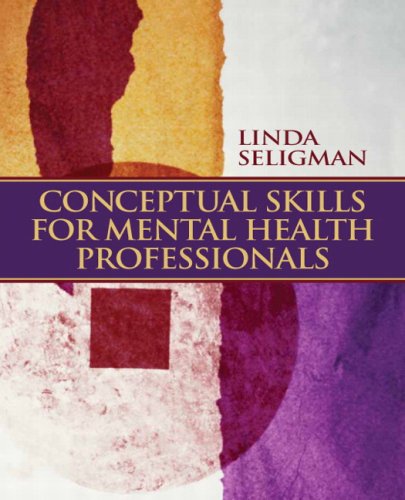
Conceptual Skills for Mental Health Professionals
Authors:
Linda Seligman
Publisher:
Pearson
Publication Date:
Not available
ISBN:
0132230453
This book is designed to help students in the mental health professions, as well as clinicians, to bridge the gap between theory and practice and to... develop competence in the conceptual skills of their profession. Written by a well-known author who is an educator as well as a practicing clinician, this book teaches the conceptual skills that mental health professionals need to understand their clients; to develop sound ideas about the cause, nature, and purpose of their clients' difficulties; and to craft a treatment plan that is likely to be effective. Skills are organized into a readily comprehensible structure and are grouped by their primary focus (background, emotions, thoughts, or actions), thus clearly linking theory and practice. Important skills presented in this book include developing a sound therapeutic alliance, case conceptualization, assessment, becoming competent in diagnosis and treatment planning, and addressing transference and countertransference. Written exercises, discussion questions, group role-plays, personal journal questions, and many examples facilitate learning and application. Highlights of this First Edition: The structure of BETA (background, emotions, thoughts, actions) format-enables readers to link theory and practice and readily understand the primary purpose of each skill. Consistent use of four types of learning opportunities at the end of each chapter (written exercises, discussion questions, role-play exercises, personal journal questions)-affords readers diverse approaches to learning, designed to promote skill development regardless of the learner's preferred learning style. Gives structure and consistency to the book. The teaching of advanced conceptual skills-until recently, skill development in the training programs in counseling, psychology, and social work focused almost exclusively on teaching the basic or fundamental skills. Recent research has affirmed the importance of both fundamental and conceptual skills. This is one of the few books that teaches readers how to understand and think about their clients and potentially moves the treatment process to a deeper and more meaningful level. New and revised examples and case studies, including a new intake interview in the concluding chapter of the book-new and revised case studies reflect typical clients and concerns currently encountered by mental health professionals. Clients and concerns reflect multicultural diversity as well as a range of problems. This book presents a variety of models for conceptualizing clients and their difficulties. Models include a modified version of Bloom's Taxonomy, Concept Mapping, Clinical Factor Analysis, the Inverted Pyramid Heuristic, and others-this variety of models affords readers experience in various ways to approach the conceptualization process and enables them to identify a model that seems most useful to them.
Conceptual Skills For Mental Health Professionals (Jumpbook 180 Days)
Authors:
Not Available
Publisher:
Not available
Publication Date:
Not available
ISBN:
Not available
 '
'