production
/viewbook/list/all/?page=272
/
/static/
None
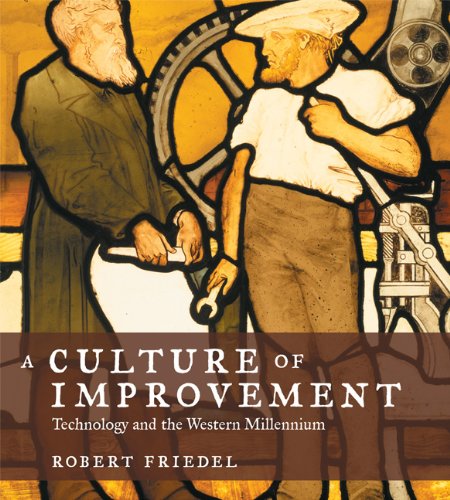
A Culture of Improvement: Technology and the Western Millennium
Authors:
Robert Friedel
Publisher:
The MIT Press
Publication Date:
Not available
ISBN:
026251401X
Why does technology change over time, how does it change, and what difference does it make? In this sweeping, ambitious look at a thousand years of... Western experience, Robert Friedel argues that technological change comes largely through the pursuit of improvement--the deep-rooted belief that things could be done in a better way. What Friedel calls the "culture of improvement" is manifested every day in the ways people carry out their tasks in life--from tilling fields and raising children to waging war.Improvements can be ephemeral or lasting, and one person's improvement may not always be viewed as such by others. Friedel stresses the social processes by which we define what improvements are and decide which improvements will last and which will not. These processes, he emphasizes, have created both winners and losers in history.Friedel presents a series of narratives of Western technology that begin in the eleventh century and stretch into the twenty-first. Familiar figures from the history of invention are joined by others--the Italian preacher who described the first eyeglasses, the dairywomen displaced from their control over cheesemaking, and the little-known engineer who first suggested a grand tower to Gustav Eiffel. Friedel traces technology from the plow and the printing press to the internal combustion engine, the transistor, and the space shuttle. Friedel also reminds us that faith in improvement can sometimes have horrific consequences, as improved weaponry makes warfare ever more deadly and the drive for improving human beings can lead to eugenics and even genocide. The most comprehensive attempt to tell the story of Western technology in many years, engagingly written and lavishly illustrated, A Culture of Improvement documents the ways in which the drive for improvement has shaped our modern world.
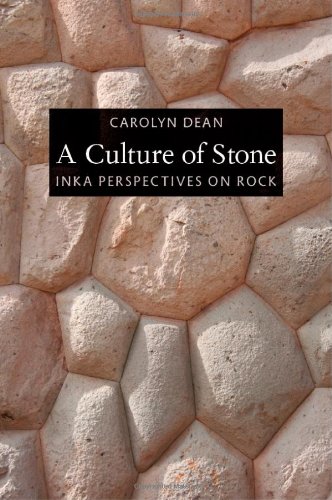
A Culture of Stone: Inka Perspectives on Rock
Authors:
Carolyn Dean
Publisher:
Duke University Press Books
Publication Date:
Not available
ISBN:
0822348071
A major contribution to both art history and Latin American studies, A Culture of Stone offers sophisticated new insights into Inka culture and the... interpretation of non-Western art. Carolyn Dean focuses on rock outcrops masterfully integrated into Inka architecture, exquisitely worked masonry, and freestanding sacred rocks, explaining how certain stones took on lives of their own and played a vital role in the unfolding of Inka history. Examining the multiple uses of stone, she argues that the Inka understood building in stone as a way of ordering the chaos of unordered nature, converting untamed spaces into domesticated places, and laying claim to new territories. Dean contends that understanding what the rocks signified requires seeing them as the Inka saw them: as potentially animate, sentient, and sacred. Through careful analysis of Inka stonework, colonial-period accounts of the Inka, and contemporary ethnographic and folkloric studies of indigenous Andean culture, Dean reconstructs the relationships between stonework and other aspects of Inka life, including imperial expansion, worship, and agriculture. She also scrutinizes meanings imposed on Inka stone by the colonial Spanish and, later, by tourism and the tourist industry. A Culture of Stone is a compelling multidisciplinary argument for rethinking how we see and comprehend the Inka past.
A Cup of Java: An Introduction to Programming
Authors:
STARKEY DENBIGH
Publisher:
Kendall Hunt Publishing
Publication Date:
Not available
ISBN:
0757574416
Teaches students to use the language of sythesis directly (utilizing the grammar of synthon and disconnection) rather than translating it into that of... organic chemistry.

A Curious Calling: Unconscious Motivations for Practicing...
Authors:
Michael Sussman
Publisher:
Jason Aronson, Inc.
Publication Date:
Not available
ISBN:
0765705524
The road to becoming a professional psychotherapist is typically long and arduous. Once having arrived, the actual practice of psychotherapy is... emotionally taxing and the process is frequently characterized by a good deal of anxiety, ambiguity and doubt. What are the underlying motivations that provide the impetus for such an undertaking? This is the complex and intriguing question to which this book is addressed. The care of other people rather than oneself is a superb form of adaptation - but only if the self is also cared for. By recognizing and mastering the more pathological sources of their wish to heal, psychotherapists can ultimately heal their own wounds, and achieve a more truly loving a creative helping capacity.
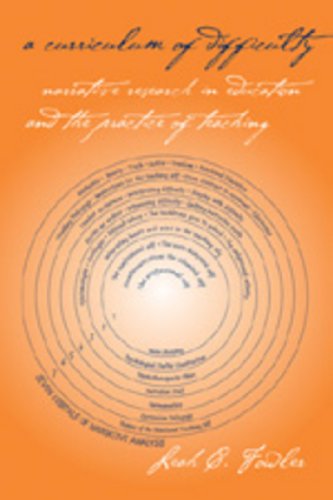
A Curriculum of Difficulty (Complicated Conversation: a Book Series...
Authors:
Leah C. Fowler
Publisher:
Peter Lang Publishing
Publication Date:
Not available
ISBN:
0820481505
Describing a new narrative research approach, this book focuses on difficulty in teaching practices, particularly at the site of the professional... teaching self. A thoughtful approach to narrative research is foundationally constructed through the use of thirteen original stories. Leah C. Fowler writes theoretically, narratively, and autobiographically to illustrate her narrative method of working. Her theory, along with internarrative exemplars, addresses a need for deeper inquiry into narrative research. The seven orbitals of scholarly narrative analysis include naive storying, psychological [de/re] construction, psychotherapeutic ethics, narrative craft, hermeneutics, curriculum pedagogy, and poetics of the relational teaching self.
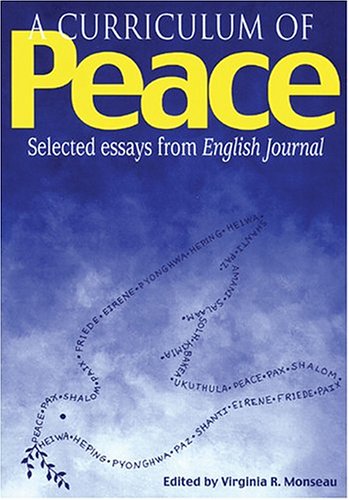
A Curriculum of Peace: Selected Essays from English Journal
Authors:
Not Available
Publisher:
Natl Council of Teachers
Publication Date:
Not available
ISBN:
0814110061
Tragic story of wasted lives, set against a bleak New England background. A poverty-stricken New England farmer, his ailing wife and a youthful... housekeeper are drawn relentlessly into a deep-rooted domestic struggle in this hauntingly grim tale of thwarted love. Considered by many to be Wharton's masterpiece.

A Curtain of Green: and Other Stories
Authors:
Eudora Welty
Publisher:
Mariner Books
Publication Date:
Not available
ISBN:
0156234920
This is the first collection of Welty’s stories, originally published in 1941. It includes such classics as “A Worn Path,” “Petrified Man,”... “Why I Live at the P.O.,” and “Death of a Traveling Salesman.” The historic Introduction by Katherine Anne Porter brought Welty to the attention of the american reading public.

A CUSTOMIZED EDITION FOR THE DEPARTMENT OF EARTH SCIENCES,...
Authors:
OZDENEROL ESRA
Publisher:
Kendall Hunt Publishing
Publication Date:
Not available
ISBN:
0757552978
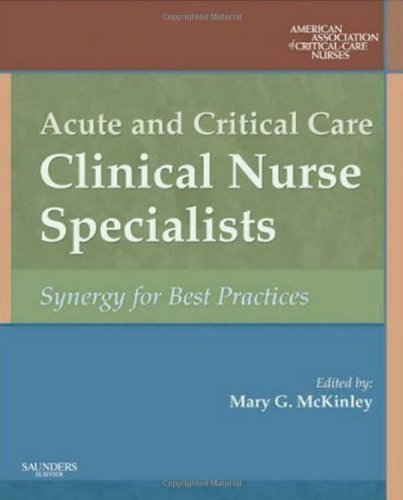
Acute and Critical Care Clinical Nurse Specialists: Synergy for...
Authors:
AACN
Publisher:
Saunders
Publication Date:
Not available
ISBN:
1416001565
2007 AJN Book of the Year Award WinnerAcute and Critical Care Clinical Nurse Specialists: Best Practices presents the knowledge and tools the CNS needs... to provide the best standards of practice and performance. It focuses on the role of the CNS in acute and critical care, emphasizing the relationship between critical care nursing, the patient, and the environment of care. Divided into 3 main sections, the framework of the book is based on the Scope and Standards of Practice for the Clinical Nurse Specialist in Acute and Critical Care and the AACN's synergy model. This book delivers up-to-date information for today's health care along with practical tools for the CNS in acute and critical care settings.Provides a current guide for the CNS' role in acute and critical care for the most up-to-date information.Reader-friendly presentation of information provides an easy reference that can be used in day-to-day practice.Discussion questions based on the CCNS blueprint assist in review for the certification examination, making this book a seminal reference for nurses taking the CCNS certification examination.Case studies present applied learning of the acute and critical care setting to prepare the reader for real-life situations.

Acute Care Handbook for Physical Therapists, 3e
Authors:
Jaime C. Paz MS PT
Publisher:
Saunders
Publication Date:
Not available
ISBN:
1416048995
Familiarize yourself with the acute care environment and confidently develop patient rehabilitation plans with this essential guide to physical therapy... practice in a clinical setting. Acute Care Handbook for Physical Therapists, Third Edition helps you understand and interpret hospital protocol, medical terminology, and the medical-surgical aspects of acute care. Each chapter focuses on a body system and includes a review of basic structure and function, an overview of a medical-surgical workup, a review of pathophysiology, information on pharmacology, and guidelines for physical therapy intervention. This edition features a larger, slimmer design that highlights clinical tips, decision-making aids, and practice patterns throughout the text so that you can easily locate these tools and apply them to your practice. If you are unfamiliar with the complex acute care environment, this comprehensive resource is just what you need to become more comfortable and better able to manage the specific needs of your patients.Review of body system basics and disease processes in each chapter provides concise information to help you better manage patients in a hospital setting.Familiarizes you with the acute care environment by explaining medical terminology, hospital protocol, and surgical workupsIncludes updated information on medications, laboratory and diagnostic tests, and surgical and invasive procedures pertinent to physical therapy practiceClinical tips throughout the text show you how to maximize safety, quality, and efficiency of care. Over 350 illustrations, tables, and boxed text highlight essential concepts and procedures for quick reference. Uses terminology consistent with the Guide to Physical Therapist Practice, Second EditionFocuses on evidence-based practice to help you determine the best interventions including recent literature regarding rehabilitation in the critical care setting. NEW! Pertinent practice patterns from the Guide to Physical Therapist Practice, Second Edition are included in each chapter. NEW! Additional illustrations to improve comprehension of the materialNEW! More pharmacologic implications for physical therapists, specifically concerning side effects and use of combination drugs. NEW! Additional decision-making algorithms facilitate critical thinking in the clinical setting. NEW! Updated surgical and invasive procedures include minimally invasive orthopedic surgery, bariatric procedures, and complete insight into circulatory assist devices. NEW! Expanded neurological chapter including vestibular dysfunction tests and measures, a discussion of dementia, and the latest in stroke evaluation and management. NEW! Revised appendices discuss the latest concepts in documentation standards, palliative care, and patient safety. NEW! Slimmer, larger format allows the book to lie open for easier reading. NEW! Improved design highlighting clinical tips and other key features lets you locate important information quickly in a busy clinical setting.

Acute Care Nurse Practitioner Study Question Book, Second Edition
Authors:
Sally K. Miller
Publisher:
Jones & Bartlett Publishers
Publication Date:
Not available
ISBN:
1449604579
Completely revised and updated, the Acute Care Nurse Practitioner Certification Study Question Book, Second Edition is intended to work either as a... stand alone or in conjunction with Adult Nurse Practitioner Certification Review Guide. The Study Question Book has 300 additional problem-oriented, multiple-choice questions which are divided according to content area and include answers, rationale and bibliographic reference. Prepared by board certified nurse practitioners, the questions are representative of those found on the certification examinations offered for the Nurse Practitioner Certification.

A Cycle of Outrage: America's Reaction to the Juvenile Delinquent...
Authors:
James Gilbert
Publisher:
Oxford University Press, USA
Publication Date:
Not available
ISBN:
0195056418
The youth culture is on everyone's lips today, as pressures build to ban controversial song lyrics, reintroduce school prayer, and prohibit teenagers'... access to contraceptives. It's not the first time Americans have been outraged over the "seuction of the innocent." When James Dean and Marlon Brando donned their motorcycle jackets and adopted alienated poses in Rebel Without a Cause, East of Eden, and The Wild One, in the 1950's, so did countless numbers of American teenagers. Or so it seemed to their parents. American teenagers were looking and acting like juvenile delinquents. By mid-decade, the nation had reached a pitch of near obsession with the harmful effects of film, radio, comic books, and television on American youth. Experts across the land denounced mass culture as depriving young people of their innocence and weakening their parents' hold on them. By the end of the decade, the obsession had ended, although the actual numbers of juvenile delinquents had apparently risen. A Cycle of Outrage explores the 1950's debate over the media and juvenile delinquency among parents, professionals, and the creators of mass culture themselves. In this groundbreaking study, James Gilbert sees the attempt to blame the media as part of a larger reaction of discomfort echoed in recent debates over censorship. The book examines how the central phenomena of the 1950's--the development of youth culture and the rise of a mass media society--became intertwined and confused and argues that young people ceased to be a threat as they were recognized to be a market. ,bout the Author: James Gilbert is a Professor of History at the University of Maryland. He is the author of Another Chance: America After World War II, among other books. A groundbreaking study of the '50s obsession with juvenile deliquency ·Sheds new light on the rise of the youth culture and America's response to change ·"A marvelous exploration...He deeply illuminates our understanding of the contemporary United States."--William M. Tuttle, Jr. ·"Cultural history at its best."--David Nasaw
AD101 ONLINE COURSE ACCESS KIT
Authors:
Not Available
Publisher:
Not available
Publication Date:
Not available
ISBN:
Not available

A.D. 381: Heretics, Pagans, and the Dawn of the Monotheistic State
Authors:
Charles Freeman
Publisher:
Overlook TP
Publication Date:
Not available
ISBN:
1590202872
A provoking and timely examination of one of the most important periods in Church history In A.D. 381, Theodosius, emperor of the eastern Roman empire,... issued a decree in which all his subjects were required to subscribe to a belief in the Trinity of the Father, Son and Holy Spirit. This edict defined Christian orthodoxy and brought to an end a lively and wide-ranging debate about the nature of God; all other interpretations were now declared heretical. It was the first time in a thousand years of Greco-Roman civilization free thought was unambiguously suppressed. Why has Theodosius's revolution been airbrushed from the historical record? In this groundbreaking book, acclaimed historian Charles Freeman argues that Theodosius's edict and the subsequent suppression of paganism not only brought an end to the diversity of religious and philosophical beliefs throughout the empire, but created numerous theological problems for the Church, which have remained unsolved. The year A.D. 381, as Freeman puts it, was "a turning point which time forgot."

Adam as Israel: Genesis 1-3 as the Introduction to the Torah and...
Authors:
Seth D. Postell
Publisher:
Pickwick Publications
Publication Date:
Not available
ISBN:
1610971760
The story of Adam is the story of Israel writ smallIn this text-centered interpretation of Genesis 1-3, Seth Postell contends that the opening chapters... of the Bible, when interpreted as a strategic literary introduction to the Torah and to the Tanakh, intentionally foreshadows Israel's failure to keep the Sinai Covenant and their exile from the Promised Land, in order to point the reader to a future work of God, whereby a king will come in "the last days" to fulfill Adam's original mandate to conquer the land (Gen 1:28). Thus Genesis 1-3, the Torah, and the Hebrew Bible as a whole have an eschatological trajectory.Postell highlights numerous intentional links between the story of Adam and the story of Israel and, in the process, explains numerous otherwise perplexing features of the Eden story.
 '
'