production
/viewbook/list/all/?page=2754
/
/static/
None
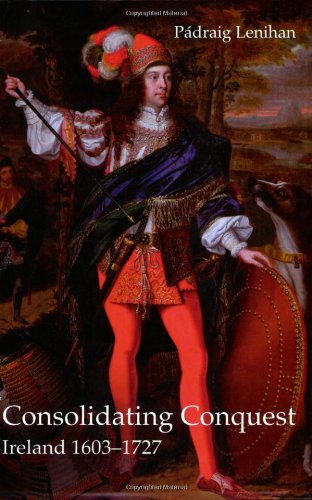
Consolidating Conquest: Ireland 1603-1727
Authors:
Padraig Lenihan
Publisher:
Longman
Publication Date:
Not available
ISBN:
0582772176
This book covers the crucial period of Irish history from the completion of the Tudor conquest of Ireland and the end of Gaelic resistance to the... temporary achievement of political stability in the early eighteenth century. This was a period of not entirely successful attempts to turn Ireland into a kingdom that was thoroughly English in terms of land settlement, law and government. It was also a period of revolts, suppression and the threat of invasion – of the Ulster plantations, Cromwell’s campaigns, the massacres of Drogheda and Wexford and the Battle of the Boyne– iconic events which laid the foundations for many centuries of trouble to come.
Conspicuous Consumption (Penguin Great Ideas)
Authors:
Thorsten Veblen
Publisher:
Penguin Books
Publication Date:
Not available
ISBN:
0143037595
The perfect books for the true book lover, Penguin's Great Ideas series features twelve more groundbreaking works by some of history's most prodigious... thinkers. Each volume is beautifully packaged with a unique type-driven design that highlights the bookmaker's art. Offering great literature in great packages at great prices, this series is ideal for those readers who want to explore and savor the Great Ideas that have shaped our world With its wry portrayal of a shallow, materialistic 'leisure class' obsessed by clothes, cars, consumer goods and climbing the social ladder, this withering satire on modern capitalism is as pertinent today as it was when it was written over a century ago.
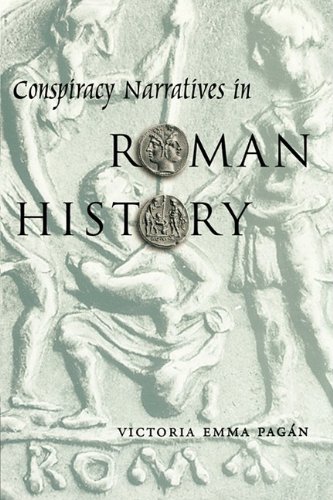
Conspiracy Narratives in Roman History
Authors:
Victoria Emma Pagán
Publisher:
University of Texas Press
Publication Date:
Not available
ISBN:
0292722338
Conspiracy is a thread that runs throughout the tapestry of Roman history. From the earliest days of the Republic to the waning of the Empire,... conspiracies and intrigues created shadow worlds that undermined the openness of Rome's representational government. To expose these dark corners and restore a sense of order and safety, Roman historians frequently wrote about famous conspiracies and about how their secret plots were detected and the perpetrators punished. These accounts reassured readers that the conspiracy was a rare exception that would not happen again--if everyone remained vigilant.In this first book-length treatment of conspiracy in Roman history, Victoria Pagán examines the narrative strategies that five prominent historians used to disclose events that had been deliberately shrouded in secrecy and silence. She compares how Sallust, Livy, and Tacitus constructed their accounts of the betrayed Catilinarian, Bacchanalian, and Pisonian conspiracies. Her analysis reveals how a historical account of a secret event depends upon the transmittal of sensitive information from a private setting to the public sphere--and why women and slaves often proved to be ideal transmitters of secrets. Pagán then turns to Josephus's and Appian's accounts of the assassinations of Caligula and Julius Caesar to explore how the two historians maintained suspense throughout their narratives, despite readers' prior knowledge of the outcomes.
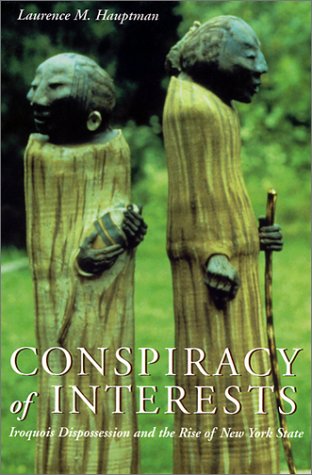
Conspiracy of Interests: Iroquois Dispossession and the Rise of New...
Authors:
Laurence M. Hauptman
Publisher:
Syracuse University Press
Publication Date:
Not available
ISBN:
0815607121
A captivating look at a bygone era through the lens of a single, surprisingly momentous American year one century ago. 1908 was the year Henry Ford... launched the Model T, the Wright Brothers proved to the world that they had mastered the art of flight, Teddy Roosevelt decided to send American naval warships around the globe, the Chicago Cubs won the World Series (a feat they have never yet repeated), and six automobiles set out on an incredible 20,000 mile race from New York City to Paris via the frozen Bering Strait. A charming and knowledgeable guide, Rasenberger takes readers back to a time of almost limitless optimism, even in the face of enormous inequality, an era when the majority of Americans believed that the future was bound to be better than the past, that the world’s worst problems would eventually be solved, and that nothing at all was impossible. As Thomas Edison succinctly said that year, “Anything, everything is possible.”
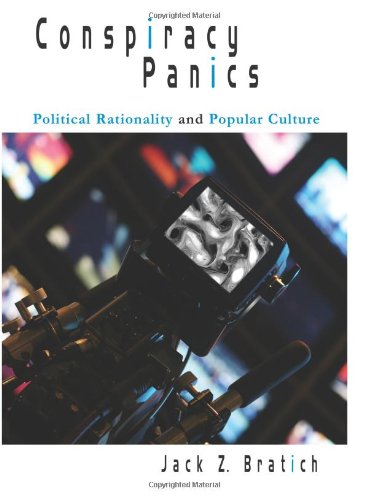
Conspiracy Panics: Political Rationality and Popular Culture
Authors:
Jack Z. Bratich
Publisher:
State University of New York Press
Publication Date:
Not available
ISBN:
0791473341
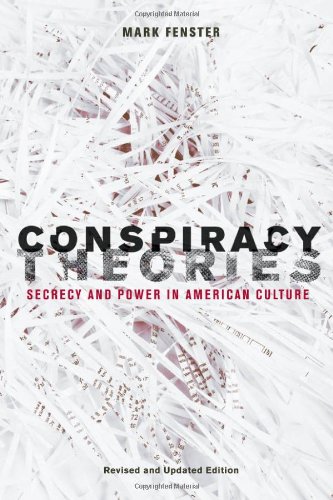
Conspiracy Theories: Secrecy and Power in American Culture
Authors:
Mark Fenster
Publisher:
Univ Of Minnesota Press
Publication Date:
Not available
ISBN:
0816654948
JFK, Karl Marx, the Pope, Aristotle Onassis, Queen Elizabeth II, Howard Hughes, Fox Mulder, Bill Clinton-all have been linked to vastly complicated... global (or even galactic) intrigues. In this enlightening tour of conspiracy theories, Mark Fenster guides readers through this shadowy world and analyzes its complex role in American culture and politics. Fenster argues that conspiracy theories are a form of popular political interpretation and contends that understanding how they circulate through mass culture helps us better understand our society as a whole. To that end, he discusses Richard Hofstadter's The Paranoid Style in American Politics, the militia movement, The X-Files, popular Christian apocalyptic thought, and such artifacts of suspicion as The Turner Diaries, the Illuminatus! trilogy, and the novels of Richard Condon. Fenster analyzes the "conspiracy community" of radio shows, magazine and book publishers, Internet resources, and role-playing games that promote these theories. In this world, the very denial of a conspiracy's existence becomes proof that it exists, and the truth is always "out there." He believes conspiracy theory has become a thrill for a bored subculture, one characterized by its members' reinterpretation of "accepted" history, their deep cynicism about contemporary politics, and their longing for a utopian future. Fenster's progressive critique of conspiracy theories both recognizes the secrecy and inequities of power in contemporary politics and economics and works toward effective political engagement. Probing conspiracy theory's tendencies toward scapegoating, racism, and fascism, as well as Hofstadter's centrist acceptance of a postwar American "consensus," he advocates what conspiracy theory wants but cannot articulate: a more inclusive, engaging political culture. Mark Fenster received his Ph.D. in communication from the University of Illinois and his law degree from Yale University. He currently lives in Denver. Excerpt: "Ultimately, I want to propose that the Utopian 'plot' to be uncovered is not composed of the exclusivity and secrets of conspiracy, but of the open-ended political struggle for equality, solidarity, and a transparent, participatory democracy that conspiracy theory might assume but can hardly imagine and cannot attain."
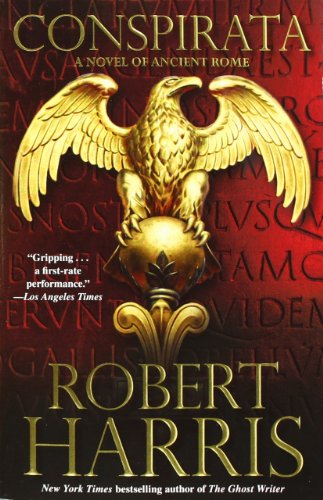
Conspirata: A Novel of Ancient Rome
Authors:
Robert Harris
Publisher:
Pocket Books
Publication Date:
Not available
ISBN:
0743266110
Conspirata is “a portrait of ancient politics as a blood sport,” raves the New York Times. As he did with Imperium, Robert Harris again turns Roman... history into a gripping thriller as Cicero faces a new power struggle in a world filled with treachery, violence, and vengeance. On the eve of Cicero’s inauguration as consul of Rome, a grisly discovery sends fear rippling through a city already racked by unrest. A young slave boy has been felled by a hammer, his throat slit and his organs removed, apparently as a human sacrifice. For Cicero, the ill omens of this hideous murder only increase his dangerous situation: elected leader by the people but despised by the heads of the two rival political camps. Caught in a shell game that leaves him forever putting out fires only to have them ignite elsewhere, Cicero plays for the future of the republic . . . and his life. There is a plot to assassinate him, abetted by a rising young star of the Roman senate named Gaius Julius Caesar—and it will take all the embattled consul’s wit, strength, and force of will to stop the plot and keep Rome from becoming a dictatorship.
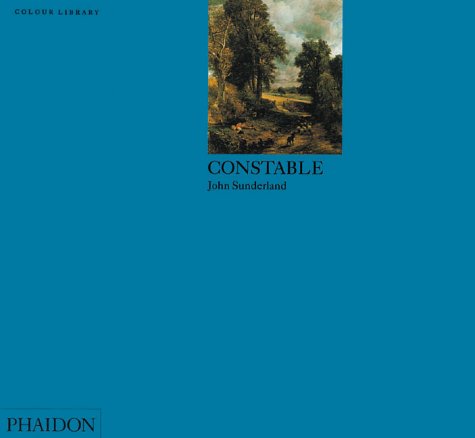
Constable: Colour Library (Phaidon Colour Library)
Authors:
John Sunderland
Publisher:
Phaidon Press
Publication Date:
Not available
ISBN:
0714827541
This series acts as an introduction to key artists and movements in art history. Each title contains 48 full-page colour plates, accompanied by... extensive notes, and numerous comparative illustrations in colour or black and white, a concise introduction, select bibliography and detailed source information for the images. Monographs on individual artists also feature a brief chronology.
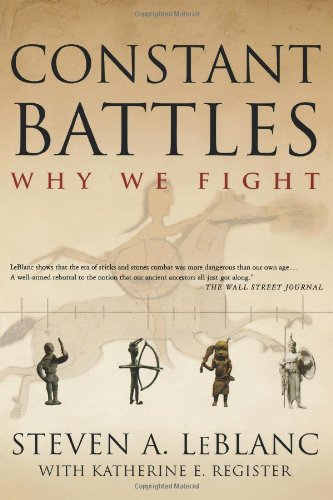
Constant Battles: Why We Fight
Authors:
Steven Le Blanc
Publisher:
St. Martin's Griffin
Publication Date:
Not available
ISBN:
0312310900
With armed conflict in the Persian Gulf now upon us, Harvard archaeologist Steven LeBlanc takes a long-term view of the nature and roots of war,... presenting a controversial thesis: The notion of the "noble savage" living in peace with one another and in harmony with nature is a fantasy. In Constant Battles: The Myth of the Peaceful, Noble Savage, LeBlanc contends that warfare and violent conflict have existed throughout human history, and that humans have never lived in ecological balance with nature. The start of the second major U.S. military action in the Persian Gulf, combined with regular headlines about spiraling environmental destruction, would tempt anyone to conclude that humankind is fast approaching a catastrophic end. But as LeBlanc brilliantly argues, the archaeological record shows that the warfare and ecological destruction we find today fit into patterns of human behavior that have gone on for millions of years.Constant Battles surveys human history in terms of social organization-from hunter gatherers, to tribal agriculturalists, to more complex societies. LeBlanc takes the reader on his own digs around the world -- from New Guinea to the Southwestern U.S. to Turkey -- to show how he has come to discover warfare everywhere at every time. His own fieldwork combined with his archaeological, ethnographic, and historical research, presents a riveting account of how, throughout human history, people always have outgrown the carrying capacity of their environment, which has led to war. Ultimately, though, LeBlanc's point of view is reassuring and optimistic. As he explains the roots of warfare in human history, he also demonstrates that warfare today has far less impact than it did in the past. He also argues that, as awareness of these patterns and the advantages of modern technology increase, so does our ability to avoid war in the future.

Constantine and the Bishops: The Politics of Intolerance (Ancient...
Authors:
H. A. Drake
Publisher:
The Johns Hopkins University Press
Publication Date:
Not available
ISBN:
0801871042
Historians who viewed imperial Rome in terms of a conflict between pagans and Christians have often regarded the emperor Constantine's conversion as the... triumph of Christianity over paganism. But in Constantine and the Bishops, historian H. A. Drake offers a fresh and more nuanced understanding of Constantine's rule and, especially, of his relations with Christians.Constantine, Drake suggests, was looking not only for a god in whom to believe but also a policy he could adopt. Uncovering the political motivations behind Constantine's policies, Drake shows how those policies were constructed to ensure the stability of the empire and fulfill Constantine's imperial duty in securing the favor of heaven.Despite the emperor's conversion to Christianity, Drake concludes, Rome remained a world filled with gods and with men seeking to depose rivals from power. A book for students and scholars of ancient history and religion, Constantine and the Bishops shows how Christian belief motivated and gave shape to imperial rule.
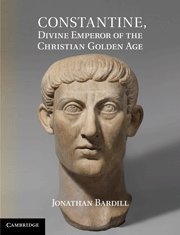
Constantine, Divine Emperor of the Christian Golden Age
Authors:
Jonathan Bardill
Publisher:
Cambridge University Press
Publication Date:
Not available
ISBN:
0521764238
Constantine, Divine Emperor of the Christian Golden Age offers a radical reassessment of Constantine as an emperor, a pagan, and a Christian. The book... examines in detail a wide variety of evidence, including literature, secular and religious architectural monuments, coins, sculpture, and other works of art. Setting the emperor in the context of the kings and emperors who preceded him, Jonathan Bardill shows how Constantine's propagandists exploited the traditional themes and imagery of rulership to portray him as having been elected by the supreme solar God to save his people and inaugurate a brilliant golden age. The author argues that the cultivation of this image made it possible for Constantine to reconcile the long-standing tradition of imperial divinity with his monotheistic faith by assimilating himself to Christ.
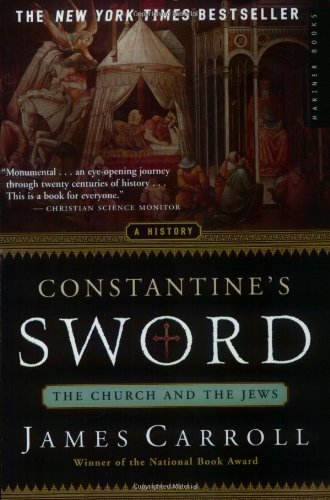
Constantine's Sword: The Church and the Jews, A History
Authors:
James Carroll
Publisher:
Mariner Books
Publication Date:
Not available
ISBN:
0618219080
“A rare book that combines searing passion with a subject that has affected all of our lives.”—Chicago Tribune Novelist, cultural critic, and... former priest James Carroll marries history with memoir as he maps the two-thousand-year course of the Church’s battle against Judaism and faces the crisis of faith it has sparked in his own life. “Fascinating, brave, and sometimes infuriating” (Time), this dark history is more than a chronicle of religion. It is the central tragedy of Western civilization, its fault lines reaching deep into our culture to create “a deeply felt work” (San Francisco Chronicle) as Carroll wrangles with centuries of strife and tragedy to reach a courageous and affecting reckoning with difficult truths.

Constantine V.Prince & Worldwide Footwear In
Authors:
Not Available
Publisher:
Not available
Publication Date:
Not available
ISBN:
Not available
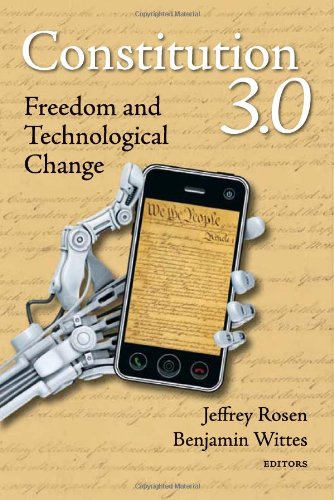
Constitution 3.0: Freedom and Technological Change
Authors:
Not Available
Publisher:
Brookings Institution Press
Publication Date:
Not available
ISBN:
0815722125
Technological changes are posing stark challenges to America's core values. Basic constitutional principles find themselves under stress from stunning... advances that were unimaginable even a few decades ago, much less during the Founders' era. Policymakers and scholars must begin thinking about how constitutional principles are being tested by technological change and how to ensure that those principles can be preserved without hindering technological progress. Constitution 3.0, a product of the Brookings Institution's landmark Future of the Constitution program, presents an invaluable roadmap for responding to the challenge of adapting our constitutional values to future technological developments. Renowned legal analysts Jeffrey Rosen and Benjamin Wittes asked a diverse group of leading scholars to imagine plausible technological developments in or near the year 2025 that would stress current constitutional law and to propose possible solutions. Some tackled issues certain to arise in the very near future, while others addressed more speculative or hypothetical questions. Some favor judicial responses to the scenarios they pose; others prefer legislative or regulatory responses.Here is a sampling of the questions raised and answered in Constitution 3.0:• How do we ensure our security in the face of the biotechnology revolution and our overwhelming dependence on internationally networked computers?• How do we protect free speech and privacy in a world in which Google and Facebook have more control than any government or judge?• How will advances in brain scan technologies affect the constitutional right against self-incrimination?• Are Fourth Amendment protections against unreasonable search and seizure obsolete in an age of ubiquitous video and unlimited data storage and processing?• How vigorously should society and the law respect the autonomy of individuals to manipulate their genes and design their own babies?Individually and collectively, the deeply thoughtful analyses in Constitution 3.0 present an innovative roadmap for adapting our core legal values, in the interest of keeping the Constitution relevant through the 21st century.Contributors include Jamie Boyle, Erich Cohen, Robert George, Jack Goldsmith, Orin Kerr, Lawrence Lessig, Stephen Morse, John Robertson, Jeffrey Rosen, Christopher Slobogin, O. Carter Snead, Benjamin Wittes, Tim Wu, and Jonathan Zittrain.
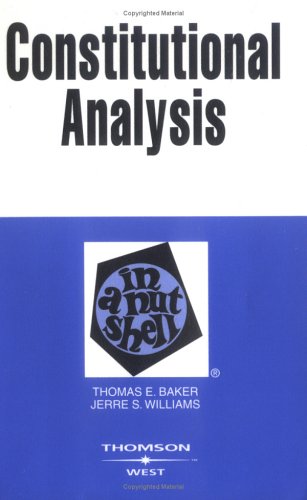
Constitutional Analysis: In a Nutshell (Nutshell Series)
Authors:
Thomas E. Baker
Publisher:
West Group
Publication Date:
Not available
ISBN:
0314265147
This authoritative text provides a framework for understanding individual liberty and governmental power and the institutional role played by the U.S.... Supreme Court. Coverage includes judicial review, commerce clause and state powers, federalism, separation of powers, congressional and executive powers, and individual civil rights and civil liberties. Includes diagrams that aid understanding of the fundamentals of our system of government.
 '
'