production
/viewbook/list/all/?page=2762
/
/static/
None

CONSTITUTION OF IRAQ
Authors:
Not Available
Publisher:
Not available
Publication Date:
Not available
ISBN:
Not available
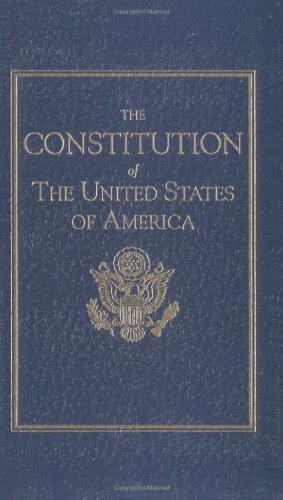
Constitution of the United States (Little Books of Wisdom)
Authors:
Not Available (NA)
Publisher:
Applewood Books
Publication Date:
Not available
ISBN:
1557091056
The landmark legal document of the United States, the U.S. Constitution comprises the primary law of the Federal Government. Signed by the members of... the Consitutional Convention in Philadelphia on September 17, 1787, the Constitution outlines the powers and responsibilities of the three chief branches of the Federal Government, as well as the basic rights of the citizens of the United States. This beautiful gift edition contains the complete text of the United States Constitution, as well as all of its amendments. It is a treasure for Americans of all ages.
Constitution Study GD 2006
Authors:
Holt Rinehart Winston
Publisher:
Not available
Publication Date:
Not available
ISBN:
0030419220
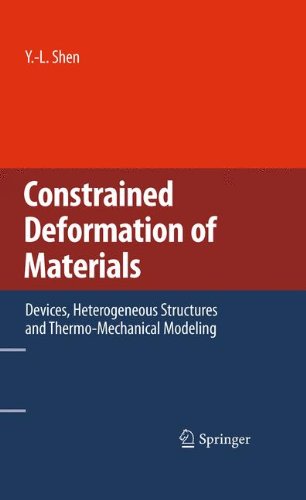
Constrained Deformation of Materials: Devices, Heterogeneous...
Authors:
Y.-L. Shen
Publisher:
Springer
Publication Date:
Not available
ISBN:
1441963111
"Constrained Deformation of Materials: Devices, Heterogeneous Structures and Thermo-Mechanical Modeling" is an in-depth look at the mechanical analyses... and modeling of advanced small-scale structures and heterogeneous material systems. Mechanical deformations in thin films and miniaturized materials, commonly found in microelectronic devices and packages, MEMS, nanostructures and composite and multi-phase materials, are heavily influenced by the external or internal physical confinement. A continuum mechanics-based approach is used, together with discussions on micro-mechanisms, to treat the subject in a systematic manner under the unified theme. Readers will find valuable information on the proper application of thermo-mechanics in numerical modeling as well as in the interpretation and prediction of physical material behavior, along with many case studies. Additionally, particular attention is paid to practical engineering relevance. Thus real-life reliability issues are discussed in detail to serve the needs of researchers and engineers alike.
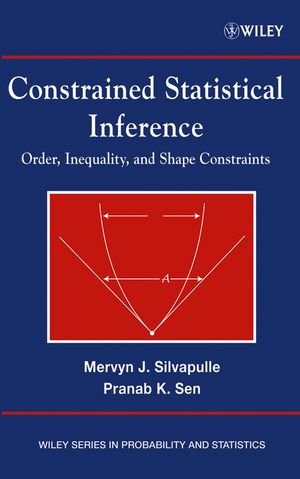
Constrained Statistical Inference: Inequality, Order, and Shape...
Authors:
Mervyn J. Silvapulle
Publisher:
Wiley-Interscience
Publication Date:
Not available
ISBN:
0471208272
An up-to-date approach to understanding statistical inferenceStatistical inference is finding useful applications in numerous fields, from sociology and... econometrics to biostatistics. This volume enables professionals in these and related fields to master the concepts of statistical inference under inequality constraints and to apply the theory to problems in a variety of areas.Constrained Statistical Inference: Order, Inequality, and Shape Constraints provides a unified and up-to-date treatment of the methodology. It clearly illustrates concepts with practical examples from a variety of fields, focusing on sociology, econometrics, and biostatistics.The authors also discuss a broad range of other inequality-constrained inference problems that do not fit well in the contemplated unified framework, providing a meaningful way for readers to comprehend methodological resolutions.Chapter coverage includes:Population means and isotonic regressionInequality-constrained tests on normal meansTests in general parametric modelsLikelihood and alternativesAnalysis of categorical dataInference on monotone density function, unimodal density function, shape constraints, and DMRL functionsBayesian perspectives, including Stein’s Paradox, shrinkage estimation, and decision theory
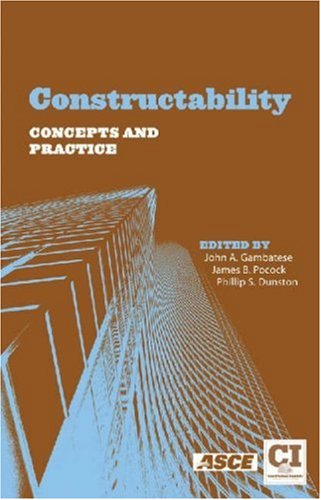
Constructability Concepts and Practice
Authors:
Not Available
Publisher:
Amer Society of Civil Engineers
Publication Date:
Not available
ISBN:
0784408955
An instant source of checklists, worksheets, forms, and model letters that provide a virtual blueprint for success at every stage of real estate... development, from seeking the right property and budgeting to building and selling it at the highest profit.
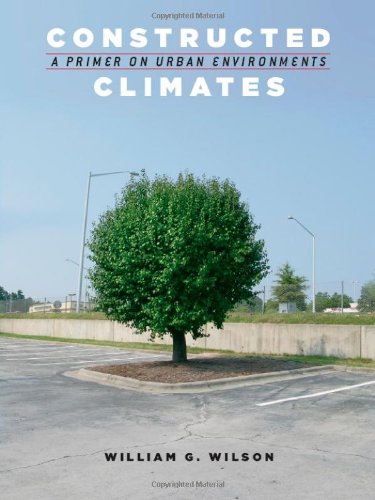
Constructed Climates: A Primer on Urban Environments
Authors:
William G. Wilson
Publisher:
University Of Chicago Press
Publication Date:
Not available
ISBN:
0226901467
As our world becomes increasingly urbanized, an understanding of the context, mechanisms, and consequences of city and suburban environments becomes... more critical. Without a sense of what open spaces such as parks and gardens contribute, it’s difficult to argue for their creation and maintenance: in the face of schools needing resources, roads and sewers needing maintenance, and people suffering at the hands of others, why should cities and counties spend scarce dollars planting trees and preserving parks? In Constructed Climates, ecologist William G. Wilson demonstrates the value of urban green. Focusing specifically on the role of vegetation and trees, Wilson shows the costs and benefits reaped from urban open spaces, from cooler temperatures to better quality ground water—and why it all matters. While Constructed Climates is a work of science, it does not ignore the social component. Wilson looks at low-income areas that have poor vegetation, and shows how enhancing these areas through the planting of community gardens and trees can alleviate social ills. This book will be essential reading for environmentalists and anyone making decisions for the nature and well-being of our cities and citizens.

Constructing a Case: An Integrated Approach to Criminal Law
Authors:
Katherine Pang
Publisher:
Carolina Academic Press
Publication Date:
Not available
ISBN:
1594608873
This textbook provides a model for students to learn the various types of crimes studied in a criminal law course, how to identify the material elements... of the crimes, and how to develop analytical reasoning skills by integrating material facts from cases and hypothetical fact patterns with the elements of various crimes. Constructing a Criminal Case emphasizes an integrative method of instruction based on learning theory that stimulates contextual, relevant learning so that students can make sense and meaning of the course content. In this textbook, students will learn not only the fundamental content of a traditional criminal law course, including the elements of various crimes as defined by a variety of states in their criminal code/penal code, but will also have the opportunity to integrate criminal law, criminal procedure, and evidence by learning how to construct a case and applying their knowledge in an applied learning activity a mock criminal trial. Throughout the textbook the student has the opportunity to 'stop and engage' their learning by reading statutory language from a variety of state penal codes and case excerpts and then applying their learning to hypothetical fact patterns and practical application exercises. The instructional design pedagogy of the textbook emphasizes not only learning course content but promoting the retention and application of the course content. The many questions posed throughout the textbook are designed to build on previously learned concepts by using reflective questions and application exercises that develop critical thinking and analytical reasoning. In addition to being used as the primary text for any criminal law course, Constructing a Criminal Case can also be used for courses in trial advocacy, the criminal trial process, or for gaining an understanding of criminal justice from an integrated legal perspective.
Constructing a Language: A Usage-Based Theory of Language Acquisition
Authors:
Michael Tomasello
Publisher:
Harvard University Press
Publication Date:
Not available
ISBN:
0674017641
In this groundbreaking book, Michael Tomasello presents a comprehensive usage-based theory of language acquisition. Drawing together a vast body of... empirical research in cognitive science, linguistics, and developmental psychology, Tomasello demonstrates that we don't need a self-contained "language instinct" to explain how children learn language. Their linguistic ability is interwoven with other cognitive abilities. Tomasello argues that the essence of language is its symbolic dimension, which rests on the uniquely human ability to comprehend intention. Grammar emerges as the speakers of a language create linguistic constructions out of recurring sequences of symbols; children pick up these patterns in the buzz of words they hear around them. All theories of language acquisition assume these fundamental skills of intention-reading and pattern-finding. Some formal linguistic theories posit a second set of acquisition processes to connect somehow with an innate universal grammar. But these extra processes, Tomasello argues, are completely unnecessary--important to save a theory but not to explain the phenomenon. For all its empirical weaknesses, Chomskian generative grammar has ruled the linguistic world for forty years. Constructing a Language offers a compellingly argued, psychologically sound new vision for the study of language acquisition.
Constructing and Deconstructing Patents
Authors:
Irah H. Donner
Publisher:
BNA Books, A Division of Bureau of National Affairs
Publication Date:
Not available
ISBN:
157018934X
Intellectual property remains the life blood of many businesses, and its proper cultivation and protection are crucial to strengthening a company s... competitive advantage, especially now during the recession. Fundamental to preserving the value of IP assets is ensuring that patents are constructed properly from the beginning. Driven by the difficulties he faced in mentoring attorneys and agents on the mechanics of patent application drafting, Irah H. Donner author of the classic BNA Books treatise Patent Prosecution: Law, Practice, and Procedure has now written the seminal guide on the subject: Constructing and Deconstructing Patents. Walking the reader step-by-step through the complexities of drafting a patent application, Constructing and Deconstructing Patents provides a standard methodology patent attorneys and agents can rely on to simplify the process. Regardless of the particular type of patent, or the level of difficulty of its technical subject matter, this treatise will help ensure each section of the patent application is carefully considered and fully developed for submission of the final application to the U.S. Patent and Trademark Office (PTO). Original, continuation, continuation-in-part, divisional, and provisional patent applications are covered in the text, and examples are taken from the invention types or technologies most regularly filed with the PTO, including mechanical, electrical, and chemical patents. Not only does this book offers expert guidance on the fundamental concepts in patent application drafting, but it also discusses the major areas of patent law that can affect the strength and vitality of a patent years later. Having this expert insight equips litigators and patent attorneys and agents to deconstruct the major elements of a patent, assessing its strengths and weaknesses. This feature is especially important in the context of litigation, with respect to the completeness and satisfaction of the application s requirements and in spotting elements that can be successfully challenged on legal grounds. Patent attorneys and agents engaged in patent application drafting practice before the PTO will find this book to be extremely valuable, as will litigators seeking both to understand the construction of patent applications, and to deconstruct them during litigation. The book s detailed organization makes it accessible as a guide for the new attorney or agent, while its time-tested methodology provides valuable insights for the experienced practitioner and can serve as a checklist review for each phase of constructing and deconstructing patents. With the publication of Constructing and Deconstructing Patents, the author has provided a useful tool attorneys and agents will find invaluable in their work to successfully secure patents.
Constructing and Reconstructing Childhood: Contemporary Issues in...
Authors:
Not Available
Publisher:
Routledge
Publication Date:
Not available
ISBN:
0750705965
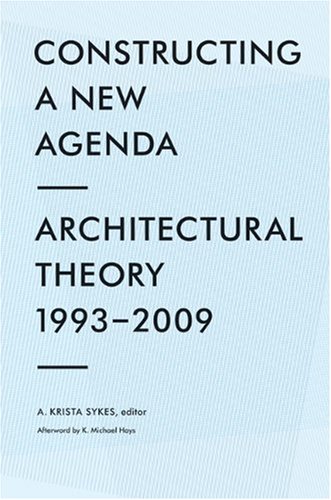
Constructing a New Agenda: Architectural Theory 1993-2009
Authors:
A. Krista Sykes
Publisher:
Princeton Architectural Press
Publication Date:
Not available
ISBN:
1568988591
Critical architectural theory has, over the past decade and a half, undergone significant transformation. The urgency of the 1990s propractice movement,... with its mandate to focus on the realities of building, has shifted architectural theory away from utopian ideals and heavy-handed cultural critiques toward the realities of architecture and building. This transition renders theory's immediate history particularly relevant to contemporary thought and practice. Constructing a New Agenda offers an overview of the myriad approaches and attitudes adopted by architects and architectural theorists during this era. In this long-awaited follow-up to our critically acclaimed and best-selling anthology Theorizing a New Agenda, editor A. Krista Sykes collects twenty-eight essays that address architectural theory from the mid-1990s, where the first volume left off, through the present. Multiple themes—including the impact of digital technologies on processes of architectural design, production, materiality, and representation; the implications of globalization and networks of information; the growing emphasis on sustainable and green architecture; and the phenomenon of the "starchitect" and iconic architecture—overlap to address the contemporary situation as a whole. By providing, in one place, the keytheoretical texts of the past fifteen years, Constructing a New Agenda becomes a foundation for ongoing discussions surrounding contemporary architectural thought and practice. Contributions by distinguished thinkers and makers such as Stan Allen, Deborah Berke, Michael Braungart, Rem Koolhaas, Sanford Kwinter, Greg Lynn, Reinhold Martin, William McDonough, William Mitchell, Samuel Mockbee, Glenn Murcutt, Jesse Reiser and Nanako Umemoto, Michael Speaks and Anthony Vidler are preceded by brief introductions that establish each essay's particular historical context and significance. An afterword by preeminent architectural theorist K. Michael Hays reflects on where architectural theory is today and where it's headed in the future.
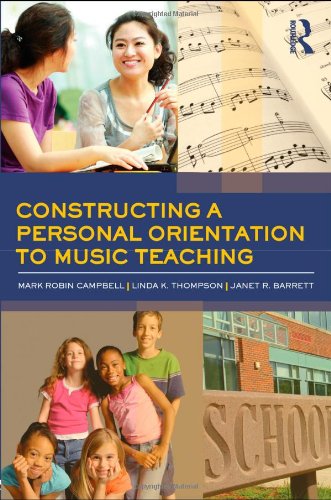
Constructing a Personal Orientation to Music Teaching
Authors:
Mark Robin Campbell
Publisher:
Routledge
Publication Date:
Not available
ISBN:
0415871859
Constructing a Personal Orientation to Music Teaching promotes inquiry and reflection to facilitate teacher growth, lifelong learning and a disposition... toward educational change. Strongly grounded in current theories and research in teacher education, the text engages readers in analyzing their own experiences in order to conceptualize the complexity of teaching; involves them in clarifying their reasons for seeking a career in teaching; supports their insights, questions, and reflections about their work; and promotes a reflective, critical attitude about schools in general as teachers are urged to think of themselves as change agents in school settings.
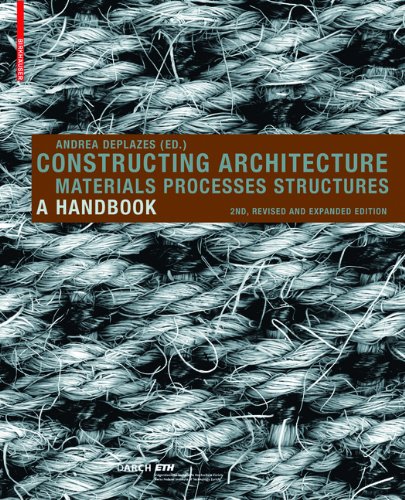
Constructing Architecture: Materials, Processes, Structures
Authors:
Not Available
Publisher:
Birkhäuser Architecture
Publication Date:
Not available
ISBN:
3764386312
This internationally prizewinning volume now appears in its second, revised and expanded edition. Since the first edition was published in 2005, it has... been adopted as a textbook at many universities. Organized into chapters on "Raw Materials/Building Materials (Modules)," "Building Components (Elements)," "Building Methods (Structures)," and "Buildings (Examples)," the book now includes a new section on translucent materials and an article on the use of glass. The chapter on "Building Elements" now includes a discussion of facades, and the chapter on "Structures" has been expanded to cover "Principles of Space Creation." The examples section now includes extensive documentation of current projects whose systematic character is oriented around the production process. Experience with the preceding edition has shown that the book has become an indispensable handbook for reference and reading not only for students and teachers but also for architects.
Constructing Architecture: Materials, Processes, Structures
Authors:
Not Available
Publisher:
Birkhäuser Basel
Publication Date:
Not available
ISBN:
3764371897
This internationally prizewinning volume now appears in its second, revised and expanded edition. Since the first edition was published in 2005, it has... been adopted as a textbook at many universities. Organized into chapters on "Raw Materials/Building Materials (Modules)," "Building Components (Elements)," "Building Methods (Structures)," and "Buildings (Examples)," the book now includes a new section on translucent materials and an article on the use of glass. The chapter on "Building Elements" now includes a discussion of facades, and the chapter on "Structures" has been expanded to cover "Principles of Space Creation." The examples section now includes extensive documentation of current projects whose systematic character is oriented around the production process. Experience with the preceding edition has shown that the book has become an indispensable handbook for reference and reading not only for students and teachers but also for architects.
 '
'