production
/viewbook/list/all/?page=279
/
/static/
None

Addicted to Failure: U.S. Security Policy in Latin America and the...
Authors:
Not Available
Publisher:
Rowman & Littlefield Publishers
Publication Date:
Not available
ISBN:
0742540987
For supplementary documentation and useful websites, click here.This perceptive book critically explores why the United States continues to pursue... failed policies in Latin America. What elements of the U.S. and Latin American political systems have allowed the Cold War, the war on drugs, and the war on terror to be conflated? Why do U.S. policies—ostensibly designed to promote the rule of law, human rights, and democracy—instead contribute to widespread corruption, erosion of government authority, human rights violations, and increasing destabilization? Why have the war on drugs and the war on terror neither reduced narcotics trafficking nor increased citizen security in Latin America? Why do Latin American governments, the European Union, and U.S. policymakers often work at cross-purposes when they all claim to be committed to "democratization" and "development" in the region?Leading scholars answer these questions by detailing the nature of U.S. economic and security strategies in Latin America and the Andean region since 1990. They analyze the impacts and responses to these strategies by policymakers, political leaders, and social movements throughout the region, explaining how programs often generate or exacerbate the very problems they were intended to solve. Reviewing official policy and its defenders and critics alike, this indispensable book focuses on the reasons for the failure of U.S. policies and their disastrous significance for Latin America and the United States alike.
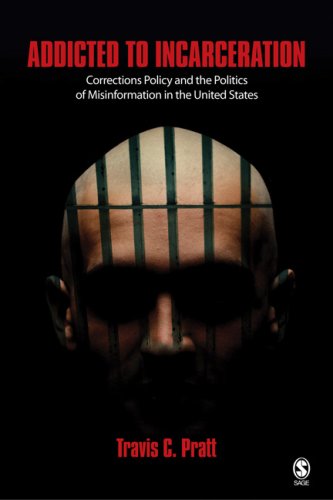
Addicted to Incarceration: Corrections Policy and the Politics of...
Authors:
Travis C. Pratt
Publisher:
Sage Publications, Inc
Publication Date:
Not available
ISBN:
0761928316
In Addicted to Incarceration, author Travis Pratt uses an evidence-based approach to explore the consequences of what he terms America’s “addiction... to incarceration,” highlighting the scope of the problem, the nature of the political discussions surrounding criminal justice policy in general and corrections policy in particular, and the social cost of incarceration. Pratt demonstrates that the United States’ addiction to incarceration has been fueled by American citizens’ opinions about crime and punishment, the effectiveness of incarceration as a means of social control, and perhaps most important, by policies legitimized by faulty information (e.g.,fear of crime is objectively linked to victimization, petty offenders mature into violent predators, and persistent offending can be accurately predicted over the life course). Analyzing crime policies as they relate to crime rates and U.S. society’s ability to both lower the crime rate and address the role of incarceration in preventing future crime, the book shows students how ineffective our rush to incarcerate has been in the last decade, as well as offering recommendations and insights into the future of this problem. Features Real world examples that put a human face on the issues open each chapter Race, ethnicity, and gender issues underlie all discussions and address key aspects of incarceration rates and crime trends The social costs of incarceration are explored, including the heightened inmate risk of personal victimization, incarceration’s effect as a barrier to successful offender reintegration into society, and its role in exacerbating existing racial inequalities The final chapter contains conclusions and recommendations for future policy makers Written in an informal and accessible style, Addicted to Incarceration is appropriate for criminal justice policy or corrections courses at the undergraduate level and can also be used as a supplementary text in introductory criminal justice, criminology, and critical issues in criminal justice courses.
Addicted to Incarceration: Corrections Policy and the Politics of...
Authors:
Travis C. Pratt
Publisher:
Sage Publications, Inc
Publication Date:
Not available
ISBN:
0761928324
In Addicted to Incarceration, author Travis Pratt uses an evidence-based approach to explore the consequences of what he terms America’s “addiction... to incarceration,” highlighting the scope of the problem, the nature of the political discussions surrounding criminal justice policy in general and corrections policy in particular, and the social cost of incarceration. Pratt demonstrates that the United States’ addiction to incarceration has been fueled by American citizens’ opinions about crime and punishment, the effectiveness of incarceration as a means of social control, and perhaps most important, by policies legitimized by faulty information (e.g.,fear of crime is objectively linked to victimization, petty offenders mature into violent predators, and persistent offending can be accurately predicted over the life course). Analyzing crime policies as they relate to crime rates and U.S. society’s ability to both lower the crime rate and address the role of incarceration in preventing future crime, the book shows students how ineffective our rush to incarcerate has been in the last decade, as well as offering recommendations and insights into the future of this problem. Features Real world examples that put a human face on the issues open each chapter Race, ethnicity, and gender issues underlie all discussions and address key aspects of incarceration rates and crime trends The social costs of incarceration are explored, including the heightened inmate risk of personal victimization, incarceration’s effect as a barrier to successful offender reintegration into society, and its role in exacerbating existing racial inequalities The final chapter contains conclusions and recommendations for future policy makers Written in an informal and accessible style, Addicted to Incarceration is appropriate for criminal justice policy or corrections courses at the undergraduate level and can also be used as a supplementary text in introductory criminal justice, criminology, and critical issues in criminal justice courses.
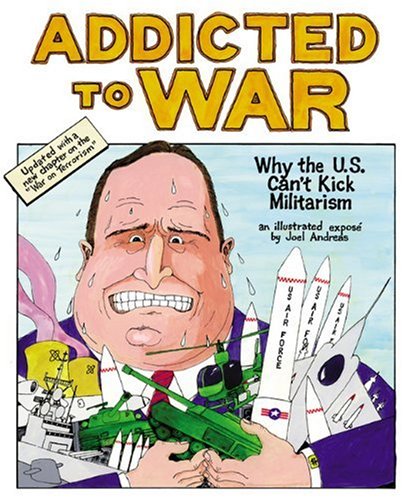
Addicted to War: Why the U.S. Can't Kick Militarism
Authors:
Joel Andreas
Publisher:
AK Press
Publication Date:
Not available
ISBN:
1904859011
Addicted to War takes on the most active, powerful and destructive military in the world. Hard-hitting, carefully documented and heavily illustrated, it... reveals why the United States has been involved in more wars in recent years than any other country. Read Addicted to War to find out who benefits from these military adventures, who pays—and who dies. Over 120,000 copies of the previous edition are in print. This new edition is substantially reworked and fully updated through the War in Iraq. “A witty and devastating portrait of U.S. military policy.”—Howard ZinnJoel Andreas wrote and illustrated The Incredible Rocky, the biting satire that introduced over 100,000 people to the unsavory activities of the Rockefeller family.
Addict In The Family: Stories of Loss, Hope, and Recovery.
Authors:
Beverly Conyers
Publisher:
Hazelden
Publication Date:
Not available
ISBN:
156838999X
Witnessing the addiction of a family member or loved one is a heart-rending experience. But hope can prevail, as shown in this compelling new book.... Here, the gripping stories of fathers, mothers, sons, and daughters of addicts offer important lessons on loving, detachment, intervention, and self care.
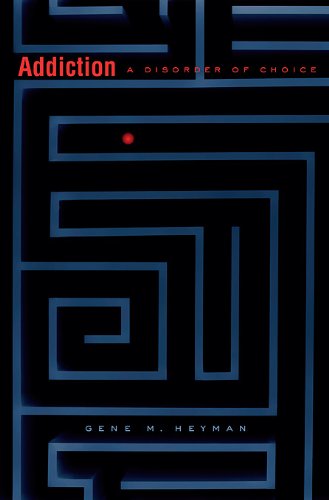
Addiction: A Disorder of Choice
Authors:
Gene M. Heyman
Publisher:
Harvard University Press
Publication Date:
Not available
ISBN:
0674057279
In a book sure to inspire controversy, Gene Heyman argues that conventional wisdom about addiction—that it is a disease, a compulsion beyond... conscious control—is wrong. Drawing on psychiatric epidemiology, addicts’ autobiographies, treatment studies, and advances in behavioral economics, Heyman makes a powerful case that addiction is voluntary. He shows that drug use, like all choices, is influenced by preferences and goals. But just as there are successful dieters, there are successful ex-addicts. In fact, addiction is the psychiatric disorder with the highest rate of recovery. But what ends an addiction? At the heart of Heyman’s analysis is a startling view of choice and motivation that applies to all choices, not just the choice to use drugs. The conditions that promote quitting a drug addiction include new information, cultural values, and, of course, the costs and benefits of further drug use. Most of us avoid becoming drug dependent, not because we are especially rational, but because we loathe the idea of being an addict. Heyman’s analysis of well-established but frequently ignored research leads to unexpected insights into how we make choices—from obesity to McMansionization—all rooted in our deep-seated tendency to consume too much of whatever we like best. As wealth increases and technology advances, the dilemma posed by addictive drugs spreads to new products. However, this remarkable and radical book points to a solution. If drug addicts typically beat addiction, then non-addicts can learn to control their natural tendency to take too much.
Addiction & Grace
Authors:
Gerald G. May
Publisher:
HarperOne
Publication Date:
Not available
ISBN:
0060655372
Explores the psychology and physiology of addiction from the perspective of contemplative spirituality, describing the relationship between addiction... and spiritual awareness.
Addiction and Change: How Addictions Develop and Addicted People...
Authors:
Carlo C. DiClemente Phd
Publisher:
The Guilford Press
Publication Date:
Not available
ISBN:
1593853440
The stages-of-change model has become widely known as a framework for conceptualizing recovery. Less well known are the processes that drive movement... through the stages or how the stages apply to becoming addicted. From Carlo C. DiClemente, codeveloper of the transtheoretical model, this book offers a panoramic view of the entire continuum of addictive behavior change. The author illuminates the common path that individuals travel as they establish and reinforce new patterns of behavior, whether they are developing an addiction or struggling to free themselves from one, and regardless of the specific addictive behavior. The book addresses crucial questions of why, when, and how to intervene to bolster recovery in those already addicted and reach out effectively to people at risk.
Addiction and Grace: Love and Spirituality in the Healing of...
Authors:
Gerald G. May
Publisher:
HarperOne
Publication Date:
Not available
ISBN:
0061122432
Addiction and Grace offers an inspiring and hope–filled vision for those who desire to explore the mystery of who and what they really are. May... examines the "processes of attachment" that lead to addiction and describes the relationship between addiction and spiritual awareness. He also details the various addictions from which we can suffer, not only to substances like alcohol and drugs, but to work, sex, performance, responsibility, and intimacy. Drawing on his experience as a psychiatrist working with the chemically dependent, May emphasizes that addiction represents an attempt to assert complete control over our lives. Addiction and Grace is a compassionate and wise treatment of a topic of major concern in these most addictive of times, one that can provide a critical yet hopeful guide to a place of freedom based on contemplative spirituality.
Addiction and Responsibility (Philosophical Psychopathology)
Authors:
Not Available
Publisher:
The MIT Press
Publication Date:
Not available
ISBN:
0262015501
Addictive behavior threatens not just the addict's happiness and health but also the welfare and well-being of others. It represents a loss of... self-control and a variety of other cognitive impairments and behavioral deficits. An addict may say, "I couldn't help myself." But questions arise: are we responsible for our addictions? And what responsibilities do others have to help us? This volume offers a range of perspectives on addiction and responsibility and how the two are bound together. Distinguished contributors--from theorists to clinicians, from neuroscientists and psychologists to philosophers and legal scholars--discuss these questions in essays using a variety of conceptual and investigative tools. Some contributors offer models of addiction-related phenomena, including theories of incentive sensitization, ego-depletion, and pathological affect; others address such traditional philosophical questions as free will and agency, mind-body, and other minds. Two essays, written by scholars who were themselves addicts, attempt to integrate first-person phenomenological accounts with the third-person perspective of the sciences. Contributors distinguish among moral responsibility, legal responsibility, and the ethical responsibility of clinicians and researchers. Taken together, the essays offer a forceful argument that we cannot fully understand addiction if we do not also understand responsibility.
Addiction and Spirituality: A Multidisciplinary Approach
Authors:
Not Available
Publisher:
Chalice Press
Publication Date:
Not available
ISBN:
0827200234
Religious and secular counselors from a variety of disciplines share their basic approaches in working with addicted persons and their understandings of... the spiritual dimension in treatment and recovery.
Addiction as an Attachment Disorder
Authors:
Philip J. Flores
Publisher:
Jason Aronson, Inc.
Publication Date:
Not available
ISBN:
0765709058
From the Foreword:"Addiction is a disorder in self-regulation. Individuals who become dependent on addictive substances cannot regulate their emotions,... self-care, self-esteem, and relationships. In this monumental and illuminating text Philip Flores covers all the reasons why this is so. But it is the domain of interpersonal relations that he makes clear why individuals susceptible to substance use disorders (SUDs) are especially vulnerable. His emphasis on addiction as an attachment disorder is principally important because he provides extensive scholarly and clinical insights as to why certain vulnerable individuals so desperately need to substitute chemical solutions and connections for human ones. The strength of Flores's paradigm of addiction as an attachment disorder is that it is a theory that effectively and wisely guides treatment, but at the same time, when properly implemented or practiced, the treatment resonates with and further enhances the theory. Flores's work here is an extraordinary one because, in parsimonious and clear language, he makes a major contribution to the literature and practice of effective psychotherapy in general and effective psychotherapy for the addictions in particular. He fills in all the gaps between theory and practice covering wide and ranging issues of what practice and empirical findings have to teach about the critical ingredients of AA, group therapy, and individual psychotherapy. This is a job well done because it helps students and experienced clinicians alike to always be mindful of how they bring their humanity to the distress and suffering of others. His theory of addiction as an attachment disorder makes it particularly clear how especially important this is for those suffering with addictive disorders. "—Edward J. Khantzian, M.D., clinical professor of psychiatry, Harvard Medical SchoolA Jason Aronson Book

Addiction by Design: Machine Gambling in Las Vegas
Authors:
Natasha Dow Schüll
Publisher:
Princeton University Press
Publication Date:
Not available
ISBN:
0691127557
Recent decades have seen a dramatic shift away from social forms of gambling played around roulette wheels and card tables to solitary gambling at... electronic terminals. Addiction by Design takes readers into the intriguing world of machine gambling, an increasingly popular and absorbing form of play that blurs the line between human and machine, compulsion and control, risk and reward. Drawing on fifteen years of field research in Las Vegas, anthropologist Natasha Dow Schüll shows how the mechanical rhythm of electronic gambling pulls players into a trancelike state they call the "machine zone," in which daily worries, social demands, and even bodily awareness fade away. Once in the zone, gambling addicts play not to win but simply to keep playing, for as long as possible--even at the cost of physical and economic exhaustion. In continuous machine play, gamblers seek to lose themselves while the gambling industry seeks profit. Schüll describes the strategic calculations behind game algorithms and machine ergonomics, casino architecture and "ambience management," player tracking and cash access systems--all designed to meet the market's desire for maximum "time on device." Her account moves from casino floors into gamblers' everyday lives, from gambling industry conventions and Gamblers Anonymous meetings to regulatory debates over whether addiction to gambling machines stems from the consumer, the product, or the interplay between the two. Addiction by Design is a compelling inquiry into the intensifying traffic between people and machines of chance, offering clues to some of the broader anxieties and predicaments of contemporary life.
Addiction Essentials: The Go-To Guide for Clinicians and Patients...
Authors:
Carlton K. Erickson
Publisher:
W. W. Norton & Company
Publication Date:
Not available
ISBN:
039370615X
An up-to-date guide to the causes, diagnosis, and treatment of addictions.Whether it’s to caffeine, nicotine, or alcohol, many of us suffer from at... least one addiction. Carlton K. Erickson presents a comprehensive overview of the various types of addictions—covering both substance and nonsubstance addictions such as gambling, Internet use, and video games—and their diagnosis and treatment. This book sheds light upon the biological and environmental factors that cause addiction, reviews the various types of substance and nonsubstance addictions, and offers clinicians and patients hope for recovery. Erickson examines alcohol, drugs that speed us up, drugs that slow us down, and how to recognize addictive behavior—such as exercise and videogame addiction—which may be less obvious. Other topics covered include alcohol and other drug pharmacology, neurophysiology of brain pathways, alcohol and drug interactions, adolescent drug use, drug use differences by gender and culture, and visual signs of drug use. Erickson presents various therapeutic methods for addressing addiction, including pharmacological interventions, individual or group therapy, twelve-step programs, and therapy involving family members. Finally, he reflects on the involvement of family and the risks and consequences of relapse.Written by one of the country’s leading addiction specialists, this accessible, comprehensive book, is a go-to reference for your questions about addiction, and a friendly introduction to the diagnosis and treatment options.
Addiction for Nurses
Authors:
G. Hussein Rassool
Publisher:
Wiley-Blackwell
Publication Date:
Not available
ISBN:
1405187468
Addiction for Nurses is a comprehensive textbook for students, explaining the role of the nurse at each stage of intervention. Early chapters approach... the subject from sociological, historical, and cultural perspectives, covering significant topics such as the nature of addiction, its social context, and addiction theory. The book then presents vital information about each of the main areas of addiction (nicotine, alcohol, opiates, cannabis, psychostimulants, and hallucinogens), with clinical and practical guidance on recognition, assessment, and treatment intervention strategies.
 '
'