production
/viewbook/list/all/?page=2887
/
/static/
None
Cosmopolis: The Hidden Agenda of Modernity
Authors:
Stephen Edelston Toulmin
Publisher:
Not available
Publication Date:
Not available
ISBN:
0226808386
In the seventeenth century, a vision arose which was to captivate the Western imagination for the next three hundred years: the vision of Cosmopolis, a... society as rationally ordered as the Newtonian view of nature. While fueling extraordinary advances in all fields of human endeavor, this vision perpetuated a hidden yet persistent agenda: the delusion that human nature and society could be fitted into precise and manageable rational categories. Stephen Toulmin confronts that agenda—its illusions and its consequences for our present and future world."By showing how different the last three centuries would have been if Montaigne, rather than Descartes, had been taken as a starting point, Toulmin helps destroy the illusion that the Cartesian quest for certainty is intrinsic to the nature of science or philosophy."—Richard M. Rorty, University of Virginia"[Toulmin] has now tackled perhaps his most ambitious theme of all. . . . His aim is nothing less than to lay before us an account of both the origins and the prospects of our distinctively modern world. By charting the evolution of modernity, he hopes to show us what intellectual posture we ought to adopt as we confront the coming millennium."—Quentin Skinner, New York Review of Books

Cosmopolitan Anxieties: Turkish Challenges to Citizenship and...
Authors:
Ruth Mandel
Publisher:
Duke University Press Books
Publication Date:
Not available
ISBN:
082234193X
In Cosmopolitan Anxieties, Ruth Mandel explores Germany’s relation to the more than two million Turkish immigrants and their descendants living within... its borders. Based on her two decades of ethnographic research in Berlin, she argues that Germany’s reactions to the postwar Turkish diaspora have been charged, inconsistent, and resonant of past problematic encounters with a Jewish “other.” Mandel examines the tensions in Germany between race-based ideologies of blood and belonging on the one hand and ambitions of multicultural tolerance and cosmopolitanism on the other. She does so by juxtaposing the experiences of Turkish immigrants, Jews, and “ethnic Germans” in relation to issues including Islam, Germany’s Nazi past, and its radically altered position as a unified country in the post–Cold War era.Mandel explains that within Germany the popular understanding of what it means to be German is often conflated with citizenship, so that a German citizen of Turkish background can never be a “real German.” This conflation of blood and citizenship was dramatically illustrated when, during the 1990s, nearly two million “ethnic Germans” from Eastern Europe and the former Soviet Union arrived in Germany with a legal and social status far superior to that of “Turks” who had lived in the country for decades. Mandel analyzes how representations of Turkish difference are appropriated or rejected by Turks living in Germany; how subsequent generations of Turkish immigrants are exploring new configurations of identity and citizenship through literature, film, hip-hop, and fashion; and how migrants returning to Turkey find themselves fundamentally changed by their experiences in Germany. She maintains that until difference is accepted as unproblematic, there will continue to be serious tension regarding resident foreigners, despite recurrent attempts to realize a more inclusive and “demotic” cosmopolitan vision of Germany.
Cosmopolitanism and Culture
Authors:
Nikos Papastergiadis
Publisher:
Polity
Publication Date:
Not available
ISBN:
0745653839
Today, more than at any other point in history, we are aware of the cultural impact of global processes. This has created new possibilities for the... development of a cosmopolitan culture but, at the same time, it has created new risks and anxieties linked to immigration and the accommodation of strangers. This book examines how the images of the terrorist and the refugee, by being dispersed across almost all aspects of social life, have resulted in the production of ‘ambient fears’, and it explores the role of artists in reclaiming the conditions of hospitality. Since 9/11 contemporary artists have confronted the issues of globalization by creating situations in which strangers can enter into dialogue with each other, collaborating with diverse networks to forms new platforms for global knowledge. Such knowledge does not depend upon the old model of establishing a supposedly objective and therefore universal framework, but on the capacity to recognize, and mutually negotiate, situated differences. From artworks that incorporate new media techniques to collective activism Papastergiadis claims that there is a new cosmopolitan imaginary that challenges the conventional divide between art and politics. Through the analysis of artistic practices across the globe this book extends the debates on culture and cosmopolitanism from the ethics of living with strangers to the aesthetics of imagining alternative visions of the world.Timely and wide-ranging, this book will be essential reading for students and scholars in sociology and cultural studies and will be of interest to anyone concerned with the changing forms of art and culture in our contemporary global age.
Cosmopolitanism: Ethics in a World of Strangers (Issues of Our Time...
Authors:
Kwame Anthony Appiah
Publisher:
W. W. Norton
Publication Date:
Not available
ISBN:
0393061558
A moral manifesto that forces us to reconsider a world divided between the West and the Rest, Us and Them.We have grown accustomed in this anxious,... post-9/11 era to constructing a world fissured by warring creeds and cultures. Much of humanity now seems separated by chasms of incomprehension. Kwame Anthony Appiah's landmark new work challenges the separatist doctrines espoused in books such as Samuel P. Huntington's The Clash of Civilizations. Reviving the ancient philosophy of "Cosmopolitanism," a school of thought that dates to the Cynics of the fourth century bce, Appiah traces its influence on the ethical legacies of the Enlightenment, the French Revolution, Kant's dream of a "league of nations," and the UN's Universal Declaration of Human Rights. In doing so, Appiah shows how Western intellectuals and leaders, on both the left and the right, have wildly exaggerated the power of difference—and neglected the power of one. One world. One species. Challenging years of received wisdom, Cosmopolitanism is a resounding work of philosophy and global culture. About the series: Issues of Our Time: "Aware of the competition for the attention of readers, W. W. Norton & Company and I have created the "Issues of Our Time" as a lucid series of highly readable books through which some of today's most thoughtful intellectuals seek to challenge the general reader to reexamine received truths and grapple with powerful trends that are shaping the world in which we live. The series launches with Anthony Appiah, Alan Dershowitz, and Nobel Laureate Amartya Sen as the first of an illustrious group who will tackle some of the most plangent and central issues defining our society today through books that deal with such issues as sexual and racial identities, the economics of the developing world, and the concept of citizenship in a truly globalized twenty-first-century world culture. Above all else, these books are designed to be read and enjoyed."—Henry Louis Gates Jr., W. E. B. DuBois Professor of the Humanities, Harvard University
Cosmopolitanism: Ethics in a World of Strangers (Issues of Our Time)
Authors:
Kwame Anthony Appiah
Publisher:
W. W. Norton & Company
Publication Date:
Not available
ISBN:
039332933X
“A brilliant and humane philosophy for our confused age.”—Samantha Power, author of A Problem from HellKwame Anthony Appiah’s landmark new work,... featured on the cover of the New York Times Magazine, challenges the separatist doctrines espoused in books like Samuel Huntington’s The Clash of Civilizations. Reviving the ancient philosophy of “cosmopolitanism,” a school of thought that dates to the Cynics of the fourth century BC, Appiah traces its influence on the ethical legacies of the Enlightenment, the French Revolution, and the UN’s Universal Declaration of Human Rights. Raised in Ghana, educated in England, and now a distinguished professor in the United States, Appiah promises to create a new era in which warring factions will finally put aside their supposed ideological differences and will recognize that the fundamental values held by all human beings will usher in a new era of global understanding.

Cosmopolitanism: Ideals and Realities
Authors:
David Held
Publisher:
Polity
Publication Date:
Not available
ISBN:
0745648363
This book sets out the case for a cosmopolitan approach to contemporary global politics. It presents a systematic theory of cosmopolitanism, explicating... its core principles and justifications, and examines the role many of these principles have played in the development of global politics, such as framing the human rights regime. The framework is then used to address some of the most pressing issues of our time: the crisis of financial markets, climate change and the fallout from the wars in Afghanistan and Iraq. In each case, Held argues that realistic politics is exhausted, and that cosmopolitanism is the new realism.See also Garrett Wallace Brown and David Held's The Cosmopolitanism Reader.
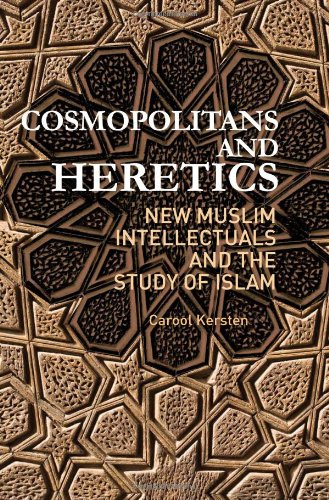
Cosmopolitans and Heretics: New Muslim Intellectuals and the Study...
Authors:
Carool Kersten
Publisher:
Columbia University Press
Publication Date:
Not available
ISBN:
0231702396
Contemporary critiques of Islam focus more on politics and the rise of extremism than on the development of liberal alternative discourses, which have... gained impressive traction among Muslim intellectuals in recent decades. These individuals now engage their Islamic heritage in more creative ways, understanding Islam in the comprehensive terms of a civilization rather than in the strict terms of a religion, and deploying relevant theories from the Western human sciences to build a more expansive history. Cosmopolitans and Heretics examines three of these individuals and the controversy, if not outright accusations of heresy, their work has produced: Nurcholish Madjid, Indonesia's most prominent public intellectual; Hasan Hanafi, one of Egypt's leading philosophers; and the influential French Algerian historian Mohammed Arkoun. Grounding their reading of the Islamic tradition within modern, Western religious scholarship, these figures counter narrow conceptions of a monolithic Islam with their cosmopolitan attitudes. Underscoring the global dimensions of a new Muslim intellectualism, this volume is a welcome and necessary addition to the intellectual history of the modern Muslim world.
Cosmos
Authors:
Carl Sagan
Publisher:
Ballantine Books
Publication Date:
Not available
ISBN:
0345331354
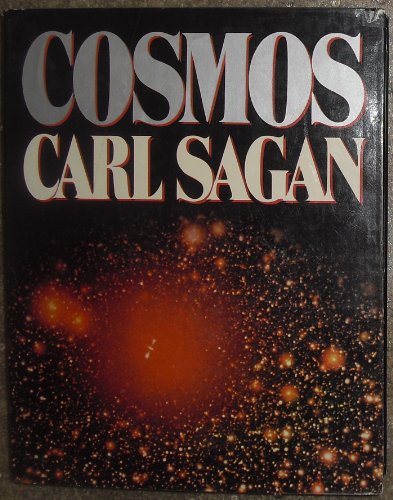
This visually stunning book with over 250 full-color illustrations, many of them never before published, is based on Carl Sagan’s thirteen-part... television series. Told with Sagan’s remarkable ability to make scientific ideas both comprehensible and exciting, Cosmos is about science in its broadest human context, how science and civilization grew up together.The book also explores spacecraft missions of discovery of the nearby planets, the research in the Library of ancient Alexandria, the human brain, Egyptian hieroglyphics, the origin of life, the death of the Sun, the evolution of galaxies and the origins of matter, suns and worlds.Sagan retraces the fifteen billion years of cos-mic evolution that have transformed matter into life and consciousness, enabling the Cosmos to wonder about itself. He considers the latest findings on life elsewhere and how we might communicate with the beings of other worlds.Cosmos is the story of our long journey of discovery and the forces and individuals who helped to shape modern science, including Democritus, Hypatia, Kepler, Newton, Huy-gens, Champollion, Lowell and Humason. Sagan looks at our planet from an extra-terrestrial vantage point and sees a blue jewel-like world, inhabited by a lifeform that is just beginning to discover its own unity and to ven-ture into the vast ocean of space.

Cosmos & Culture: Cultural Evolution in a Cosmic Context
Authors:
Not Available
Publisher:
US National Aeronautics and Space Admin
Publication Date:
Not available
ISBN:
0160831199
Product Description: During the last 50 years, coincident with the Space Age, cosmic evolution has been recognized as the master narrative of the... universe, history writ large. Cosmic evolution includes physical, biological, and cultural evolution, and of these the latter is by far the most rapid. In this volume, authors with diverse backgrounds in science, history, anthropology, and more, consider culture in the context of the cosmos. How does our knowledge of cosmic evolution affect terrestrial culture? Conversely, how does our knowledge of cultural evolution affect our thinking about possible cultures in the cosmos? Are life, mind, and culture of fundamental significance to the grand story of the cosmos that has generated its own self-understanding through science, rational reasoning, and mathematics? Might this lead to cultural evolution on a large enough scale to allow the universe to both create and steer itself toward its own destiny?
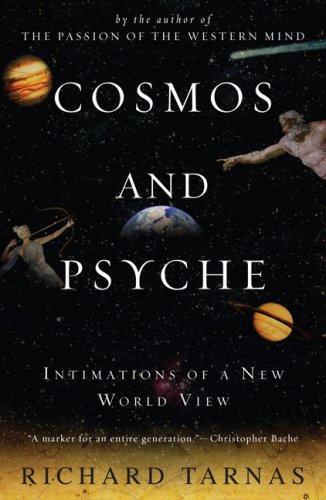
Cosmos and Psyche: Intimations of a New World View
Authors:
Richard Tarnas
Publisher:
Plume
Publication Date:
Not available
ISBN:
0452288592
From a philosopher whose magisterial history of Western thought was praised by Joseph Campbell and Huston Smith comes a brilliant new book that traces... the connection between cosmic cycles and archetypal patterns of human experience. Drawing on years of research and on thinkers from Plato to Jung, Richard Tarnas explores the planetary correlations of epochal events like the French Revolution, the two world wars, and September 11. Whether read as astrology updated for the quantum age or as a contemporary classic of spirituality, Cosmos and Psyche is a work of immense sophistication, deep learning, and lasting importance.
Cosmos: An Illustrated History of Astronomy and Cosmology
Authors:
John North
Publisher:
University Of Chicago Press
Publication Date:
Not available
ISBN:
0226594416
For millennia humans have studied the skies to help them grow crops, navigate the seas, and earn favor from their gods. We still look to the stars... today for answers to fundamental questions: How did the universe begin? Will it end, and if so, how? What is our place within it? John North has been examining such questions for decades. In Cosmos, he offers a sweeping historical survey of the two sciences that help define our place in the universe: astronomy and cosmology. Organizing his history chronologically, North begins by examining Paleolithic cave drawings that clearly chart the phases of the moon. He then investigates scientific practices in the early civilizations of Egypt, Greece, China, and the Americas (among others), whose inhabitants developed sophisticated methods to record the movements of the planets and stars. Trade routes and religious movements, North notes, brought these ancient styles of scientific thinking to the attention of later astronomers, whose own theories—such as Copernicus’ planetary theory—led to the Scientific Revolution. The work of master astronomers, including Ptolemy, Galileo, Kepler, and Newton, is described in detail, as are modern-day developments in astrophysics, such as the advent of radio astronomy, the brilliant innovations of Einstein, and the many recent discoveries brought about with the help of the Hubble telescope. This new edition brings North’s seminal book right up to the present day, as North takes a closer look at last year’s reclassification of Pluto as a “dwarf” planet and gives a thorough overview of current research. With more than two hundred illustrations and a comprehensive bibliography, Cosmos is the definitive history of astronomy and cosmology. It is sure to find an eager audience among historians of science and astronomers alike.

Cosmos: A Novel
Authors:
Witold Gombrowicz
Publisher:
Grove Press
Publication Date:
Not available
ISBN:
0802145620
Milan Kundera called Witold Gombrowicz one of the great novelists of our century.” His most famous novel, Cosmos, the recipient of the 1967... International Prize for Literature, is now available in a critically acclaimed translation, for the first time directly from the Polish, by the award-winning translator Danuta Borchardt.Cosmos is a metaphysical noir thriller narrated by Witold, a seedy, pathetic, and witty student, who is charming and appalling by turns. On his way to a relaxing vacation he meets the despondent Fuks. As they set off together for a family-run pension in the Carpathian Mountains they discover a dead bird hanging from a string. Is this a strange but meaningless occurrence or is it the beginning of a string of bizarre events? As the young men become embroiled in the Chekhovian travails of the family running the pension, Grombrowicz creates a gripping narrative where the reader questions who is sane and who is safe?

COSMOS:ASTRONOMY IN NEW...-W/STARRY CD
Authors:
Not Available
Publisher:
Not available
Publication Date:
Not available
ISBN:
Not available
Cosmos, Chaos, and the World to Come, 2nd Edition
Authors:
Professor Norman Cohn
Publisher:
Yale University Press
Publication Date:
Not available
ISBN:
0300090889
In this engrossing book, the author of the classic work The Pursuit of the Millennium investigates the origins of apocalyptic faith - the belief in a... perfect future, when the forces of good are victorious over the forces of evil. Norman Cohn takes us back two thousand years to the world views of ancient Egypt, Mesopotamia, and India, the innovations of Iranian and Jewish prophets and sages, and the earliest Christian imaginings of heaven on earth, and he illuminates a major turning point in the history of human consciousness. For this second, corrected edition, the final chapter, on Zoroastrians, Jews and Christians, has been wholly rewritten and extended.
 '
'