production
/viewbook/list/all/?page=3068
/
/static/
None
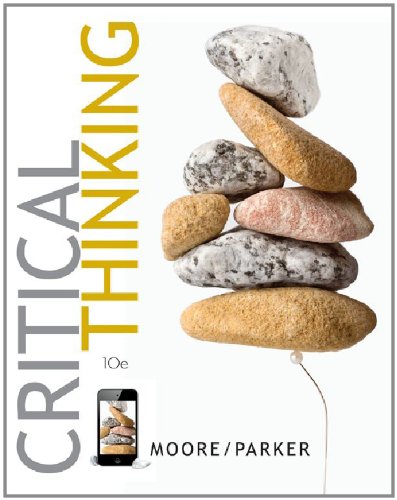
Critical Thinking w/ Connect Plus for Critical Thinking Access Card
Authors:
Brooke Noel Moore
Publisher:
McGraw-Hill Humanities/Social Sciences/Languages
Publication Date:
Not available
ISBN:
0077510852
Imagine a class where students are actively and personally engaged in thinking critically while also discovering how to apply those thinking skills in... everyday life. Now imagine those same students confidently participating in class, working efficiently through the exercises outside class, and performing better in the course. With Connect Critical Thinking, students can achieve this success. Connect Critical Thinking is a first: a learning program with pedagogical tools that are anchored in research on critical thinking. Along with Moore & Parker’s engaging writing style and the wealth of topical exercises and examples that are relevant to students’ lives, Connect Critical Thinking helps ensure that students can come to class confident and prepared. What other course provides students with skills they can apply so broadly to success in school and success in life?

CRITICAL THINKING & WRITING
Authors:
Not Available
Publisher:
Not available
Publication Date:
Not available
ISBN:
Not available
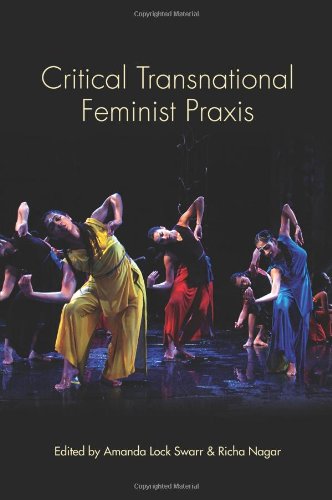
Critical Transnational Feminist Praxis (Suny Series, Praxis: Theory...
Authors:
Amanda Lock Swarr
Publisher:
SUNY Series, Praxis: Theory in Action
Publication Date:
Not available
ISBN:
143842938X
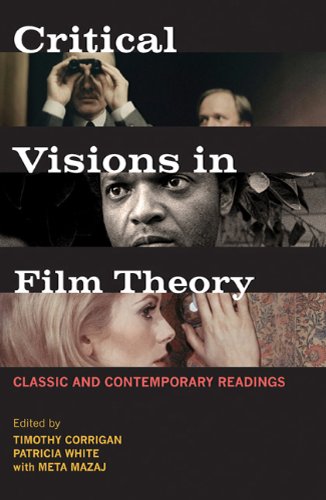
Critical Visions in Film Theory
Authors:
Timothy Corrigan
Publisher:
Bedford/St. Martin's
Publication Date:
Not available
ISBN:
0312446349
Critical Visions in Film Theory is a new book for a new generation, embracing groundbreaking approaches in the field without ignoring the history of... classical film theory. The study of film theory has changed dramatically over the past 30 years with innovative ways of looking at classic debates in areas like film form, genre, and authorship, as well as exciting new conversations on such topics as race, gender and sexuality, and new media. Until now, no film theory anthology has stepped forward to represent this broader, more inclusive perspective. Critical Visions also provides the best guidance for students, giving them the context and the tools they need to critically engage with theory and apply it to their film experiences.
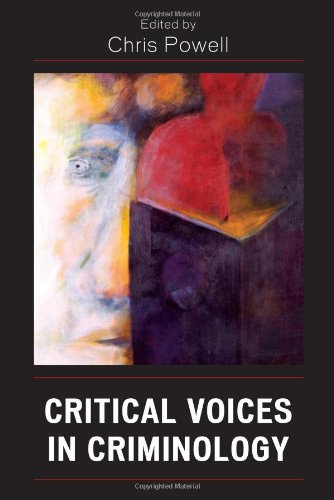
Critical Voices in Criminology (Critical Perspectives on Crime and...
Authors:
Not Available
Publisher:
Lexington Books
Publication Date:
Not available
ISBN:
0739120336
Readers of criminological literature are presented with little more than thumbnail sketches as to the social characteristics or motivations of the... authors. One learns their status, institutional location, and supposed credentials. Rarely are we presented with more detailed impressions of the authors as a combination of positivist assumptions and notions of professional competence seemingly render such information unimportant. However, increasing numbers of critical scholars are becoming aware of authorship as an issue; it matters who is addressing us. By taking these authors out of their methodological framework, Critical Voices in Criminology provides an opportunity for figures in and around critical criminology to discuss their own intellectual journeys into and within the discipline. The book offers the opportunity for contributors to reflect on their work and consider what they did not say. It also affords them the opportunity to describe their own 'channeling processes' by indicating how the pursuance of some themes/topics 'seemed' appropriate, sensible, or realistic, while others appeared less so, whether they internalized these particular themes, or attempted to contest and/or replace them.
Critical Voices in School Reform: Students Living through Change
Authors:
Not Available
Publisher:
Routledge
Publication Date:
Not available
ISBN:
0415302684
School reform of one kind or another is a priority for education systems the world over. Yet the voices of students - those most affected by, and most... pivotal to, the success or failure of any program of school reform - are rarely heard on this topic. This is the first book to look at school reform from the perspective of the students. The studies included in this collection focus on reform initiatives aimed at overcoming persistent patterns of racial, class and gender inequality. The authors combine the theoretical aspects of research with its practical applications, making this an invaluable resource for teacher educators, classroom practitioners, researchers and policymakers.Critical Voices in School Reform: Students Living Through Change is divided into two parts. Part one describes and analyses programs of reform that turned out contrary to the intentions of adult reformers, illustrating the - often unspoken - tension between adult and student perspectives on school change. Part two looks at reform initiatives that were able to harness student energies and thereby improve pupils' engagement with school life. These reforms, which are finely attuned to the needs and interests of students, offer clear, valuable guidance to those trying to create more equitable school experiences. A concluding chapter draws together the themes and insights gained from looking at school reform through a student-centred lens and offers suggestions for more relevant and lasting reform.
Critical White Studies
Authors:
Richard Delgado
Publisher:
Temple University Press
Publication Date:
Not available
ISBN:
1566395321
No longer content with accepting whiteness as the norm, critical scholars have turned their attention to whiteness itself. "In Critical White Studies:... Looking Behind the Mirror", numerous thinkers, including Toni Morrison, Eric Foner, Peggy McIntosh, Andrew Hacker, Ruth Frankenberg, John Howard Griffin, David Roediger, Kathleen Neal Cleaver, Noel Ignatiev, Cherrie Moraga, and Reginald Horsman, attack such questions as: How was whiteness invented, and why? How has the category whiteness changed over time? Why did some immigrant groups, such as the Irish and Jews, start out as nonwhite and later become white[? Can some individual people be both white and nonwhite at different times, and what does it mean to "pass for white"? At what point does pride in being white cross the line into white power or white supremacy? What can whites concerned over racial inequity or white privilege do about it? Science and pseudoscience are presented side by side to demonstrate how our views on whiteness often reflect preconception, not fact. For example, most scientists hold that race is not a valid scientific category - genetic differences between races are insignificant compared to those within them. Yet, the "one drop" rule, whereby those with any nonwhite heritage are classified as nonwhite, persists even today. As The Bell Curve controversy shows, race concepts die hard, especially when power and prestige lie behind them. A sweeping portrait of the emerging field of whiteness studies, "Critical White Studies" presents, for the first time, the best work from sociology, law, history, cultural studies, and literature. Delgado and Stefancic expressly offer "Critical White Studies" as the next step in critical race theory. In focusing on whiteness, not only do they ask nonwhites to investigate more closely for what it means for others to be white, but also they invite whites to examine themselves more searchingly and to "look behind the mirror." Author note: Richard Delgado is Charles Inglis Thomson Professor of Law at the University of Colorado Law School. He is the editor of "Critical Race Theory: The Cutting Edge" (Temple) and the author of several books, including "Failed Resolutions: Social Reform and the Limits of Legal Imagination', "Words that Wound: Critical Race Theory", "Assaultive Speech", and the "First Amendment", and the 1995 Pulitzer Prize nominee "The Rodrigo Chronicles: Conversations on Race and America". Jean Stefancic is Research Associate in Law at the University of Colorado Law School. She is co-author (with Delgado) of "No Mercy: How Conservative Think Tanks and Foundations Changed America's Social Agenda" (Temple), "Failed Revolutions: Social Reform and the Limits of Legal Imagination", and "Must We Defend Nazis?"
Critical Writings: New Edition
Authors:
Filippo Tommaso Marinetti
Publisher:
Farrar, Straus and Giroux
Publication Date:
Not available
ISBN:
0374531072
The Futurist movement was founded and promoted by Filippo Tommaso Marinetti, beginning in 1909 with the First Futurist Manifesto, in which he inveighed... against the complacency of "cultural necrophiliacs" and sought to annihilate the values of the past, writing that "there is no longer any beauty except the struggle. Any work of art that lacks a sense of aggression can never be a masterpiece." In the years that followed, up until his death in 1944, Marinetti, through both his polemical writings and his political activities, sought to transform society in all its aspects. As Günter Berghaus writes in his introduction, "Futurismsought to bridge the gap between art and life and to bring aesthetic innovation into the real world. Life was to be changed through art, and art was to become a form of life."This volume includes more than seventy of Marinetti's most important writings--many of them translated into English for the first time--offering the reader a representative and still startling selection of texts concerned with Futurist art, literature, politics, and philosophy.
Criticism and the Growth of Knowledge: Proceedings of the...
Authors:
Editor-Imre Lakatos; Editor-Alan Musgrave
Publisher:
Cambridge University Press
Publication Date:
Not available
ISBN:
0521096235
Two books have been particularly influential in contemporary philosophy of science: Karl R. Popper's Logic of Scientific Discovery, and Thomas S. Kuhn's... Structure of Scientific Revolutions. Both agree upon the importance of revolutions in science, but differ about the role of criticism in science's revolutionary growth. This volume arose out of a symposium on Kuhn's work, with Popper in the chair, at an international colloquium held in London in 1965. The book begins with Kuhn's statement of his position followed by seven essays offering criticism and analysis, and finally by Kuhn's reply. The book will interest senior undergraduates and graduate students of the philosophy and history of science, as well as professional philosophers, philosophically inclined scientists, and some psychologists and sociologists.
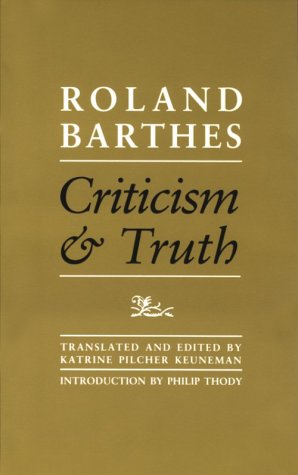
Criticism And Truth
Authors:
Ronald Barthes
Publisher:
Univ Of Minnesota Press
Publication Date:
Not available
ISBN:
0816616094
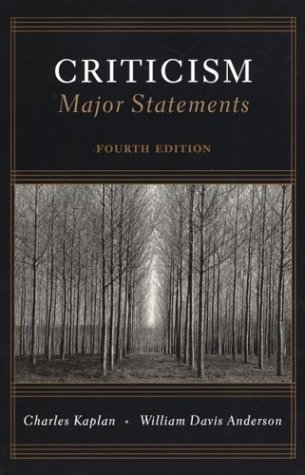
Criticism: Major Statements, 4th Edition
Authors:
Charles Kaplan
Publisher:
Bedford/St. Martin's
Publication Date:
Not available
ISBN:
0312137451
This enduring anthology is the only one to encompass the historic sweep of literary criticism — from Plato to the present — in a compact and... affordable format.
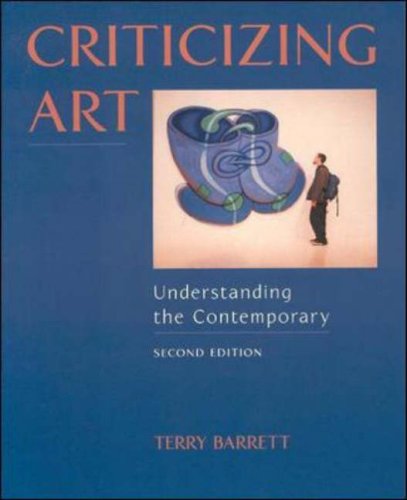
Criticizing Art: Understanding the Contemporary
Authors:
Terry Barrett
Publisher:
Mayfield Pub. Co.
Publication Date:
Not available
ISBN:
076741165X
Designed as a supplementary text, this book helps students of art and art history better understand contemporary art by engaging them in the study of... criticism and the practice of critically considering contemporary forms of art.
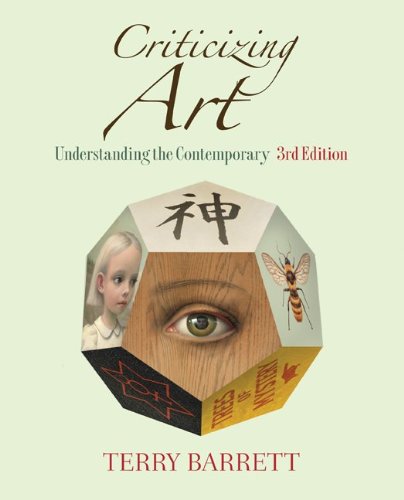
Criticizing Art: Understanding the Contemporary
Authors:
Terry Barrett
Publisher:
McGraw-Hill Humanities/Social Sciences/Languages
Publication Date:
Not available
ISBN:
0073379190
Criticizing Art: Understanding the Contemporary takes readers inside the world of contemporary art and shows them how to think, write, and talk about... art. Throughout, the principles of art criticism are presented and applied to contemporary forms of American art giving students of art and art history a solid framework for critically considering contemporary art through describing, interpreting, evaluating, and theorizing.
Criticizing Photographs
Authors:
Terry Barrett
Publisher:
McGraw-Hill Humanities/Social Sciences/Languages
Publication Date:
Not available
ISBN:
0073526533
This brief text is designed to help both beginning and advanced students of photography better develop and articulate thoughtful criticism. Organized... around the major activities of criticism (describing, interpreting, evaluating, and theorizing), Criticizing Photographs provides a clear framework and vocabulary for students' critical skill development.
Criticizing Photographs: An Introduction to Understanding Images
Authors:
Terry Barrett
Publisher:
McGraw-Hill Humanities/Social Sciences/Languages
Publication Date:
Not available
ISBN:
0072977434
This brief text is designed to help both beginning and advanced students of photography better develop and articulate thoughtful criticism. Organized... around the major activities of criticism (describing, interpreting, evaluating, and theorizing), Criticizing Photographs provides a clear framework and vocabulary for students' critical skill development. The fourth edition includes new black and white and color images, updated commentary, a completely revised chapter on theory that offers a broad discussion of digital images, and an expanded chapter eight on studio critiques and writing about photographs, plus examples of student writing and critique.
 '





