production
/viewbook/list/all/?page=3105
/
/static/
None
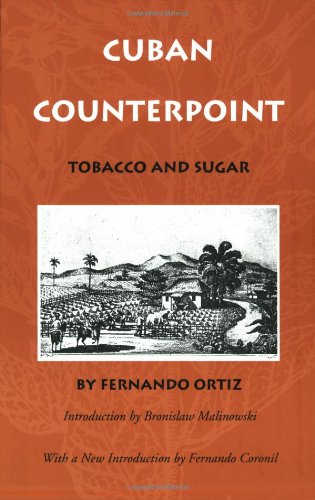
Cuban Counterpoint: Tobacco and Sugar
Authors:
Fernando Ortiz
Publisher:
Duke University Press Books
Publication Date:
Not available
ISBN:
0822316161
First published in 1940 and long out of print, Fernando Ortiz’s classic work, Cuban Counterpoint is recognized as one of the most important books of... Latin American and Caribbean intellectual history. Ortiz’s examination of the impact of sugar and tobacco on Cuban society is unquestionably the cornerstone of Cuban studies and a key source for work on Caribbean culture generally. Though written over fifty years ago, Ortiz’s study of the formation of a national culture in this region has significant implications for contemporary postcolonial studies.Ortiz presents his understanding of Cuban history in two complementary sections written in contrasting styles: a playful allegorical tale narrated as a counterpoint between tobacco and sugar and a historical analysis of their development as the central agricultural products of the Cuban economy. Treating tobacco and sugar both as agricultural commodities and as social characters in a historical process, he examines changes in their roles as the result of transculturation. His work shows how transculturation, a critical category Ortiz developed to grasp the complex transformation of cultures brought together in the crucible of colonial and imperial histories, can be used to illuminate not only the history of Cuba, but, more generally, that of America as well.This new edition includes an introductory essay by Fernando Coronil that provides a contrapuntal reading of the relationship between Ortiz’s book and its original introduction by the renowned anthropologist Bronislaw Malinowski. Arguing for a distinction between theory production and canon formation, Coronil demonstrates the value of Ortiz’s book for anthropology as well as Cuban, Caribbean, and Latin American studies, and shows Ortiz to be newly relevant to contemporary debates about modernity, postmodernism, and postcoloniality.
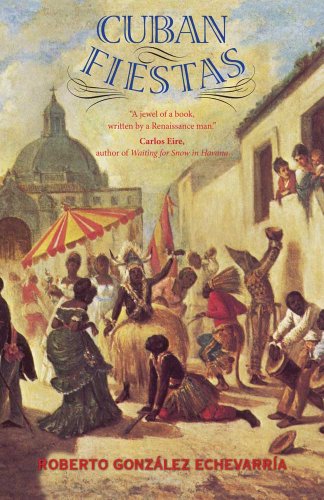
Cuban Fiestas
Authors:
Roberto Gonzalez Echevarria
Publisher:
Yale University Press
Publication Date:
Not available
ISBN:
0300177887
In the Cuban town of Sagua la Grande, a young Roberto Gonzalez Echevarria peers out the window of his family home on the morning of the Nochebuena... fiesta as preparations begin for the slaughter of a feast day pig. The author recalls 'watching them at a distance, though thinking, fearing, that once I grew older I would have to participate in the whole event'. Now an acclaimed scholar of Latin American literature, Gonzalez Echevarria returns to the rituals that defined his young life in Cuban Fiestas. Drawing from art, literature, film, and even the national sport of baseball, he vividly reveals the fiesta as a dynamic force of both destruction and renewal in the life of a people. Roberto Gonzalez Echevarria masterfully exposes the distinctive elements of the fiesta cubana that give depth and coherence to more than two centuries of Cuban cultural life. Reaching back to nineteenth-century traditions of Cuban art and literature, and augmenting them, in the twentieth, with the arts of narrative, the aesthetic performances of sport and entertainment in nightclubs, on the baseball diamond, and in movie theatres, "Cuban Fiestas" renders the lilting strains of the fiesta and drum beats of the passage of time as keys to understanding the dynamic quality of Cuban culture. Gonzalez Echevarria's explorations are also illuminated by autobiographical vignettes that unveil the ever-shifting impact of the fiesta on the author's own story of exile and return.
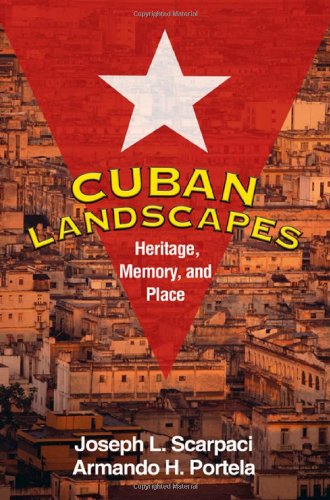
Cuban Landscapes: Heritage, Memory, and Place (Texts in Regional...
Authors:
Joseph L. Scarpaci PhD
Publisher:
The Guilford Press
Publication Date:
Not available
ISBN:
1606233238
This accessible book offers a vivid geographic portrait of Cuba, exploring the island’s streetscapes, sugar cane fields, beaches, and rural... settlements; its billboards, government buildings, and national landmarks. The authors illuminate how natural and built landscapes have shaped Cuban identity (cubanidad), and vice versa. They provide a unique perspective on Cuba’s distinct historical periods and political economies, from the colonial period through republicanism and today’s socialist era. Compelling topics include the legacies of slavery and the sugar industry, the past and future of urban development, and the impact of islandness” on sociocultural processes.
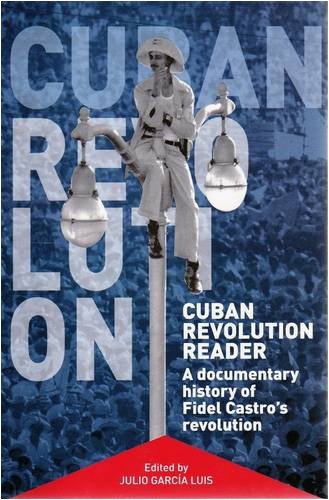
Cuban Revolution Reader: A Documentary History of Key Moments in...
Authors:
Not Available
Publisher:
Ocean Press
Publication Date:
Not available
ISBN:
1920888896
A timely new publication assessing 50 years of the Cuban revolution. The Cuban revolution was one of the defining moments of the 20th century, its... influence reaching far beyond the shores of the tiny Caribbean island. As Cuba marks the 50th anniversary of the 1959 overthrow of the Batista dictatorship, this book documents the turbulent history of Fidel Castro’s revolution, from the euphoria of the early years to near economic collapse in the 1990s and finally the Cuban leader’s decision to step down in 2008. The editor offers a critical examination of Cuba’s decades-long relationship with the Soviet Union and the epilogue considers the prospects for the revolution without Fidel Castro. Including a comprehensive chronology and index, this is an essential resource for scholars and others. Julio García-Luis (editor) is one of Cuba’s most prominent writers and historians. Formerly president of the Cuban Journalists Union, he is currently Dean of the School of Social Communications at the University of Havana.“Cuba has the same effect on US administrations as the full moon has on wolves: it’s an obsession.”—Wayne Smith, former US diplomat in Havana "Cuba has lived a dramatic life with successes as well as failures. Alone and abandoned by all after the Soviet Union disappeared, it had to resist heroically in some very hard years during which the United States intensified its economic and political aggresssion. Today Cuba forges a path to craft its own unique socialist system, rooted in its own historical experience and with the active participation of its people." —Ricardo Alarcon “This book is every bit a celebration of the achievements of the revolution, and will prove a useful resource for students seeking to understand how the revolution will now move forward.” —NACLA magazine
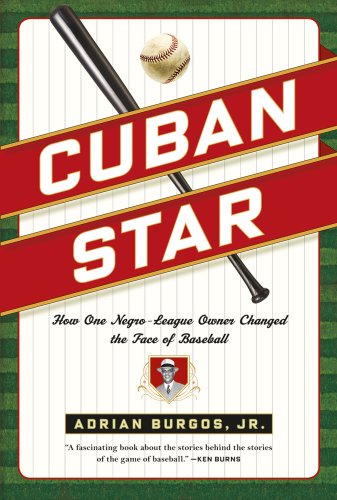
Cuban Star: How One Negro-League Owner Changed the Face of Baseball
Authors:
Adrian Burgos
Publisher:
Hill and Wang
Publication Date:
Not available
ISBN:
0809037203
When the selection committee voted Alejandro “Alex” Pompez into the Baseball Hall of Fame in 2006, some cried foul. A Negro-league owner during... baseball’s glory days, Pompez was known as an early and steadfast advocate for Latino players, helping bring baseball into the modern age. So why was his induction so controversial? Like many in the era of segregated baseball, Pompez found that the game alone could never make all ends meet. To finance his beloved team, the New York Cubans, he delved headlong into a sin many baseball fans find unforgivable—gambling. He built one of the most infamous numbers rackets in Harlem, eventually arousing the ire of the famed prosecutor Thomas Dewey. But he also led his Cubans, with their star lineup of Latino players, to a Negro-league World Series championship in 1947.In this effervescent biography, the historian and sportswriter Adrian Burgos, Jr., brings to life the world of professional baseball during a time of enormous change. Following Pompez from his early days to the twilight of his career, Burgos offers a glimpse inside the clubhouse as both owners and players struggled with the new realities of the game. That today’s rosters are filled with names like Rodriguez, Pujols, Rivera, and Ortiz is a testament to Pompez and his lasting influence.
Cuba On My Mind: Journeys to a Severed Nation
Authors:
Roman de la Campa
Publisher:
Verso
Publication Date:
Not available
ISBN:
1859847900
Examines the dual Cuban capitals of Havana and Miami to offer insight on the two Cubas.In this moving and personal account of the forty-three-year-old... divide between Cuba and its exile population in the United States, Roman de la Campa questions both sides of a family feud that is acutely reflective of his own experience. Taking the three migration waves of Cubans to the United States as a historical background to his own story, the author details the continuing rift between Havana and Miami and the shaping, in the light of globalization and post-socialism, of a Cuban national split which has obvious consequences for both countries.
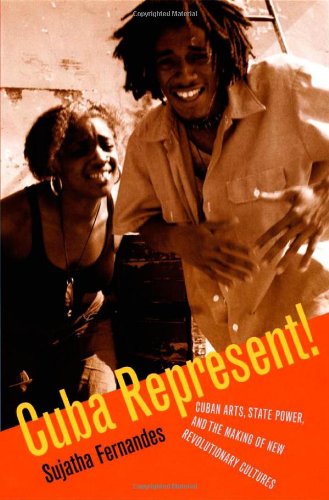
Cuba Represent!: Cuban Arts, State Power, and the Making of New...
Authors:
Sujatha Fernandes
Publisher:
Duke University Press Books
Publication Date:
Not available
ISBN:
0822338912
In Cuba something curious has happened over the past fifteen years. The government has allowed vocal criticism of its policies to be expressed within... the arts. Filmmakers, rappers, and visual and performance artists have addressed sensitive issues including bureaucracy, racial and gender discrimination, emigration, and alienation. How can this vibrant body of work be reconciled with the standard representations of a repressive, authoritarian cultural apparatus? In Cuba Represent! Sujatha Fernandes—a scholar and musician who has performed in Cuba—answers that question.Combining textual analyses of films, rap songs, and visual artworks; ethnographic material collected in Cuba; and insights into the nation’s history and political economy, Fernandes details the new forms of engagement with official institutions that have opened up as a result of changing relationships between state and society in the post-Soviet period. She demonstrates that in a moment of extreme hardship and uncertainty, the Cuban state has moved to a more permeable model of power. Artists and other members of the public are collaborating with government actors to partially incorporate critical cultural expressions into official discourse. The Cuban leadership has come to recognize the benefits of supporting artists: rappers offer a link to increasingly frustrated black youth in Cuba; visual artists are an important source of international prestige and hard currency; and films help unify Cubans through community discourse about the nation. Cuba Represent! reveals that part of the socialist government’s resilience stems from its ability to absorb oppositional ideas and values.

Cuba's Academic Advantage: Why Students in Cuba Do Better in School
Authors:
Martin Carnoy
Publisher:
Stanford University Press
Publication Date:
Not available
ISBN:
0804755981
In this book, Martin Carnoy explores the surprising success of the Cuban educational system, where the average elementary school student learns much... more than her Latin American peers. In developing the case for Cuba's supportive social context and centralized management of education, Carnoy asks important questions about educational systems in general. How responsible should government be for creating environments that encourage academic achievement? How much autonomy should teachers and schools have over their classrooms? Is there an inherent tradeoff between promoting individual choice and a better system of schooling?Cuba's Academic Advantage challenges many prevailing views about the effectiveness of educational markets, school and teacher autonomy, decentralized decision-making, and government responsibility for children's social and economic welfare. Drawing on interviews with teachers, principals, and policymakers, as well as hours of videotaped material taken in more than 30 classrooms, this book brings new evidence to bear on controversial educational issues currently under debate in many countries.
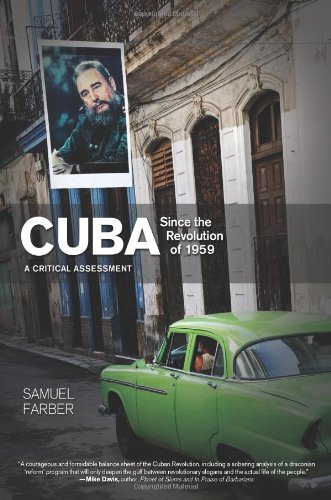
Cuba Since the Revolution of 1959: A Critical Assessment
Authors:
Samuel Farber
Publisher:
Haymarket Books
Publication Date:
Not available
ISBN:
1608461394
Uncritically lauded by the left and impulsively denounced by the right, the Cuban Revolution is almost universally viewed one dimensionally. Farber, one... of its most informed left-wing critics, provides a much-needed critical assessment of the revolution’s impact and legacy.

Cuba: The Making of a Revolution
Authors:
Ramon Eduardo Ruiz
Publisher:
W. W. Norton & Company
Publication Date:
Not available
ISBN:
0393005135
The twelve essays in Wars within a War explore the internal stresses that posed serious challenges to the viability of the opposing sides in the Civil... War as well as some of the ways in which wartime disputes and cultural fissures carried over into the postwar years and beyond. Comprised of contributions from leading scholars, this volume extends the discussion of controversies far past the death of the Confederacy in the spring of 1865. Contributors address, among other topics, Walt Whitman's poetry, the handling of the Union and Confederate dead, the treatment of disabled and destitute northern veterans, Ulysses S. Grant's imposing tomb, and Hollywood's long relationship with the Lost Cause narrative. Reflecting a variety of approaches and methodologies, these essays provide a starting point for anyone interested in how Americans have argued about the prosecution, meaning, and memory of the war.Contributors:William Blair, The Pennsylvania State UniversityStephen Cushman, University of VirginiaDrew Gilpin Faust, Harvard UniversityGary W. Gallagher, University of VirginiaJ. Matthew Gallman, University of FloridaJoseph T. Glatthaar, University of North Carolina at Chapel HillHarold Holzer, Metropolitan Museum of ArtJames Marten, Marquette UniversityStephanie McCurry, University of PennsylvaniaJames M. McPherson, Princeton UniversityCarol Reardon, The Pennsylvania State UniversityJoan Waugh, University of California, Los Angeles
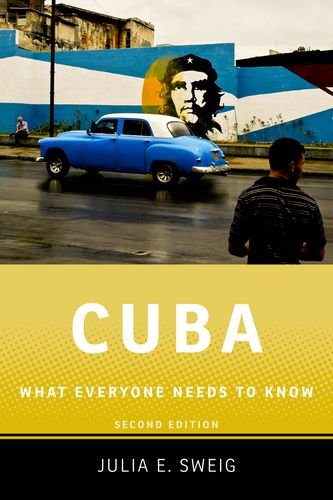
Cuba: What Everyone Needs to Know
Authors:
Julia E. Sweig
Publisher:
Oxford University Press, USA
Publication Date:
Not available
ISBN:
0199896704
Ever since Fidel Castro assumed power in Cuba in 1959, Americans have obsessed about the nation ninety miles south of the Florida Keys. America's... fixation on the tropical socialist republic has only grown over the years, fueled in part by successive waves of Cuban immigration and Castro's larger-than-life persona. Cubans are now a major ethnic group in Florida, and the exile community is so powerful that every American president has curried favor with it. But what do most Americans really know about Cuba itself? In this second edition of the widely hailed Cuba: What Everyone Needs to Know, Julia Sweig updates her concise and remarkably accessible portrait of the small island nation--and now includes material from her 2010 interview with Fidel Castro. The new edition covers the key events of the last few years: Raul Castro's assumption of power from his brother Fidel, economic and political reforms since Raul came to power, and the changes in US-Cuba relations following the election of Barack Obama. Expansive in coverage and authoritative in scope, the book looks back over Cuba's history since the Spanish American War before shifting to recent times. Focusing equally on Cuba's role in world affairs and its own social and political transformations, Sweig divides the book chronologically into the pre-Fidel era, the period between the 1959 revolution and the fall of the Soviet Union, the post-Cold War era, and--finally--the post-Fidel era. Informative, pithy, and lucidly written, it is the best compact reference on Cuba's internal politics, its often fraught relationship with the United States, and its shifting relationship with the global community.
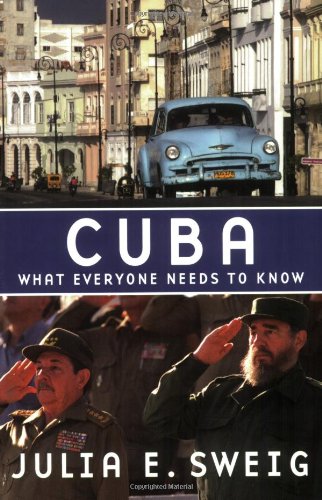
Cuba: What Everyone Needs to Know
Authors:
Julia E Sweig
Publisher:
Oxford University Press, USA
Publication Date:
Not available
ISBN:
019538380X
Ever since Fidel Castro assumed power in Cuba in 1959, Americans have obsessed about the nation ninety miles south of the Florida Keys. America's... fixation on the tropical socialist republic has only grown over the years, fueled in part by successive waves of Cuban immigration and Castro's larger-than-life persona. Cubans are now a major ethnic group in Florida, and the exile community is so powerful that every American president has kowtowed to it. But what do most Americans really know about Cuba itself? In Cuba: What Everyone Needs to Know, Julia Sweig, one of America's leading experts on Cuba and Latin America, presents a concise and remarkably accessible portrait of the small island nation's unique place on the world stage over the past fifty years. Yet it is authoritative as well. Following a scene-setting introduction that describes the dynamics unleashed since summer 2006 when Fidel Castro transferred provisional power to his brother Raul, the book looks backward toward Cuba's history since the Spanish American War before shifting to more recent times. Focusing equally on Cuba's role in world affairs and its own social and political transformations, Sweig divides the book chronologically into the pre-Fidel era, the period between the 1959 revolution and the fall of the Soviet Union, the post-Cold War era, and-finally-the looming post-Fidel era. Informative, pithy, and lucidly written, it will serve as the best compact reference on Cuba's internal politics, its often fraught relationship with the United States, and its shifting relationship with the global community.
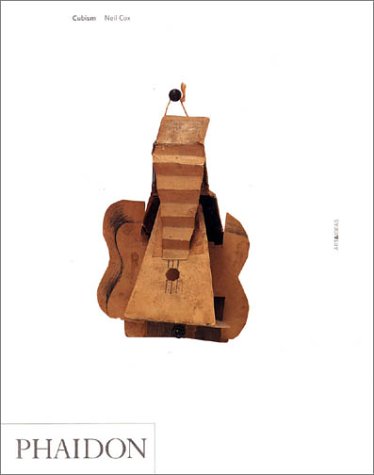
Cubism A&I (Art and Ideas)
Authors:
Neil Cox
Publisher:
Phaidon Press
Publication Date:
Not available
ISBN:
0714840106
This is an introduction to cubism, the movement often seen as the single most important development in the history of 20th-century art. The book offers... an account of the origins of the style in the dialogue between Georges Braque and Pablo Picasso between 1907 and 1914. It traces cubism's evolution in the work of these two artists as well as Juan Gris, Fernand Leger, Robert Delaunay, Andre Derain, Albert Gleizes, Jean Metzinger and many others. The book situates cubism in the context of its times, and shows how it penetrated artistic activity far beyond painting and sculpture, reinvigorating architecture, graphic design, music and poetry, and transforming the possibilities of photography and film.
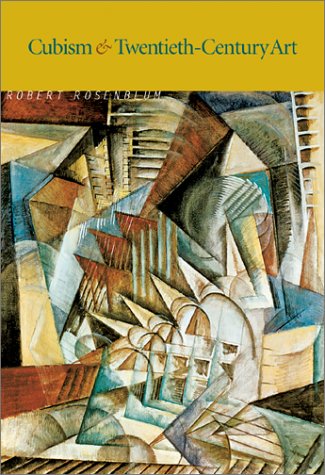
Cubism and 20th Century Art
Authors:
Robert Rosenblum
Publisher:
Harry N. Abrams
Publication Date:
Not available
ISBN:
0810929678
This reissue brings back into print a timeless classic on one of the most important movements in Modern art. Art historian Robert Rosenblum brilliantly... clarifies the language of Cubism and offers a penetrating analysis of its role in the creation of the major pictorial and sculptural styles of our time. The colorplates include both well-known Cubist masterpieces and works marking the transition to other viewpoints in contemporary art.
Cubism and Culture (World of Art)
Authors:
Mark Antliff
Publisher:
Thames & Hudson
Publication Date:
Not available
ISBN:
0500203423
"This is a book whose great achievement is to bring out the importance of the Cubists in a history far bigger than the history of art."—Christopher... Green, Courtauld Institute of ArtOften considered to be the seminal art movement of the twentieth century, Cubism initiated a pictorial revolution through its radical approach to image making, invention of the new media of collage and sculptural assemblage, and evolution toward pure abstraction. Scholarly yet accessible, Cubism and Culture reveals these profound formal innovations as integrally related to changes in French society. The authors first examine the movement's origins in primitivism and its engagement with issues of race and colonialism, and then consider the Cubists' responses to anti-Enlightenment philosophies, the relation of Cubist art to the "classical," the role played by gender conceptually and within particular careers and practices, collage and its interplay with cultural themes, and the impact of anarchism, nationalism, and pacifism on Cubism's cultural politics. This comprehensive and fresh examination of Cubism in its wider context—social, cultural, political, scientific, and philosophical—covers the full range of art and artists from the movement's advent in 1908. Among the artists included: Alexander Archipenko, Maria Blanchard, Georges Braque, Robert Delaunay, Sonia Delaunay, André Derain, Marcel Duchamp, Raymond Duchamp-Villon, Albert Gleizes, Juan Gris, Alice Halicka, Roger de La Fresnaye, Marie Laurencin, Henri Laurens, Henri Le Fauconnier, Fernand Léger, Jacques Lipchitz, Louis Marcoussis, Frans Masereel, Jean Metzinger, Francis Picabia, Pablo Picasso. 182 illustrations, 54 in color
 '





