production
/viewbook/list/all/?page=3110
/
/static/
None

Culinary Reactions: The Everyday Chemistry of Cooking
Authors:
Simon Quellen Field
Publisher:
CHICA
Publication Date:
Not available
ISBN:
1569767068
This book explores the scientific principles behind everyday recipes. Recipes demonstrate scientific concepts, such as Whipped Creamsicle Topping (a... foam), Cherry Dream Cheese (a protein gel) and Lemonade with Chameleon Eggs (an acid indicator).
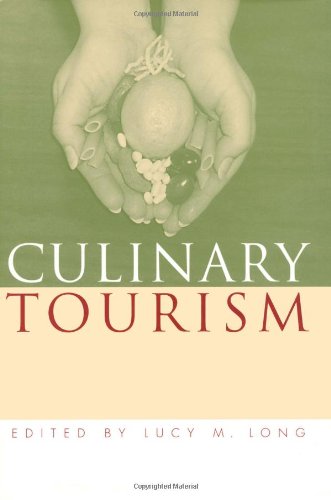
Culinary Tourism (Material Worlds)
Authors:
Not Available
Publisher:
The University Press of Kentucky
Publication Date:
Not available
ISBN:
0813122929
""From Kosher Oreos to the gentrification of Mexican cusine, from the charismatic cook of Basque communities in Spain and the United States to the... mainstreaming of southwestern foodways, Culinary Tourism maps a lively cultural and intellectual terrain."" -- from the foreword by Barbara Kirshenblatt-GimblettCulinary Tourism is the first book to consider food as both a destination and a means for tourism. The book's contributors examine the many intersections of food, culture and tourism in public and commercial contexts, in private and domestic settings, and around the world. The contributors argue that the sensory experience of eating provides people with a unique means of communication. Editor Lucy Long contends that although the interest in experiencing ""otherness"" is strong within American society, total immersion into the unfamiliar is not always welcome. Thus spicy flavors of Latin Aermcia and the exotic ingredients of Asia have been mainstreamed for everyday consumption. Culinary Tourism explains how and why interest in foreign food is expanding tastes and leading to commercial profit in America, but the book also show how tourism combines personal experiences with cultural and social attitudes toward food and the circumstances for adventurous eating.
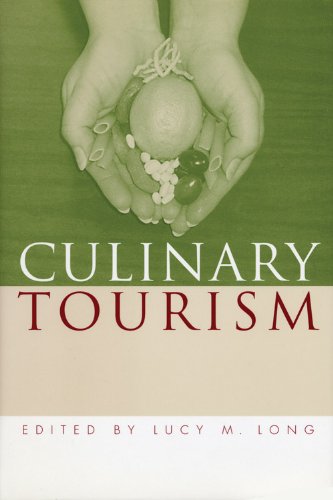
Culinary Tourism (Material Worlds)
Authors:
Not Available
Publisher:
The University Press of Kentucky
Publication Date:
Not available
ISBN:
0813129850
""From Kosher Oreos to the gentrification of Mexican cusine, from the charismatic cook of Basque communities in Spain and the United States to the... mainstreaming of southwestern foodways, Culinary Tourism maps a lively cultural and intellectual terrain."" -- from the foreword by Barbara Kirshenblatt-GimblettCulinary Tourism is the first book to consider food as both a destination and a means for tourism. The book's contributors examine the many intersections of food, culture and tourism in public and commercial contexts, in private and domestic settings, and around the world. The contributors argue that the sensory experience of eating provides people with a unique means of communication. Editor Lucy Long contends that although the interest in experiencing ""otherness"" is strong within American society, total immersion into the unfamiliar is not always welcome. Thus spicy flavors of Latin Aermcia and the exotic ingredients of Asia have been mainstreamed for everyday consumption. Culinary Tourism explains how and why interest in foreign food is expanding tastes and leading to commercial profit in America, but the book also show how tourism combines personal experiences with cultural and social attitudes toward food and the circumstances for adventurous eating.

CULIN HOSP TRAVEL AND TOUR SWP UVU
Authors:
Not Available
Publisher:
Not available
Publication Date:
Not available
ISBN:
Not available
CULINOLOGY (CUSTOM)
Authors:
Not Available
Publisher:
Not available
Publication Date:
Not available
ISBN:
Not available
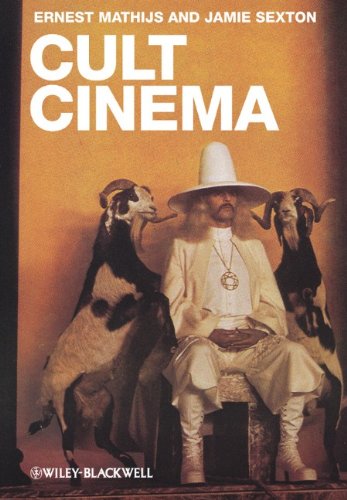
Cult Cinema
Authors:
Ernest Mathijs
Publisher:
Wiley-Blackwell
Publication Date:
Not available
ISBN:
1405173734
Cult Cinema: an Introduction presents the first in-depth academic examination of all aspects of the field of cult cinema, including audiences, genres,... and theoretical perspectives.Represents the first exhaustive introduction to cult cinemaOffers a scholarly treatment of a hotly contested topic at the center of current academic debateCovers audience reactions, aesthetics, genres, theories of cult cinema, as well as historical insights into the topic
Cultivating an Ethical School
Authors:
Robert J. Starratt
Publisher:
Routledge
Publication Date:
Not available
ISBN:
0415887399
Often the school is left as an institution seemingly ethically neutral, leaving untouched questions about whether the school itself is a site of... injustice toward both educators and children. Springing from his well-known Building an Ethical School, Robert J. Starratt now looks more closely at the educational leader’s responsibility to ensure that the whole fabric of the educational process reflects an ethical philosophy of education. Starratt argues that the work of educating young people is by its very nature an ethical work as well as an intellectual work, and that this work inescapably engages educators and their pupils with an academic curriculum, a social curriculum, and a civic curriculum. Cultivating an Ethical School lays a foundation for educators seeking to cultivate a comprehensive ethical educating environment. The second half of the book then takes up the more specific perspectives on teaching and learning that constitute the heart of cultivating an ethical school. Starratt provides examples of how an ethical school can expose students to a variety of perspectives on the challenges they will be called upon to face in the worlds of culture, nature, and society. This valuable book shows leaders and educators the importance of organizing a curriculum and a pedagogy that simultaneously respect and cultivate the intellectual, personal, and social qualities of being human.
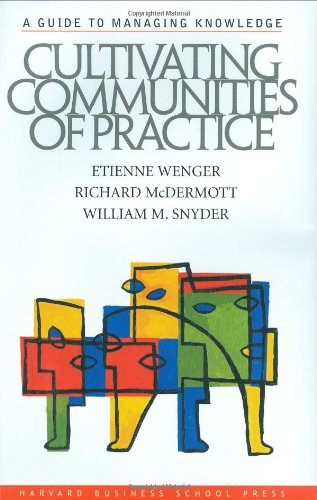
Cultivating Communities of Practice
Authors:
Etienne Wenger
Publisher:
Harvard Business Review Press
Publication Date:
Not available
ISBN:
1578513308
Today's economy is fueled by knowledge. Every leader knows this to be true, yet few have systematic methods for converting organizational knowledge into... economic value. This book argues that communities of practice--groups of individuals formed around common interests and expertise--provide the ideal vehicle for driving knowledge-management strategies and building lasting competitive advantage. Written by leading experts in the field, Cultivating Communities of Practice is the first book to outline models and methods for systematically developing these essential groups. Through compelling research and company examples, including DaimlerChrysler, McKinsey & Company, Shell, and the World Bank, authors Etienne Wenger, Richard McDermott, and William M. Snyder show how world-class organizations have leveraged communities of practice to drive strategy, generate new business opportunities, solve problems, transfer best practices, develop employees' professional skills, and recruit and retain top talent. Underscoring the new central role communities of practice are playing in today's knowledge economy, Cultivating Communities of Practice is the definitive guide to fostering, designing, and developing these powerful groups within and across organizations.
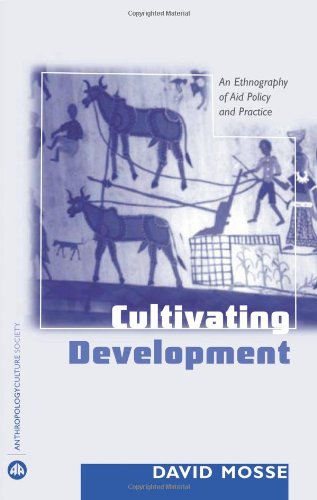
Cultivating Development: An Ethnography of Aid Policy and Practice...
Authors:
David Mosse
Publisher:
Pluto Press
Publication Date:
Not available
ISBN:
0745317987
Development agencies and researchers are preoccupied with policy; with exerting influence over policy, linking research to policy and with implementing... policy around the world. But what if development practice is not driven by policy? Suppose that the things that make for 'good policy' - policy that legitimises and mobilises political support - in reality make it impossible to implement? By focusing in detail on the unfolding activities of a development project in western India over more than ten years, as it falls under different policy regimes, this book takes a close look at the relationship between policy and practice in development. David Mosse shows how the actions of development workers are shaped by the exigencies of organisations and the need to maintain relationships rather than by policy; but also that development actors work hardest of all to maintain coherent representations of their actions as instances of authorised policy. Raising unfamiliar questions, Mosse provides a rare self-critical reflection on practice, while refusing to endorse current post-modern dismissal of development.

Cultivating Food Justice: Race, Class, and Sustainability (Food,...
Authors:
Not Available
Publisher:
The MIT Press
Publication Date:
Not available
ISBN:
0262516322
Popularized by such best-selling authors as Michael Pollan, Barbara Kingsolver, and Eric Schlosser, a growing food movement urges us to support... sustainable agriculture by eating fresh food produced on local family farms. But many low-income neighborhoods and communities of color have been systematically deprived of access to healthy and sustainable food. These communities have been actively prevented from producing their own food and often live in "food deserts" where fast food is more common than fresh food. Cultivating Food Justice describes their efforts to envision and create environmentally sustainable and socially just alternatives to the food system. Bringing together insights from studies of environmental justice, sustainable agriculture, critical race theory, and food studies, Cultivating Food Justice highlights the ways race and class inequalities permeate the food system, from production to distribution to consumption. The studies offered in the book explore a range of important issues, including agricultural and land use policies that systematically disadvantage Native American, African American, Latino/a, and Asian American farmers and farmworkers; access problems in both urban and rural areas; efforts to create sustainable local food systems in low-income communities of color; and future directions for the food justice movement. These diverse accounts of the relationships among food, environmentalism, justice, race, and identity will help guide efforts to achieve a just and sustainable agriculture.

Cultivating Global Citizens: Population in the Rise of China (Edwin...
Authors:
Susan Greenhalgh
Publisher:
Harvard University Press
Publication Date:
Not available
ISBN:
0674055713
Current accounts of China’s global rise emphasize economics and politics, largely neglecting the cultivation of China’s people. Susan Greenhalgh,... one of the foremost authorities on China’s one-child policy, places the governance of population squarely at the heart of China’s ascent. Focusing on the decade since 2000, and especially 2004–09, she argues that the vital politics of population has been central to the globalizing agenda of the reform state. By helping transform China’s rural masses into modern workers and citizens, by working to strengthen, techno-scientize, and legitimize the PRC regime, and by boosting China’s economic development and comprehensive national power, the governance of the population has been critically important to the rise of global China. After decades of viewing population as a hindrance to modernization, China’s leaders are now equating it with human capital and redefining it as a positive factor in the nation’s transition to a knowledge-based economy. In encouraging “human development,” the regime is trying to induce people to become self-governing, self-enterprising persons who will advance their own health, education, and welfare for the benefit of the nation. From an object of coercive restriction by the state, population is being refigured as a field of self-cultivation by China’s people themselves.

Cultivating Gratitude
Authors:
Patty Hlava
Publisher:
Mill City Press, Inc.
Publication Date:
Not available
ISBN:
1937600114
Gratitude is the quickest way to improve your relationships with your romantic partner, co-workers, friends, and even casual acquaintances. When you... learn how to make gratitude an intentional part of your daily life, it becomes a protection that helps weather all storms. "Cultivating Gratitude" outlines simple yet powerful ways to bring appreciation and thankfulness into your life. Even if thoughts and expressions of gratitude don't come easily to you, the good news is that gratitude can be learned - and "Cultivating Gratitude" shows you how. The step-by-step practices outlined in this book will help you develop habits of gratitude, which will bring greater joy, hope, and love into your day-to-day experiences.
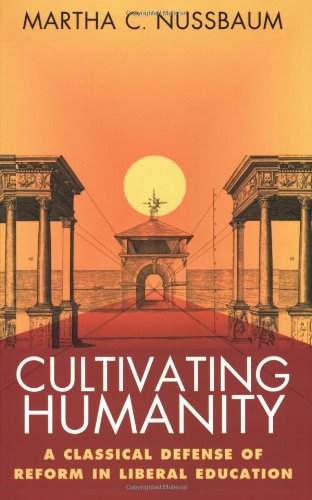
Cultivating Humanity: A Classical Defense of Reform in Liberal...
Authors:
Martha C. Nussbaum
Publisher:
Harvard University Press
Publication Date:
Not available
ISBN:
0674179498
How can higher education today create a community of critical thinkers and searchers for truth that transcends the boundaries of class, gender, and... nation? Martha C. Nussbaum, philosopher and classicist, argues that contemporary curricular reform is already producing such "citizens of the world" in its advocacy of diverse forms of cross-cultural studies. Her vigorous defense of "the new education" is rooted in Seneca's ideal of the citizen who scrutinizes tradition critically and who respects the ability to reason wherever it is found--in rich or poor, native or foreigner, female or male. Drawing on Socrates and the Stoics, Nussbaum establishes three core values of liberal education--critical self-examination, the ideal of the world citizen, and the development of the narrative imagination. Then, taking us into classrooms and campuses across the nation, including prominent research universities, small independent colleges, and religious institutions, she shows how these values are (and in some instances are not) being embodied in particular courses. She defends such burgeoning subject areas as gender, minority, and gay studies against charges of moral relativism and low standards, and underscores their dynamic and fundamental contribution to critical reasoning and world citizenship. For Nussbaum, liberal education is alive and well on American campuses in the late twentieth century. It is not only viable, promising, and constructive, but it is essential to a democratic society. Taking up the challenge of conservative critics of academe, she argues persuasively that sustained reform in the aim and content of liberal education is the most vital and invigorating force in higher education today.
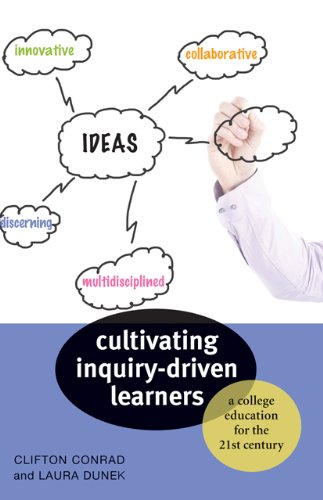
Cultivating Inquiry-Driven Learners: A College Education for the...
Authors:
Clifton Conrad
Publisher:
The Johns Hopkins University Press
Publication Date:
Not available
ISBN:
1421405997
Inquiry-driven learners anticipate, embrace, and adapt to disruptive change. Clifton Conrad and Laura Dunek advance a transformative purpose of a... college education. They invite stakeholders from across higher education to engage in vigorous dialogue about the aims of a college education—and how to realize those aims. Increasingly influenced by market forces, many universities employ a default purpose of a college education: preparing students for entry into the workforce. As a result, students remain unprepared for a world in which much of the knowledge they acquire will have a shelf life of only a few years. Cultivating Inquiry-Driven Learners charts a new way forward. It proposes that a college education prepare students to be innovative and adaptable by developing four signature capabilities: core qualities of mind, critical thinking skills, expertise in divergent modes of inquiry, and the capacity to express and communicate ideas. In concert, these capabilities empower students to explore and foster ideas that will prepare them to successfully navigate constant change, capitalize on career opportunities, enrich their personal lives, and thoughtfully engage in public life.This innovative book also explores a wide range of initiatives and practices for educating inquiry-driven learners. Examples illustrate possibilities for developing inquiry-driven learners across the curriculum and are drawn from institutions with remarkably different missions and identities—from research universities to liberal arts colleges.
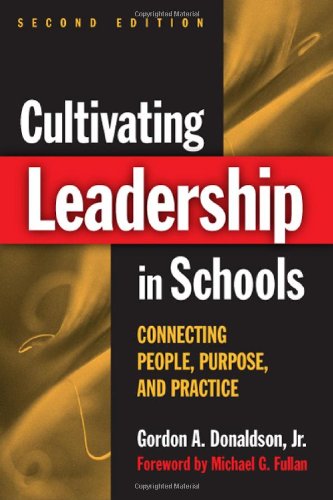
Cultivating Leadership in Schools: Connecting People, Purpose,...
Authors:
Gordon A. Donaldson
Publisher:
Teachers College Press
Publication Date:
Not available
ISBN:
0807747106
An excellent resource for aspiring and experienced instructional leaders, this popular text reveals a practical model of leadership for teacher leaders,... principals, and school teams. It honors the working realities of schools and highlights interpersonal and intrapersonal skills and qualities essential to successful school leadership. This completely updated second edition features: * Greater emphasis on how the roles of formal and informal teacher leaders and principals can complement one another in shaping strong leadership for a school. * Integration of current research and thinking to support the bookÂ’s relational model of leadership (e.g., relational trust, learning communities, and emotional intelligence). * More graphic summaries to assist leadership teams, classes, and individual readers in applying the Three Stream Leadership Model to their own schools and work. * More illustrative examples showing the Model at work.
 '





