production
/viewbook/list/all/?page=3206
/
/static/
None

D'Accord - La Prononciation du Francais Internationale: Acquisition...
Authors:
Sylvie Carduner
Publisher:
John Wiley & Sons
Publication Date:
Not available
ISBN:
0471097292
Uses the methodology of contrastive analysis to teach French pronunciations to the American student. Contains a systematic, four-stage approach that... emphasizes learning sounds, auditory discrimination, articulation, and practice in a communicative context. Compares the phonological systems of French and American English. Provides a detailed discussion of the French spelling system, with clearly stated rules. Includes abundant practice examples throughout.

Dacha Idylls: Living Organically in Russia's Countryside
Authors:
Melissa L. Caldwell
Publisher:
University of California Press
Publication Date:
Not available
ISBN:
0520262859
Dacha Idylls is a lively account of dacha life and how Russians experience this deeply rooted tradition of the summer cottage amid the changing... cultural, economic, and political landscape of postsocialist Russia. Simultaneously beloved and reviled, dachas wield a power that makes owning and caring for them an essential part of life. In this book, Melissa L. Caldwell captures the dacha's abiding traditions and demonstrates why Russians insist that these dwellings are key to understanding Russian life. She draws on literary texts as well as observations from dacha dwellers to highlight this enduring fact of Russian culture at a time when so much has changed. Caldwell presents the dacha world in all its richness and complexity--a "good life" that draws inspiration from the natural environment in which it is situated.
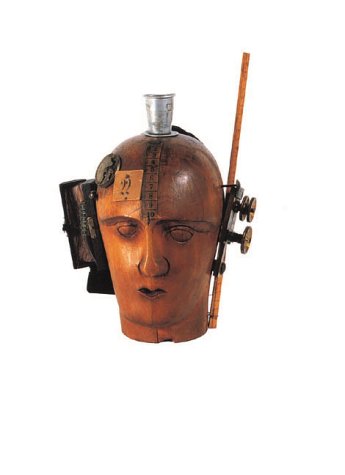
Dada & Surrealism A&I (Art and Ideas)
Authors:
Matthew Gale
Publisher:
Phaidon Press
Publication Date:
Not available
ISBN:
0714832618
This introductory survey traces the origins and development of two revolutionary 20th-century art movements: Dada and Surrealism. It explores the full... range of artistic production, including film, photography and painting. The art is situated within a context of ideas. Against the background of the slaughter of World War I, the Dadas embarked upon a total reconsideration of nationalism, materialism and the basis of art. Hugo Ball and Tristan Tzara in Zurich, Richard Huelsenbeck and Raoul Hausmann in Berlin, Francis Picabia and Andre Breton in Paris - all emphasized the freedom of the individual in their art. Dada has no consistent style and was never an organized movement. Surrealism, on the other hand, was a clearly constituted movement with a recognized charismatic leader, Andre Breton. In an attempt to reconcile the rational and irrational sides of existence, the movement explored dreams, trances and automatism. The results include the paintings of Max Ernst, Joan Miro, Salvadore Dali and Rene Magritte.

Dada and Surrealism: A Very Short Introduction (Very Short...
Authors:
David Hopkins
Publisher:
Oxford University Press, USA
Publication Date:
Not available
ISBN:
0192802542
The avant-garde movements of Dada and Surrealism continue to have a huge influence on cultural practice, especially in contemporary art, with its... obsession with sexuality, fetishism, and shock tactics. In this new treatment of the subject, Hopkins focuses on the many debates surrounding these movements: the Marquis de Sade's Surrealist deification, issues of quality (How good is Dali?), the idea of the 'readymade', attitudes towards the city, the impact of Freud, attitudes to women, fetishism, and primitivism. The international nature of these movements is examined, covering the cities of Zurich, New York, Berlin, Cologne, Barcelona, Paris, London, and recently discovered examples in Eastern Europe.Hopkins explores the huge range of media employed by both Dada and Surrealism (collage, painting, found objects, performance art, photography, film) , whilst at the same time establishing the aesthetic differences between the movements. He also examines the Dadaist obsession with the body-as-mechanism in relation to the Surrealists' return to the fetishized/eroticized body.
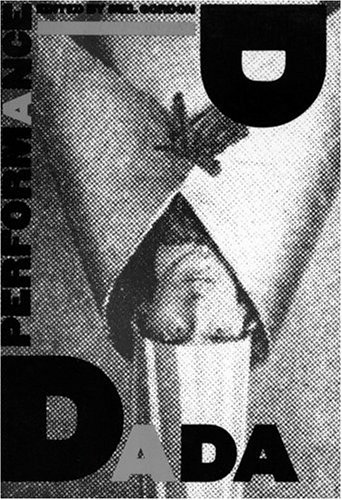
Dada Performance (PAJ Books)
Authors:
Not Available
Publisher:
PAJ Publications
Publication Date:
Not available
ISBN:
1555540112
One of the most controversial and ironic of twentieth-century modernisms, Dada swept through the arts after the shock of World War I, when poets,... painters, filmmakers, and performers joined forces to challenge conventions of society and art. The only collection of its kind, this volume includes writings by leading Dadaists: Hugo Ball, Kurt Schwitters, Richard Huelsenbeck, Roger Vitrac, Tristan Tzara, Emmy Hennings, Francis Picabia, and others.

Dadas on Art: Tzara, Arp, Duchamp and Others (Dover Fine Art,...
Authors:
Not Available
Publisher:
Dover Publications
Publication Date:
Not available
ISBN:
0486456994
Anarchistic, fractured, and born from the ashes of World War I, the Dada movement influenced nearly every aspect of 20th-century art. Focusing mainly on... visual artists, this select anthology features prose, poetry, and polemics from Marcel Duchamp, Max Ernst, Tristan Tzara, Hanna Höch, George Grosz, Jean Cocteau, and others.
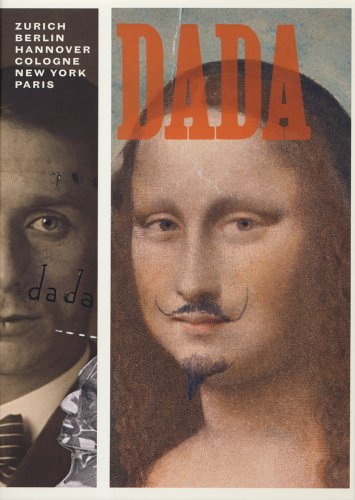
Dada: Zurich, Berlin, Hannover, Cologne, New York, Paris
Authors:
Dorothea Dietrich
Publisher:
National Gallery of Art, Washington/D.A.P.
Publication Date:
Not available
ISBN:
0894683136
Now available in paperback, this lavishly illustrated and astonishingly comprehensive volume stands as the definitive study of the influential but... deliberately elusive international Dada movement of the early twentieth century. Organized according to the primary city centers where this shifting, quintessentially avant garde movement emerged, Dada: Zurich, Berlin, Hannover, Cologne, New York, Paris features the work of 40 key artists, both infamous and lesser-known, including Louis Aragon, Hans Arp, Hugo Ball, Andre Breton, Otto Dix, Marcel Duchamp, Hannah Hoch, Man Ray, Tristan Tzara and Kurt Schwitters, to name just a few, in media spanning painting, sculpture, photography, collage, photomontage, prints and graphic work. Dynamically designed with an uncommon intelligence suited to the complexity of the movement itself, it contains hundreds of reproductions of works which, until the major traveling exhibition of 2005 and 2006 for which this book was originally produced, had for the most part never been seen in one place together. Documentary images, topical essays and an invaluable illustrated chronology of the movement make this volume uniquely essential, along with witty chronicles of events in each city center, a selected bibliography and biographies of each artist, accompanied by Dada-era photographs.

Daddy-Long-Legs (Puffin Classics)
Authors:
Jean Webster
Publisher:
Puffin
Publication Date:
Not available
ISBN:
0141331119
A trustee of the John Grier orphanage has offered to send Judy Abbott to college. The only requirements are that she must write to him every month, and... that she can never know who he is. Judy's life at college is a whirlwind of friends, classes, parties, and a growing friendship with the handsome Jervis Pendleton. With so much happening in her life, Judy can scarcely stop writing to the mysterious "Daddy-Long-Legs"!

"Daddy's Gone to War": The Second World War in the Lives of...
Authors:
William M. Tuttle Jr.
Publisher:
Oxford University Press, USA
Publication Date:
Not available
ISBN:
0195096495
Looking out a second-story window of her family's quarters at the Pearl Harbor naval base on December 7, 1941, eleven-year-old Jackie Smith could see... not only the Rising Sun insignias on the wings of attacking Japanese bombers, but the faces of the pilots inside. Most American children on the home front during the Second World War saw the enemy only in newsreels and the pages of Life Magazine, but from Pearl Harbor on, "the war"--with its blackouts, air raids, and government rationing--became a dramatic presence in all of their lives. Thirty million Americans relocated, 3,700,000 homemakers entered the labor force, sparking a national debate over working mothers and latchkey children, and millions of enlisted fathers and older brothers suddenly disappeared overseas or to far-off army bases. By the end of the war, 180,000 American children had lost their fathers. In "Daddy's Gone to War", William M. Tuttle, Jr., offers a fascinating and often poignant exploration of wartime America, and one of generation's odyssey from childhood to middle age. The voices of the home front children are vividly present in excerpts from the 2,500 letters Tuttle solicited from men and women across the country who are now in their fifties and sixties. From scrap-collection drives and Saturday matinees to the atomic bomb and V-J Day, here is the Second World War through the eyes of America's children. Women relive the frustration of always having to play nurses in neighborhood war games, and men remember being both afraid and eager to grow up and go to war themselves. (Not all were willing to wait. Tuttle tells of one twelve year old boy who strode into an Arizona recruiting office and declared, "I don't need my mother's consent...I'm a midget.") Former home front children recall as though it were yesterday the pain of saying good-bye, perhaps forever, to an enlisting father posted overseas and the sometimes equally unsettling experience of a long-absent father's return. A pioneering effort to reinvent the way we look at history and childhood, "Daddy's Gone to War" views the experiences of ordinary children through the lens of developmental psychology. Tuttle argues that the Second World War left an indelible imprint on the dreams and nightmares of an American generation, not only in childhood, but in adulthood as well. Drawing on his wide-ranging research, he makes the case that America's wartime belief in democracy and its rightful leadership of the Free World, as well as its assumptions about marriage and the family and the need to get ahead, remained largely unchallenged until the tumultuous years of the Kennedy assassination, Vietnam and Watergate. As the hopes and expectations of the home front children changed, so did their country's. In telling the story of a generation, Tuttle provides a vital missing piece of American cultural history.

Daddy's War: Greek American Stories
Authors:
Irene Kacandes
Publisher:
University of Nebraska Press
Publication Date:
Not available
ISBN:
0803240058
When she was very young, Irene Kacandes knew things about her father that had no plot, no narrator, and no audience. To her childhood self these things... resembled beings who resided with her family, like the ancestresses who’d thrown themselves off cliffs rather than be taken by the Turks, or the forefathers who’d fought the Trojans. For decades she thought of these cohabitants as Daddy’s War Experiences and tried to stay away from them. When tragedy touched the adult life she had constructed for herself, however, she realized she had to confront her family’s wartime past. Kacandes begins with what she did know: that her immigrant grandmother returned to Greece with four young children—and without her husband—only to get trapped there by the Nazi occupation. Though still a child himself, her father, John, helped feed his younger siblings by taking up any task possible, including smuggling arms to the Resistance. Kacandes painstakingly uncovers a complex truth her father chose not to tell, a truth inextricably entwined with the Holocaust, discovering, too, a common but little-told story about how the telling of such memories is negotiated between survivors and their children. Daddy’s War brings new understanding to how trauma, like the revenge of Greek gods, can visit each generation and offers a model for breaking the cycle.
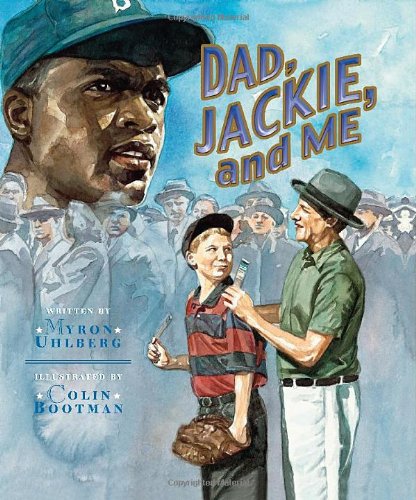
Dad, Jackie, and Me
Authors:
Myron Uhlberg
Publisher:
Peachtree Publishers
Publication Date:
Not available
ISBN:
1561453293
"It was Opening Day, 1947. And every kid in Brooklyn knew this was our year. The Dodgers were going to go all the way!"It is the summer of 1947 and a... highly charged baseball season is underway in New York. Jackie Robinson is the new first baseman for the Brooklyn Dodgers-and the first black player in Major League Baseball. A young boy shares the excitement of Robinson's rookie season with his deaf father.Each day he listens eagerly to the Brooklyn Dodgers games on the radio. When his father arrives home from work, the boy uses sign language to tell him about the Dodgers. His father begins to keep a scrapbook, clipping photos and articles about Jackie. Finally one day the father delivers some big news: they are going to Ebbets Field to watch Jackie play in person!Author Myron Uhlberg offers a nostalgic look back at 1947, and pays tribute to Jackie Robinson, the legendary athlete and hero who brought a father and son-and an entire New York community-together for one magical summer. Illustrator Colin Bootman's realistic, full-color illustrations capture the details of the period and the excitement of an entire city as Robinson helps the Dodgers win the long-awaited pennant.

Daemon
Authors:
Daniel Suarez
Publisher:
Not available
Publication Date:
Not available
ISBN:
0451228731
When a designer of computer games dies, he leaves behind a program that unravels the Internet's interconnected world. It corrupts, kills, and runs... independent of human control. It's up to Detective Peter Sebeck to wrest the world from the malevolent virtual enemy before its ultimate purpose is realized: to destroy civilization...

Daf Kompakt: Grammatik A1 - B1 (German Edition)
Authors:
Not Available
Publisher:
Klett (Ernst) Verlag,Stuttgart
Publication Date:
Not available
ISBN:
3126761933

Daf Kompakt: Kursbuch MIT 3 Audio-Cds (German Edition)
Authors:
Ilse Sander
Publisher:
Klett (Ernst) Verlag,Stuttgart
Publication Date:
Not available
ISBN:
3126761801

Daf Kompakt: Ubungsbuch MIT 2 Audio-Cds (German Edition)
Authors:
Not Available
Publisher:
Klett (Ernst) Verlag,Stuttgart
Publication Date:
Not available
ISBN:
312676181X
 '





