production
/viewbook/list/all/?page=3233
/
/static/
None

Darwin's Disciple: George John Romanes, A Life In Letters
Authors:
Not Available
Publisher:
Amer Philosophical Society
Publication Date:
Not available
ISBN:
1606189204
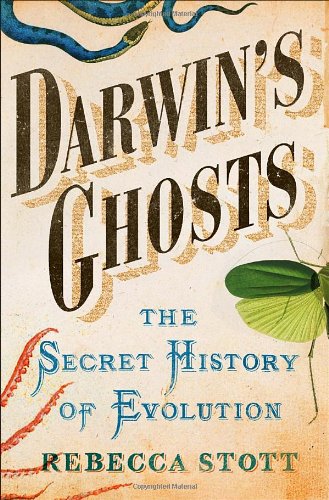
Darwin's Ghosts: The Secret History of Evolution
Authors:
Rebecca Stott
Publisher:
Spiegel & Grau
Publication Date:
Not available
ISBN:
1400069378
Christmas, 1859. Just one month after the publication of On the Origin of Species, Charles Darwin received an unsettling letter. He had expected... criticism; in fact, letters were arriving daily, most expressing outrage and accusations of heresy. But this letter was different. It accused him of failing to acknowledge his predecessors, of taking credit for a theory that had already been discovered by others. Darwin realized that he had made an error in omitting from Origin of Species any mention of his intellectual forebears. Yet when he tried to trace all of the natural philosophers who had laid the groundwork for his theory, he found that history had already forgotten many of them. Darwin’s Ghosts tells the story of the collective discovery of evolution, from Aristotle, walking the shores of Lesbos with his pupils, to Al-Jahiz, an Arab writer in the first century, from Leonardo da Vinci, searching for fossils in the mine shafts of the Tuscan hills, to Denis Diderot in Paris, exploring the origins of species while under the surveillance of the secret police, and the brilliant naturalists of the Jardin de Plantes, finding evidence for evolutionary change in the natural history collections stolen during the Napoleonic wars. Evolution was not discovered single-handedly, Rebecca Stott argues, contrary to what has become standard lore, but is an idea that emerged over many centuries, advanced by daring individuals across the globe who had the imagination to speculate on nature’s extraordinary ways, and who had the courage to articulate such speculations at a time when to do so was often considered heresy. With each chapter focusing on an early evolutionary thinker, Darwin’s Ghosts is a fascinating account of a diverse group of individuals who, despite the very real dangers of challenging a system in which everything was presumed to have been created perfectly by God, felt compelled to understand where we came from. Ultimately, Stott demonstrates, ideas—including evolution itself—evolve just as animals and plants do, by intermingling, toppling weaker notions, and developing over stretches of time. Darwin’s Ghosts presents a groundbreaking new theory of an idea that has changed our very understanding of who we are.
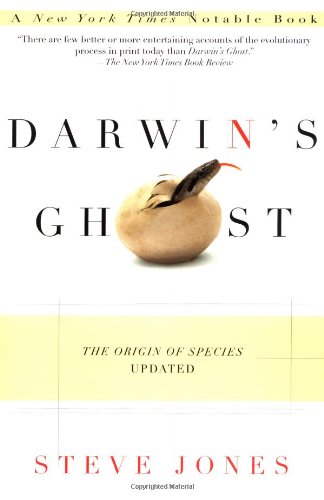
Darwin's Ghost: The Origin of Species Updated
Authors:
Steve Jones
Publisher:
Ballantine Books
Publication Date:
Not available
ISBN:
0345422775
Charles Darwin's The Origin of Species is probably the best-known, least-read book. One of the most important achievements of the past millennium, it... did for biology what Galileo did for astronomy: made it into a single science rather than a collection of unrelated facts. Important though Origin remains, its examples and intricate Victorian prose are now a century and a half old. They are ripe for renewal and reaffirmation. Writing as "Darwin's ghost," eminent geneticist Steve Jones updates this seminal work—and restates evolution's case for the 21st century.Jones is a writer of engaging wit and dazzling erudition and has been called "the British Carl Sagan." Using modern examples—the AIDS virus, the puzzles of sexual selection, the physiology and psychology of pets, and the unparalleled genetic success of our own species—he shows the power and immediacy of Darwin's great argument and makes us appreciate how it makes life make sense. Eye-opening and entertaining, filled with astonishing facts, amusing anecdotes, and the very latest research, Darwin's Ghost is contemporary science writing at its very best.
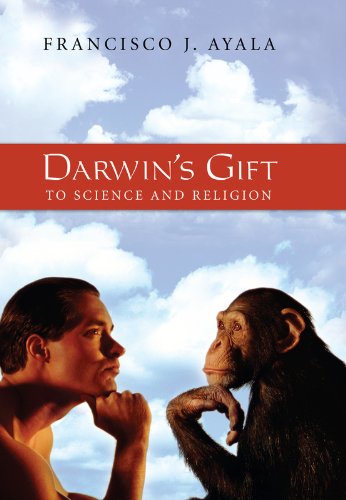
Darwin's Gift: To Science and Religion
Authors:
Francisco Ayala
Publisher:
Joseph Henry Press
Publication Date:
Not available
ISBN:
0309102316
With the publication in 1859 of "On the Origin of Species by Means of Natural Selection", Charles Darwin established evolution by common descent as the... dominant scientific explanation for nature's diversity. This was to be his gift to science and society - at last, we had an explanation for how life came to be on Earth. Scientists agree that the evolutionary origin of animals and plants is a scientific conclusion beyond reasonable doubt. They place it beside such established concepts as the roundness of the earth, its revolution around the sun, and the molecular composition of matter. That evolution has occurred, in other words, is a fact. Yet, as we approach the bicentennial celebration of Darwin's birth, the world finds itself divided over the truth of evolutionary theory.Consistently endorsed as "good science" by experts and overwhelmingly accepted as fact by the scientific community, it is not always accepted by the public - and our schools continue to be battlegrounds for this conflict. From the Tennessee trial of a biology teacher who dared to teach Darwin's theory to his students in 1925 to Tammy Kitzmiller's 2005 battle to keep intelligent design out of the Dover district schools in Pennsylvania, it's clear that we need to cut through the propaganda to quell the cacophony of raging debate. With the publication of "Darwin's Gift", a voice at once fresh and familiar brings a rational, measured perspective to the science of evolution. An acclaimed evolutionary biologist with a background in theology, Francisco Ayala offers clear explanations of the science, reviews the history that led us to ratify Darwin's theories, and ultimately provides a clear path for a confused and conflicted public.
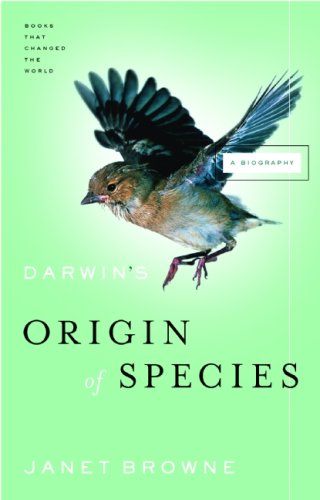
Darwin's Origin of Species: Books That Changed the World
Authors:
Janet Browne
Publisher:
Grove Press
Publication Date:
Not available
ISBN:
0802143466
Charles Darwin’s foremost biographer, Janet Browne, delivers a vivid and accessible introduction to the book that permanently altered our... understanding of what it is to be human. A sensation on its publication in 1859, The Origin of the Species profoundly shocked Victorian readers by calling into question the belief in a Creator with its description of evolution through natural selection. And Darwin’s seminal work is nearly as controversial today. In her illuminating study, Browne delves into the long genesis of Darwin’s theories, from his readings as a university student and his five-year voyage on the Beagle, to his debates with contemporaries and experiments in his garden. She explores the shock to Darwin when he read of competing scientist’s similar discoveries and the wide and immediate impact of Darwin’s theories on the world. As one of the launch titles in Atlantic Monthly Press’ Books That Changed the World” series, Browne’s history takes readers inside The Origin of the Species and shows why it can fairly claim to be the greatest science book ever published.
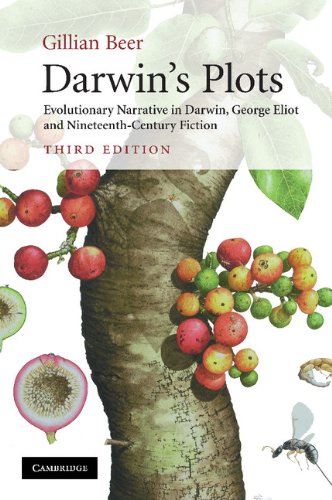
Darwin's Plots: Evolutionary Narrative in Darwin, George Eliot and...
Authors:
Gillian Beer
Publisher:
Cambridge University Press
Publication Date:
Not available
ISBN:
0521743613
Gillian Beer's classic Darwin's Plots, one of the most influential works of literary criticism and cultural history of the last quarter century, is here... reissued in an updated edition to coincide with the anniversary of Darwin's birth and of the publication of The Origin of Species. Its focus on how writers, including George Eliot, Charles Kingsley and Thomas Hardy, responded to Darwin's discoveries and to his innovations in scientific language continues to open up new approaches to Darwin's thought and to its effects in the culture of his contemporaries. This 2009 third edition includes an important new essay that investigates Darwin's concern with consciousness across all forms of organic life. It demonstrates how this fascination persisted throughout his career and affected his methods and discoveries. With an updated bibliography reflecting recent work in the field, this book will retain its place at the heart of Victorian studies.
Darwin's Sacred Cause: How a Hatred of Slavery Shaped Darwin's...
Authors:
Adrian Desmond
Publisher:
Houghton Mifflin Harcourt
Publication Date:
Not available
ISBN:
0547055269
An astonishing new portrait of a scientific iconIn this remarkable book, Adrian Desmond and James Moore restore the missing moral core of Darwin’s... evolutionary universe, providing a completely new account of how he came to his shattering theories about human origins.There has always been a mystery surrounding Darwin: How did this quiet, respectable gentleman, a pillar of his parish, come to embrace one of the most radical ideas in the history of human thought? It’s difficult to overstate just what Darwin was risking in publishing his theory of evolution. So it must have been something very powerfula moral fire, as Desmond and Moore put itthat propelled him. And that moral fire, they argue, was a passionate hatred of slavery.To make their case, they draw on a wealth of fresh manuscripts, unpublished family correspondence, notebooks, diaries, and even ships’ logs. They show how Darwin’s abolitionism had deep roots in his mother’s family and was reinforced by his voyage on the Beagle as well as by events in Americafrom the rise of scientific racism at Harvard through the dark days of the Civil War.Leading apologists for slavery in Darwin’s time argued that blacks and whites had originated as separate species, with whites created superior. Darwin abhorred such "arrogance." He believed that, far from being separate species, the races belonged to the same human family. Slavery was therefore a "sin," and abolishing it became Darwin’s "sacred cause." His theory of evolution gave all the racesblacks and whites, animals and plantsan ancient common ancestor and freed them from creationist shackles. Evolution meant emancipation.In this rich and illuminating work, Desmond and Moore recover Darwin’s lost humanitarianism. They argue that only by acknowledging Darwin’s Christian abolitionist heritage can we fully understand the development of his groundbreaking ideas. Compulsively readable and utterly persuasive, Darwin’s Sacred Cause will revolutionize our view of the great naturalist.
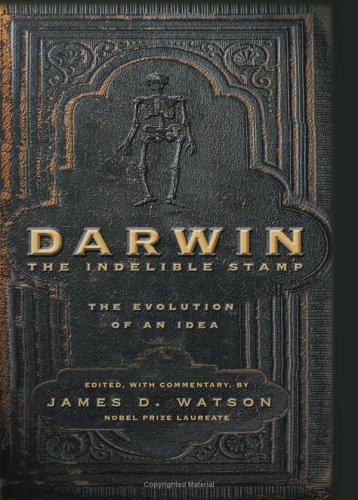
Darwin: The Indelible Stamp
Authors:
Not Available
Publisher:
Running Press
Publication Date:
Not available
ISBN:
0762421363
For the first time ever in one volume, here are four of the most influential works of Charles Darwin, reprinted in their entirety, each illuminated by... commentary from eminent scientist James D. Watson. Included are On the Origin of Species, arguably the most important scientific work of the nineteenth century; Voyage of the Beagle, a captivating travelogue richly stocked with observations that helped guide the young Darwin through his evolutionary world view; The Descent of Man, which explored the origins of humans and their history; and The Expressions of Emotions in Man and Animals, which explored the origin and nature of the mind. With his separate introductions for each of Darwin's books he goes further to explain how the modern considerations underlying genome research would have been impossible without Darwin, bringing a contemporary relevance to these nineteenth century masterworks.
Darwin (The Routledge Philosophers)
Authors:
Tim Lewens
Publisher:
Routledge
Publication Date:
Not available
ISBN:
041534638X
In this invaluable book, Tim Lewens shows in a clear and accessible manner how important Darwin is for philosophy and how his work has shaped and... challenged the very nature of the subject. Beginning with an overview of Darwin’s life and work, the subsequent chapters discuss the full range of fundamental philosophical topics from a Darwinian perspective. These include natural selection; the origin and nature of species; the role of evidence in scientific enquiry; the theory of Intelligent Design; evolutionary approaches to the human mind; the implications of Darwin’s work for ethics and epistemology; and the question of how social and political thought needs to be updated in the light of a Darwinian understanding of human nature. A concluding chapter assesses the philosophical legacy of Darwin’s thought. Darwin is essential reading for anyone in the humanities, social sciences and sciences seeking a philosophical introduction to Darwin, or anyone simply seeking a philosophical companion to Darwin’s own writings.
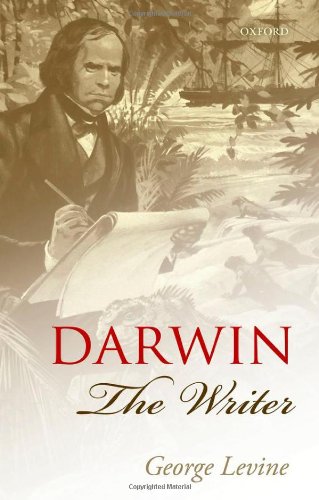
Darwin the Writer
Authors:
George Levine
Publisher:
Oxford University Press, USA
Publication Date:
Not available
ISBN:
0199608431
Charles Darwin's On the Origin of Species, arguably the most important book written in English in the nineteenth century, transformed the way we looked... at the world. It is usually assumed that this is because the idea of evolution was so staggeringly powerful. Prize-winning author George Levine suggests that much of its influence was due, in fact, to its artistry; to the way it was written. Alive with metaphor, vivid descriptions, twists, hesitations, personal exclamations, and humour, the prose is imbued with the sorts of tensions, ambivalences, and feelings characteristic of great literature. Although it is certainly a work of "science," the Origin is equally a work of "literature," at home in the company of celebrated Victorian novels such as Middlemarch and Bleak House, books that give us a unique yet recognisable sense of what the world is really like, while not being literally 'true'. Darwin's enormous cultural success, Levine contends, depended as much on the construction of his argument and the nature of his language, as it did on the power of his ideas and his evidence. By challenging the dominant reading of his work, this impassioned and energetic book gives us a Darwin who is comic rather than tragic, ebullient rather than austere, and who takes delight in the wild and fluid entanglement of things.

Das Amulett (German Edition)
Authors:
Ockert Meyer
Publisher:
Philipp Reclam Jun Verlag GmbH
Publication Date:
Not available
ISBN:
3150069432
In "My Paris, a Canadian woman keeps an extraordinary journal of her time in a Parisian studio. Not a typical tourist, she prefers indoor spaces, seeing... Paris go by on TV or watching from her window the ever-changing displays of men's designer clothing across the boulevard. Or she roams the streets, caught between nostalgia and a competing sense of the present day, between Paris's rich cultural traditions and the realities of Western imperialism. Disillusioned by her inability to reconcile these contradictions and by her own part in perpetuating them, she assembles in her journal pieces of the present, past, of art, philosophy, of herself, and of the world outside her.

Das Cabinet Des Dr. Caligari
Authors:
Not Available
Publisher:
British Film Institute
Publication Date:
Not available
ISBN:
0851706452
In this book, David Robinson challenges long accepted versions of the history and reception of Das Cabinet des Dr. Caligari, and seeks to redefine its... relationship to the larger phenomenon of Expressionist art.
DASC/FSTC 326 COURSE PACK FALL 2012
Authors:
Not Available
Publisher:
Not available
Publication Date:
Not available
ISBN:
Not available
DASC/FSTC 327 COURSE PACK FALL 2012
Authors:
Not Available
Publisher:
Not available
Publication Date:
Not available
ISBN:
Not available

Das Desinteresse
Authors:
Peter Wawerzinek
Publisher:
Hasenverlag GmbH
Publication Date:
Not available
ISBN:
3939468533
While unpacking boxes of old family books recently, Elizabeth Gilbert rediscovered a dusty, yellowed hardcover called At Home on the Range, originally... written by her great-grandmother, Margaret Yardley Potter. Having only been peripherally aware of the volume, Gilbert dug in with some curiosity, and soon found that she had stumbled upon a book far ahead of its time. Part scholar and part crusader for a more open food conversation, Potter espoused the importance of farmer’s markets and ethnic food (Italian, Jewish, and German), derided preservatives and culinary shortcuts, and generally celebrated a devotion to epicurean adventures. Reading this practical and humorous cookbook, it’s not hard to see that Gilbert inherited her great-grandmother’s love of food and her warm, infectious prose.Proceeds from this book benefit ScholarMatch (scholarmatch.org).
 '





