production
/viewbook/list/all/?page=3265
/
/static/
None

Deaf World: A Historical Reader and Primary Sourcebook
Authors:
Not Available
Publisher:
NYU Press
Publication Date:
Not available
ISBN:
0814798535
To many who hear, the deaf world is as foreign as a country never visited. Deaf World thus concerns itself less with the perspectives of the hearing and... more with what Deaf people themselves think and do. Editor Lois Bragg asserts that English is for many signing people a second, infrequently used language and that Deaf culture is the socially transmitted pattern of behavior, values, beliefs, and expression of those who use American Sign Language. She has assembled an astonishing array of historical sources, political writings, and personal memoirs, from classic 19th-century manifestos to contemporary policy papers, on everything from eugenics to speech and lipreading, the right to work and marry, and the never-ending controversy over separation vs. social integration. At the heart of many of the selections lies the belief that Deaf Americans have long constituted an internal colony of sorts in the United States. While not attempting to speak for Deaf people en masse, this ambitious platform anthology places the Deaf on center stage, offering them an opportunity to represent the world--theirs as well as the hearing world--from a Deaf perspective. For Deaf readers, the book will be welcomed as a gift, both a companion to be savored and, as often, an opponent to be engaged and debated. And for the hearing, it serves as an unprecedented guide to a world and a culture so often overlooked. Comprising a judicious mix of published pieces and original essays solicited specifically for this volume, Deaf World marks a major contribution.

Deal Breaker : A Myron Bolitar Mystery
Authors:
Harlan Coben
Publisher:
Dell Publishing
Publication Date:
Not available
ISBN:
0440220440
Sports agent Myron Bolitar is poised on the edge of the big time. So is Christian Steele, a rookie quarterback and Myron's prized client. But when... Christian gets a phone call from a former girlfriend, a woman who everyone, including the police, believes is dead, the deal starts to go sour. Trying to unravel the truth about a family's tragedy, a woman's secret, and a man's lies, Myron is up against the dark side of his business—where image and talent make you rich, but the truth can get you killed.In novels that crackle with wit and suspense, Edgar Award winner Harlan Coben has created one of the most fascinating and complex heroes in suspense fiction—Myron Bolitar—a hotheaded, tenderhearted sports agent who grows more and more engaging and unpredictable with each page-turning appearance.

Dealers of Lightning: Xerox PARC and the Dawn of the Computer Age
Authors:
Michael A. Hiltzik
Publisher:
HarperBusiness
Publication Date:
Not available
ISBN:
0887309895
In the bestselling tradition of The Soul of a New Machine, Dealers of Lightning is a fascinating journey of intellectual creation. In the 1970s and... '80s, Xerox Corporation brought together a brain-trust of engineering geniuses, a group of computer eccentrics dubbed PARC. This brilliant group created several monumental innovations that triggered a technological revolution, including the first personal computer, the laser printer, and the graphical interface (one of the main precursors of the Internet), only to see these breakthroughs rejected by the corporation. Yet, instead of giving up, these determined inventors turned their ideas into empires that radically altered contemporary life and changed the world.Based on extensive interviews with the scientists, engineers, administrators, and executives who lived the story, this riveting chronicle details PARC's humble beginnings through its triumph as a hothouse for ideas, and shows why Xerox was never able to grasp, and ultimately exploit, the cutting-edge innovations PARC delivered. Dealers of Lightning offers an unprecedented look at the ideas, the inventions, and the individuals that propelled Xerox PARC to the frontier of technohistoiy--and the corporate machinations that almost prevented it from achieving greatness.
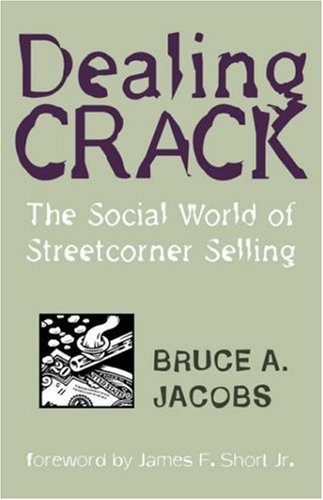
Dealing Crack: The Social World of Streetcorner Selling...
Authors:
Bruce A. Jacobs
Publisher:
Northeastern
Publication Date:
Not available
ISBN:
1555533876
During the 1980s, addiction to crack cocaine escalated at an alarming rate. As the demand for crack grew, so did the economic opportunities for... entrepreneurial street dealers, who developed criminal underground networks for the supply and retail sale of the high-profit substance. While crack cocaine use has since plateaued and is on the decline, hard-core dealers persist in selling the increasingly unprofitable drug in a high-risk, competitive street market.Bruce A. Jacobs bases his study on dangerous field research conducted in one of the most socially distressed and impoverished neighborhoods in St. Louis. Drawing on no-holds-barred interviews with active dealers, as well as on his own eyewitness observations of transactions and encounters with police, Jacobs captures the crack business as it actually operates on the streets.He examines the underlying motivations for selling crack, describes the complex and intricate social organization of dealing, and explores how dealers protect transactions from law enforcement, undercover police, and criminal predators. Quoting extensively from his conversations with offenders, he conveys much of the fear and aura surrounding the process and lifestyle of crack cocaine dealing.This provocative volume is appropriate for a variety of courses in criminal justice and social problems and gives general readers an inside look at one of America's most troubling problems.

Dealing Death and Drugs: The Big Business of Dope in the U.S. and...
Authors:
Beto O'Rourke
Publisher:
Cinco Puntos Press
Publication Date:
Not available
ISBN:
1933693940
The War on Drugs doesn’t work. This became obvious to El Paso City Representatives Susie Byrd and Beto O’Rourke when they started to ask questions... about why El Paso’s sister city Ciudad Juárez has become the deadliest city in the world8,000-plus deaths since January 1, 2008. Byrd and O’Rourke soon realized American drug use and United States' failed War on Drugs are at the core of problem. In Dealing Death and Drugs a book written for the general reader they explore the costs and consequences of marijuana prohibition. They argue that marijuana prohibition has created a black market so profitable that drug kingpins are billionaires and drug control doesn’t stand a chance. Using Juárez as their focus, they describe the business model of drug trafficking and explain why this illicit system has led to the never-ending slaughter of human beings. Their position: the only rational alternative to the War on Drugs is to end to the current prohibition on marijuana."If Washington won’t do anything different, if Mexico City won’t do anything different, then it is up to us the citizens of the border who understand the futility and tragedy of this current policy first hand to lead the way." from the AfterwordA portion of the proceeds from the sale of Dealing Death and Drugs will be donated to Centro Santa Catalina, a faith-based community in Ciudad Juárez, Mexico, founded in 1996 by Dominican Sisters for the spiritual, educational and economic empowerment of economically poor women and for the welfare of their families.

Dealings with God (St Andrews Studies in Reformation History)
Authors:
Francisca Loetz
Publisher:
Ashgate
Publication Date:
Not available
ISBN:
0754668835
Blasphemy could be a serious business in early-modern Europe, and those judged to have cursed, abused or denied God could in some cases find themselves... on trial for their lives. Whilst such attitudes may appear draconian to modern eyes, it is clear that in the past, blasphemy was regarded as a very real threat to society. Concentrating on the city of Zurich, this study examines the cultural and theological aspects of blasphemy in order to better understand exactly why this should be, and to illuminate the diverse and sometimes contradictory dynamics at work. The book explores the political, social and individual nature of religion; how these interact in cases of blasphemy, and how in turn the authorities dealt with them. On the most prosaic level this means understanding blasphemy as a denial of God, and thus the denial of a social and cultural system that claimed direct divine sanction. In a world without the sophisticated means of social control used to regulate modern society, religion formed the bedrock of social stability and the justification for unequal distribution of power and wealth. Beyond the purely political, however, the study also engages with the theological aspects of blasphemy, looking at the legacy of Zwingli and Bullinger, two of the most influential figures in the shaping of Reformed Zurich. By studying their attitudes, and the theological traditions they drew upon, and comparing these with the interpretations and actions of magistrates, pastors and city councillors, fascinating insights into the multiple meanings of blasphemy are put forth. By providing such a broad overview of the issue of blasphemy, linking the theological, cultural and social issues, this book provides a fascinating insight into a crucial, but often misunderstood aspect of early-modern society. The conclusions reached not only offer a much fuller understanding of the situation in Zurich, but have resonance for all historians of Reformation Europe.

Dealing with an Angry Public: The Mutual Gains Approach To...
Authors:
Lawrence Susskind
Publisher:
Free Press
Publication Date:
Not available
ISBN:
1451627351
Some portion of the American public will react negatively to almost any new corporate initiative, as Disney discovered when it announced its plans to... build an historical theme park in Virginia. Similarly, government efforts to change policy or shift budget priorities are invariably met with stiff resistance. In this enormously practical book, Lawrence Susskind and Patrick Field analyze scores of both private and public-sector cases, as well as crisis scenarios such as the Alaskan oil spill, the silicone breast implant controversy, and nuclear plant malfunction at Three Mile Island. They show how resistance to both public and private initiatives can be overcome by a mutual gains approach involving face-to-face negotiation, a strategy applied successfully by over fifteen hundred executives and officials who have attended Professor Susskind's MIT-Harvard "Angry Public" seminars. Susskind and Field outline the six key elements of this approach in order to help business and government leaders negotiate, rather than fight, with their critics. In the process, they show how to identify who the public is, whose concerns to address first, which people and organizations must be convinced of the legitimacy of action taken, and how to assess and respond to different types of anger effectively. Acknowledging the crucial role played by the media in shaping public perception and understanding, Susskind and Field suggest a way to develop media interaction which is consistent with the six mutual gains principles, and also discuss the type of leadership that corporate and government managers must provide in order to combine these ideas into a useful whole. We all need to be concerned about a society in which the public's concerns, fears and anger are not adequately addressed. When corporate and government agencies must spend crucial time and resources on rehashing and defending each decision they make, a frustrated and angry public contributes to the erosion of confidence in our basic institutions and undermines our competitiveness in the international marketplace. In this valuable book, Susskind and Field have produced a strong, clear framework which will help reduce these hidden costs for hundreds of executives, managers, elected and appointed officials, entrepreneurs, and the public relations, legal and other professionals who advise them.

Dealing with Challenges in Psychotherapy and Counseling (Skills,...
Authors:
Christiane Brems
Publisher:
Brooks Cole
Publication Date:
Not available
ISBN:
0534364713
This text provides a framework for handling tough clinical situations as they arise. It includes both the complexities of assessment issues that arise... in special circumstances with a variety of clients as well as a number of general interventions that are relevant to all clients. The book provides a theory-free conceptual super-structure that can guide and ground readers in difficult situations regardless of theoretical beliefs. The author's underlying philosophy reflects the importance of taking a contextual approach with clients, viewing clients as collaborators in the therapeutic process, and recognizing that the client needs strategies other than the provider-client relationship that he/she can implement independently.

Dealing With Conflict: Conflict Resolution Styles: Participant...
Authors:
Alexander Hiam
Publisher:
HRD Press, Inc.
Publication Date:
Not available
ISBN:
0874255104
Most of us are less skilled at handling conflict than we should be. Although studies show that a negotiating behavior is usually the best response to a... conflict situation, negotiation is a difficult endeavor-one that requires considerable skill and thought. The normal negotiating behavior, as typically practiced in business and social contexts, does not generally produce high levels of satisfaction for either participant. The Dealing with Conflict Instrument (DWCI) will help change this by encouraging conflicting parties to shift to a more collaborative style in order to find and pursue shared interests, creating a win/win outcome. The Dealing with Conflict Instrument presents five conflict-handling styles. The five styles; accommodate, avoid, compromise, compete, and collaborate, encompass all the effective ways of dealing with conflict. By completing the Dealing with Conflict Instrument-Self, participants will learn about their own natural style tendencies, while the information gathered from the DWCI 360-Degree Feedback set will give them insight into how they are perceived by others when resolving conflicts. The combined results of these assessments indicate which styles of conflict resolution need the most improvement. Participants will explore the characteristics of each conflict-handling style which will help them develop greater style flexibility. In order to decide which style is best in a given situation, they will learn to dissect situations, using Conflict Situation Analysis. DWCI is a significant improvement over conventional conflict assessments. It shortens usage time, produces clearer and more user-friendly results, and includes helpful support material. DWCI is compatible with most existing training programs and is the easiest way to update assessment materials.

Dealing with Darwin: How Great Companies Innovate at Every Phase of...
Authors:
Geoffrey A. Moore
Publisher:
Portfolio Hardcover
Publication Date:
Not available
ISBN:
1591841070
Geoffrey Moore is one of the most respected and bestselling names in business books. In his widely quoted Crossing the Chasm, he identified and... addressed the greatest challenge facing new ventures. Now he’s back with a book for established businesses that need to learn how to adapt—or suffer the slow declines into marginalized performance that have characterized so many Fortune 500 icons in recent years. Deregulation, globalization, and e-commerce are exerting unprecedented pressures on company profits. In this new economic ecosystem, companies must dramatically differentiate from their direct competitors—or risk declining performance and eventual extinction. But how do companies choose the right innovation strategy? Or overcome internal inertia that resists the kind of radical commitments needed to truly set the company’s offers apart? Illustrating his arguments with more than one hundred examples and a full-length case study based on his unprecedented access to Cisco Systems, Moore shows businesses how to meet today’s Darwinian challenges, whether they’re producing commodity products or customized services. For companies whose competitive differentiation to the marketplace is still effective, he demonstrates how innovations in execution can help boost productivity, whether a company is competing in a growth market, a mature market, or even a declining market. For companies in danger of succumbing to competitive pressures, he shows how to overcome inertia by engaging the entire corporate community in an unceasing commitment to innovate and evolve. For any business competing in today’s eat-or-be-eaten economic jungle, this groundbreaking guide shows not only how to survive, but also thrive.

Dealing With Deities: The Ritual Vow in South Asia
Authors:
Not Available
Publisher:
State University of New York Press
Publication Date:
Not available
ISBN:
0791467082
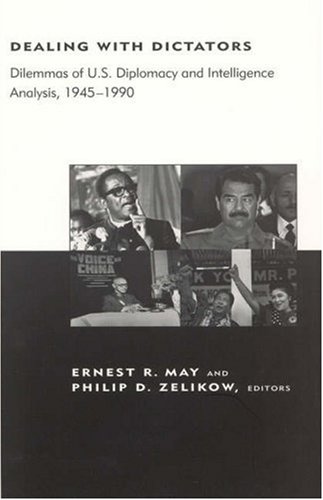
Dealing with Dictators: Dilemmas of US Diplomacy and Intelligence...
Authors:
Not Available
Publisher:
The MIT Press
Publication Date:
Not available
ISBN:
0262633248
The United States continues to proclaim its support for democracy and its opposition to tyranny, but American presidents often have supported dictators... who have allied themselves with the United States. This book illustrates the chronic dilemmas inherent in US dealings with dictators under conditions of uncertainty and moral ambiguity.Dealing with Dictators offers in-depth analysis of six cases: the United States and China, 1945-1948; UN intervention in the Congo, 1960-1965; the overthrow of the Shah of Iran; US relations with the Somoza regime in Nicaragua; the fall of Marcos in the Philippines; and US policy toward Iraq, 1988-1990. The authors' fascinating and revealing accounts shed new light on critical episodes in US foreign policy and provide a basis for understanding the dilemmas that US decision makers confronted. The chapters do not focus on whether US leaders made the "right" or "wrong" decisions, but instead seek to deepen our understanding of how uncertainty permeated the process and whether decision makers and their aides asked the right questions. This approach makes the book invaluable to scholars and students of government and history, and to readers interested in the general subject of how intelligence analysis interacts with policymaking.

Dealing with Differences: Dramas of Mediating Public Disputes
Authors:
John Forester
Publisher:
Oxford University Press, USA
Publication Date:
Not available
ISBN:
019538590X
Conflict and dispute pervade political and policy discussions. Moreover, unequal power relations tend to heighten levels of conflict. In this context... of contention, figuring out ways to accommodate others and reach solutions that are agreeable to all is a perennial challenge for activists, politicians, planners, and policymakers. John Forester is one of America's eminent scholars of progressive planning and dispute resolution in the policy arena, and in Dealing with Differences he focuses on a series of 'hard cases'--conflicts that appeared to be insoluble yet which were resolved in the end. Forester ranges across the country--from Hawaii to Maryland to Washington State--and across issues--the environment, ethnic conflict, and HIV. Throughout, he focuses on how innovative mediators settled seemingly intractable disputes. Between pessimism masquerading as 'realism' and the unrealistic idealism that 'we can all get along,' Forester identifies the middle terrain where disputes do actually get resolved in ways that offer something for all sides. Dealing with Differences serves as an authoritative and fundamentally pragmatic pathway for anyone who has to engage in the highly contentious worlds of planning and policymaking.
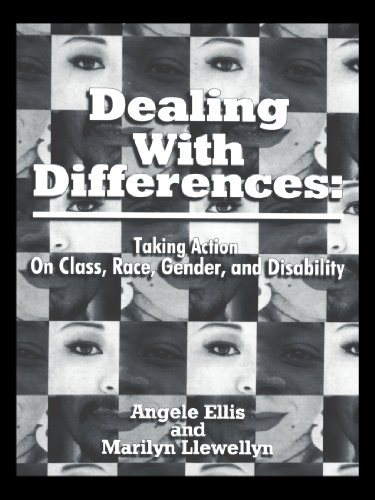
Dealing With Differences: Taking Action on Class, Race, Gender and...
Authors:
Angele M. Ellis
Publisher:
Corwin Press
Publication Date:
Not available
ISBN:
0803964307
Foreword by Jane Margolis Dealing With Differences is a classroom-tested action guide to dealing with issues and prejudice around class, race,... gender, and disability

Dealing With Difficult Parents And With Parents in Difficult...
Authors:
Todd Whitaker
Publisher:
Not available
Publication Date:
Not available
ISBN:
1930556098
This book helps teachers, principals, superintendents, and all educators develop a repertoire of tools and skills for comfortable and effective... interaction with parents. It shows you how to deal with the parent who is bossy, volatile, argumentative, aggressive, or maybe the worst - apathetic. It provides specific phrases to use with parents to help you avoid using "trigger" words which unintentionally make matters worse. It will show you how to deliver bad news to good parents, how to build positive credibility to all types of parents, and how to foster the kind of parent involvement which leads to student success.
 '





