production
/viewbook/list/all/?page=3273
/
/static/
None
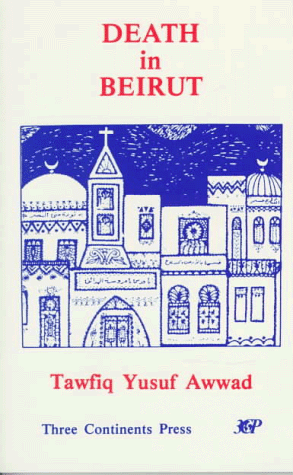
Death in Beirut: A Novel
Authors:
Tawfig Awwad
Publisher:
Three Continents Pr
Publication Date:
Not available
ISBN:
0914478877
Sociology of Organizations: Structures and Relationships is a timely and unique collection of both classic and contemporary studies of organizations.... Designed around competing theoretical frameworks, this cutting-edge book examines organizations with attention to structure and objectives, interactions among members and among organizations, the relationship between the organization and its environment and the social significance or social meaning of the organization. This volume sheds light on some of the most interesting changes and challenges facing organizations today: the integration of new media, the implementation of diversity and inclusion, and the promotion of sustainable workforce engagement. Lively and provocative, this textbook is theoretically rigorous, disciplinarily informed and representative of heterogeneity within organization studies.
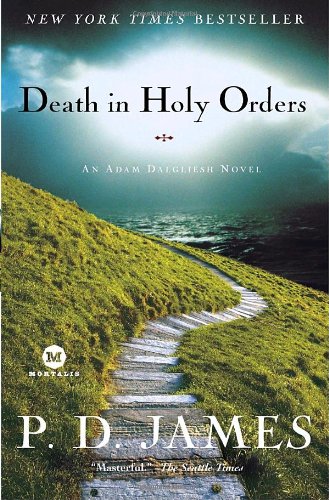
Death in Holy Orders (Adam Dalgliesh Mystery Series #11)
Authors:
P. D. James
Publisher:
Ballantine Books
Publication Date:
Not available
ISBN:
0812977238
From the award-winning master of literary crime fiction, a classic work rich in tense drama and psychological insight.On the East Anglian seacoast, a... small theological college hangs precariously on an eroding shoreline and an equally precarious future. When the body of a student is found buried in the sand, the boy’s influential father demands that Scotland Yard investigate. Enter Adam Dalgliesh, a detective who loves poetry, a man who has known loss and discovery. The son of a parson, and having spent many happy boyhood summers at the school, Dalgliesh is the perfect candidate to look for the truth in this remote, rarified community of the faithful–and the frightened. And when one death leads to another, Dalgliesh finds himself steeped in a world of good and evil, of stifled passions and hidden pasts, where someone has cause not just to commit one crime but to begin an unholy order of murder. . . . “Gracefully sculpted prose and [a] superbly executed mystery . . . Death in Holy Orders is among [James’s] most remarkable and accomplished Dalgliesh novels.”–The Philadelphia Inquirer“An elegant work about hope, death, and the alternately redemptive and destructive nature of love.”–The Miami Herald “Absorbing . . . [James’s] plotting and characterization [are] impeccable.”–Orlando Sentinel“P. D. James is in top form.”–The Boston GlobeOpen the exclusive dossier at the back of this book, featuring P. D. James’ essay on penning the perfect detective novel.
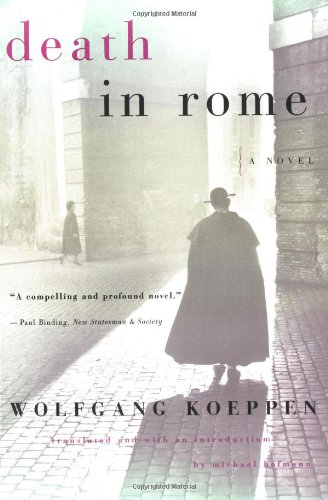
Death in Rome
Authors:
Wolfgang Koeppen
Publisher:
W. W. Norton & Company
Publication Date:
Not available
ISBN:
0393321940
A prophetic novel that ranks with The Tin Drum and W. G. Sebald's The Emigrants as one of the essential works of contemporary European fiction.Wolfgang... Koeppen's Death in Rome, in the words of translator Michael Hofmann, "is a comprehensive and brilliant provocation of an entire nation." First published in 1954 to great controversy, it is only now being recognized as a classic. A tragic portrait of Germany after World War II, Death in Rome completes the trilogy that earned Koeppen praise from Günter Grass in his lifetime as "the greatest living German writer." Mirroring the social and political upheaval following the fall of Nazism, Koeppen here offers the story of four members of a Germany family—a former SS officer, a young man preparing for the priesthood, a composer, and a government administrator—reunited by chance in the decaying beauty of postwar Rome. Koeppen re-creates the soul of a nation at a significant juncture of history in this devastating work of literary genius.
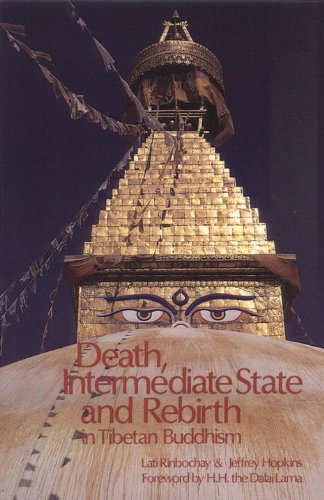
Death, Intermediate State and Rebirth in Tibetan Buddhism
Authors:
Lati Rinpoche
Publisher:
Snow Lion Publications
Publication Date:
Not available
ISBN:
0937938009
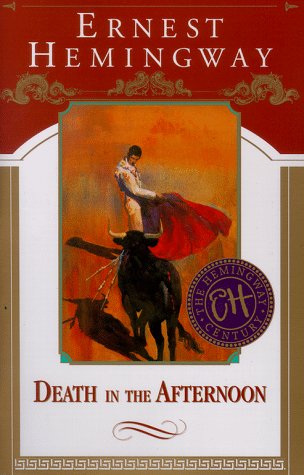
Death in the Afternoon
Authors:
Ernest Hemingway
Publisher:
Scribner
Publication Date:
Not available
ISBN:
0684801450
Hemingway's Classic Portrait Of The Pageantry Of Bullfighting. Still considered one of the best books ever written about bullfighting, Death in the... Afternoon reflects Hemingway's belief that bullfighting was more than mere sport. Here he describes and explains the technical aspects of this dangerous ritual, and "the emotional and spiritual intensity and pure classic beauty that can be produced by a man, an animal, and a piece of scarlet serge draped on a stick." Seen through his eyes, bullfighting becomes an art, a richly choreographed ballet, with performers who range from awkward amateurs to masters of great grace and cunning. A fascinating look at the history and grandeur of bullfighting, Death in the Afternoon is also a deeper contemplation on the nature of cowardice and bravery, sport and tragedy, and is enlivened throughout by Hemingway's pungent commentary on life and literature.

Death in the Andes: A Novel
Authors:
Mario Vargas Llosa
Publisher:
Picador
Publication Date:
Not available
ISBN:
0312427255
In a remote Andean village, three men have disappeared. Peruvian Army corporal Lituma and his deputy Tomás have been dispatched to investigate, and to... guard the town from the Shining Path guerrillas they assume are responsible. But the townspeople do not trust the officers, and they have their own ideas about what forces claimed the bodies of the missing men. To pass the time, and to cope with their homesickness, Tomás entertains Lituma nightly with the sensuous, surreal tale of his precarious love affair with a wayward prostitute. His stories are intermingled with the ongoing mystery of the missing men.Death in the Andes is an atmospheric suspense story and a political allegory, a panoramic view of contemporary Peru from one of the world's great novelists.
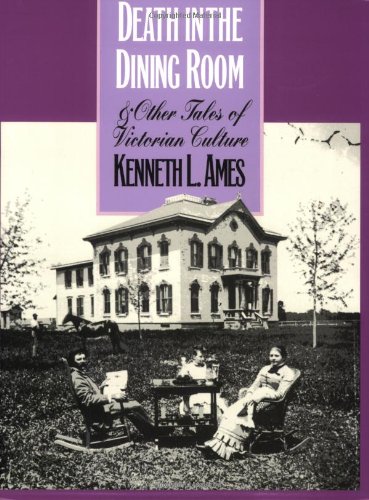
Death in the Dining Room and Other Tales of Victorian Culture...
Authors:
Kenneth Ames
Publisher:
Temple University Press
Publication Date:
Not available
ISBN:
1566393337
In this provocative look at Victorian America, Kenneth Ames explores the minds of Victorians by examining some of their most distinctive and fascinating... creations. Featuring five once-prominent home furnishings, he reconstructs a vanished culture and demonstrates the centrality of the artifact to historical understanding. Richly illustrated with photographs of surviving objects as well as images from a wide variety of period sources, the five essays discuss specific pieces - hallstands, sideboards, embroidered mottoes, parlor organs, and seating furniture - within the context of broader cultural issues and concerns. Ames reveals not only the major outlines of Victorian culture but also the conflicts and tensions deep within that culture. An extraordinary proliferation of goods characterizes the Victorian world. Throughout the study, Ames considers the relationship of some of these household objects to issues of class, gender, and place. For example, the importance of public image was dramatized by the rituals of the front hall in Victorian homes: its placement within the house, the massive hallstand with its receptacles for calling cards and umbrellas, accommodations for temporary and usually uncomfortable seating. The dining room was a shrine to the notion of "man's" dominion over nature - each elaborately carved sideboard displayed a frieze of slaughtered game and harvested vegetation. Parlor organs, a blending of the sacred and the profane, provided an occasion to display feminine accomplishment and to symbolize the role of the bourgeois Christian lady. Ames also discusses how the prevailing class and gender hierarchy was echoed in the posture of seating furniture and its arrangement. The author is one of the premier interpreters of Victorian culture in America. His witty, provocative, and irreverent commentary on the "quaint" fixtures of the Victorian household will fascinate scholars, antique buffs, and collectors on nostalgia. Author note: Kenneth L. Ames is Chief of Historical and Anthropological Surveys at the New York State Museum and was formerly Chair of the Office of Advanced Studies at the Winterthur Museum.
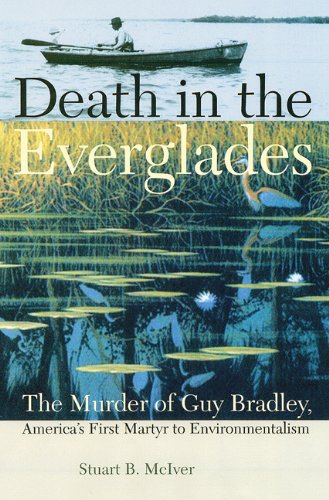
Death in the Everglades: The Murder of Guy Bradley, America's First...
Authors:
Stuart B. McIver
Publisher:
University Press of Florida
Publication Date:
Not available
ISBN:
0813034426
"This is a fascinating account of the Florida plume hunters, the devastation they wrought, and the slow, painful progress--exemplified bravely on the... hunting grounds by Guy Bradley--of the bird protection movement that ultimately succeeded."--Oliver H. Orr, Jr., Library of Congress (retired), and author of Saving American Birds: T. Gilbert Pearson and the Founding of the Audubon Movement"A moving account of a raw frontier and a hero who lost his life trying to enforce the law."--Paul S. George, editor, TequestaDeath in the Everglades chronicles the demise of one of 20th-century Florida's most enduring folk heroes. The murder of Guy Bradley represents a milestone not only in the saga of the Everglades but also in the broader history of American environmentalism. This fascinating biography of his abbreviated but eventful life is emblematic of the struggle to tame the Florida frontier without destroying it. As Stuart McIver unfolds the story behind this famous but little-known crime, he also provides a window into Florida history during the creation of modern South Florida.Born in Chicago in 1870, Bradley moved to Florida as a young boy in 1876. Nineteen years later his father became associated with the developer and railroad magnate Henry Flagler, and in 1898 the family moved to the isolated coastal village of Flamingo. Situated on the southeastern fringe of the Everglades, Flamingo was a flash point in an emerging ecological battleground that drew the Bradleys and other pioneer families into a conflict later dubbed "the Plume Wars." At the turn of the century, the mass killing of egrets and other plume birds for feathers to adorn women's hats was a serious concern among the nation's growing cadre of environmentalists, especially among those who belonged to the Audubon Society, a conservation organization founded in 1886.In 1901, at the urging of Audubon Society leaders and the American Ornithologists' Union, the Florida legislature enacted a bird protection law that provided for the hiring of local game wardens, and a year later Guy Bradley assumed the dual role of Monroe County's game warden and deputy sheriff. For the next three years, from 1902 to 1905, Bradley matched wits and sometimes weapons with an array of plume hunters and other nefarious characters, some of whom were strangers but many of whom were friends or acquaintances of the warden or his family. In the end, Bradley was shot and killed by Walter Smith, a man he had known for nearly a decade. How this murder came about, what happened to Smith and others left behind, and how Bradley's demise and subsequent controversies affected the environmental movement are intriguing questions that frame McIver's richly textured narrative.With the instincts and skills of a master storyteller, McIver--long one of Florida's most historically minded journalists--has recaptured a tale for the ages, a story of personal sacrifice and collective awakening that altered the course of the state's natural and human history. Bradley should not be forgotten, and this book should not be overlooked by anyone seeking a full understanding of how the Everglades became a treasured but imperiled place.Stuart B. McIver was a prolific journalist who also wrote numerous books, more than 500 magazine articles, and documentary films, for which he also worked as producer.
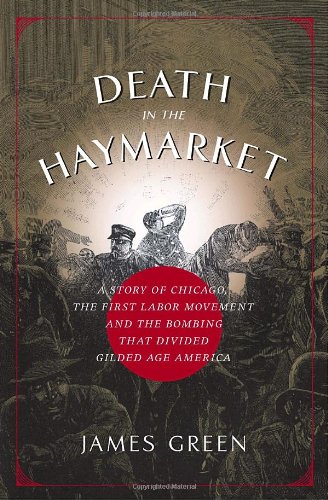
Death in the Haymarket: A Story of Chicago, the First Labor...
Authors:
James Green
Publisher:
Pantheon
Publication Date:
Not available
ISBN:
0375422374
On May 4, 1886, a bomb exploded at a Chicago labor rally, wounding dozens of policemen, seven of whom eventually died. Coming in the midst of the... largest national strike Americans had ever seen, the bombing created mass hysteria and led to a sensational trial, which culminated in four controversial executions. The trial seized headlines across the country, created the nation’s first red scare and dealt a blow to the labor movement from which it would take decades to recover.Death in the Haymarket brings these remarkable events to life, re-creating a tempestuous moment in American social history. James Green recounts the rise of the first great labor movement in the wake of the Civil War and brings to life the epic twenty-year battle for the eight-hour workday. He shows how the movement overcame numerous setbacks to orchestrate a series of strikes that swept the country in 1886, positioning the unions for a hard-won victory on the eve of the Haymarket tragedy.As he captures the frustrations, tensions and heady victories, Green also gives us a rich portrait of Chicago, the Midwestern powerhouse of the Gilded Age. We see the great factories and their wealthy owners, including men such as George Pullman, and we get an intimate view of the communities of immigrant employees who worked for them. Throughout, we are reminded of the increasing power of newspapers as, led by the legendary Chicago Tribune editor Joseph Medill, they stirred up popular fears of the immigrants and radicals who led the unions.Blending a gripping narrative, outsized characters and a panoramic portrait of a major social movement, Death in the Haymarket is an important addition to the history of American capitalism and a moving story about the class tensions at the heart of Gilded Age America.
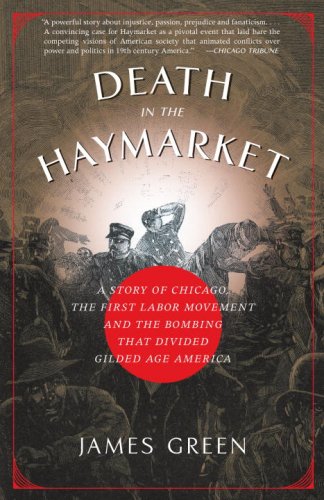
Death in the Haymarket: A Story of Chicago, the First Labor...
Authors:
James Green
Publisher:
Anchor
Publication Date:
Not available
ISBN:
1400033225
On May 4, 1886, a bomb exploded at a Chicago labor rally, wounding dozens of policemen, seven of whom eventually died. A wave of mass hysteria swept the... country, leading to a sensational trial, that culminated in four controversial executions, and dealt a blow to the labor movement from which it would take decades to recover. Historian James Green recounts the rise of the first great labor movement in the wake of the Civil War and brings to life an epic twenty-year struggle for the eight-hour workday. Blending a gripping narrative, outsized characters and a panoramic portrait of a major social movement, Death in the Haymarket is an important addition to the history of American capitalism and a moving story about the class tensions at the heart of Gilded Age America.
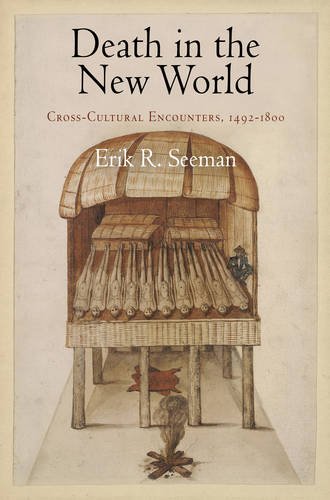
Death in the New World: Cross-Cultural Encounters, 1492-1800 (Early...
Authors:
Erik R. Seeman
Publisher:
University of Pennsylvania Press
Publication Date:
Not available
ISBN:
081222194X
Reminders of death were everywhere in the New World, from the epidemics that devastated Indian populations and the mortality of slaves working the... Caribbean sugar cane fields to the unfamiliar diseases that afflicted Europeans in the Chesapeake and West Indies. According to historian Erik R. Seeman, when Indians, Africans, and Europeans encountered one another, they could not ignore the similarities in their approaches to death. All of these groups believed in an afterlife to which the soul or spirit traveled after death. As a result all felt that corpses—the earthly vessels for the soul or spirit—should be treated with respect, and all mourned the dead with commemorative rituals. Seeman argues that deathways facilitated communication among peoples otherwise divided by language and custom. They observed, asked questions about, and sometimes even participated in their counterparts' rituals.At the same time, insofar as New World interactions were largely exploitative, the communication facilitated by parallel deathways was often used to influence or gain advantage over one's rivals. In Virginia, for example, John Smith used his knowledge of Powhatan deathways to impress the local Indians with his abilities as a healer as part of his campaign to demonstrate the superiority of English culture. Likewise, in the 1610-1614 war between Indians and English, the Powhatans mutilated English corpses because they knew this act would horrify their enemies.Told in a series of engrossing narratives, Death in the New World is a landmark study that offers a fresh perspective on the dynamics of cross-cultural encounters and their larger ramifications in the Atlantic world.
Death in Venice
Authors:
Michael Cunningham
Publisher:
Ecco
Publication Date:
Not available
ISBN:
0060576057
The world-famous masterpiece by Nobel laureate Thomas Mann -- here in a new translation by Michael Henry Heim Published on the eve of World War I, a... decade after Buddenbrooks had established Thomas Mann as a literary celebrity, Death in Venice tells the story of Gustav von Aschenbach, a successful but aging writer who follows his wanderlust to Venice in search of spiritual fulfillment that instead leads to his erotic doom. In the decaying city, besieged by an unnamed epidemic, he becomes obsessed with an exquisite Polish boy, Tadzio. "It is a story of the voluptuousness of doom," Mann wrote. "But the problem I had especially in mind was that of the artist's dignity."
Death in Venice
Authors:
Thomas Mann
Publisher:
CreateSpace Independent Publishing Platform
Publication Date:
Not available
ISBN:
1453875263
Thomas Mann (1875 - 1955) was a German novelist, short story writer, social critic, philanthropist, essayist, and 1929 Nobel Prize laureate, known for... his series of highly symbolic and ironic epic novels and novellas, noted for their insight into the psychology of the artist and the intellectual. DEATH IN VENICE, this tale of forbidden love which has long intrigued the reading public, was his early masterpiece. This is an exciting, new translation by Martin C. Doege.

Death in Venice
Authors:
Thomas Mann
Publisher:
Bedford/St. Martin's
Publication Date:
Not available
ISBN:
0312120028
This critical edition of Thomas Mann’s 1912 German modernist novella reprints the widely praised translation by David Luke together with critical... essays that approach the work from 5 contemporary critical perspectives and highly praised editorial apparatus that introduces students to the novel and the perspectives.
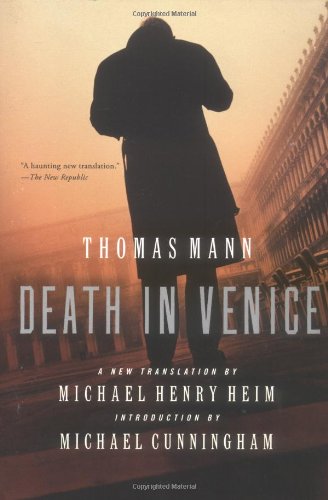
Death in Venice
Authors:
Thomas Mann
Publisher:
Harper Perennial
Publication Date:
Not available
ISBN:
0060576170
The world-famous masterpiece by Nobel laureate Thomas Mann -- here in a new translation by Michael Henry Heim Published on the eve of World War I, a... decade after Buddenbrooks had established Thomas Mann as a literary celebrity, Death in Venice tells the story of Gustav von Aschenbach, a successful but aging writer who follows his wanderlust to Venice in search of spiritual fulfillment that instead leads to his erotic doom. In the decaying city, besieged by an unnamed epidemic, he becomes obsessed with an exquisite Polish boy, Tadzio. "It is a story of the voluptuousness of doom," Mann wrote. "But the problem I had especially in mind was that of the artist's dignity."
 '





