production
/viewbook/list/all/?page=3276
/
/static/
None
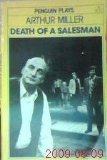
Death of a Salesman: Text and Criticism (Viking Critical Library)
Authors:
Arthur Miller
Publisher:
Penguin
Publication Date:
Not available
ISBN:
0140155023
Willy Loman, the protagonist of Death of a Salesman, has spent his life following the American way, living out his belief in salesmanship as a way to... reinvent himself. But somehow the riches and respect he covets have eluded him. At age 63, he searches for the moment his life took a wrong turn, the moment of betrayal that undermined his relationship with his wife and destroyed his relationship with Biff, the son in whom he invested his faith. Willy lives in a fragile world of elaborate excuses and daydreams, conflating past and present in a desperate attempt to make sense of himself and of a world that once promised so much. Since it was first performed in 1949, Arthur Miller's Pulitzer Prize-winning drama about the tragic shortcomings of an American dreamer has been recognized as a milestone of the theater. This Viking Critical Library edition of Death of a Salesman contains the complete text of the play, typescript facsimiles, and extensive critical and contextual material including: Conflicting reviews about its opening night by Robert Garland, Harold Clurman, Eleanor Clark, and others Five articles by Miller on his play, including "Tragedy and the Common Man" and his "Introduction to Collected Plays" Critical essays by John Gassner, Ivor Brown, Joseph A. Hynes, and others General essays on Miller by William Weigand, Allan Seager, and others Analogous works by Eudora Welty, Walter D. Moody, Tennessee Williams, and Irwin Shaw The stage designer's account, presented in selections from Designing for the Theatre by Jo Mielziner An in-depth introduction by the editor, a chronology, a list of topics for discussion and papers, and a bibliography
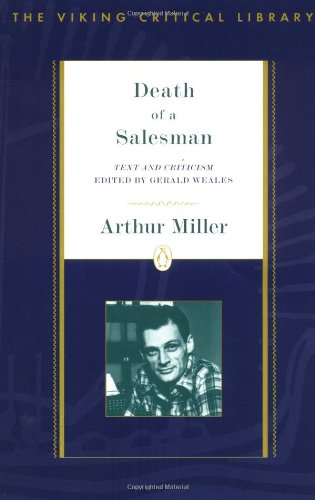
Death of a Salesman (Viking Critical Library)
Authors:
Arthur Miller
Publisher:
Penguin Books
Publication Date:
Not available
ISBN:
0140247734
Willy Loman, the protagonist of Death of a Salesman, has spent his life following the American way, living out his belief in salesmanship as a way to... reinvent himself. But somehow the riches and respect he covets have eluded him. At age 63, he searches for the moment his life took a wrong turn, the moment of betrayal that undermined his relationship with his wife and destroyed his relationship with Biff, the son in whom he invested his faith. Willy lives in a fragile world of elaborate excuses and daydreams, conflating past and present in a desperate attempt to make sense of himself and of a world that once promised so much. Since it was first performed in 1949, Arthur Miller's Pulitzer Prize-winning drama about the tragic shortcomings of an American dreamer has been recognized as a milestone of the theater. This Viking Critical Library edition of Death of a Salesman contains the complete text of the play, typescript facsimiles, and extensive critical and contextual material including: Conflicting reviews about its opening night by Robert Garland, Harold Clurman, Eleanor Clark, and others Five articles by Miller on his play, including "Tragedy and the Common Man" and his "Introduction to Collected Plays" Critical essays by John Gassner, Ivor Brown, Joseph A. Hynes, and others General essays on Miller by William Weigand, Allan Seager, and others Analogous works by Eudora Welty, Walter D. Moody, Tennessee Williams, and Irwin Shaw The stage designer's account, presented in selections from Designing for the Theatre by Jo Mielziner An in-depth introduction by the editor, a chronology, a list of topics for discussion and papers, and a bibliography
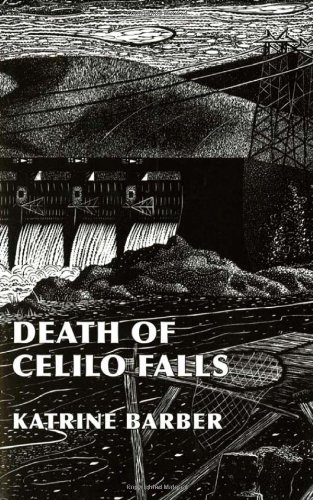
Death of Celilo Falls (Emil and Kathleen Sick Lecture Book Series)
Authors:
Katrine Barber
Publisher:
University of Washington Press
Publication Date:
Not available
ISBN:
0295985461
For thousands of years, Pacific Northwest Indians fished, bartered, socialized, and honored their ancestors at Celilo Falls, part of a nine-mile stretch... of the Long Narrows on the Columbia River. Although the Indian community of Celilo Village survives to this day as Oregon's oldest continuously inhabited town, with the construction of The Dalles Dam in 1957, traditional uses of the river were catastrophically interrupted. Most non-Indians celebrated the new generation of hydroelectricity and the easy navigability of the river "highway" created by the dam, but Indians lost a sustaining center to their lives when Celilo Falls was inundated.Death of Celilo Falls is a story of ordinary lives in extraordinary circumstances, as neighboring communities went through tremendous economic, environmental, and cultural change in a brief period. Katrine Barber examines the negotiations and controversies that took place during the planning and construction of the dam and the profound impact the project had on both the Indian community of Celilo Village and the non-Indian town of The Dalles, intertwined with local concerns that affected the entire American West: treaty rights, federal Indian policy, environmental transformation of rivers, and the idea of "progress."Katrine Barber is assistant professor of history at Portland State University and an associate at the Center for Columbia River History."Creatively conceived and carefully argued, Barber's study provides important insights to a story that, while set in the Pacific Northwest on the Columbia River, has much larger relevance to the American West as a whole and to modern U.S. social history, Cold War historiography, federal Indian policy in the mid-twentieth century, and recent Native American history." - Peter Boag, author of Environment and Experience: Settlement Culture in Nineteenth-Century Oregon
DEATH OF CONTRACT: SECOND EDITION
Authors:
GRANT GILMORE
Publisher:
Ohio State University Press
Publication Date:
Not available
ISBN:
081420676X
Soundly based in the research literature and theory, this comprehensive introductory text is a practical guide to teaching physical education to the... elementary school child. Its skill theme approach guides teachers in the process of assisting children develop their motor skills and physical fitness through developmentally appropriate activities.
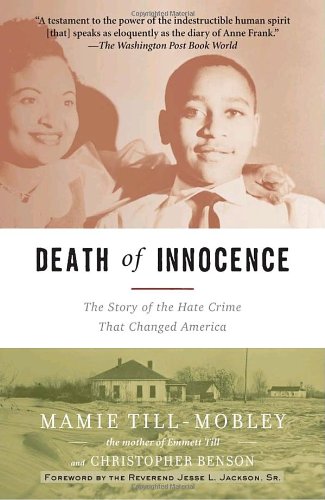
Death of Innocence: The Story of the Hate Crime That Changed America
Authors:
Mamie Till-Mobley
Publisher:
One World/Ballantine
Publication Date:
Not available
ISBN:
0812970470
There are many heroes of the civil rights movement—men and women we can look to for inspiration. Each has a unique story, a path that led to a role as... leader or activist. Death of Innocence is the heartbreaking and ultimately inspiring story of one such hero: Mamie Till-Mobley, the mother of Emmett Till—an innocent fourteen-year-old African-American boy who was in the wrong place at the wrong time, and who paid for it with his life. His outraged mother’s actions galvanized the civil rights movement, leaving an indelible mark on American racial consciousness. Mamie Carthan was an ordinary African-American woman growing up in 1930s Chicago, living under the strong, steady influence of her mother’s care. She fell in love with and married Louis Till, and while the marriage didn’t last, they did have a beautiful baby boy, Emmett. In August 1955, Emmett was visiting family in Mississippi when he was kidnapped from his bed in the middle of the night by two white men and brutally murdered. His crime: allegedly whistling at a white woman in a convenience store. His mother began her career of activism when she insisted on an open-casket viewing of her son’s gruesomely disfigured body. More than a hundred thousand people attended the service. The trial of J. W. Milam and Roy Bryant, accused of kidnapping and murdering Emmett (the two were eventually acquitted of the crime), was considered the first full-scale media event of the civil rights movement. What followed altered the course of this country’s history, and it was all set in motion by the sheer will, determination, and courage of Mamie Till-Mobley—a woman who would pull herself back from the brink of suicide to become a teacher and inspire hundreds of black children throughout the country. Mamie Till-Mobley, who died in 2003 just as she completed this memoir, has honored us with her full testimony: “I focused on my son while I considered this book. . . . The result is in your hands. . . . I am experienced, but not cynical. . . . I am hopeful that we all can be better than we are. I’ve been brokenhearted, but I still maintain an oversized capacity for love.” Death of Innocence is an essential document in the annals of American civil rights history, and a painful yet beautiful account of a mother’s ability to transform tragedy into boundless courage and hope.From the Hardcover edition.
Death of the Liberal Class
Authors:
Chris Hedges
Publisher:
Nation Books
Publication Date:
Not available
ISBN:
1568586442
The liberal class plays a vital role in a democracy. It gives moral legitimacy to the state. It makes limited forms of dissent and incremental change... possible. The liberal class posits itself as the conscience of the nation. It permits us, through its appeal to public virtues and the public good, to define ourselves as a good and noble people. Most importantly, on behalf of the power elite the liberal class serves as bulwarks against radical movements by offering a safety valve for popular frustrations and discontentment by discrediting those who talk of profound structural change. Once this class loses its social and political role then the delicate fabric of a democracy breaks down and the liberal class, along with the values it espouses, becomes an object of ridicule and hatred. The door that has been opened to proto-fascists has been opened by a bankrupt liberalism The Death of the Liberal Class examines the failure of the liberal class to confront the rise of the corporate state and the consequences of a liberalism that has become profoundly bankrupted. Hedges argues there are five pillars of the liberal establishment – the press, liberal religious institutions, labor unions, universities and the Democratic Party— and that each of these institutions, more concerned with status and privilege than justice and progress, sold out the constituents they represented. In doing so, the liberal class has become irrelevant to society at large and ultimately the corporate power elite they once served.

Death of the Liberal Class
Authors:
Chris Hedges
Publisher:
Nation Books
Publication Date:
Not available
ISBN:
1568586795
For decades the liberal class was a defense against the worst excesses of power. But the pillars of the liberal class— the press, universities, the... labor movement, the Democratic Party, and liberal religious institutions—have collapsed. In its absence, the poor, the working class, and even the middle class no longer have a champion. In this searing polemic Chris Hedges indicts liberal institutions, including his former employer, the New York Times, who have distorted their basic beliefs in order to support unfettered capitalism, the national security state, globalization, and staggering income inequalities. Hedges argues that the death of the liberal class created a profound vacuum at the heart of American political life. And now speculators, war profiteers, and demagogues— from militias to the Tea Party—are filling the void.
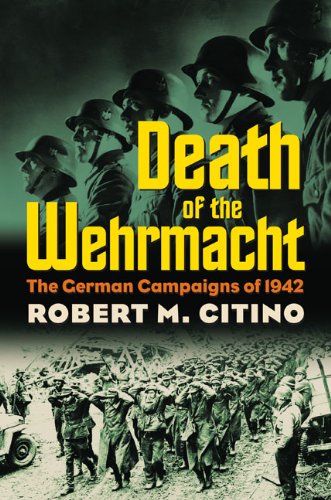
Death of the Wehrmacht: The German Campaigns of 1942 (Modern War...
Authors:
Robert M. Citino
Publisher:
Not available
Publication Date:
Not available
ISBN:
0700617914
For Hitler and the German military, 1942 was a key turning point of World War II, as an overstretched but still lethal Wehrmacht replaced brilliant... victories and huge territorial gains with stalemates and strategic retreats. In this major reevaluation of that crucial year, Robert Citino shows that the German army's emerging woes were rooted as much in its addiction to the "war of movement"--attempts to smash the enemy in "short and lively" campaigns--as they were in Hitler's deeply flawed management of the war. From the overwhelming operational victories at Kerch and Kharkov in May to the catastrophic defeats at El Alamein and Stalingrad, Death of the Wehrmacht offers an eye-opening new view of that decisive year. Building upon his widely respected critique in The German Way of War, Citino shows how the campaigns of 1942 fit within the centuries-old patterns of Prussian/German warmaking and ultimately doomed Hitler's expansionist ambitions. He examines every major campaign and battle in the Russian and North African theaters throughout the year to assess how a military geared to quick and decisive victories coped when the tide turned against it. Citino also reconstructs the German generals' view of the war and illuminates the multiple contingencies that might have produced more favorable results. In addition, he cites the fatal extreme aggressiveness of German commanders like Erwin Rommel and assesses how the German system of command and its commitment to the "independence of subordinate commanders" suffered under the thumb of Hitler and chief of staff General Franz Halder. More than the turning point of a war, 1942 marked the death of a very old and traditional pattern of warmaking, with the classic "German way of war" unable to meet the challenges of the twentieth century. Blending masterly research with a gripping narrative, Citino's remarkable work provides a fresh and revealing look at how one of history's most powerful armies began to founder in its quest for world domination. This book is part of the Modern War Studies series.
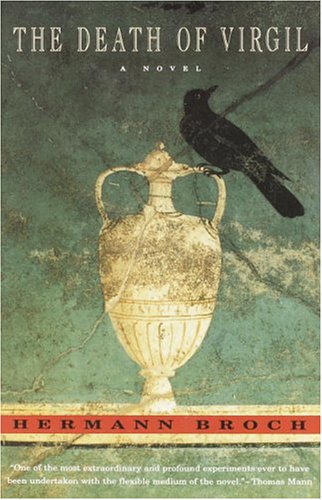
Death of Virgil
Authors:
Hermann Broch
Publisher:
Vintage
Publication Date:
Not available
ISBN:
0679755489
It is the reign of the Emperor Augustus, and Publius Vergilius Maro, the poet of the Aeneid and Caesar's enchanter, has been summoned to the palace,... where he will shortly die. Out of the last hours of Virgil's life and the final stirrings of his consciousness, the Austrian writer Hermann Broch fashioned one of the great works of twentieth-century modernism, a book that embraces an entire world and renders it with an immediacy that is at once sensual and profound. Begun while Broch was imprisoned in a German concentration camp, The Death of Virgil is part historical novel and part prose poem -- and always an intensely musical and immensely evocative meditation on the relation between life and death, the ancient and the modern.

Death of White Sociology
Authors:
Ladner
Publisher:
Black Classic Press
Publication Date:
Not available
ISBN:
1574780077
In the 1970s, the battle for racial equality being waged in the streets an d the legislatures took the ivory tower. Black students, researchers and... instructors had long been witness to the distortion of their history, their communities, and their identities in the classroom and in the field. The Black community had long borne the brunt of academia s failings. But many, like the contributors to Joyce A. Ladner s The Death of White Sociology, took up their pens and raised their voices against mis-education and bias in social science research.
Death on Demand
Authors:
Kim Q Hill
Publisher:
Thomas Horton and Daughters
Publication Date:
Not available
ISBN:
0913878634
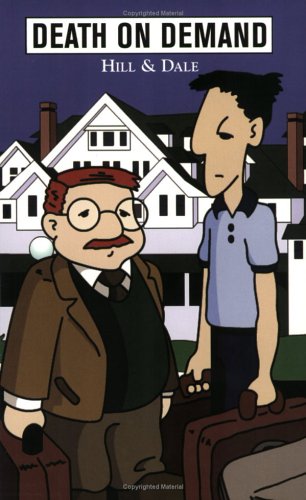
Professors Joe Birnoff and Karl Teasdale, the odd couple of the economics profession, are hoping for a quiet spring break at a stately nineteenth centry... hotel on Florida's Gulf Coast but a bitterly contested take-over fight at a shareholders' meeting at a hotel arrests their vacation fun. A British publishing magnate is seeking to gain control of prestigious Art World magazine, and economic as well as artistic controversies abound. When the boardroom bickering escalates to murder, Joe and Karl become amateur detectives, attempting to sort out the (mostly) economic motives of the suspects. The collaboration between Keynsian Birnoff and monetarist Teasdale unravel many an economic mystery as well as the solution to the crime.

Death on the Nile (Penguin Longman Readers Level5)
Authors:
Agatha Christie
Publisher:
Penguin
Publication Date:
Not available
ISBN:
1405867795
Contemporary / British English Linnet Ridgeway is rich, beautiful and clever. She appears to have everything. But Linnet also has enemies. When she is... shot dead on a passenger boat in Egypt, it is fortunate that Hercule Poirot is also on the trip. But even for the great Belgian detective, this is not a simple case.

Death or Deception: Sense of Place in Buzzati and Morante...
Authors:
Felix Siddell
Publisher:
Troubador Publishing Ltd
Publication Date:
Not available
ISBN:
1905237111
This book examines the evocation of place in the works of Dino Buzzati and Elsa Morante. Although these two post-war Italian authors are quite... dramatically different in style and subject matter, they share an important point, an evocation of place which is constructed around the tension between the purported realism of map space and the irrational yet persuasive powers of fantasy. Conceived as more than the author's response to a referent of specific locations, sense of place emerges through the interplay of different and apparently contradictory notions. The theoretical works examined in the introduction establish that sense of place is constructed according to two coexisting and conflicting approaches: one which defines place as an outcome of individual perception; and another in which place is understood as an arrangement of locations separate from the individual. In their evocation of place, both Buzzati and Morante emphasise the interplay of these approaches, to the point where they foster an awareness of the conflict and discord between these two ways of constructing reality. The role of these constructs is examined in the texts, particularly their manipulation by the authors to produce verisimilitude or fantasy. The book will appeal to a wider audience than scholars concerned with the authors studied, because it sets up a theoretical approach which could be applied to the study of other literary works.
Death Orders: The Vanguard of Modern Terrorism in Revolutionary...
Authors:
Anna Geifman
Publisher:
Praeger
Publication Date:
Not available
ISBN:
0275997529
Arguing that Russia is the birthplace of modern terrorism, Death Orders: The Vanguard of Modern Terrorism in Revolutionary Russia uses the nation as a... case study of psycho-historical patterns of worldwide terrorist activity during the past century. Key features of early-20th century Russian political extremism serve as models for terrorist experiences in other periods and regions as author Anna Geifman builds a typology of a universal phenomenon.The book shows how, in Russia and elsewhere, terrorists' objectives have degenerated from punishment of individual adversaries and attempts to intimidate political elites to indiscriminate acts of political violence. It shifts attention from ideology to practices that had been previously hidden, ignored, or rationalized, demonstrating that what terrorists say about their motives may not be what actually drives them to brutality. By looking closely at Russian precedents for the general experience of modern political violence, the book helps illuminate many obscure aspects of terrorism today.
Death or Liberty: African Americans and Revolutionary America
Authors:
Douglas R. Egerton
Publisher:
Oxford University Press, USA
Publication Date:
Not available
ISBN:
0199782253
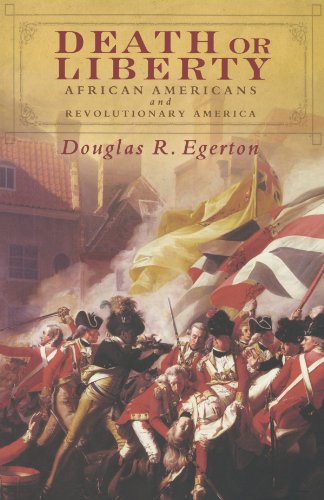
In Death or Liberty, Douglas R. Egerton offers a sweeping chronicle of African American history stretching from Britain's 1763 victory in the Seven... Years' War to the election of slaveholder Thomas Jefferson as president in 1800. While American slavery is usually identified with antebellum cotton plantations, Egerton shows that on the eve of the Revolution it encompassed everything from wading in the South Carolina rice fields to carting goods around Manhattan to serving the households of Boston's elite. More important, he recaptures the drama of slaves, freed blacks, and white reformers fighting to make the young nation fulfill its republican slogans. Although this struggle often unfolded in the corridors of power, Egerton pays special attention to what black Americans did for themselves in these decades, and his narrative brims with compelling portraits of forgotten African American activists and rebels, who battled huge odds and succeeded in finding liberty--if never equality--only in northern states. Egerton concludes that despite the real possibility of peaceful, if gradual, emancipation, the Founders ultimately lacked the courage to end slavery.
 '





